
Letter Tracing Practice Letter Recognition Worksheets for Ages 3-6
5 filtered results
Difficulty Level
Grade
Age
-
From - To
Subject
Activity
Standards
Introducing our engaging Letter Tracing Practice and Letter Recognition Worksheets, specially designed for children ages 3-6! These fun, interactive resources help young learners develop essential handwriting skills while enhancing their familiarity with the alphabet. Each worksheet features colorful illustrations and fun activities that keep kids motivated and eager to learn. As they trace each letter, children will strengthen their fine motor skills and boost their letter recognition abilities. Perfect for at-home or classroom use, our worksheets provide a hands-on approach to learning that builds confidence and sets the foundation for future literacy success. Start your child’s writing journey today!
Favorites
With answer key
Interactive
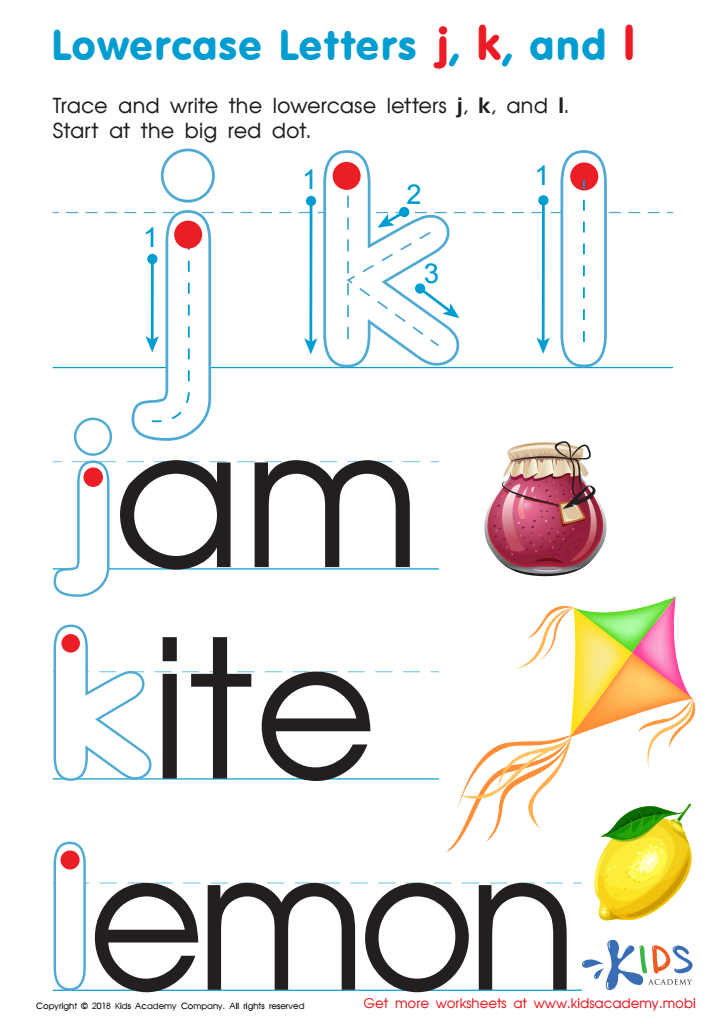
Lowercase Letters j k l Worksheet
Teach your child the difference between uppercase and lowercase letters. Have them trace and write the lowercase letters j, k, and l, starting at the red dot. Guide your child's hand to form the letters correctly.
Lowercase Letters j k l Worksheet
Worksheet
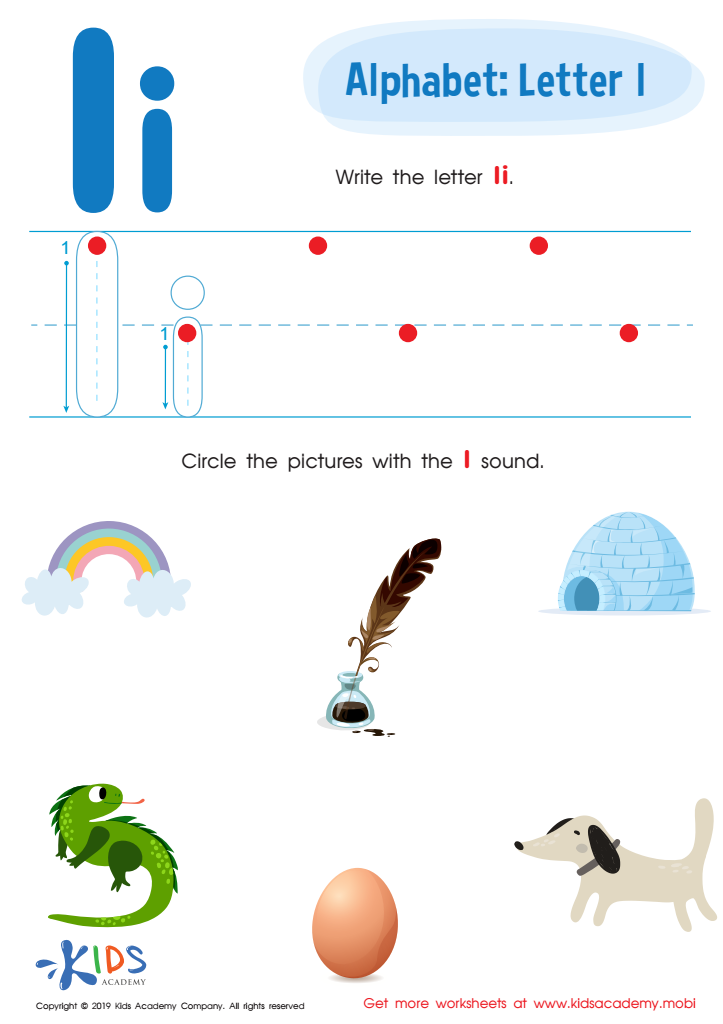
Letter I Tracing Worksheet
Kids can hone tracing, writing and identifying skills for the letter 'I' with this worksheet. Whether visual or reading/writing learners, every child can benefit from the tasks - tracing, writing and circling objects beginning with 'I'. This free sheet will soon get preschoolers confident with the 'I' letter!
Letter I Tracing Worksheet
Worksheet
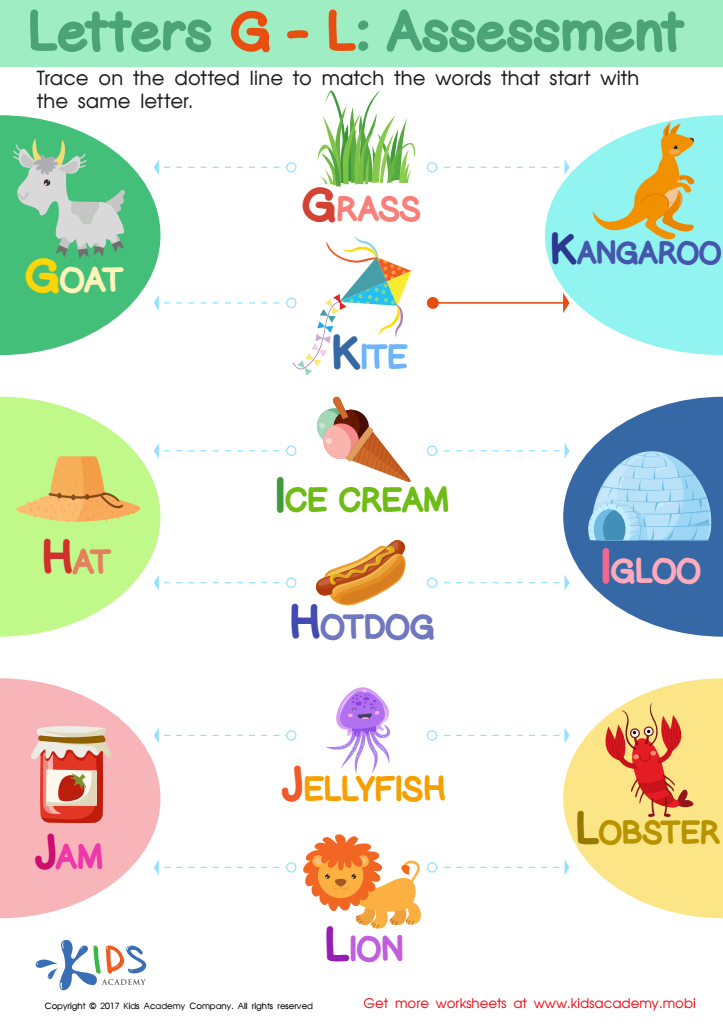
Letters G-L Worksheet
This fun worksheet helps preschoolers develop reading and phonics skills. It gets kids to match G-L words that start with the same letter, making it engaging and educational.
Letters G-L Worksheet
Worksheet
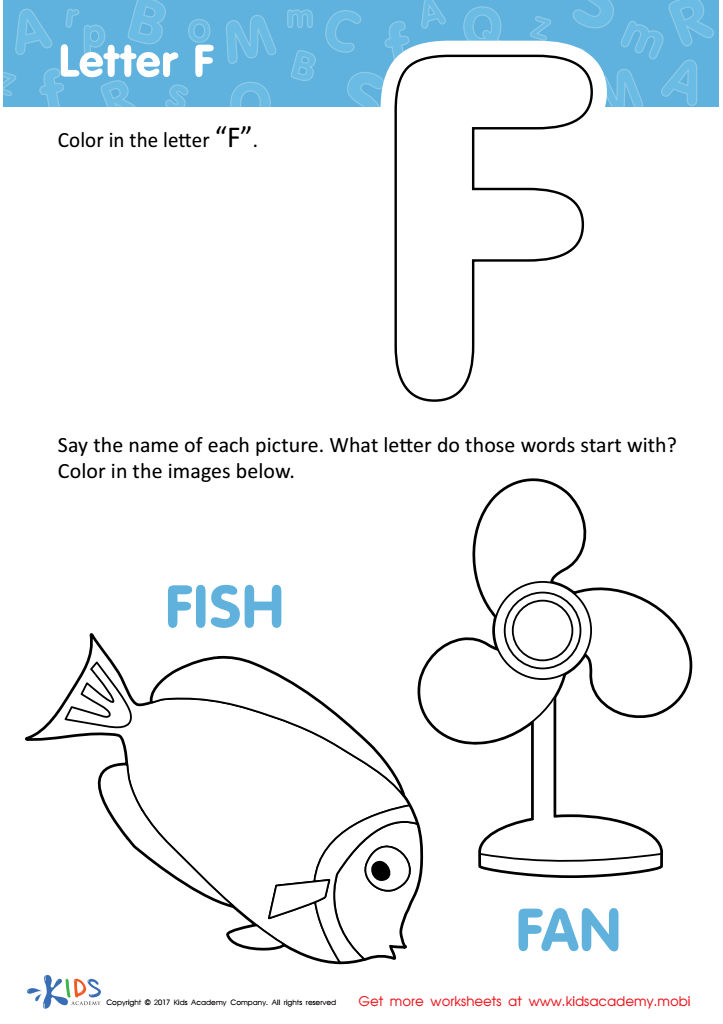
Letter F Coloring Sheet
Coloring pages help kids learn to recognize letters and sounds. Our "F" page has kids color a fish and a fan. It's a great way to introduce them to the letter "F" using words they already know.
Download (PDF)
 Assign to My Students
Assign to My Students
Letter F Coloring Sheet
Worksheet
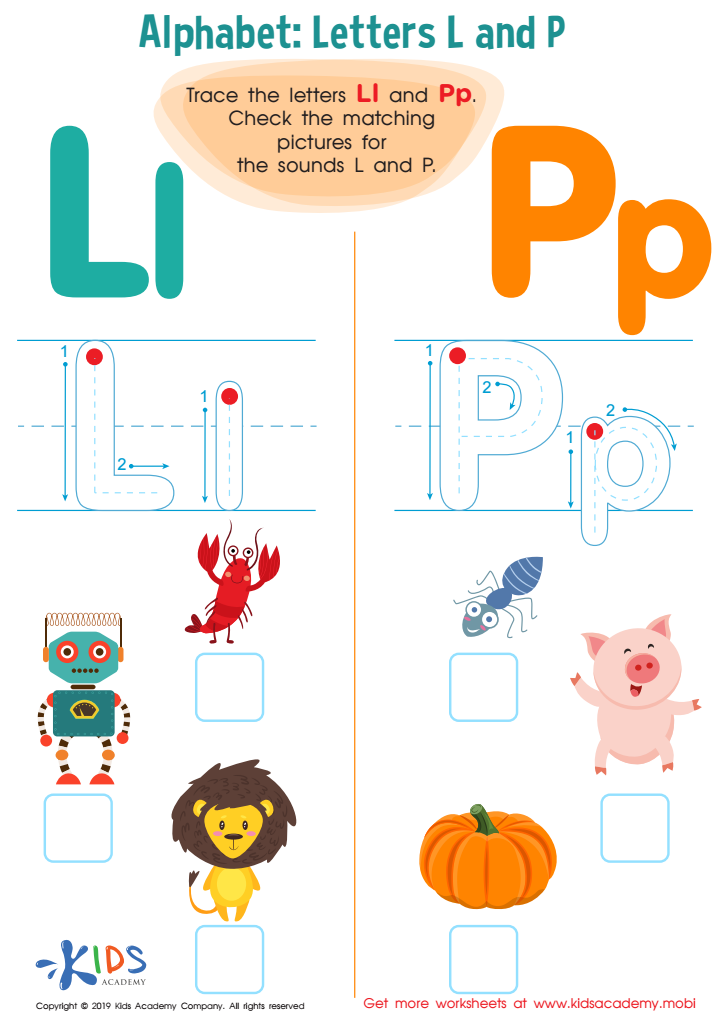
Letter L and P Tracing Worksheet
This traceable worksheet can motivate your students to learn and practice core skills. They'll trace the letters 'L' and 'P' and identify the pictures next to them. With this exercise, they'll unlock their learning abilities and excel in the subject!
Letter L and P Tracing Worksheet
Worksheet
Join Kids Academy for Free
Who is primarily going to use this learning content?








Letter tracing practice and letter recognition are fundamental skills for children aged 3-6, and both parents and teachers play pivotal roles in fostering these abilities. During early childhood, children are like sponges, eagerly soaking up information, and learning to recognize letters sets the groundwork for reading and writing proficiency. By incorporating letter tracing into daily routines, children enhance their fine motor skills, build hand-eye coordination, and strengthen the muscle memory necessary for writing.
Additionally, letter recognition is crucial for phonemic awareness—the ability to identify and manipulate individual sounds in words—which significantly impacts future literacy skills. When parents and teachers engage in letter tracing activities, they not only help children learn the alphabet but also cultivate a love for learning through fun, interactive experiences.
Moreover, consistent practice in letter tracing helps instill confidence in young learners, making them more excited about exploring language and literacy. This nurturing environment encourages positive attitudes toward education, thereby promoting a lifelong appreciation of learning. As young children develop these foundational skills, they are better equipped to succeed academically and socially as they transition into more advanced stages of education, ultimately laying the groundwork for their future success.







