
Phonics practice Letter Recognition Worksheets for Ages 3-6
5 filtered results
Difficulty Level
Grade
Age
-
From - To
Subject
Activity
Standards
Our Phonics Practice Letter Recognition Worksheets are perfect for ages 3-6, fostering foundational literacy skills. These engaging and age-appropriate worksheets help young learners recognize and differentiate letters through interactive activities. Featuring vibrant images and enjoyable exercises, our worksheets make learning phonics fun and effective. Each worksheet is designed to reinforce letter sounds, enhance vocabulary, and build early reading skills. Ideal for both parents and educators, these tools support your child's journey to becoming a confident reader. Kickstart your child’s literacy with our expert-designed worksheets, ensuring solid phonics foundations and a love for learning.
Favorites
With answer key
Interactive
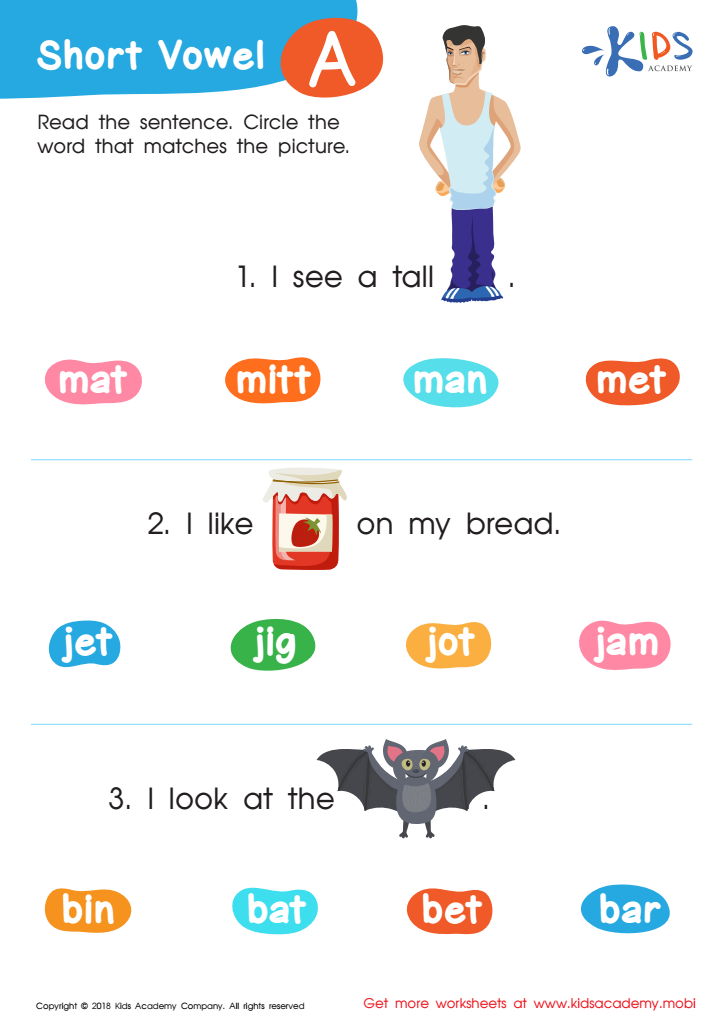
Short Vowel /a/ Worksheet
This free PDF helps new readers use sight words and pictures to read basic sentences. Then, they use accompanying word choices to find the correct word with the short a vowel sound. A key early reading skill, discriminating between short vowel sounds can be tricky in monosyllabic words, so use this PDF to help your reader reinforce it.
Short Vowel /a/ Worksheet
Worksheet
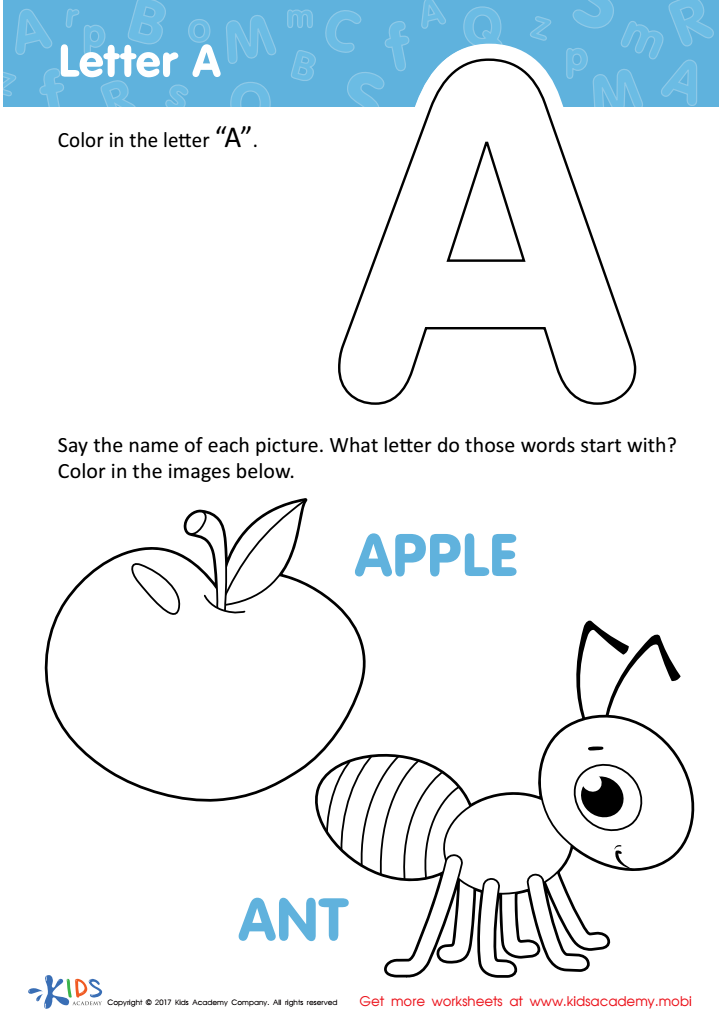
Letter A Coloring Sheet
This letter "A" coloring page is great for introducing kids to the alphabet! Let them exercise their creativity while they learn to recognize letters and sounds - it's a fun and easy way to help them get started.
Download (PDF)
 Assign to My Students
Assign to My Students
Letter A Coloring Sheet
Worksheet
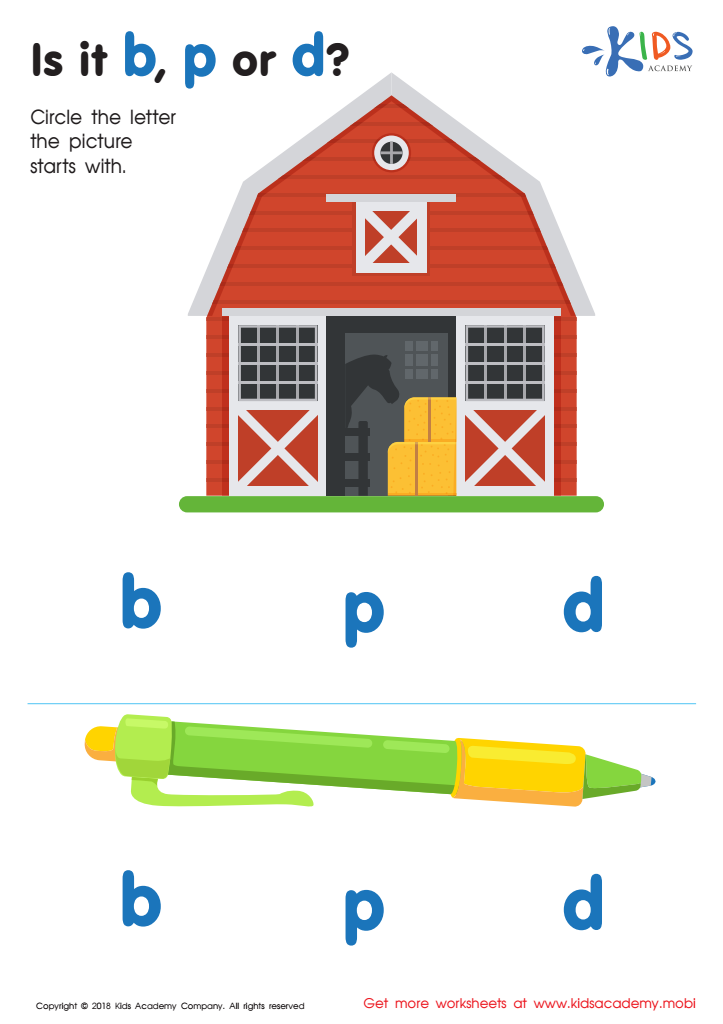
Is it b, p or d? Worksheet
Test your child's identification skills with this worksheet. They must identify the image and then circle the letter it begins with: 'b', 'p', or 'd' (e.g. an image of the sun would mean they circle 's').
Is it b, p or d? Worksheet
Worksheet
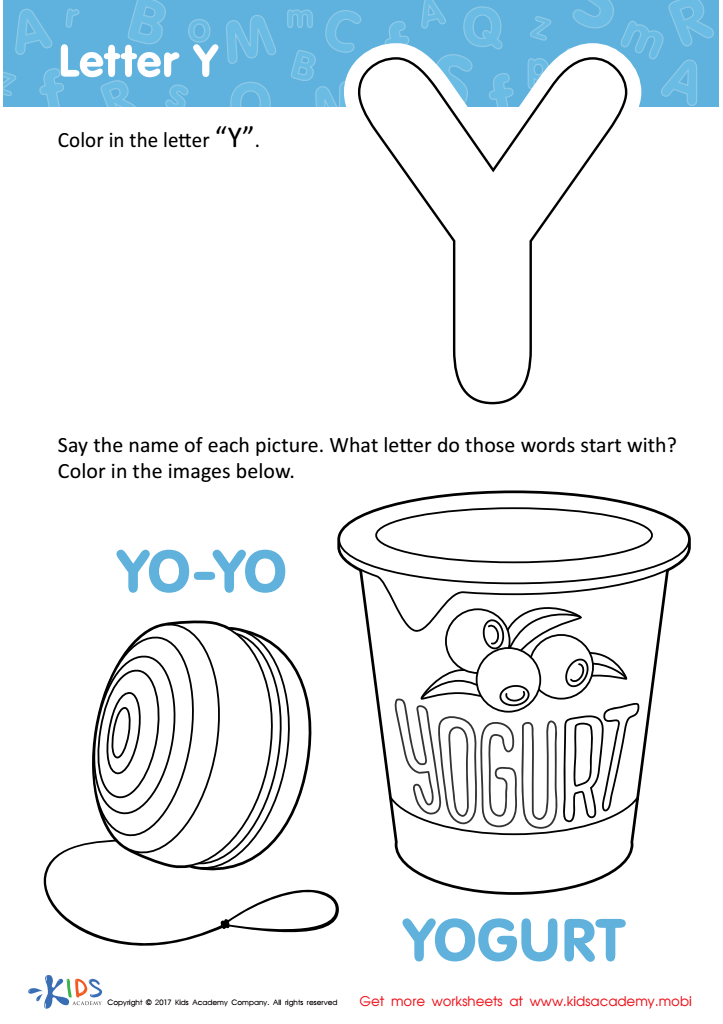
Letter Y Coloring Sheet
Let's celebrate letter "Y"! Here's a fun coloring page that'll help your child learn this end-of-the alphabet letter. It's packed with familiar objects that'll help build their art and literacy skills. So let's say "Yay"!
Download (PDF)
Assign to My Students
Assign to My Students
Letter Y Coloring Sheet
Worksheet
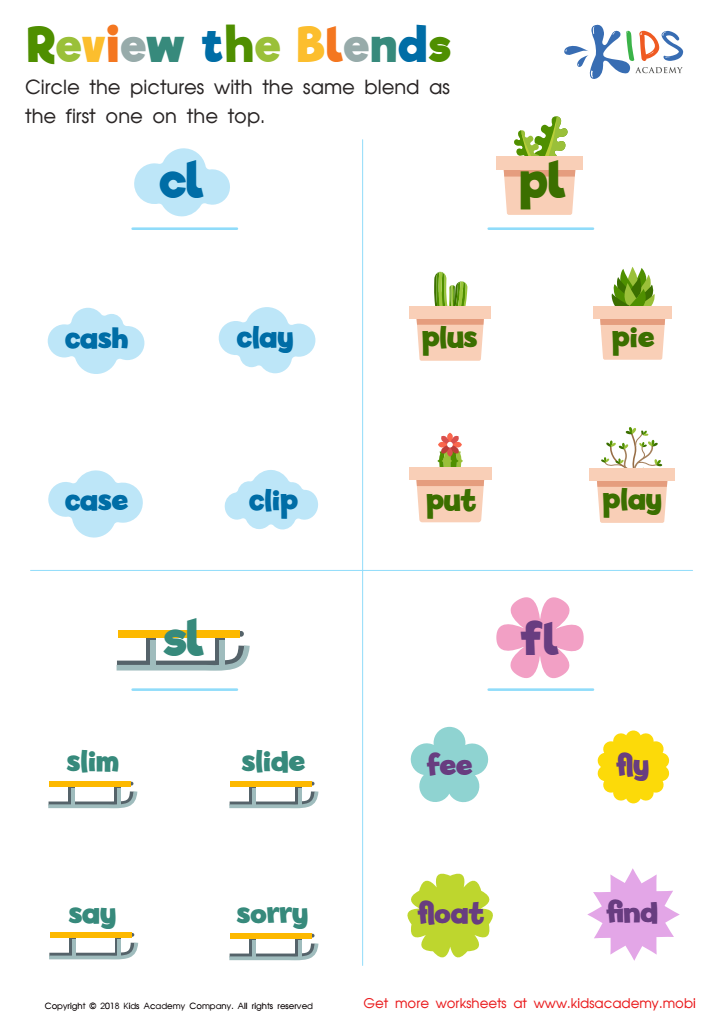
Review the Blends Worksheet
Consonant blends are two or three consonants that make a sound when pronounced together. L-blends like cl, bl, sl, fl and 3-letter blends like str, slp are common. This phonics worksheet helps early readers identify words containing two letter L-blends. Students must circle the words then read them aloud.
Review the Blends Worksheet
Worksheet
Join Kids Academy for Free
Who is primarily going to use this learning content?








Phonics practice and letter recognition are foundational elements of early literacy, crucial for children aged 3-6. These skills serve as the building blocks for reading and writing, pivotal activities for academic success and day-to-day communication. Phonics teaches the relationship between letters and their corresponding sounds, enabling children to decode words, fostering an understanding of how letters combine to form words. Letter recognition equips young learners with the ability to identify both upper and lower case letters instantly, an essential step towards reading fluency.
For parents and teachers, emphasizing phonics and letter recognition is vital because early literacy has a cascading effect on overall learning. Mastery of these skills can significantly reduce the likelihood of reading difficulties later, providing children with the confidence to engage with more complex texts. Furthermore, early competence in reading is often linked to better performance across all subjects, including math and science, as it bolsters comprehension skills and the ability to follow instructions.
Engaging in phonics and letter recognition activities also supports cognitive development, enhancing attentiveness, memory, and listening skills. Given this critical period of brain development, educational interventions now can yield long-term benefits, equipping children with the necessary literacy foundation to thrive in their educational journey and beyond.







