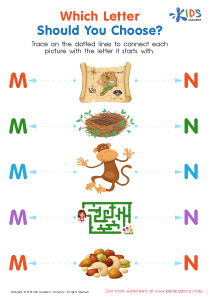
Alphabet sequencing Lowercase/Small Letters Worksheets for Ages 3-6
3 filtered results
-
From - To
The "Alphabet Sequencing Lowercase/Small Letters Worksheets for Ages 3-6" are designed to enhance early childhood literacy skills through engaging activities. These worksheets guide children in recognizing, ordering, and writing the lowercase letters of the alphabet, fostering foundational skills for reading and writing. Each activity is tailored to captivate young learners, making the process of mastering the alphabet enjoyable and effective. Perfect for preschoolers and kindergarteners, these printables focus on developing fine motor skills, cognitive ability, and a love for learning. Ideal for both classroom and home environments, these worksheets support educators and parents in nurturing young, curious minds.
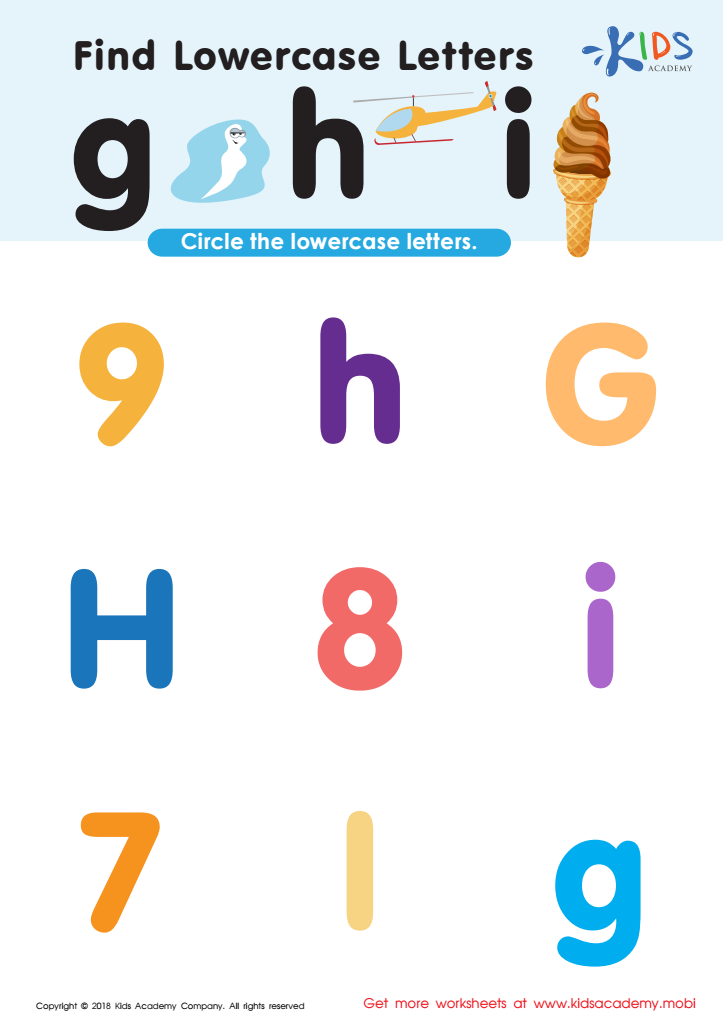
Find Lowercase Letters g h i Worksheet
 Assign to My Students
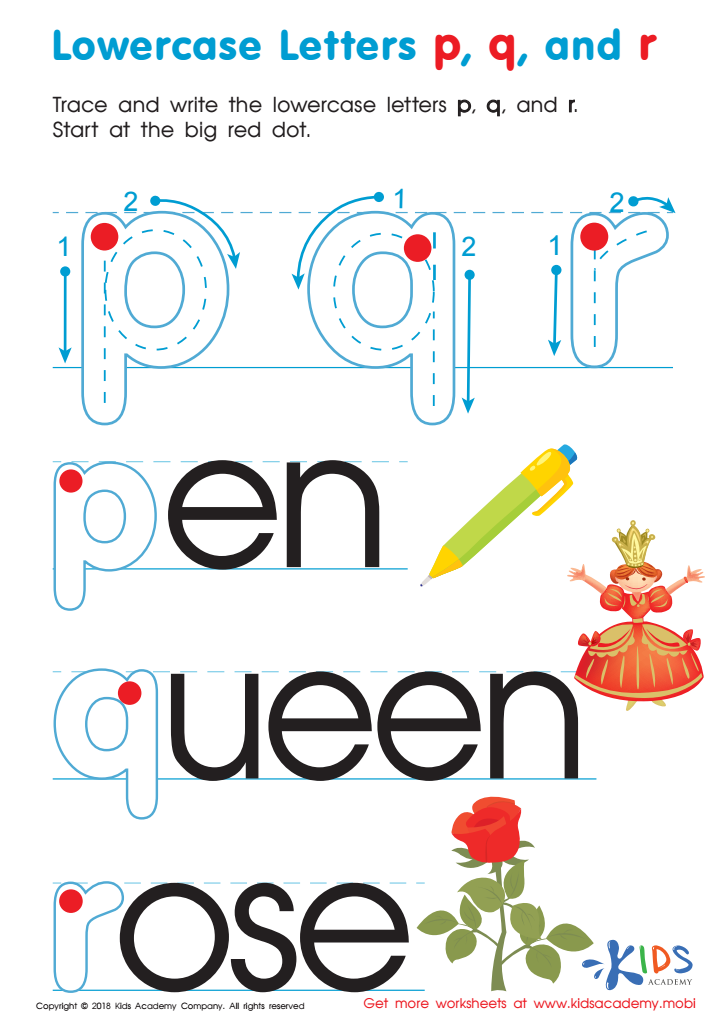
Lowercase Letters p q r Worksheet
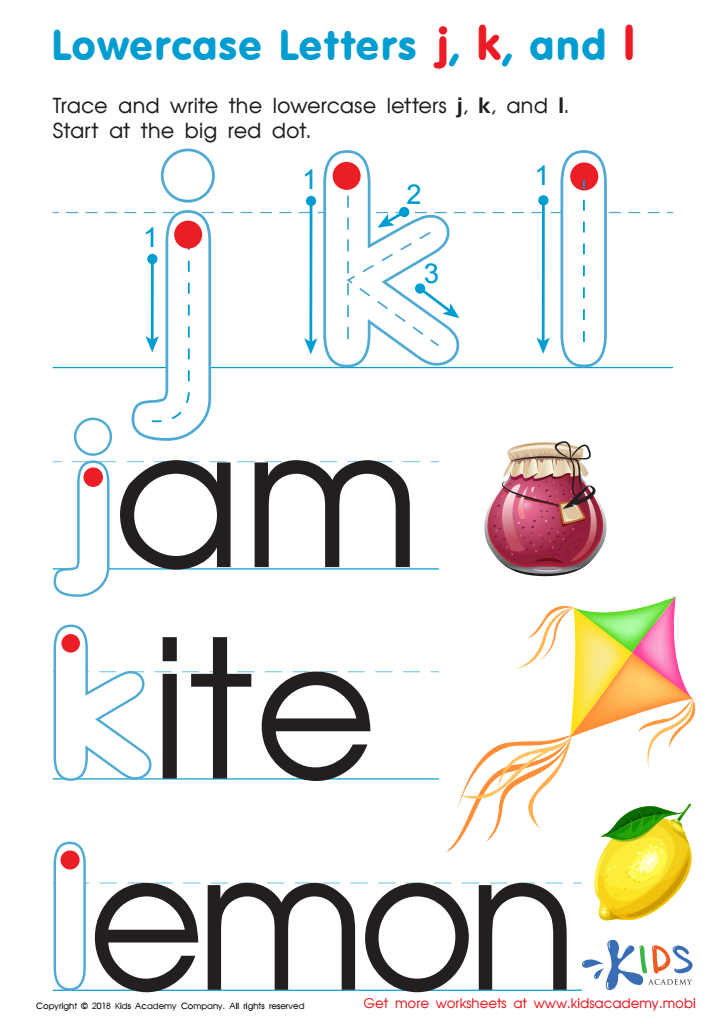
Lowercase Letters j k l Worksheet


Alphabet sequencing of lowercase letters for children aged 3-6 is crucial for several reasons. First, early literacy skills form the foundation for future reading and writing success. By mastering lowercase letters, children become proficient in recognizing and differentiating between the letters, which is integral for developing reading abilities.
Second, familiarity with the alphabet enhances cognitive skills such as memory and sequencing, helping children to understand order and patterns—a critical component in math and logical reasoning. It also aids in the development of fine motor skills as children learn to write each letter, promoting better hand-eye coordination.
Third, a strong grasp of lowercase letters is essential for effective communication. Since most written text is in lowercase, knowing these letters enables children to start reading simple words, sentences, and ultimately books. This boosts their confidence, interest in learning, and independence.
Finally, early exposure to alphabet sequencing aligns with educational standards, preparing children for a smoother transition into formal schooling. Cultivating these skills at a young age assists in meeting academic milestones and fosters a lifelong love of learning, helping set the stage for academic success. Consequently, both parents and teachers should prioritize alphabet sequencing in early childhood education.