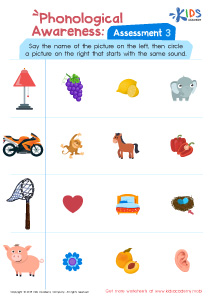
Rhyming skills development Rhyming Worksheets for Ages 3-6
4 filtered results
-
From - To
Enhance your child's language skills with our Rhyming Worksheets designed for ages 3-6! These engaging worksheets focus on the essential development of rhyming skills, promoting phonemic awareness and early literacy. With fun, interactive activities, children will learn to recognize and create rhymes, making learning enjoyable. Our resources are perfect for parents and educators seeking to foster a love for language through playful exercises that improve reading readiness. Help your little ones explore the magical world of rhyme and rhythm as they gain confidence in their abilities. Discover the joy of learning today with our delightful rhyming worksheets!
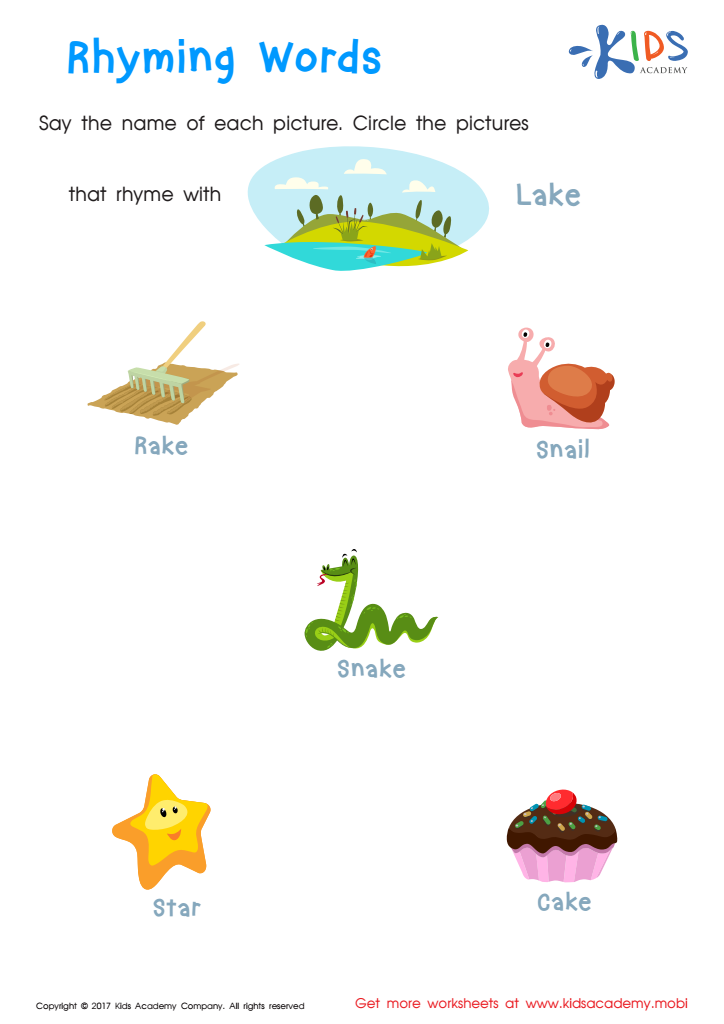
Rhyming Words Rhyming Worksheet
 Assign to My Students
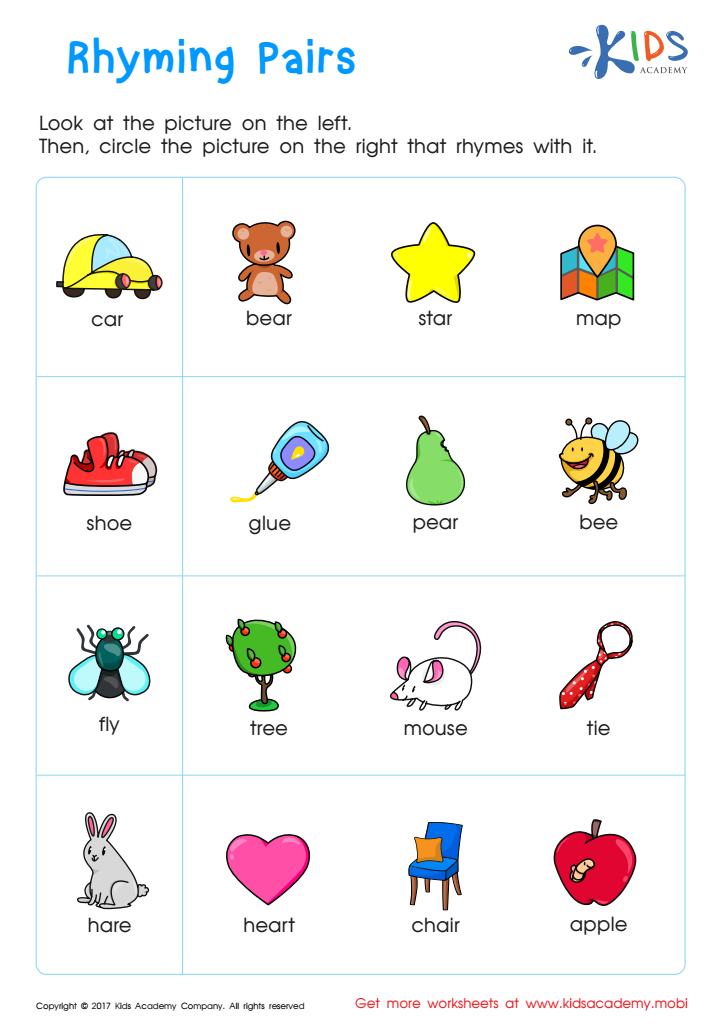
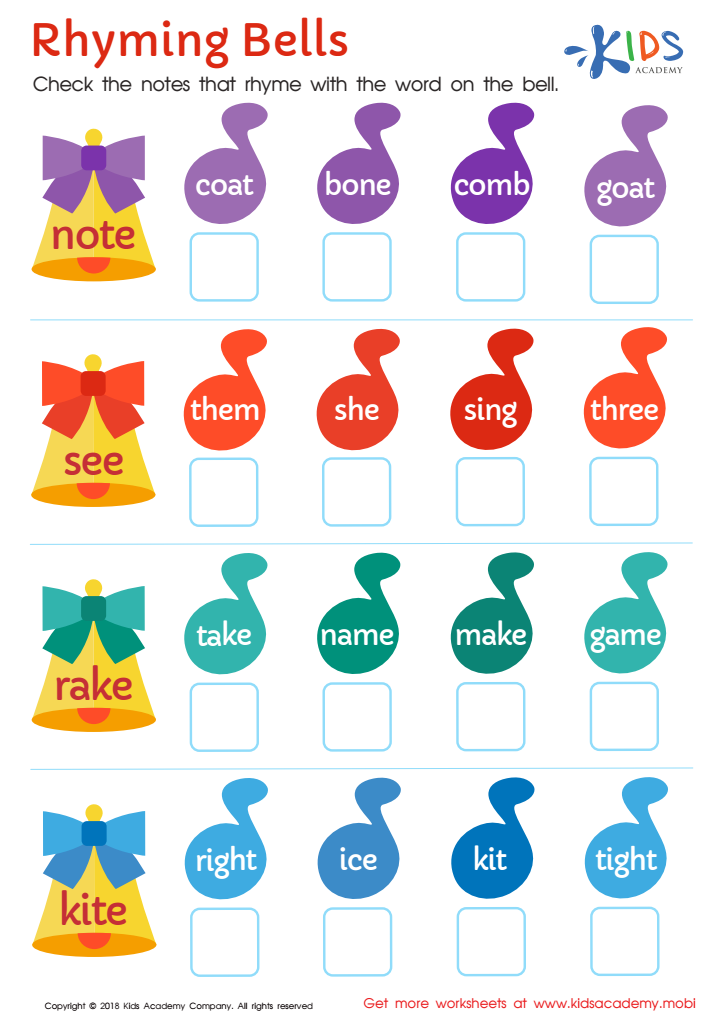
Rhyming Bells Worksheet
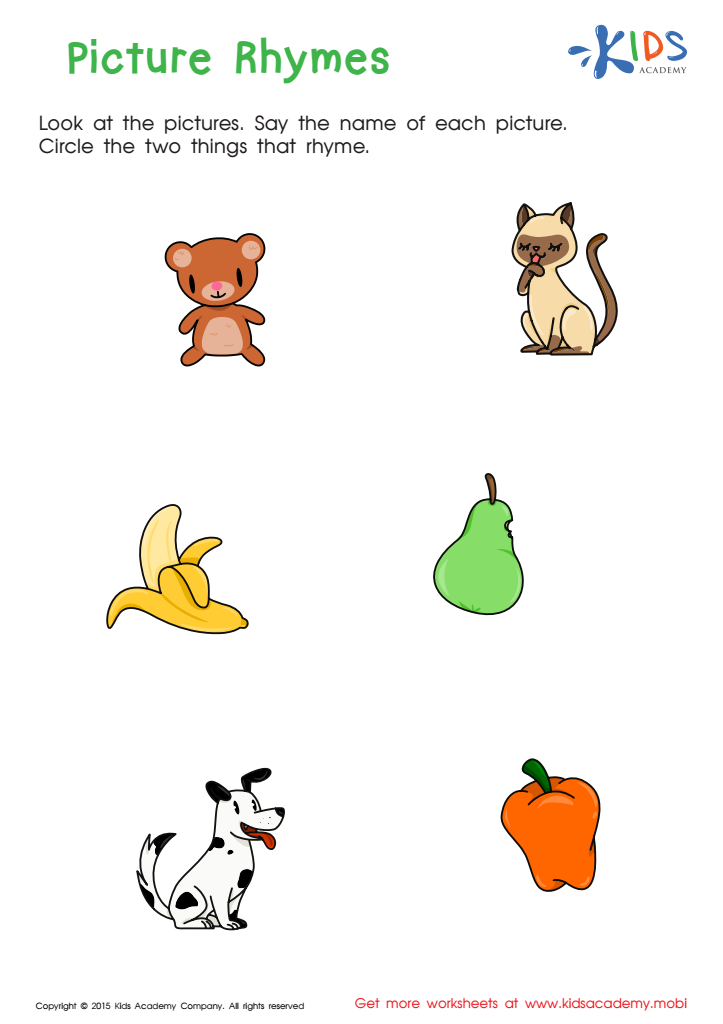
First Words: Picture Rhymes Worksheet








Rhyming skills play a crucial role in early language development for children aged 3-6. Parents and teachers should care about fostering these skills for several reasons. First, rhyming enhances phonemic awareness, which is the ability to recognize and manipulate sounds in words. This skill is foundational for reading, helping young learners identify word families and sound patterns, ultimately making it easier to decode new words.
Additionally, engaging with rhymes enriches vocabulary. Through playful repetition and rhythm, children encounter new words and concepts, enhancing their language development and comprehension. Rhyming also promotes memory retention, as catchy rhymes are easier for children to recall, laying the groundwork for literacy.
Socially and emotionally, engaging in rhyming activities encourages collaborative play and bonding between peers, parents, and educators. It fosters a love for language and creativity, as children experiment with sounds and create their own rhymes.
Incorporating rhyming games, songs, and stories into daily routines supports these developmental benefits. Overall, prioritizing rhyming skill development is a fun and effective strategy to prepare young learners for successful reading and communication throughout their educational journey.