Fine motor skills development Tracing Letters Worksheets for Ages 3-6
3 filtered results
-
From - To
Boost your child's fine motor skills with our Tracing Letters Worksheets designed for ages 3-6. These engaging, age-appropriate printable sheets help young learners practice letter formation, improve hand-eye coordination, and develop essential pre-writing skills. Each worksheet features fun, educational activities that make learning enjoyable, while progressively refining motor control. Ideal for both classroom and home use, our tracing letters worksheets are crafted to build a strong foundation for writing. Set your little one on the path to literacy success with activities perfectly tailored to their developmental stage. Download now and watch their skills soar!
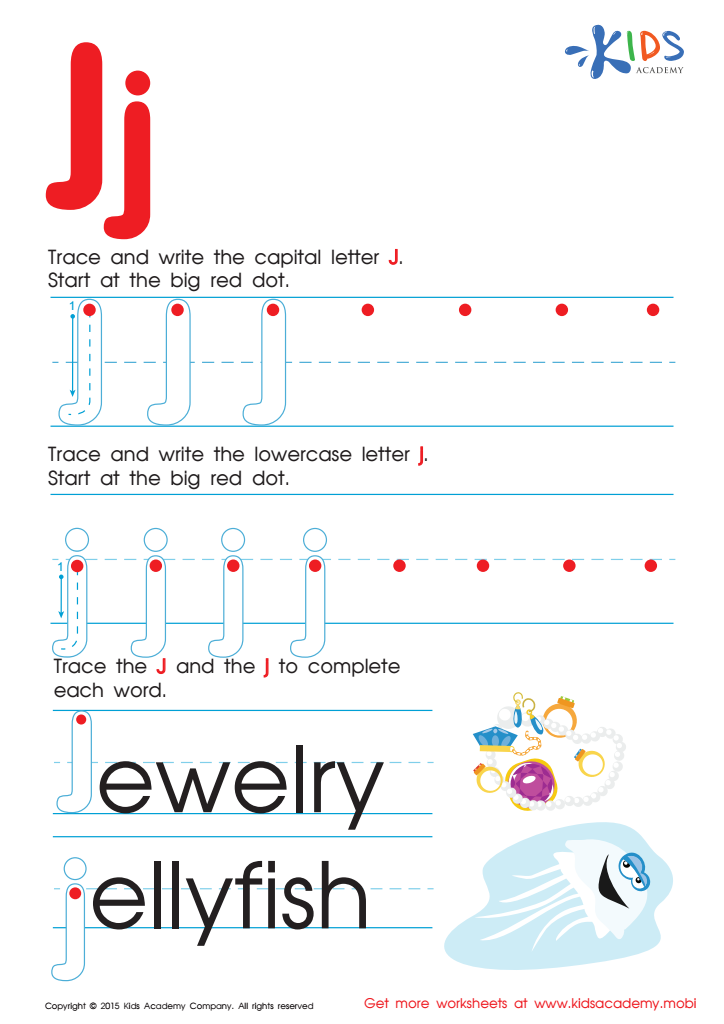
Letter J Tracing Page
 Assign to My Students
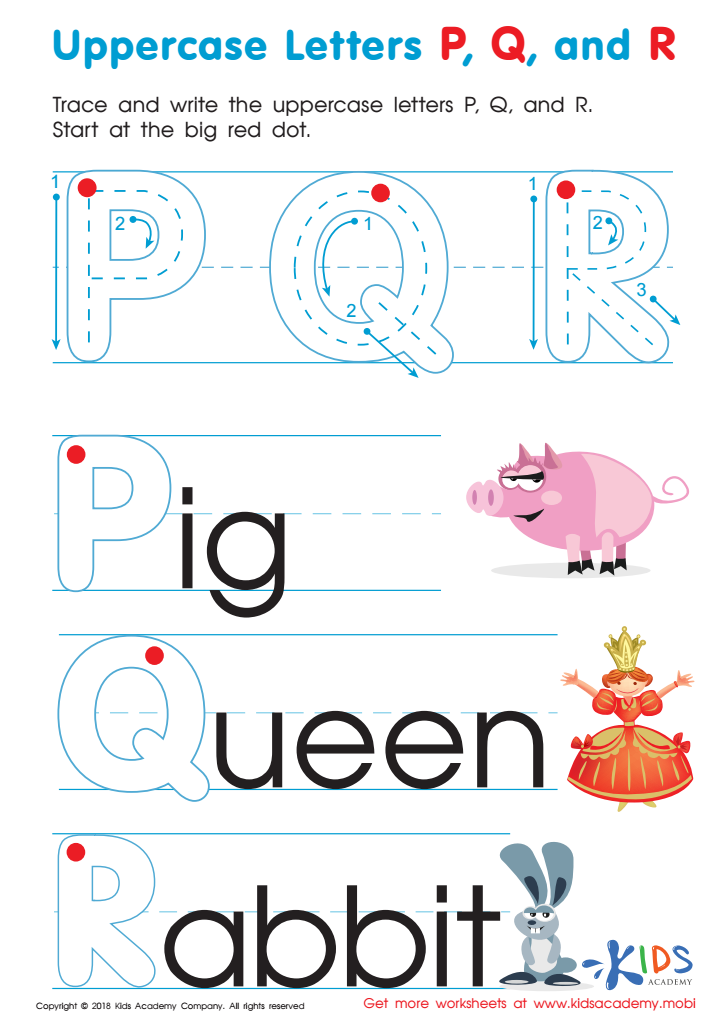
Uppercase Letters P, Q, and R Worksheet
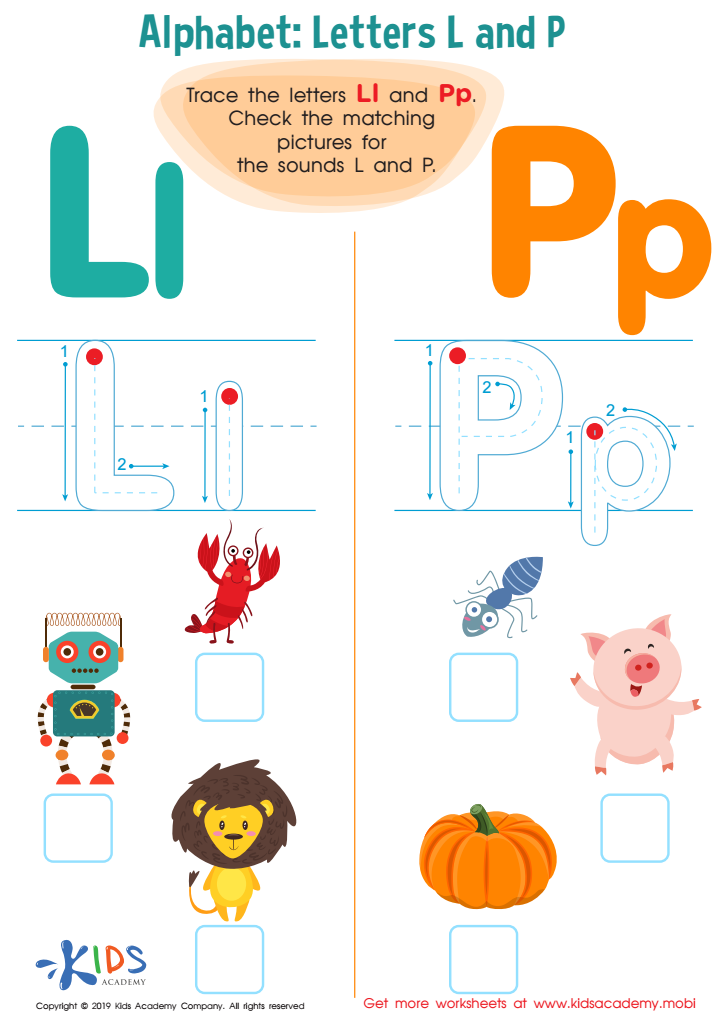
Letter L and P Tracing Worksheet








Fine motor skills are crucial for young children's overall development, influencing their ability to perform everyday tasks with ease and confidence. Tracing letters is a particularly effective way for children aged 3-6 to hone these skills. When parents and teachers focus on tracing letters, they are providing activities that enhance hand-eye coordination, necessary for performing detailed tasks.
Improved fine motor skills allow children to handle writing utensils, cut with scissors, and manage buttons or zippers on clothing, thereby fostering independence. This developmental stage sets the foundation for more complex academic tasks, such as writing and reading, vital for later educational success.
Engaging in tracing exercises strengthens the small muscles in the hands and fingers, crucial for grip strength and endurance. This tactile learning process also helps children recognize letter shapes and their corresponding sounds, integrating cognitive skills with physical tasks. At this age, fostering a love for learning through playful and engaging activities like letter tracing can build both competence and confidence.
Consequently, prioritizing activities that develop fine motor skills, such as letter tracing, equips children with essential tools for academic success and everyday life, making it an invaluable focus for both parents and teachers.








