Hand-eye Coordination Tracing Letters Worksheets for Ages 3-6
6 filtered results
-
From - To
Enhance your child's motor skills with our "Hand-Eye Coordination Tracing Letters Worksheets" designed specifically for ages 3-6! These engaging activities help young learners develop essential skills by tracing letters, fostering proper pencil grip, and promoting hand-eye coordination. Our fun, educational worksheets guide little hands through the alphabet, making learning interactive and enjoyable. Perfect for preschool and kindergarten readiness, these worksheets build a strong foundation in literacy while boosting confidence in fine motor abilities. Discover the joy of learning and watch your child’s skills flourish. Visit Kids Academy to download and print now!

Letter A Tracing Page
 Assign to My Students
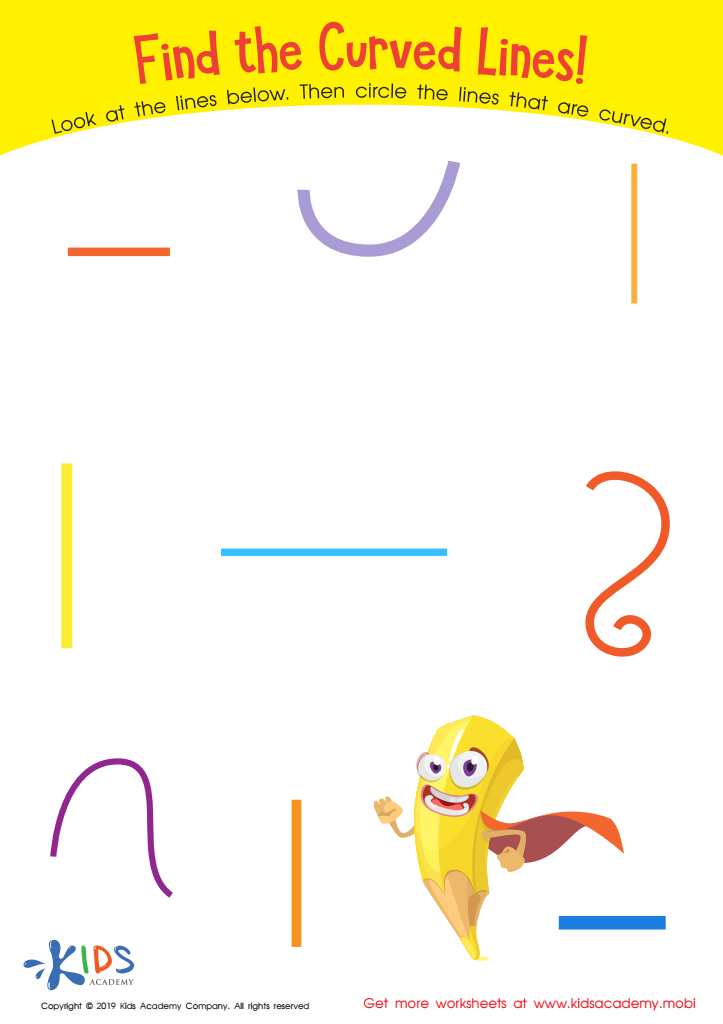
Find the Curved Lines! Worksheet
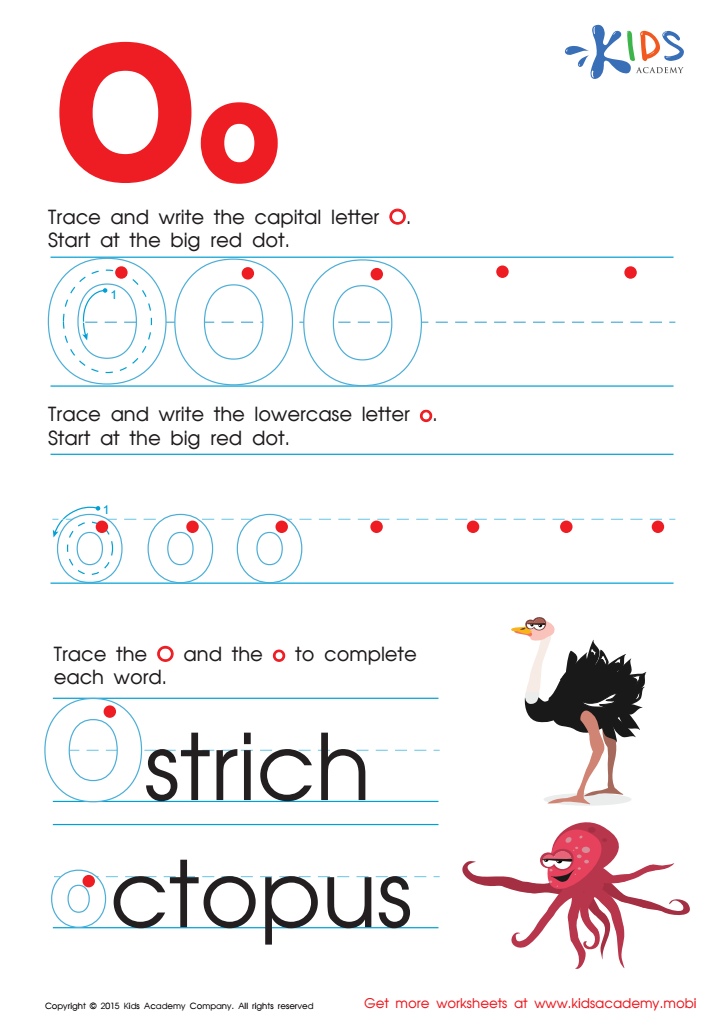
Letter O Tracing Page
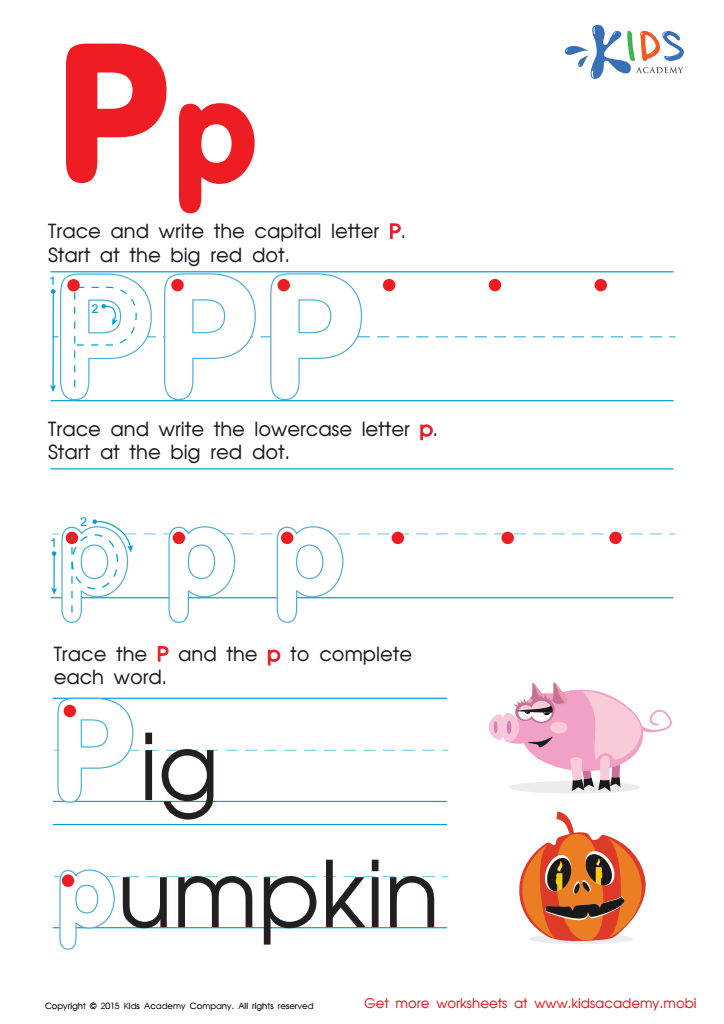
Letter P Tracing Page
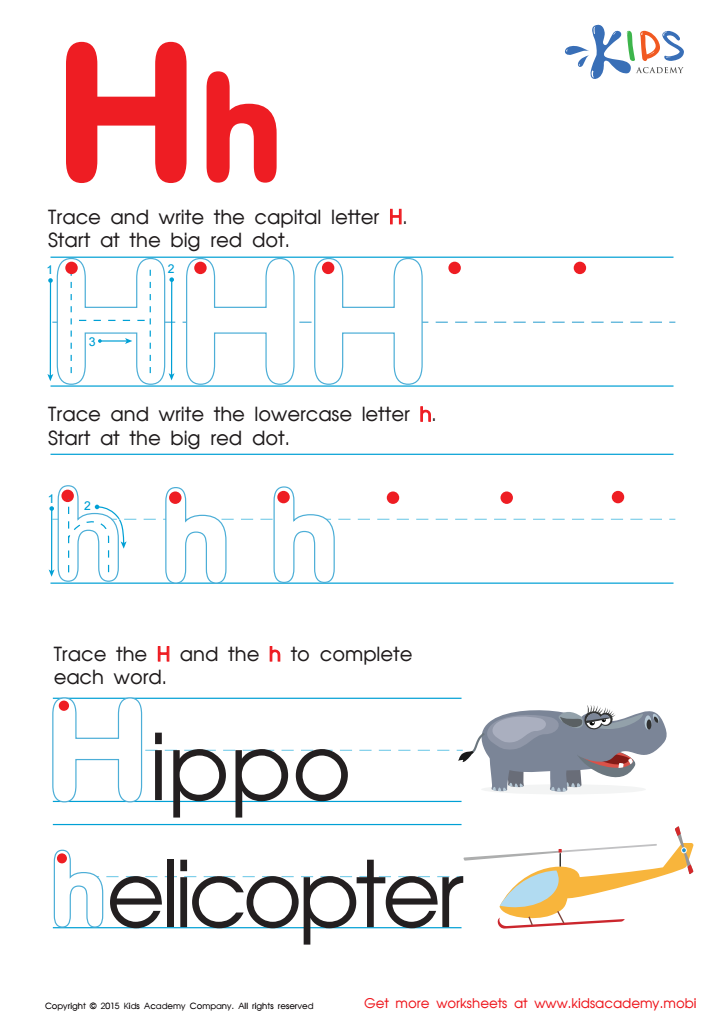
Letter H Tracing Page

Letter D Tracing Page







Hand-eye coordination is a crucial developmental skill for children aged 3-6, and tracing letters is an excellent way to cultivate it. This coordination involves the ability to process visual information and execute corresponding hand movements, which is essential for everyday tasks and further learning. When children trace letters, they are engaging their visual and motor skills simultaneously, establishing a foundation for effective communication and fine motor abilities.
Firstly, improved hand-eye coordination makes learning to write easier. As children become more adept at controlling their hand movements, they can form letters more accurately, making the overall writing process smoother. This not only sets the stage for academic success in reading and writing but also boosts confidence and fosters a positive attitude towards learning.
Secondly, this practice enhances concentration and attention to detail. Tracing requires children to follow specific patterns, helping them to focus and pay careful attention, skills that are transferable to other areas of education and daily life.
Lastly, these activities can also serve as an early indicator of potential developmental issues. Consistent difficulties in tracing might suggest the need for further evaluation and, if necessary, early intervention which is crucial for the child’s overall development.
In summary, hand-eye coordination through tracing letters is foundational for writing proficiency, attentional skills, and broader developmental monitoring, making it a beneficial practice for young learners.








