Phonics Skills Two Letter Phonics Worksheets for Ages 3-6
4 filtered results
-
From - To
Discover exciting "Two Letter Phonics Worksheets" made for children ages 3-6. Helping kids master essential phonics skills through fun and engaging practice, these worksheets focus on beginning sounds, two-letter blends, and simple word formation. Carefully crafted to stimulate young minds, our resources pave the way for successful reading development. Bright illustrations and interactive exercises make learning enjoyable, supporting letter recognition, sound association, and early literacy, ensuring a strong foundation for future learning. Ideal for parents, teachers, and homeschooling, these worksheets provide an excellent start to your child's phonics journey. Get started today and make learning a joyful experience!
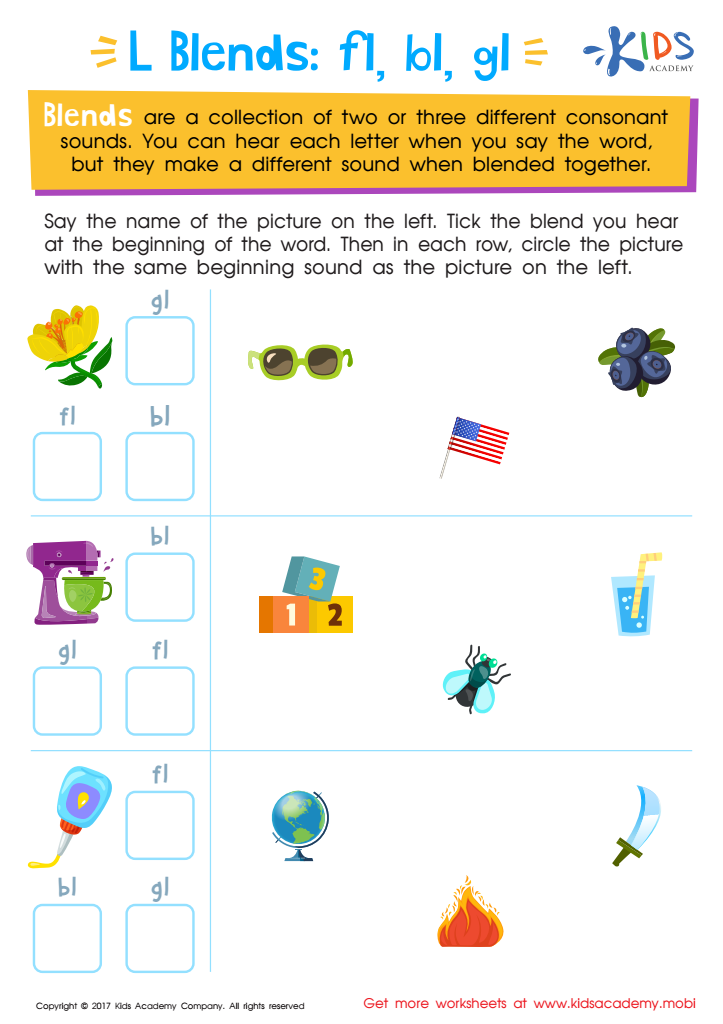
Blending Consonants: "Fl", "Bl" and "Gl" Printable
 Assign to My Students
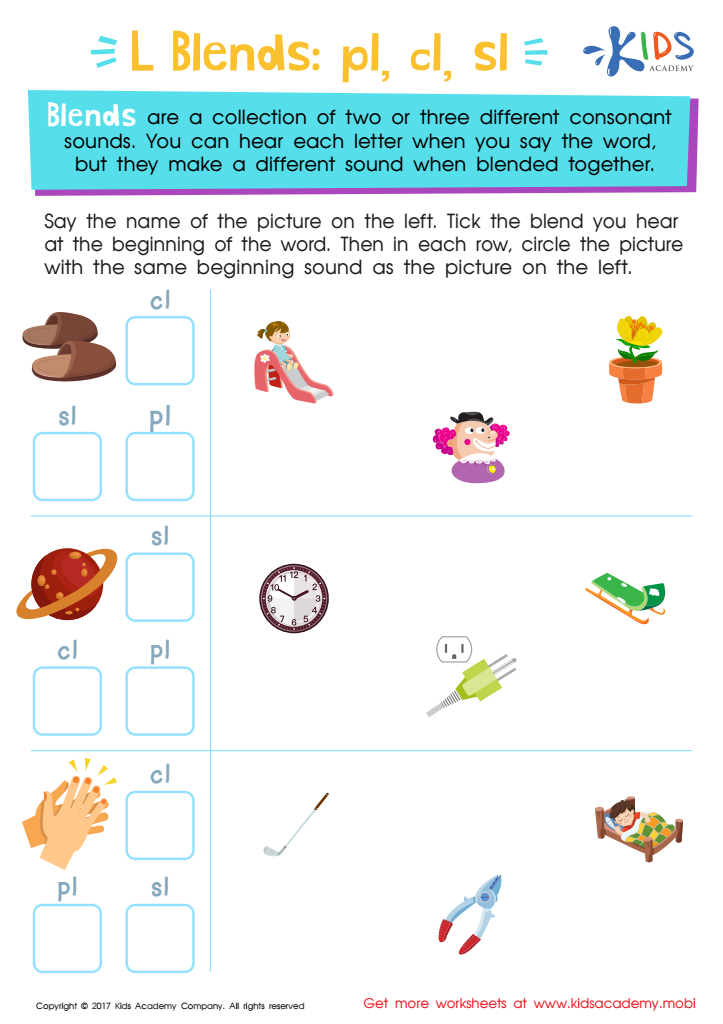
L Blends: "Pl", "Cl" and "Sl" Printable
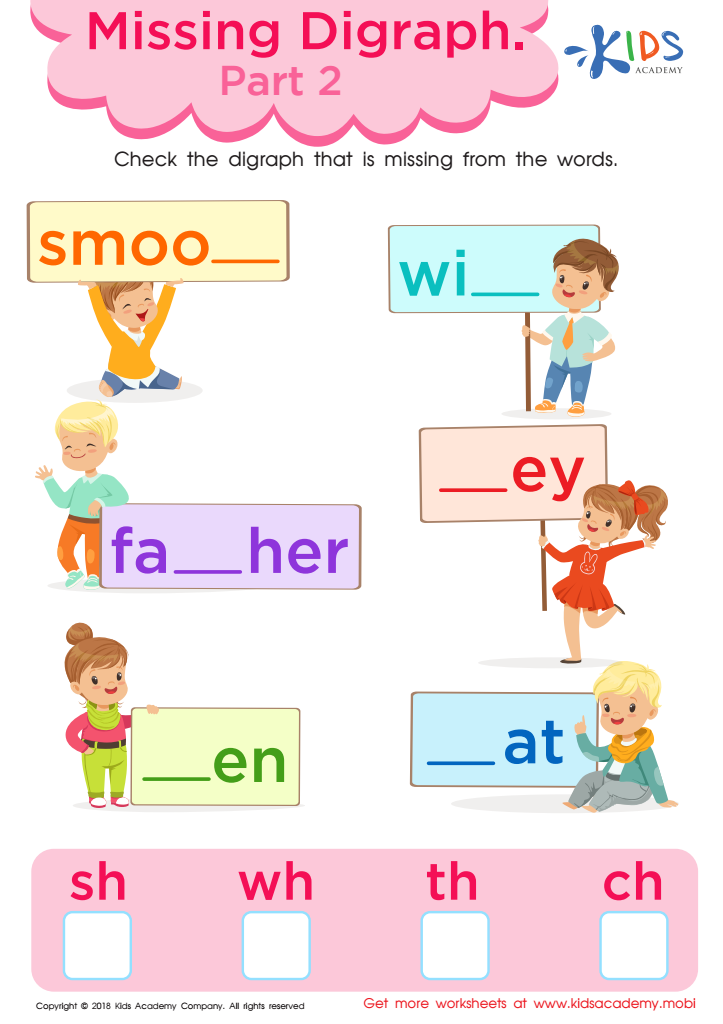
Missing Digraph: Part 2 Worksheet
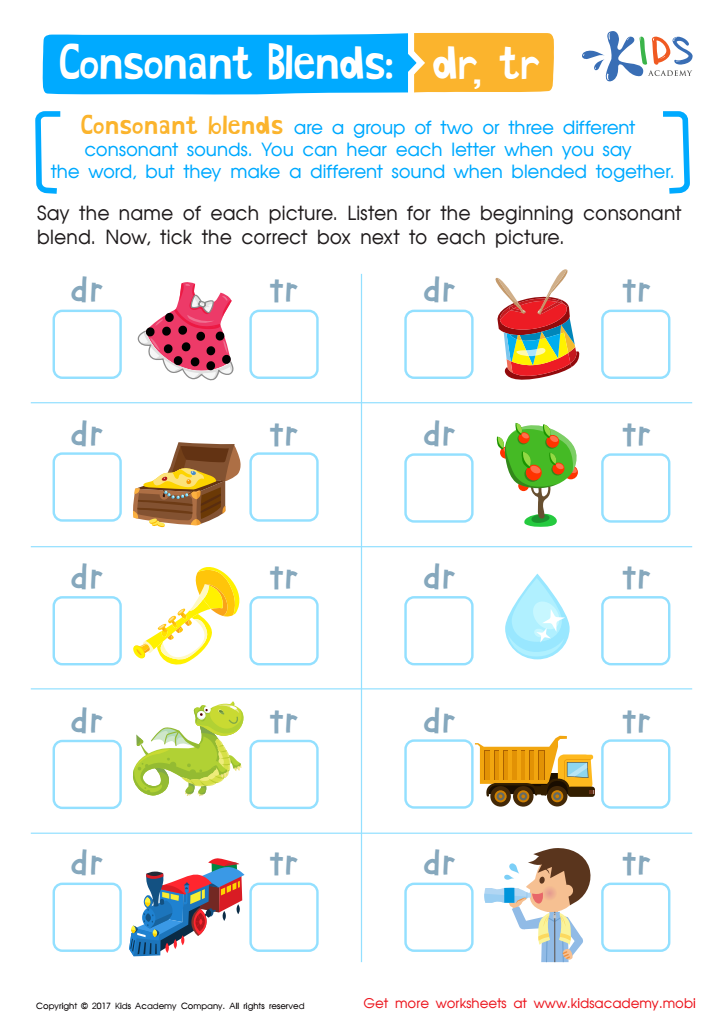
Consonant Blends: "Dr" and "Tr" Printable



Phonics skills, particularly two-letter phonics, are crucial for children aged 3-6 because they lay the foundational stone for fluent reading and effective communication. At this formative age, children’s brains are highly receptive to learning new sounds and patterns in language. Teachers and parents should care about these building blocks because they directly contribute to a child's ability to decode words, which is essential for reading fluency.
When young children learn to identify and combine two-letter phonics, such as "sh," "ch," or "th," they are also learning how to recognize patterns in words. This recognition boosts their confidence, making the transition to more complex words and sentences smoother. Early exposure to these sounds helps improve their spelling, vocabulary, and even comprehension skills. Children who struggle with these basics often find themselves lagging behind their peers, affecting their academic performance and self-esteem.
Early intervention and consistent practice of two-letter phonics can prevent future reading difficulties. Furthermore, mastering phonics at an early stage fosters a love for reading, which is associated with lifelong learning and academic success across various subjects. Therefore, emphasizing phonics in early childhood education is not just about learning letters and sounds; it’s about setting up a young mind for a bright, literate future.







