Fine motor skills development Upper & Lowercase Letters Worksheets for Ages 3-6
3 filtered results
-
From - To
Enhance your child's fine motor skills with our comprehensive Upper & Lowercase Letters Worksheets, designed especially for ages 3-6. These engaging, printable activities help young learners master letter recognition and formation while improving hand-eye coordination and pencil control. Each worksheet features fun tracing, writing, and coloring exercises, providing multiple ways to practice both uppercase and lowercase letters. Perfect for preschoolers and kindergarteners, these educational tools lay a strong foundation for reading and writing success. Equip your child with the skills needed for lifelong learning and development with our expertly crafted, age-appropriate worksheets.
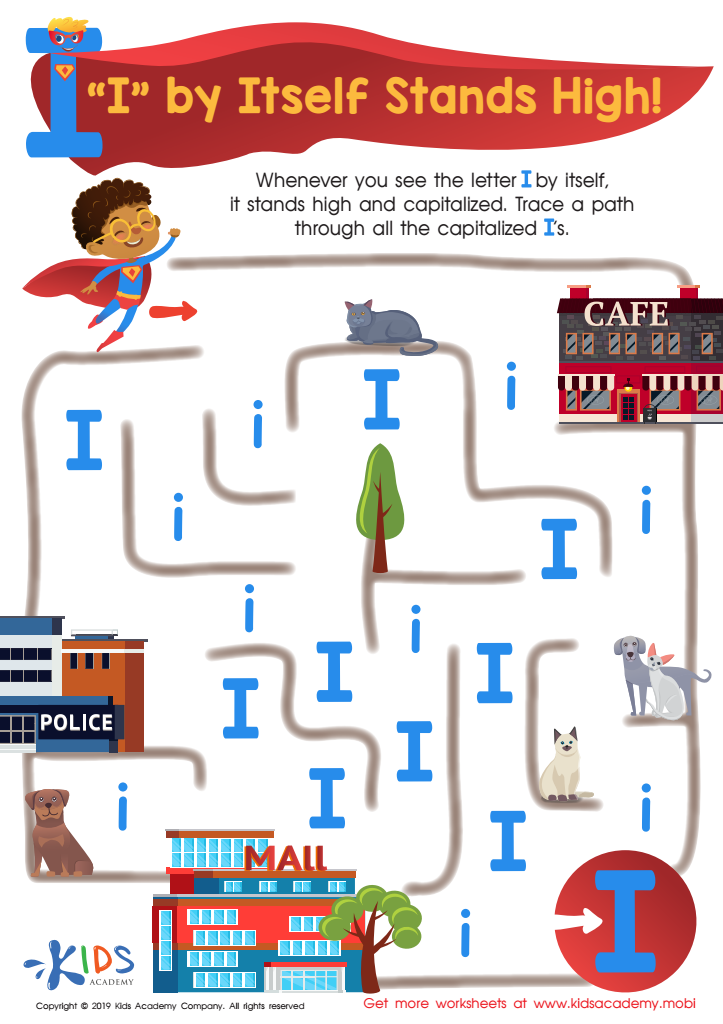
I Stands High Worksheet
 Assign to My Students











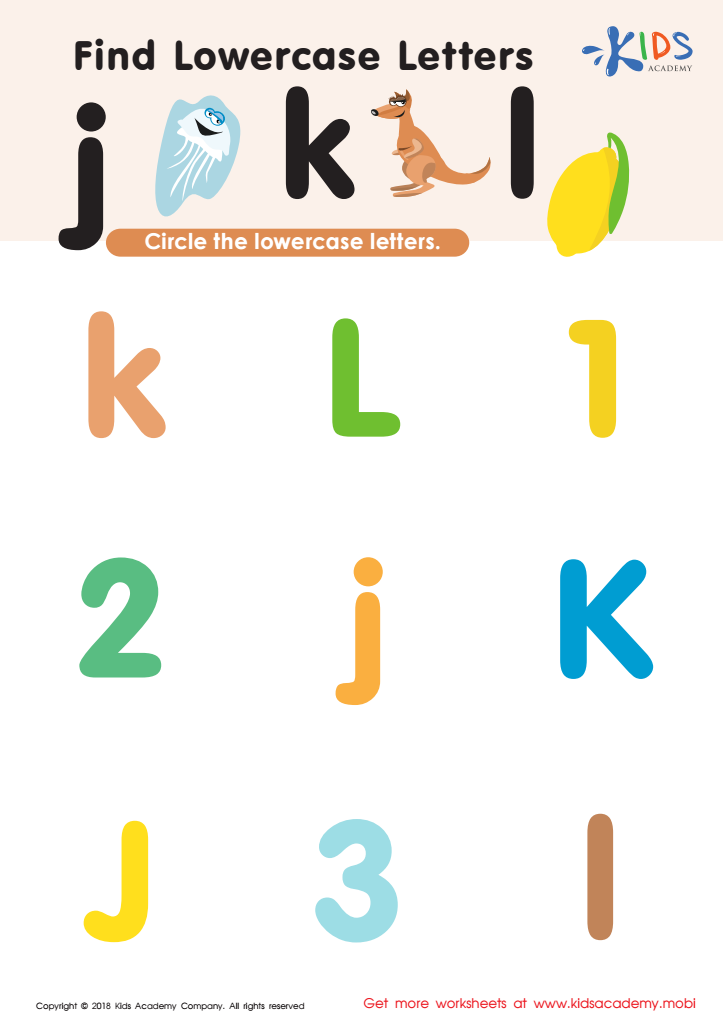
Find Lowercase Letters j k l Worksheet
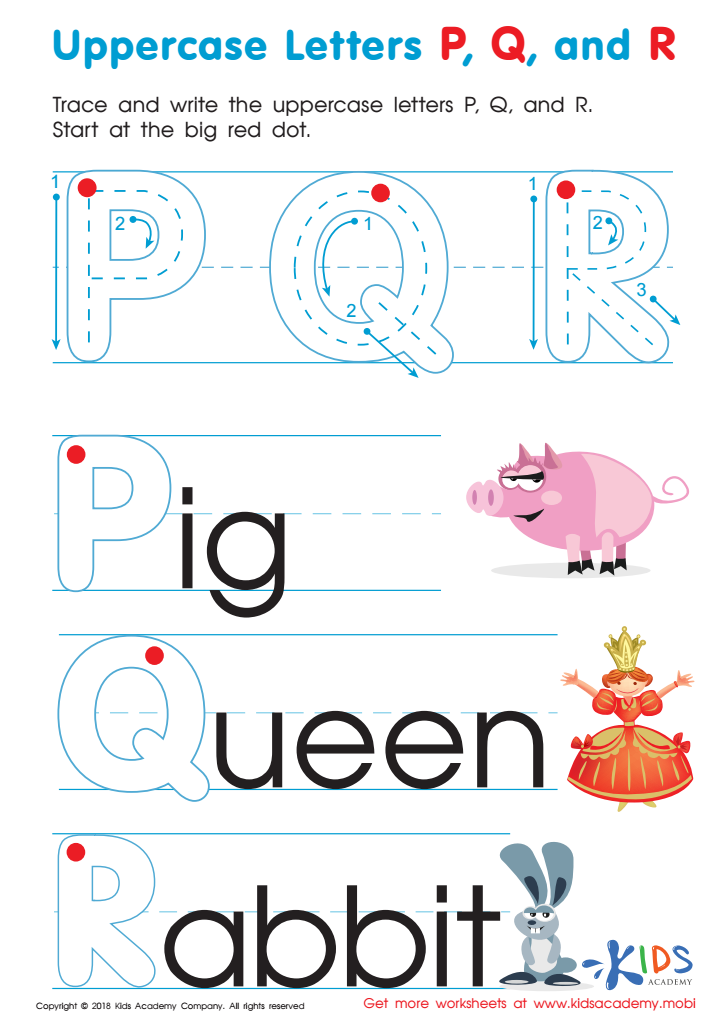
Uppercase Letters P, Q, and R Worksheet






Parent and teacher engagement in developing fine motor skills and recognizing uppercase and lowercase letters in children ages 3-6 is crucial for their academic and overall development. Fine motor skills—the ability to make movements using the small muscles in our hands and wrists—are foundational for many of the life's daily activities, such as buttoning clothes, tying shoelaces, and, importantly, writing. These skills significantly contribute to a child's independence and confidence.
Learning to differentiate and write uppercase and lowercase letters is particularly beneficial during this formative stage. It lays the groundwork for literacy, encouraging children to explore reading and writing more readily. Forms of both printed and cursive letters introduce children to a more varied range of texts, nourishing a deeper understanding and learning enthusiasm.
Developing these skills at an early age also complements cognitive and sensory growth. Engaging in creative and educational activities that promote these abilities—for example, tracing letters, playing with playdough, and using scissors—fuels curiosity and a desire to learn. Failure to address these skills may result in future educational challenges, including academic delays and decreased self-esteem. Therefore, fostering an environment that prioritizes practicing these fine motor tasks and recognizing letters equips children with foundational skills essential for their lifelong learning and development as literate, capable individuals.







