Uppercase identification Upper & Lowercase Letters Worksheets for Ages 3-6
5 filtered results
-
From - To
Our "Uppercase Identification Upper & Lowercase Letters Worksheets for Ages 3-6" are perfect for young learners beginning their alphabet journey! These engaging worksheets focus on recognizing and differentiating between uppercase and lowercase letters, essential for reading and writing readiness. Fun, child-friendly activities help boost letter identification and cognitive skills. Ideal for preschools and kindergartens, these printable sheets promote interactive learning through tracing, matching, and coloring exercises. Tailored for children ages 3-6, these worksheets not only make learning enjoyable but also pave the way for academic success in early literacy. Start your child’s letter mastery today!
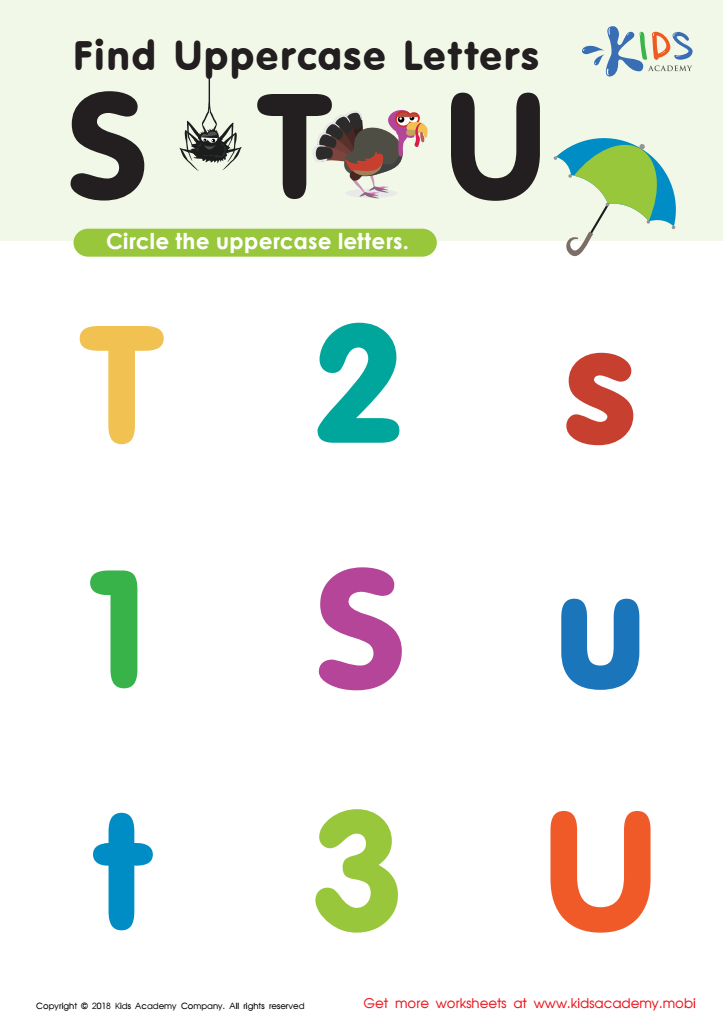
Find Uppercase Letters Worksheet
 Assign to My Students

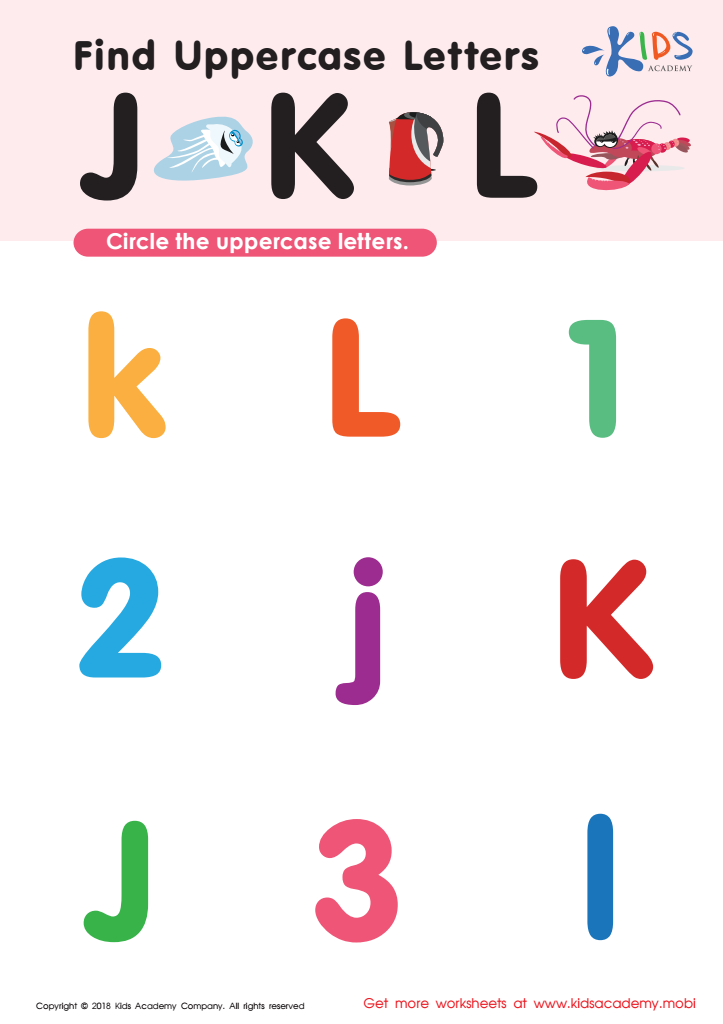
Find Uppercase Letters J, K, and L Worksheet
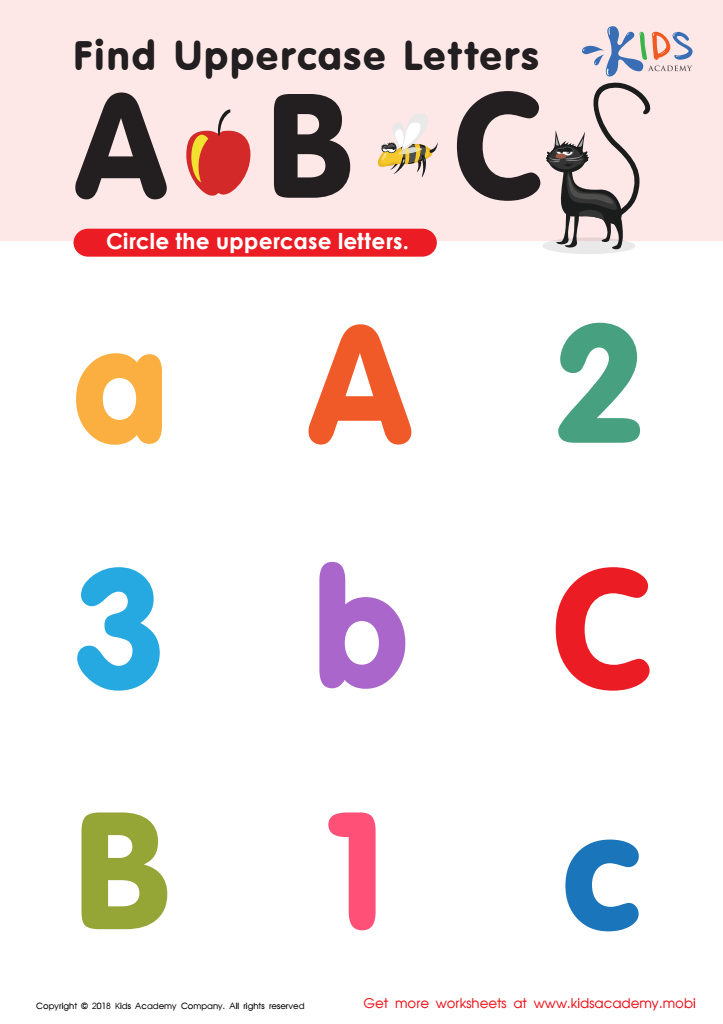
Find Uppercase Letters A, B, and C Worksheet

Find Uppercase Letters V, W, X Worksheet
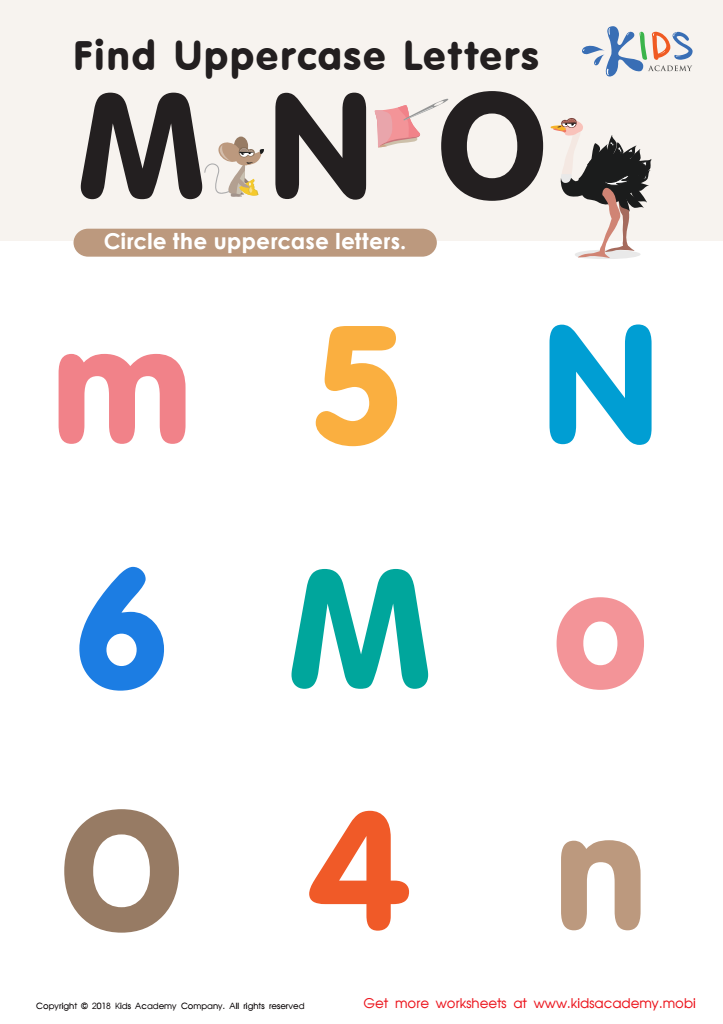
Find Uppercase Letters M, N, and O Worksheet






Understanding uppercase and lowercase letters is a critical milestone in early childhood development, serving as a foundational skill for future literacy. For children aged 3-6, recognition of both uppercase and lowercase letters boosts their ability to read and write effectively, as printed text typically features a combination of both. Mastery in letter identification promotes alphabetic knowledge, essential for phonics instruction, where each letter’s shape correlates with its sound.
Parents and teachers play a pivotal role in this developmental stage. Early familiarity with letter forms supports phonemic awareness, enabling children to blend sounds, form words, and eventually read sentences. Engaging children in activities that differentiate uppercase and lowercase letters enhances cognitive abilities, aiding memory, attention, and pattern recognition.
Furthermore, early competency in this area builds confidence and instills a love for learning. Structured activities such as alphabet games, flashcards, and interactive reading time provide a fun, engaging way to reinforce these skills. This early intervention can prevent future literacy struggles, equipping children with the tools for academic success and fostering a lifelong habit of reading.
Thus, emphasizing uppercase and lowercase letter identification in early childhood sets a strong literacy foundation, essential for the academic and personal growth of children. This prepares them for a smoother transition into formal schooling, where these skills become crucial.







