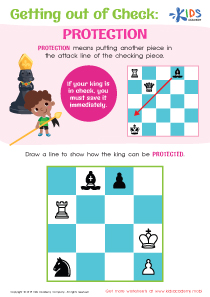
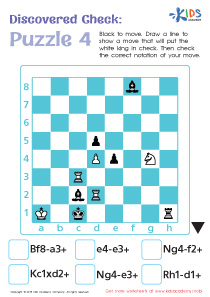
Critical thinking development Chess Worksheets for Ages 3-6
5 filtered results
-
From - To
Unlock your child's potential with our engaging Critical Thinking Development Chess Worksheets designed specifically for ages 3-6. These interactive resources introduce young learners to the fundamentals of chess, enhancing their problem-solving and analytical skills in a playful manner. Each worksheet combines imaginative activities and colorful visuals, fostering creativity while encouraging strategic thinking. By working through our thoughtfully crafted exercises, children will improve their ability to make decisions, conceptualize different scenarios, and work collaboratively. Give your little ones the head start they need in critical thinking while they explore the captivating world of chess in a fun and educational way!
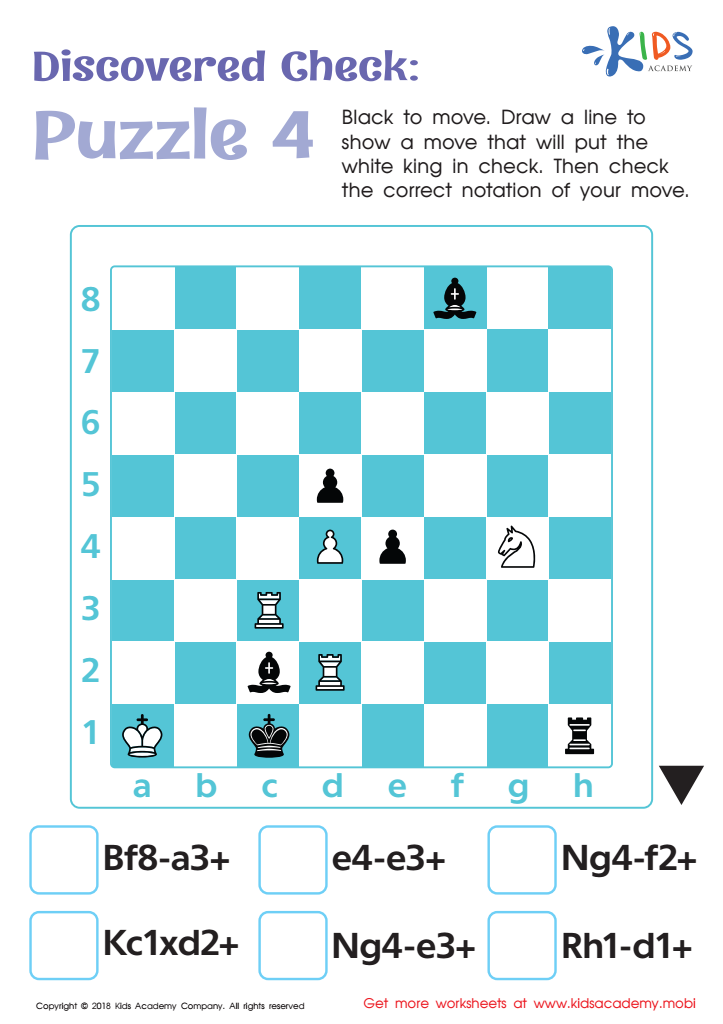
Discovered Check: Puzzle 4 Worksheet
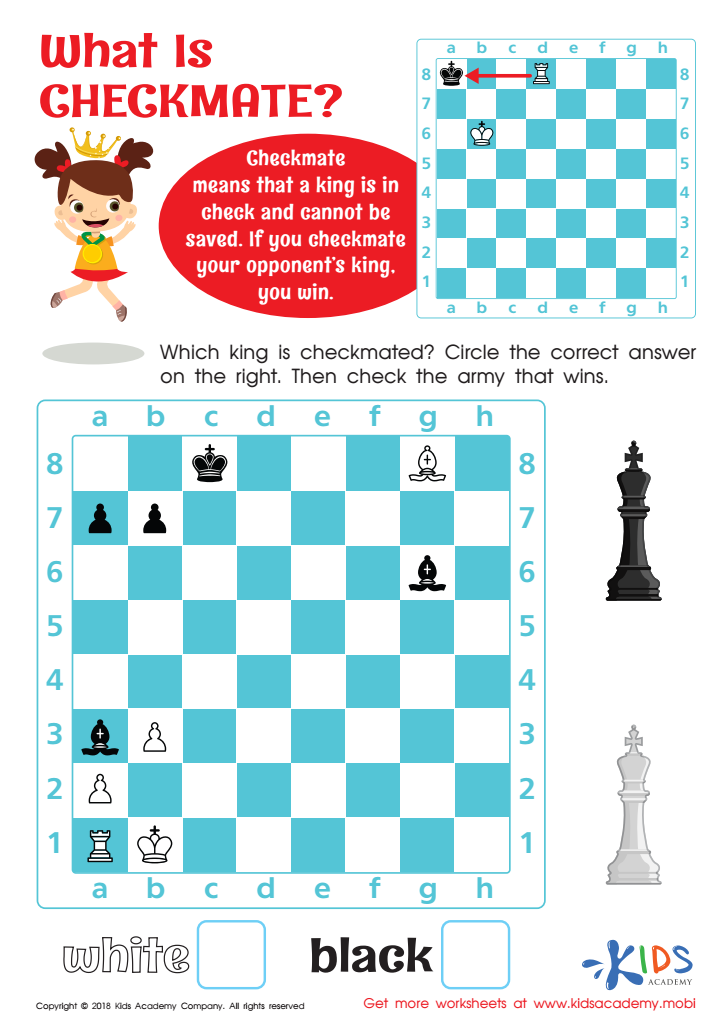
What is Checkmate? Worksheet
 Assign to My Students
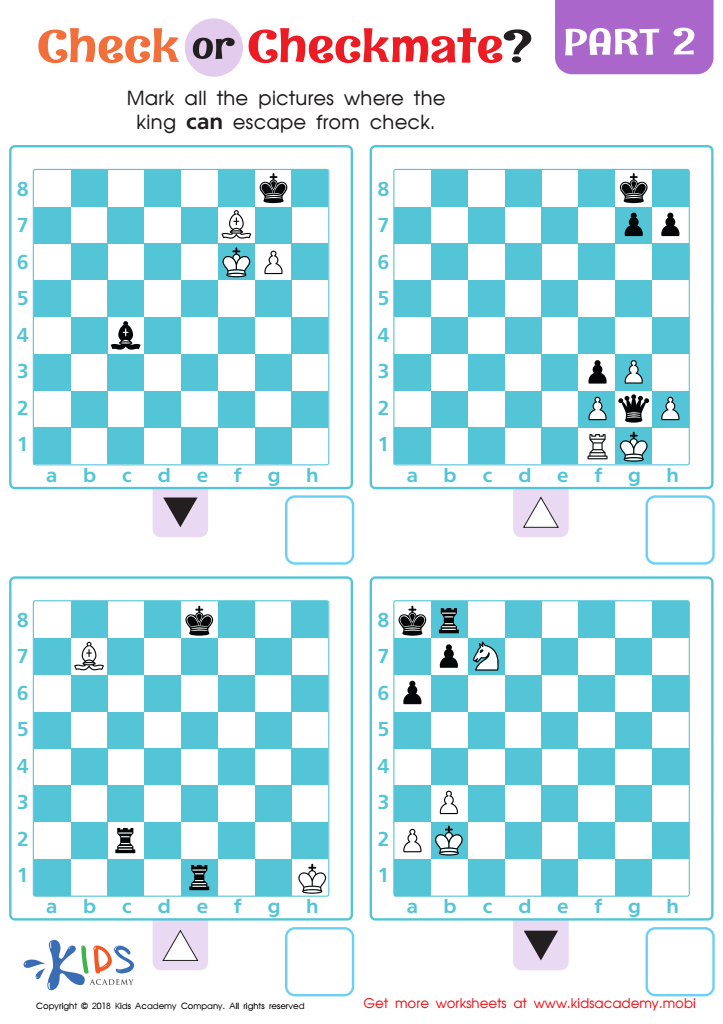
Check or Checkmate: Part 2 Worksheet
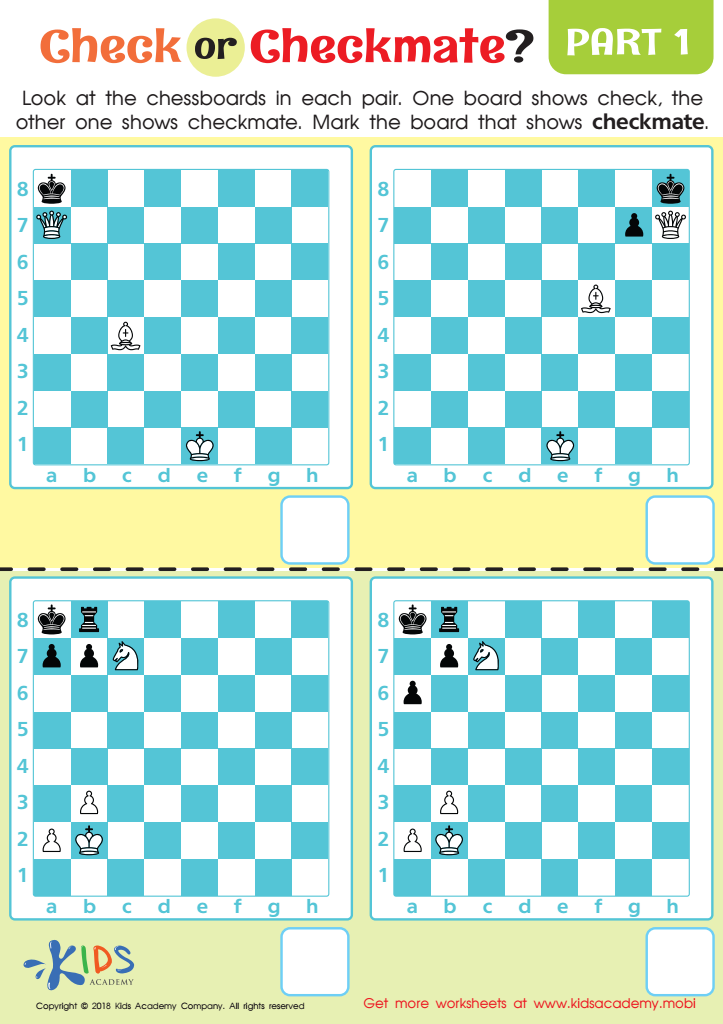
Check or Checkmate: Part 1 Worksheet
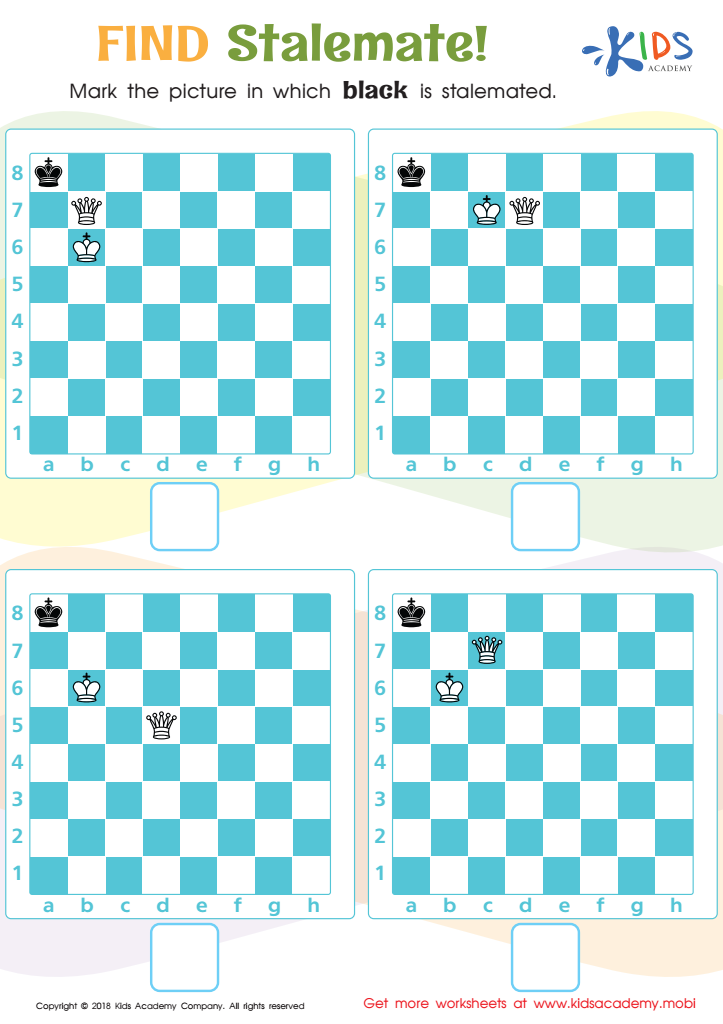
Find Stalemate! Worksheet



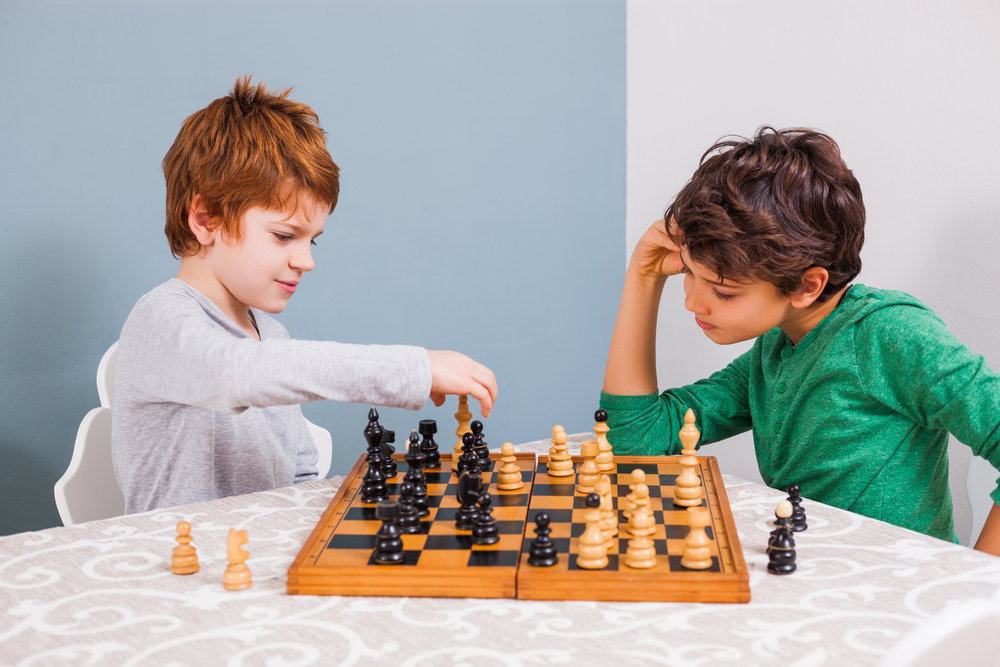


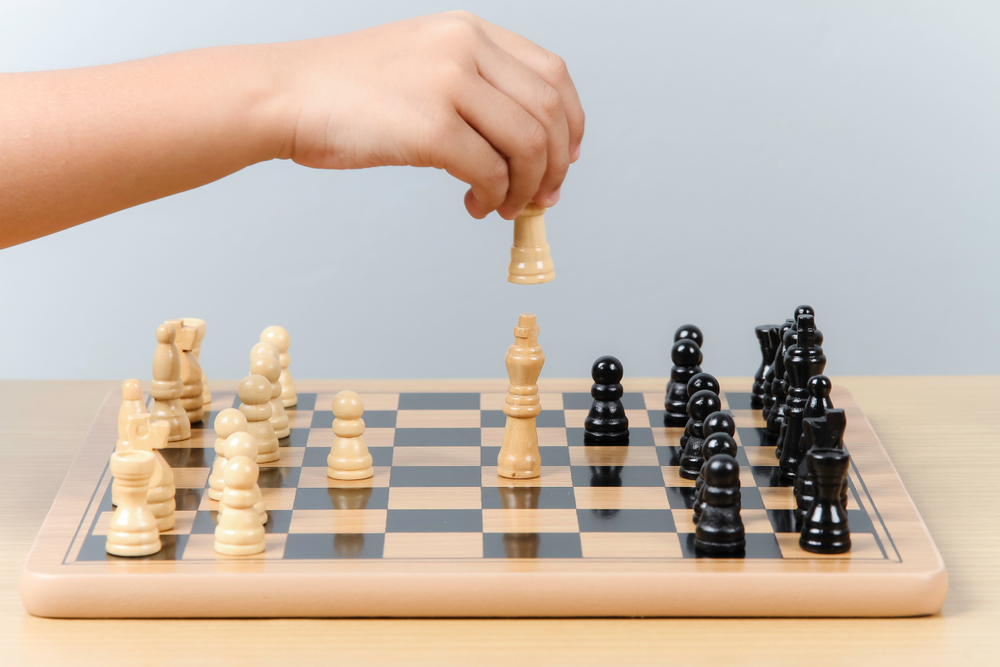

Critical thinking is an essential skill that enables children to analyze, reason, solve problems, and make informed decisions. Introducing chess to children aged 3-6 can significantly foster these skills. The game encourages them to think strategically and anticipate consequences, laying a strong foundation for cognitive development.
Playing chess requires young learners to focus, which improves concentration and patience. This level of engagement also enhances memory and the ability to retain the rules and strategies of the game. As children make decisions on how to move their pieces, they practice evaluating situations, weighing options, and considering different outcomes—all critical components of effective critical thinking.
Moreover, chess promotes social skills through interactions during gameplay. Children learn to communicate, cooperate, and respect rules and opponents, vital for their overall development.
For parents and teachers, integrating chess into early education can be a creative and enjoyable way to nurture critical thinking abilities. It not only prepares children for complex problem-solving in future academic pursuits but also boosts their confidence and resilience as they learn to cope with victories and defeats. Emphasizing chess in learning environments ensures children develop a well-rounded skill set that extends beyond the board.