Logical thinking improvement Chess Worksheets for Ages 3-6
3 filtered results
-
From - To
Enhance your child's logical thinking skills with our engaging Chess Worksheets designed specifically for ages 3-6! These interactive printables encourage young learners to develop critical reasoning, problem-solving, and analytical abilities through the exciting game of chess. Each worksheet combines playful activities and colorful illustrations that captivate attention while promoting cognitive growth. Perfect for parents and educators, our worksheets can be seamlessly incorporated into learning routines, fostering essential skills that lay the groundwork for future academic success. Start your child's journey towards strategic thinking with our fun and educational chess resources today! Unlock the power of logic through play and exploration.
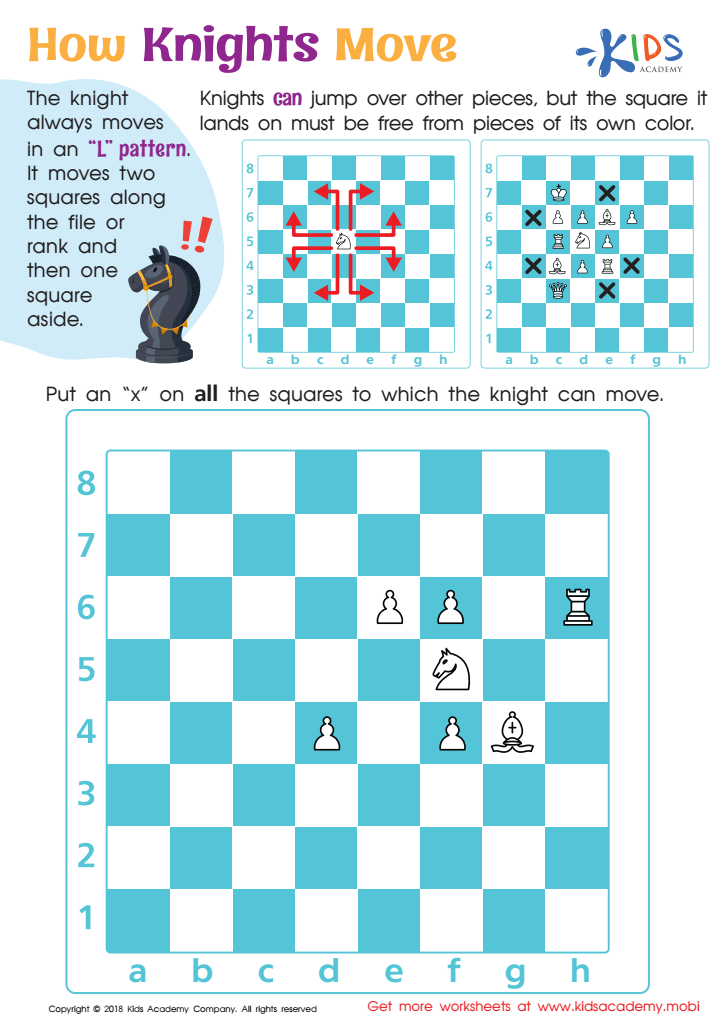
How Knights Move Worksheet
 Assign to My Students
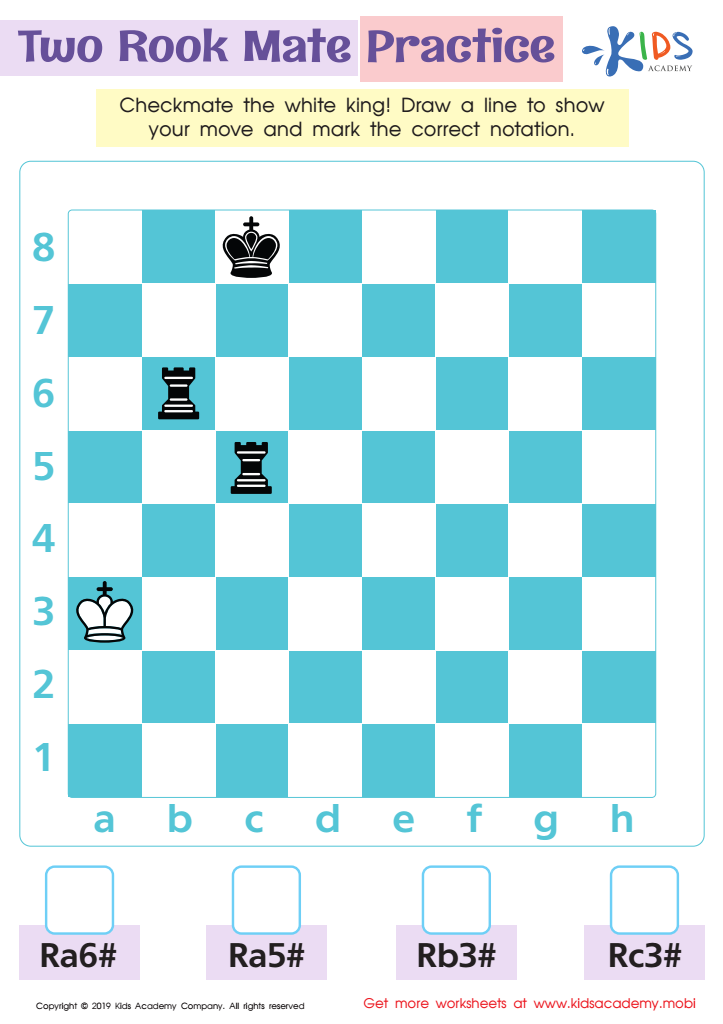
Two Rook Mate Practice Worksheet
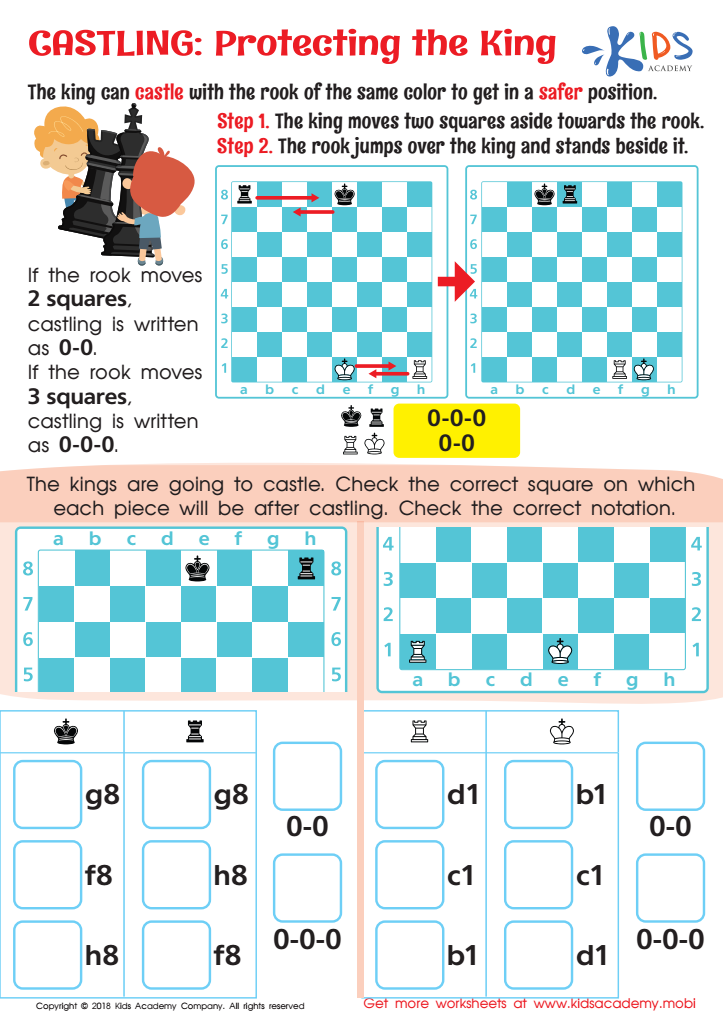
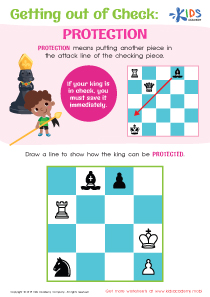
Castling: Protecting the King Worksheet







Chess, often regarded as a game for strategic minds, is incredibly beneficial for children aged 3-6 in enhancing logical thinking skills. At this developmental stage, children are naturally curious and eager to learn, making it an ideal time to introduce them to chess. Engaging with chess helps young learners develop critical cognitive skills such as problem-solving, pattern recognition, and decision-making.
Parents and teachers should care about this improvement because logical thinking lays the foundation for academic success in subjects like math and science. By learning chess, children practice assessing risks and rewards, which fosters a growth mindset as they navigate challenges on the board. Additionally, chess encourages patience and perseverance—qualities essential for children as they face various life's challenges.
Moreover, chess promotes social interaction and emotional intelligence. It provides an opportunity for children to learn about sportsmanship, collaboration, and respect for opponents, which are key components of effective communication.
Involving children in chess at an early age can also enhance concentration and memory. When parents and teachers actively support logical thinking improvement through chess, they equip children with essential life skills that extend beyond the classroom, nurturing well-rounded individuals prepared for future academic and social situations.