Letter tracing skills English for Beginners Worksheets for Ages 3-6
3 filtered results
-
From - To
Help young learners master their letters with our "Letter Tracing Skills" worksheets designed for ages 3-6! These engaging exercises make learning English fun and interactive for beginners. Perfect for developing fine motor skills, each worksheet guides children through tracing uppercase and lowercase letters while reinforcing their phonetic knowledge. Our thoughtfully designed materials are ideal for both classroom settings and at-home learning, ensuring that early learners build confidence in their writing abilities. Parents and educators can easily access a variety of tracing activities that keep children motivated and excited about letters. Start your child's journey to literacy today!
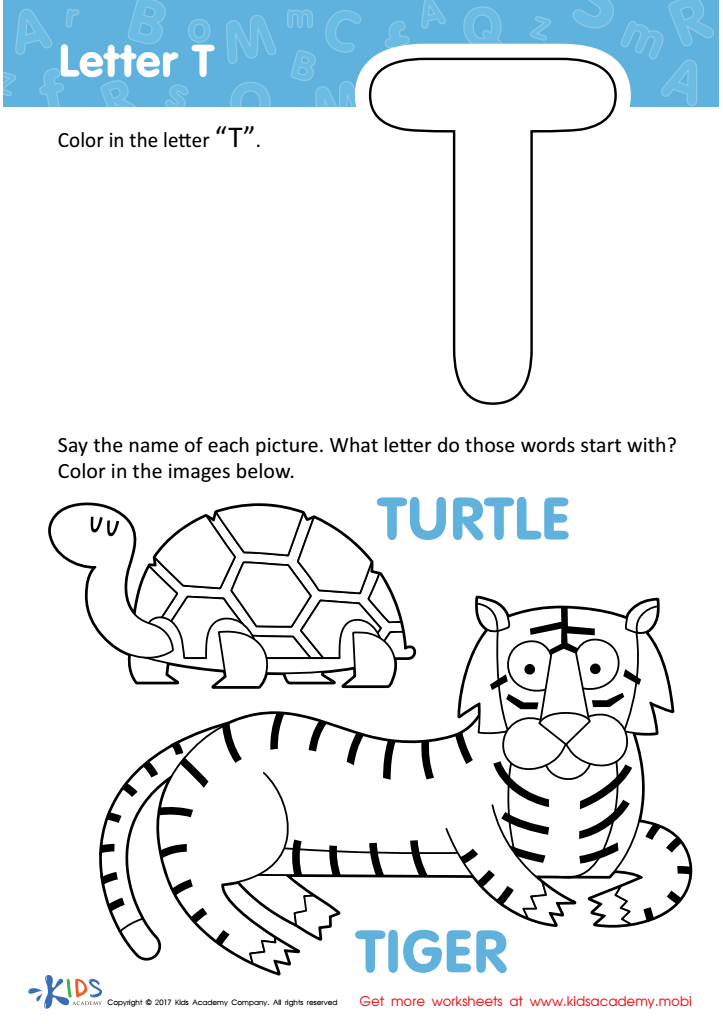
Letter T Coloring Sheet
 Assign to My Students

Letter C Tracing Page
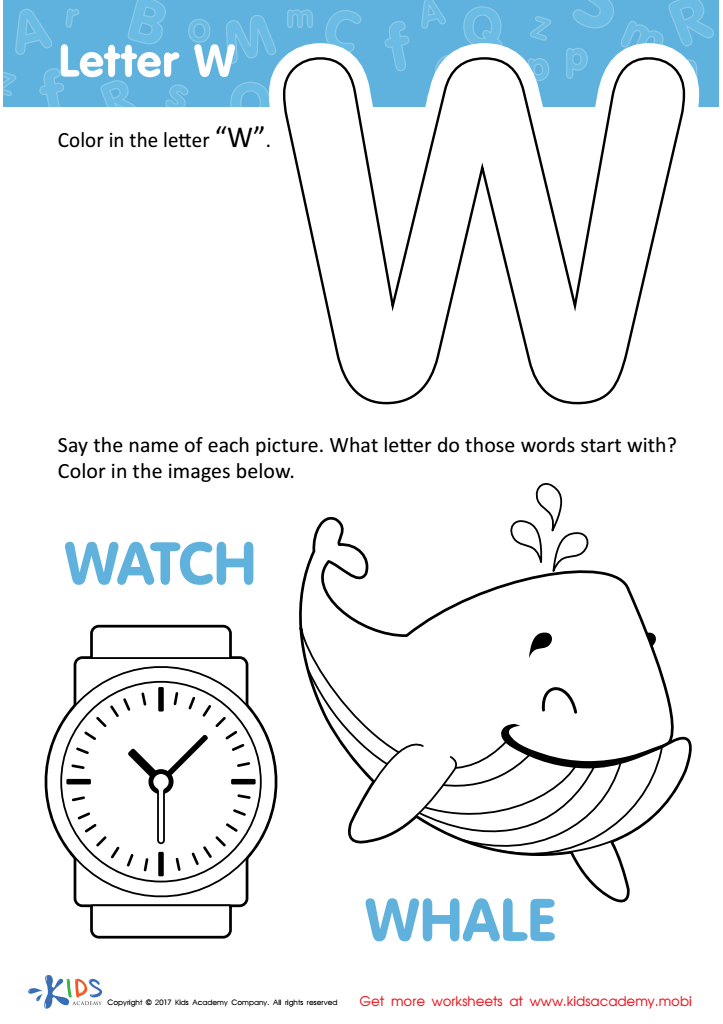
Letter W Coloring Sheet
Assign to My Students





Parents and teachers should prioritize letter tracing skills for children ages 3-6 because this foundational activity significantly impacts early literacy development. Mastering letter recognition and formation sets the groundwork for reading and writing, two essential skills for academic success. Tracing helps children develop fine motor skills, which are crucial for holding writing instruments and maneuvering them accurately.
Additionally, letter tracing encourages cognitive associations between sounds and symbols, aiding phonemic awareness. As children trace letters, they begin to understand how written letters connect to spoken language, fostering the early stages of reading comprehension.
Moreover, engaging in letter tracing can enhance a child’s confidence and motivation in learning. It transforms learning into a fun, hands-on activity that reinforces the alphabet in a visual and tactile way.
Building a strong foundation in literacy during these formative years ensures children are better prepared for future academic challenges. When parents and teachers actively engage in letter tracing, they not only support skill development but also instill a love for learning, creating eager, confident learners ready to explore the world of language.