Addition and subtraction Worksheets for Ages 3-6
4 filtered results
-
From - To
Discover engaging and fun addition and subtraction worksheets designed specifically for children aged 3-6. Our printable resources help young learners develop foundational math skills through interactive exercises that make learning enjoyable. These worksheets include vibrant illustrations and age-appropriate challenges that foster understanding of basic arithmetic concepts. Parents and educators can easily access these materials to support early number recognition and problem-solving skills. With a focus on hands-on learning, our addition and subtraction worksheets encourage kids to practice counting, adding, and subtracting with confidence. Explore our collection and ignite a lifelong love for math in your little learners today!
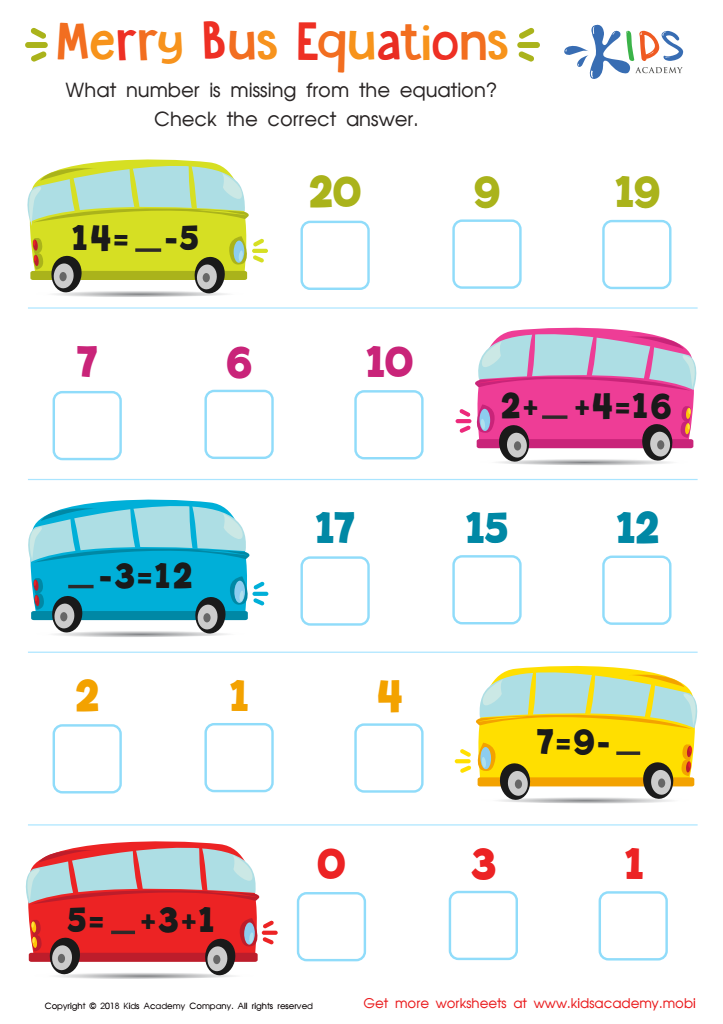
Merry Bus Equations Worksheet
 Assign to My Students
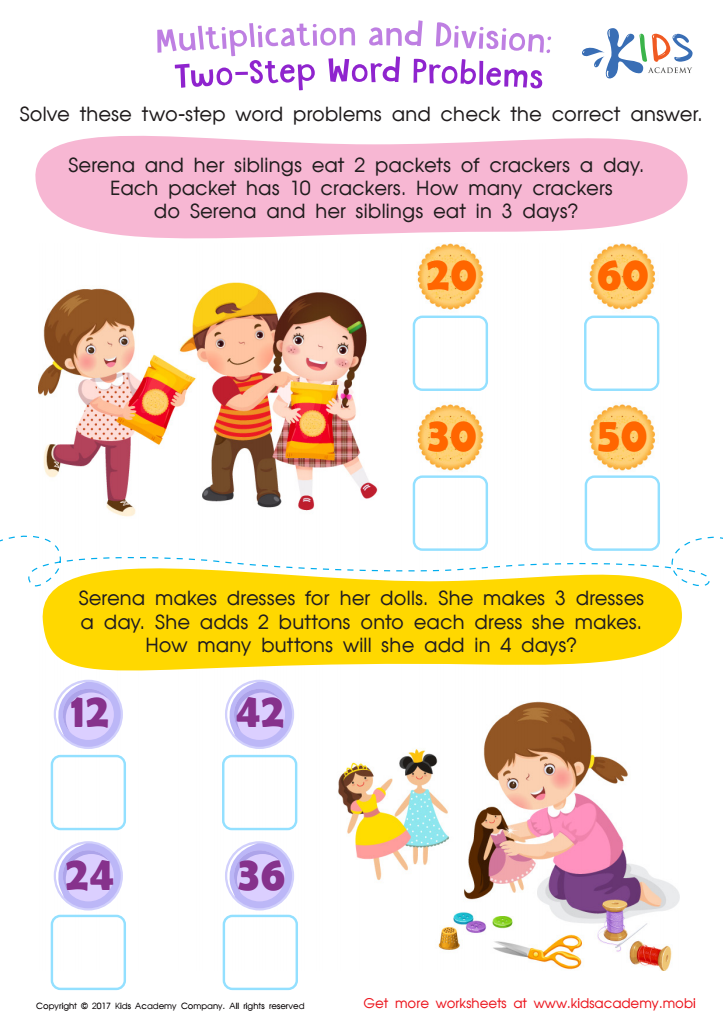
Two Step Word Problems Worksheet
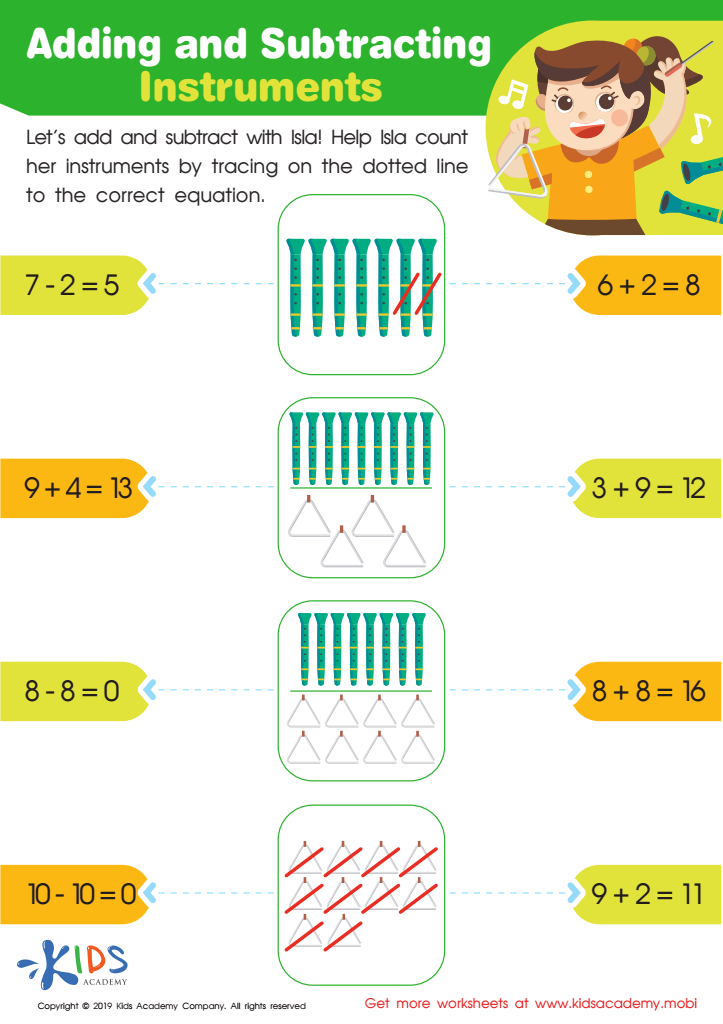
Adding and Subtracting: Instruments Worksheet
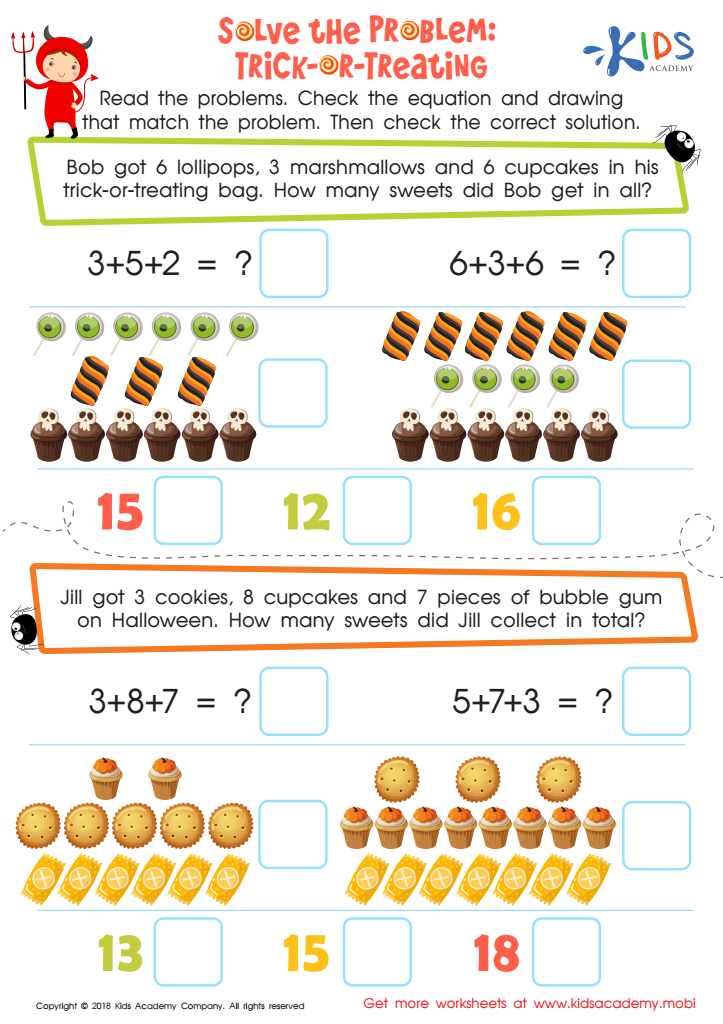
Solve the Problem: Trick–or–treating Worksheet







Addition and subtraction are foundational skills that serve as the building blocks for a child's mathematical understanding and overall cognitive development. For children aged 3-6, engaging in these concepts fosters critical thinking, problem-solving, and logical reasoning. Early exposure to basic math helps young learners develop number sense, providing them with the ability to recognize quantities and understand relationships between numbers.
Moreover, addition and subtraction activities can enhance fine motor skills and promote language development through verbally expressing mathematical concepts. Parents and teachers play a pivotal role in creating a positive learning environment. By integrating these concepts into daily life—such as counting toys, sharing snacks, or playing simple games—they make learning engaging and relatable.
Understanding addition and subtraction also builds self-confidence in children, empowering them to tackle more complex math challenges later in life. In a society increasingly driven by technology and data, having a solid foundation in early math will also open up future academic and career opportunities.
Therefore, it is essential for parents and teachers to actively support and nurture children's abilities in addition and subtraction during these crucial early years, ensuring they are not only prepared for future education but also eager lifelong learners.








