Basic geometry knowledge Worksheets for Ages 3-6
3 filtered results
-
From - To
Discover our engaging Basic Geometry Knowledge Worksheets designed specifically for children aged 3 to 6! These interactive resources help young learners explore fundamental geometric concepts such as shapes, sizes, and spatial understanding in a fun, age-appropriate way. Our worksheets incorporate vibrant visuals and playful activities that capture the imagination while enhancing critical thinking skills. Perfect for parents and educators alike, these materials are ideal for fostering early math proficiency. Encourage your child's confidence and enthusiasm for learning geometry with our easy-to-use printables, all catered to spark curiosity and creativity. Start your child's geometric journey today with our innovative worksheets!
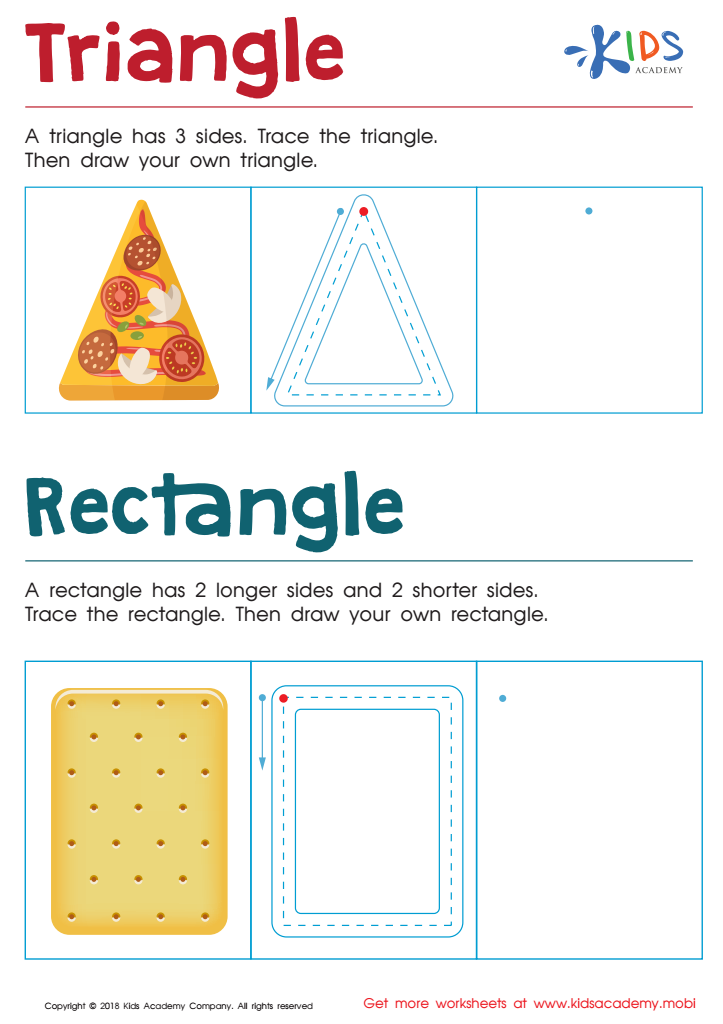
Triangle Rectangle Worksheet
 Assign to My Students
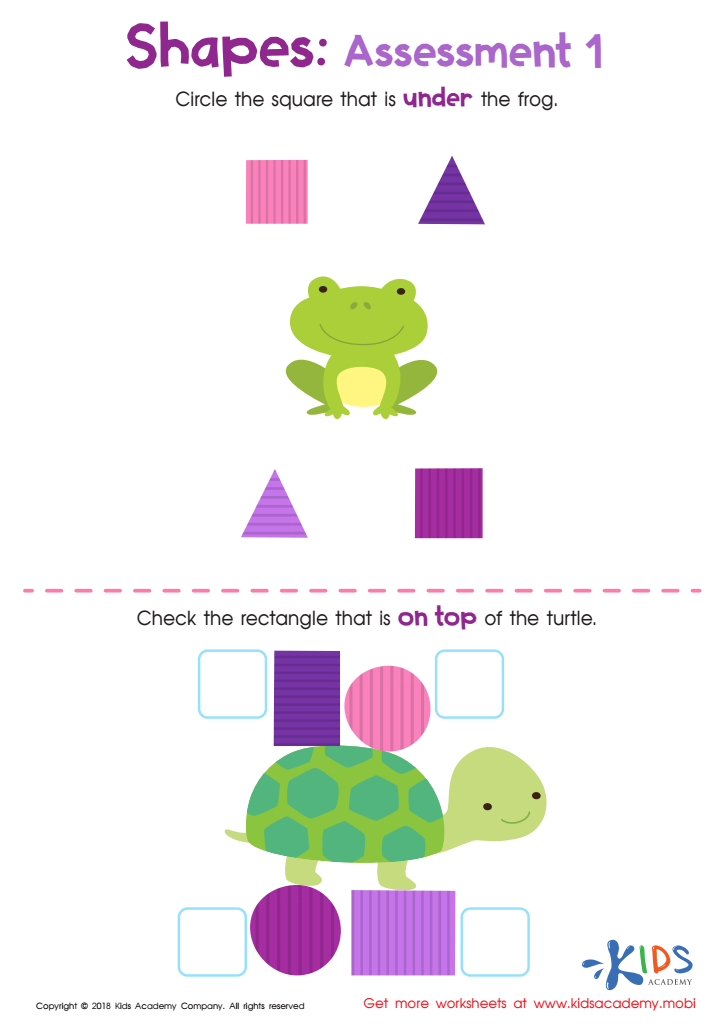
Geometry – Assessment 1 Worksheet
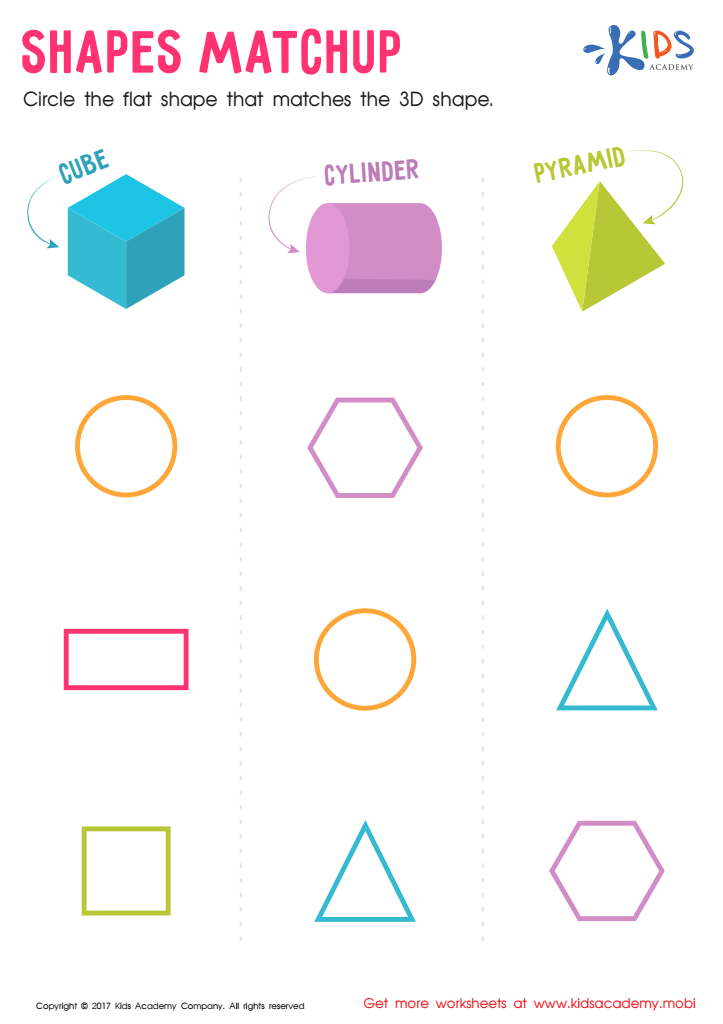
Shapes Matchup Worksheet







Basic geometry knowledge is vital for children aged 3-6 as it lays the foundation for critical thinking and cognitive development. At this early stage, children encounter shapes in their daily lives, making it an ideal time to engage with geometry. Understanding shapes helps enhance their visual-spatial awareness, which is crucial for later learning in mathematics and science.
Moreover, geometry fosters skills such as problem-solving, reasoning, and spatial perception. For instance, when children sort or identify shapes, they learn to categorize and develop logical thinking skills. These are transferable skills applicable in various academic areas.
Additionally, incorporating geometry into play promotes a love for learning. Using blocks, puzzles, or drawings, parents and teachers can create interactive experiences that not only build geometric knowledge but also encourage creativity and expression.
Socially, discussing shapes and patterns can enhance language development and communication skills, as children learn to describe what they see. Ultimately, an early introduction to basic geometry equips children with essential life skills and prepares them for more complex mathematical concepts, ensuring they are well-prepared as they progress in their education. Investing in this foundational knowledge benefits not only the child’s academic journey but ultimately their future success.








