
Basic math abilities Worksheets for Ages 3-6
3 filtered results
Difficulty Level
Grade
Age
-
From - To
Subject
Activity
Standards
Welcome to our Basic Math Abilities Worksheets for Ages 3-6! Designed to lay a strong foundation for early learners, these engaging worksheets cover essential math skills such as counting, number recognition, simple addition and subtraction, and shapes. Each activity is tailored to capture the curiosity of young minds while enhancing their problem-solving abilities. With colorful illustrations and fun exercises, children will enjoy practicing their math skills in a playful manner. These worksheets are perfect for home or classroom use, helping to promote a love for learning in a stress-free environment. Start your child's math journey today!
Favorites
With answer key
Interactive
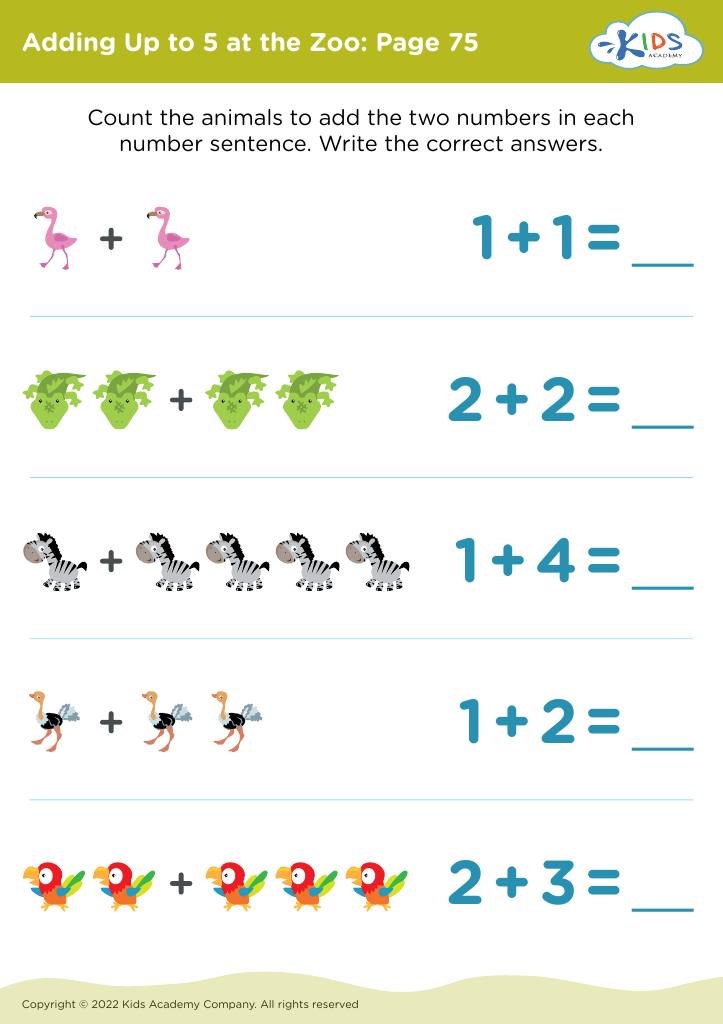
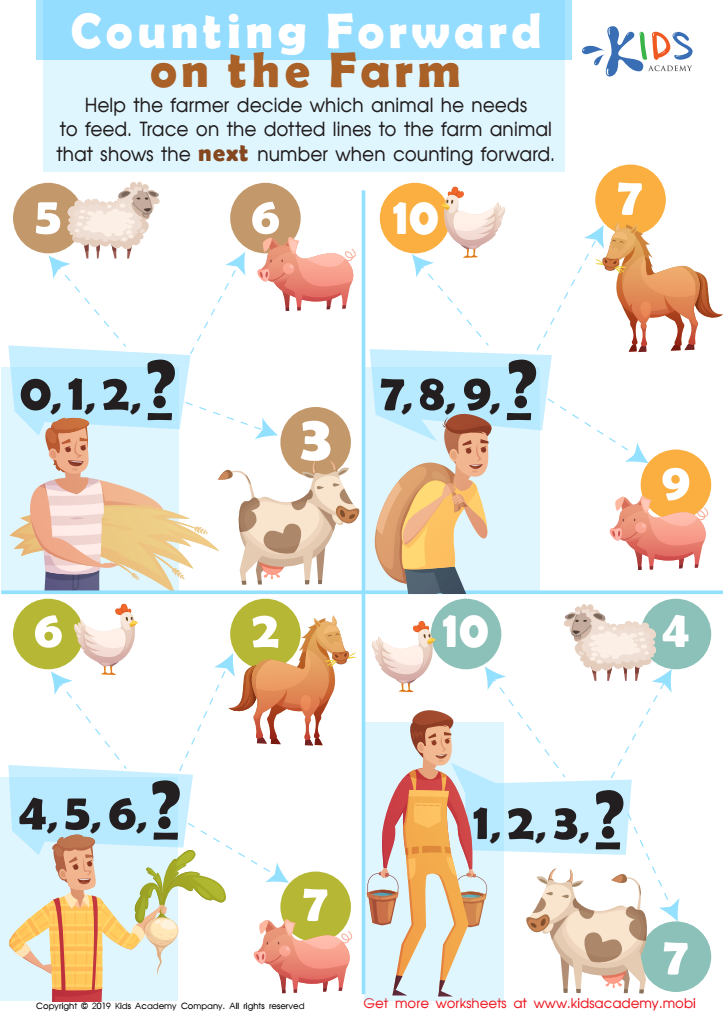
Counting Forward On the Farm Worksheet
Help your child practice counting with this fun worksheet. Have them help a farmer feed the right animal by counting on from a starting point. This activity will help them build number line thinking and refine fine motor skills.
 Assign to My Students
Counting Forward On the Farm Worksheet
Worksheet
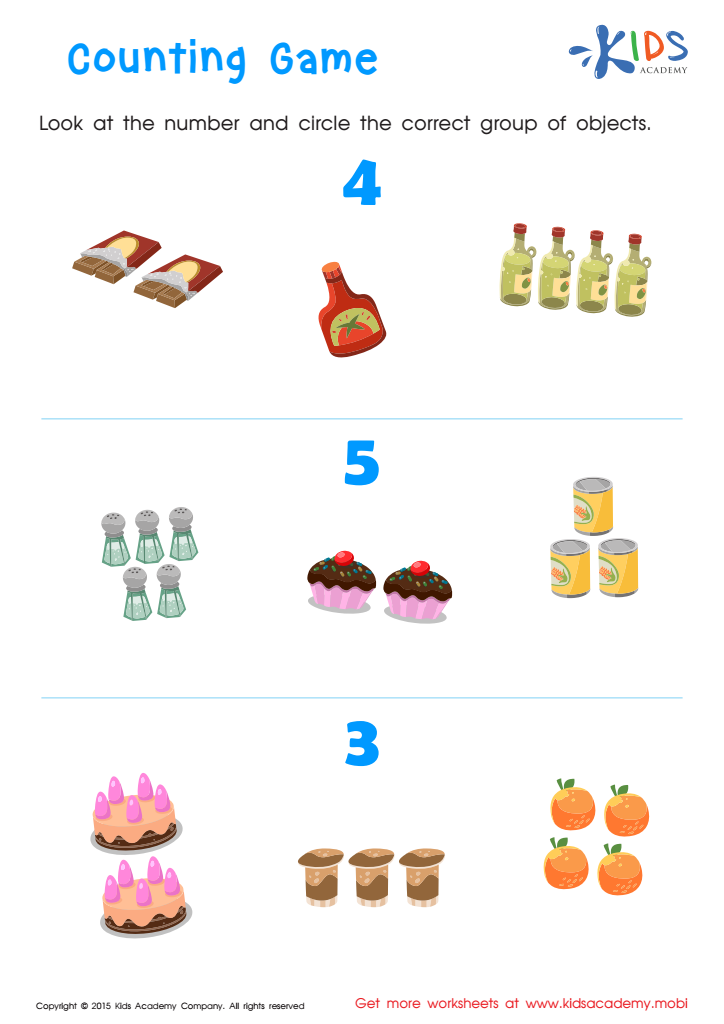
Counting Worksheet
Kids can connect printed numbers to groups of objects on this worksheet, helping them learn math by visually seeing item groups. Give your preschooler a fun, interactive way to learn counting!
Counting Worksheet
Worksheet
Join Kids Academy for Free
Who is primarily going to use this learning content?


.jpg)





Basic math abilities in children aged 3-6 are crucial for their overall cognitive development and future academic success. At this age, children are naturally inclined to explore numbers, shapes, and patterns, making it an ideal time for fostering their mathematical understanding. Research shows that early math skills not only set the foundation for more complex mathematical concepts but also enhance critical thinking, problem-solving, and reasoning abilities.
When parents and teachers engage children in fun, age-appropriate math activities—like counting objects, sorting by size or shape, or recognizing basic patterns—they help cultivate a positive attitude toward learning. This early engagement can combat math anxiety later in life and encourage a lifelong love of learning.
Moreover, strong early math skills correlate with improved performance in school across various subjects. Children who develop these foundational skills are better equipped to tackle subjects like science and economics, as they grow older.
Promoting basic math skills also supports cognitive milestones, enhancing language development and social skills as children communicate and collaborate on math-related tasks. Overall, investing time and resources into nurturing early math abilities ultimately benefits the child’s growth, confidence, and academic journey.








