
Chess knowledge Worksheets for Ages 3-6
5 filtered results
Difficulty Level
Grade
Age
-
From - To
Subject
Activity
Standards
Introduce your little ones to the captivating world of chess with our engaging worksheets, designed specifically for ages 3-6. Our “Chess Knowledge Worksheets” seamlessly blend fun and learning, helping young minds grasp the fundamentals of this classic game. Each colorful and interactive worksheet is crafted to develop strategic thinking, pattern recognition, and problem-solving skills, while making the learning experience enjoyable. Play and learn together, enhancing your child's cognitive abilities and setting the foundation for future chess proficiency. Visit Kids Academy and discover the perfect chess worksheets to ignite passion and curiosity in your budding chess champions!
Favorites
With answer key
Interactive
Rook Quest Worksheet
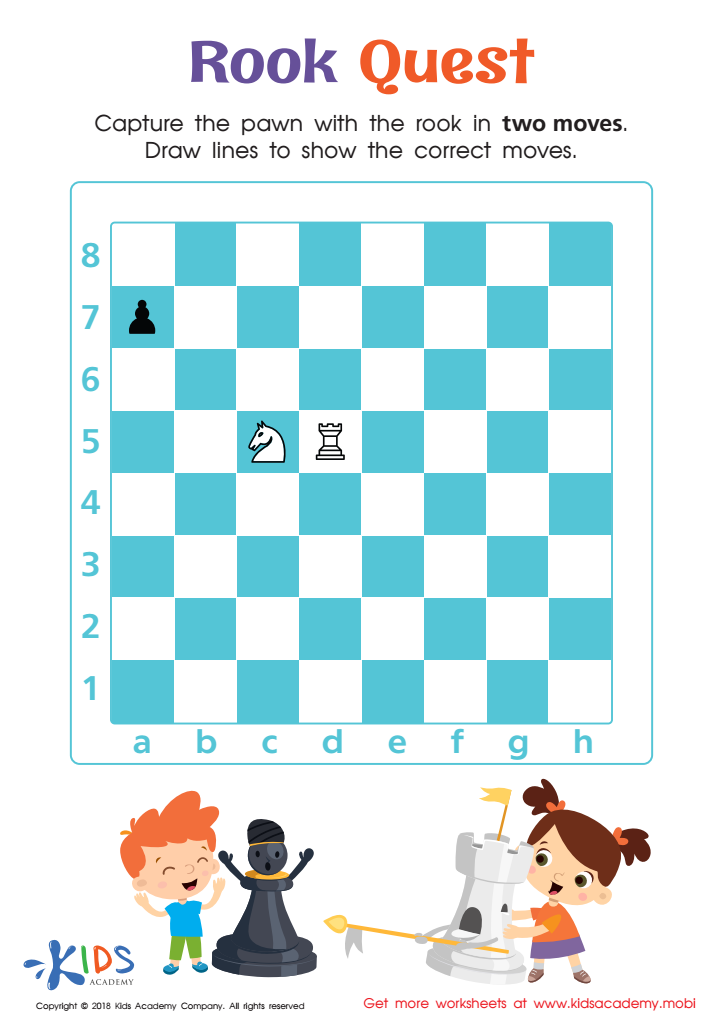
Is your child a chess whiz? Check their progress with this rook quest: get the enemy's pawn piece in just two moves. Have them draw the lines for the moves they'll make. See how quickly they master it!
 Assign to My Students
Rook Quest Worksheet
Worksheet
Bishop Quest Worksheet
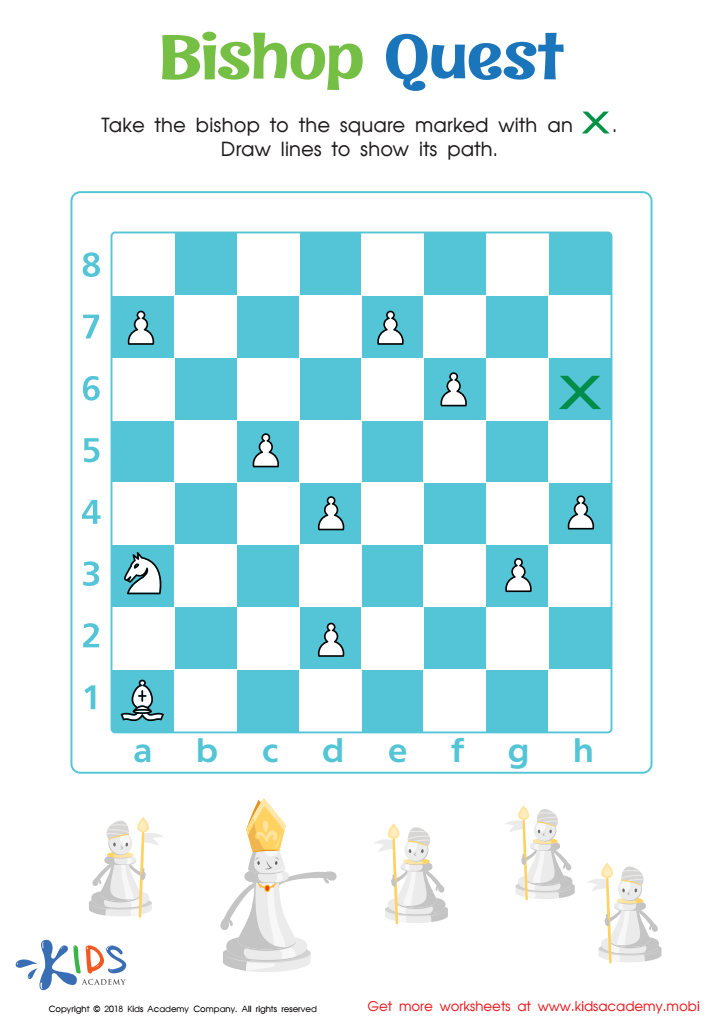
Show kids the board and ask them to identify the bishop. Then ask them to move it to the square marked 'x', drawing lines to show its path. This worksheet helps teach kids how to move the bishop on a chessboard.
Bishop Quest Worksheet
Worksheet
Chess Facts Bingo Worksheet
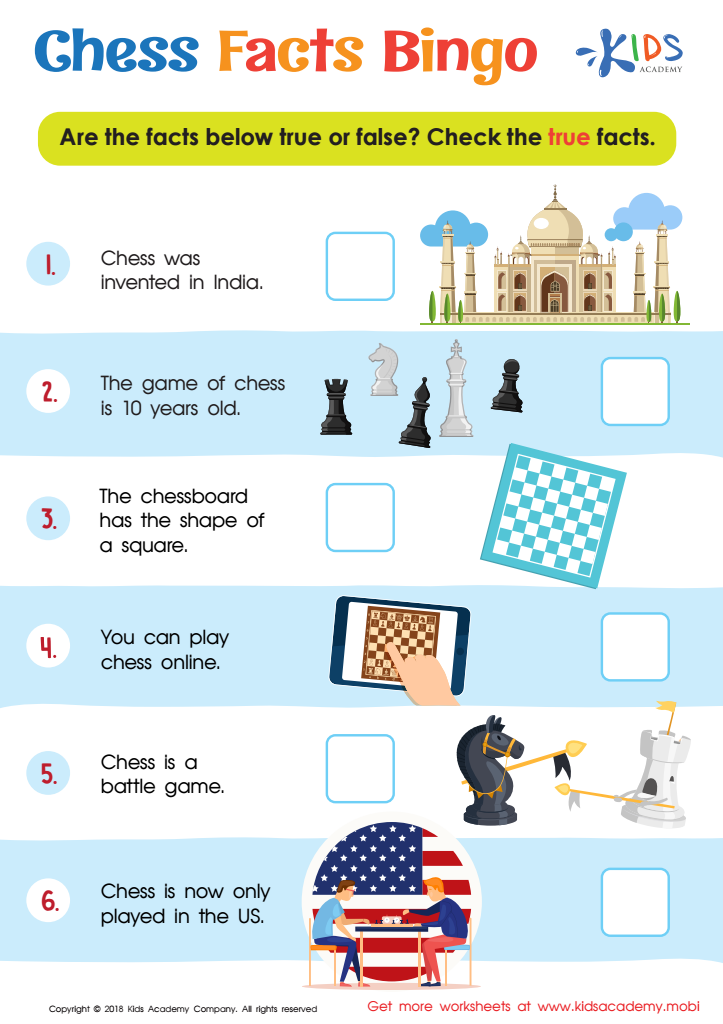
Help your child assess their knowledge of chess with our simple worksheet. It contains six questions; read them to your child and ask them if the statements are true or false. Once they check the boxes for the true statements, you'll have a better understanding of their understanding of the game.
Chess Facts Bingo Worksheet
Worksheet
Join Kids Academy for Free
Who is primarily going to use this learning content?






.jpg)
Introducing chess to children aged 3-6 can offer significant developmental benefits, making it a valuable addition to early education. At this formative stage, children's brains are extremely receptive to new information and complex problem-solving tasks, traits which chess uniquely strengthens. Here are a few key reasons to care about early chess knowledge:
-
Cognitive Development: Learning chess has been proven to enhance memory, attention span, and general cognitive abilities. It encourages children to plan ahead, recognize patterns, and think critically, laying the foundation for strong analytical and decision-making skills.
-
Mathematical Skills: Chess requires strategic thinking and understanding of geometric patterns which resemble the foundational principles of mathematics. Early engagement with chess can improve both number sense and spatial reasoning.
-
Social & Emotional Growth: Playing chess instills patience, concentration, and the value of practice. It also teaches children to cope with winning and losing gracefully. Engaging in friendly competition with peers fosters social interaction and builds emotional resilience.
-
Creativity and Imagination: Chess stimulates children's creativity as they explore various strategies and anticipate opponents’ moves.
By incorporating chess into the lives of young children, parents and teachers can profound impact early childhood development, providing foundational skills that support intellectual and personal growth.








