Comparative analysis Worksheets for Ages 3-6
5 filtered results
-
From - To
Welcome to our Comprehensive Comparative Analysis Worksheets for Ages 3-6! Designed to enhance young learners' cognitive skills, these engaging worksheets introduce children to the concepts of comparison and contrast through colorful visuals and interactive activities. Perfect for preschool and early grade learners, they focus on key skills such as identifying similarities and differences, sorting objects, and understanding attributes. Our materials foster critical thinking and problem-solving while making learning fun and approachable. With adaptable difficulty levels, educators and parents can cater the activities to individual needs. Explore our collection and empower your child’s learning journey today!
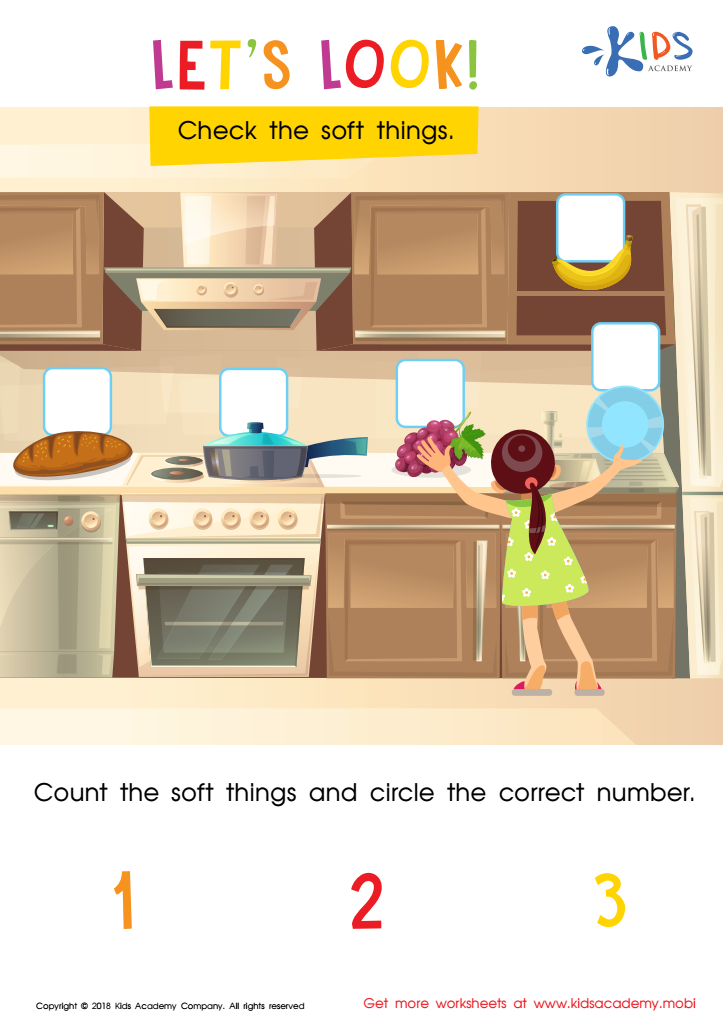
Let's Look! Assessment Worksheet
 Assign to My Students
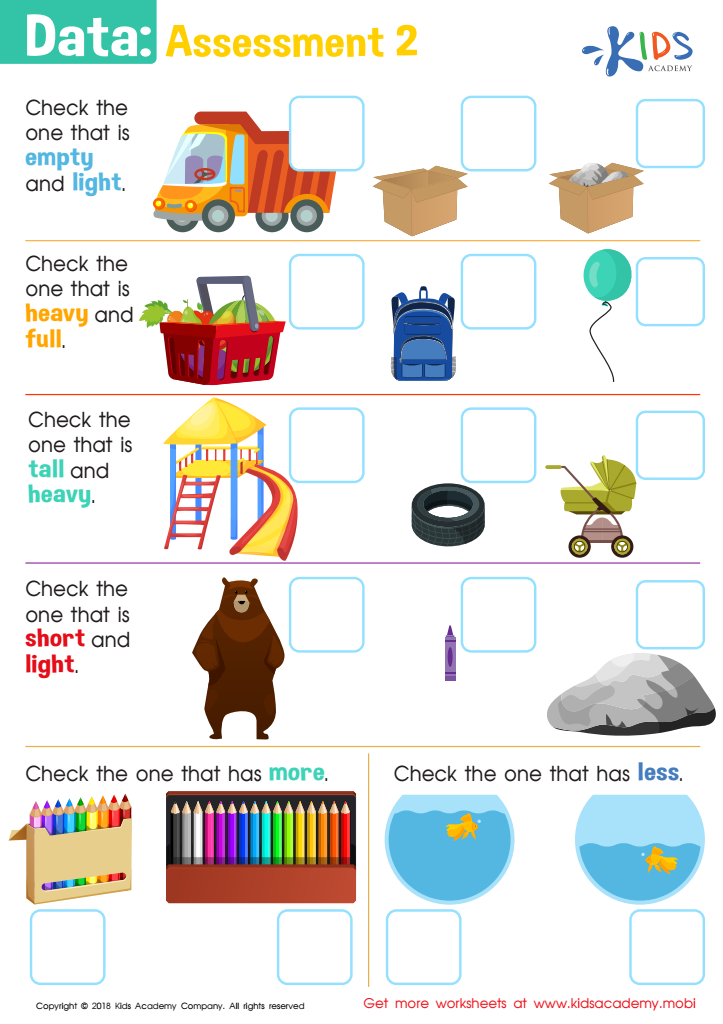
Data: Assessment 2 Worksheet
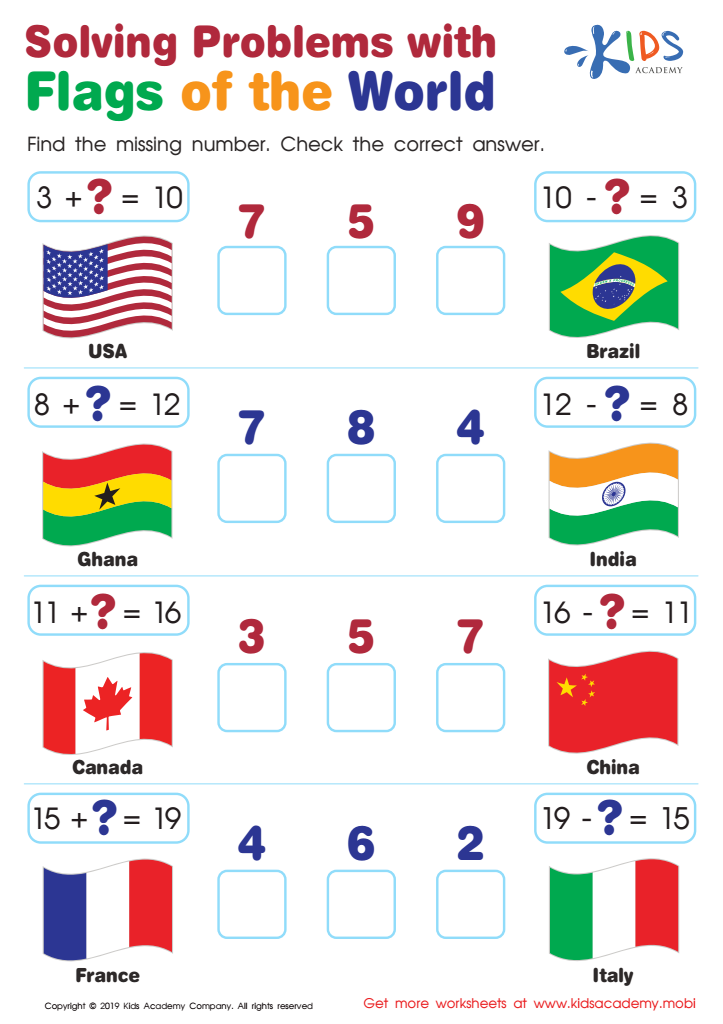
Solving Problems with Flags of the World Worksheet








Comparative analysis for children ages 3-6 is crucial for understanding developmental milestones and learning trajectories. Parents and teachers should care about this analytical approach as it provides valuable insights into how children are progressing relative to their peers. By examining various aspects of development—such as cognitive, social, emotional, and physical skills—educators and caregivers can identify trends and pinpoint areas where a child might need additional support or enrichment.
This process can inform instructional strategies, enabling teachers to tailor their teaching methods to meet diverse learning needs in the classroom. For parents, understanding comparative analysis helps to advocate for their children's needs, allowing them to engage in meaningful conversations with educators about appropriate activities and resources that foster development.
Moreover, early interventions based on comparative insights can significantly impact long-term outcomes, helping to ensure that no child is left behind. In today’s diverse educational landscape, recognizing variability in developmental stages among children in the same age group empowers parents and teachers to create inclusive environments that celebrate individual growth. Ultimately, engaging with comparative analysis enables a more nuanced approach to early childhood education that prioritizes holistic development and fosters each child's potential.








