Comparing heights Worksheets for Ages 3-6
3 filtered results
-
From - To
Unlock a world of fun and learning with our "Comparing Heights Worksheets" for ages 3-6! Our engaging and interactive worksheets are designed to help young learners grasp the concept of height differences while developing essential math skills. Through colorful visuals and simple activities, children will compare the heights of various objects and characters, fostering critical thinking and problem-solving abilities. Perfect for home or classroom use, these worksheets encourage hands-on learning and make education enjoyable. Download and print our resources today to inspire a love for learning in early childhood. Explore the joy of learning heights with your little ones!
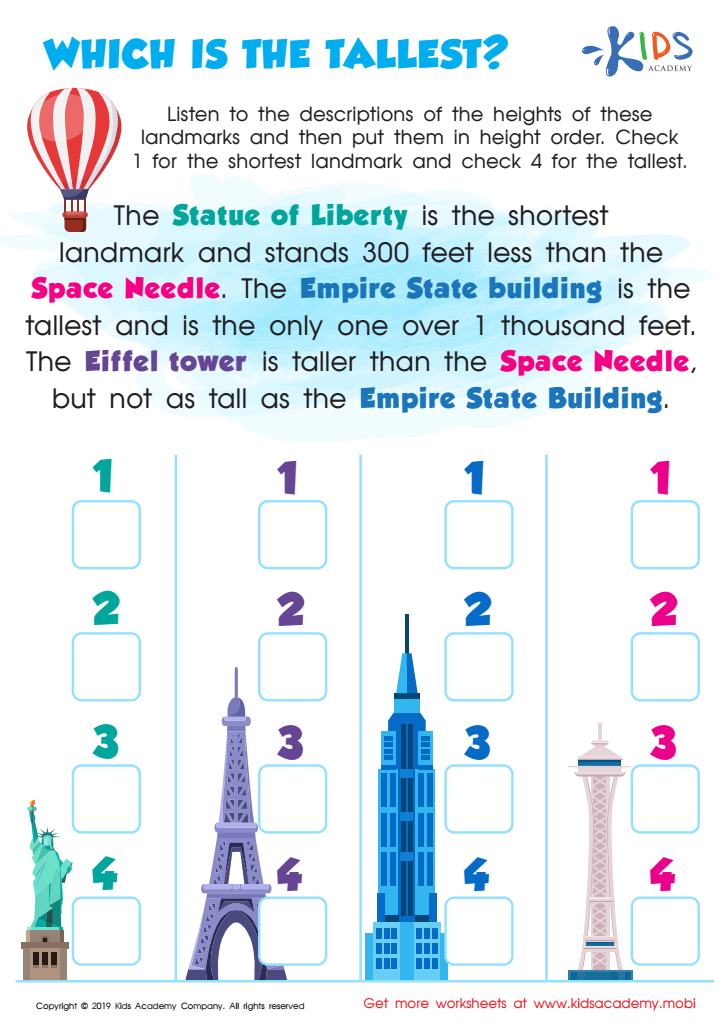
Which is the Tallest? Worksheet
 Assign to My Students
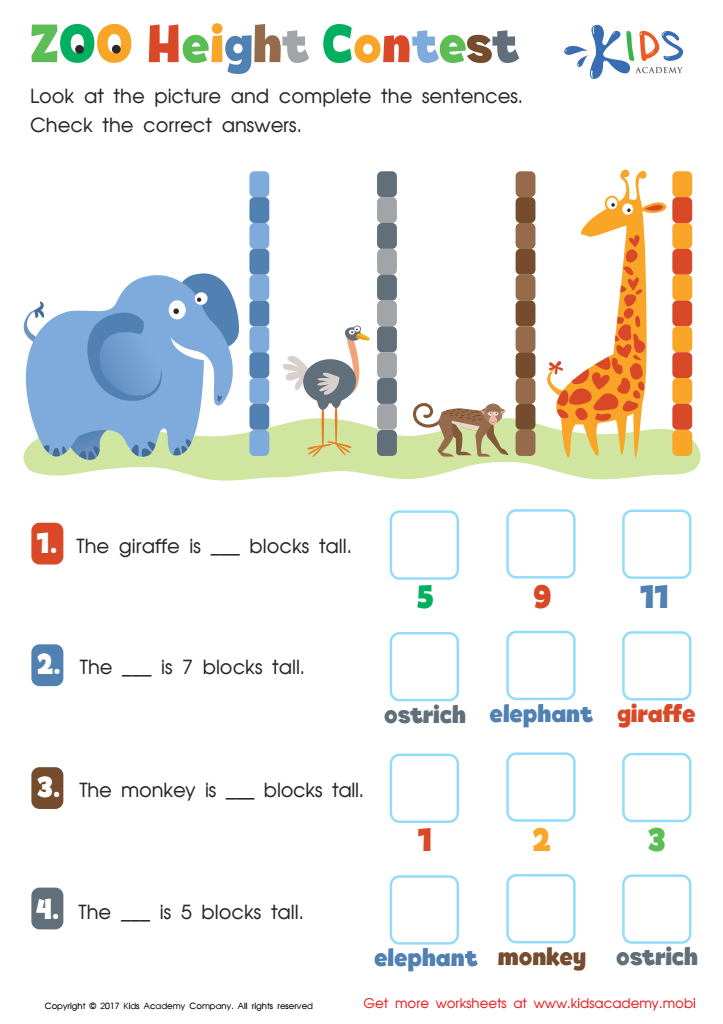
Zoo Height Contest Worksheet
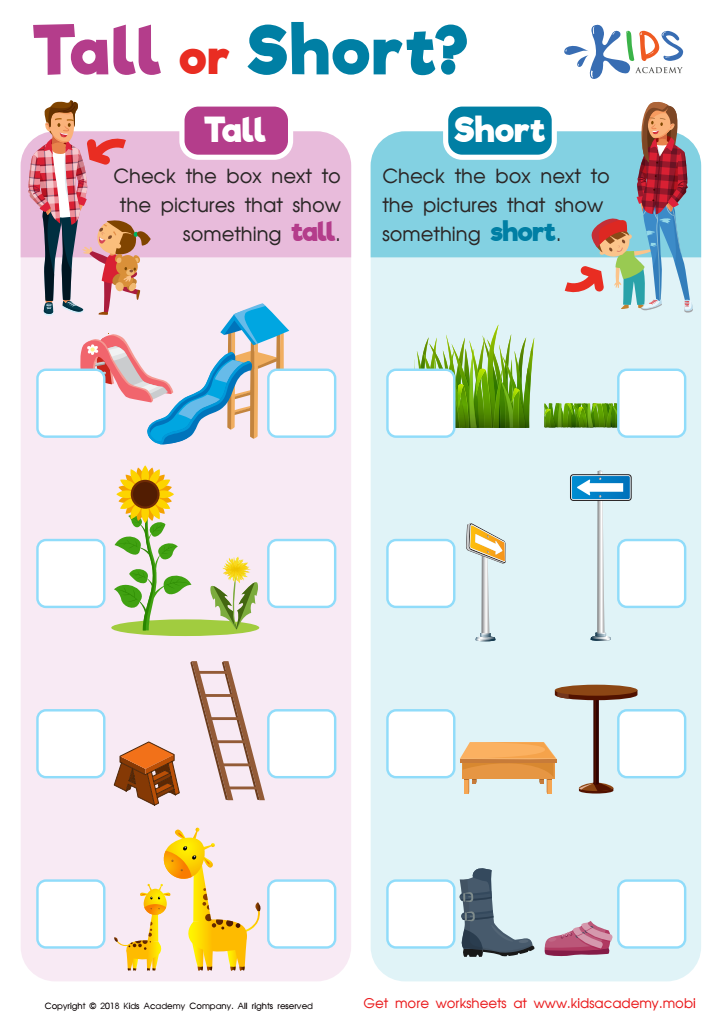
Tall or Short? Worksheet






.jpg)
Comparing heights in children aged 3-6 is significant for several reasons that parents and teachers should sincerely consider. Firstly, understanding growth patterns helps monitor a child's physical development. During early childhood, children experience rapid growth, and health professionals can use height comparisons to identify potential growth delays or abnormalities that may require further evaluation.
Moreover, height serves as more than just a physical measurement; it also impacts children's self-image and social interactions. In a group setting, differences in height can lead to feelings of self-consciousness or exclusion. Teachers, by promoting a positive and inclusive environment, can help children appreciate diversity in physical attributes while fostering self-esteem.
Additionally, height comparisons can facilitate learning opportunities. Activities and discussions focused on measuring and comparing heights can enhance early math skills, such as understanding greater than/less than concepts and developing measurement skills.
Finally, parents and teachers can use these opportunities to establish healthy habits early on. Conversations around nutrition and physical activity can reinforce the importance of healthy growth. Ultimately, taking an interest in height facilitates holistic development, encouraging not only physical health but also emotional and social well-being among young children.








