Cultural Understanding Worksheets for Ages 3-6
3 filtered results
-
From - To
Foster cultural awareness in young learners with our engaging Cultural Understanding Worksheets for ages 3-6! These thoughtfully designed resources introduce children to diverse traditions, customs, and practices from around the world. By exploring various cultural elements through vibrant illustrations and age-appropriate activities, kids develop respect and appreciation for differences while enhancing their social skills. Ideal for both home and classroom settings, our worksheets encourage early learning and discussions about diversity, inclusion, and empathy. Start your child’s journey towards global awareness today and lay the foundation for a future of open-mindedness and cultural appreciation! Explore our collection now!
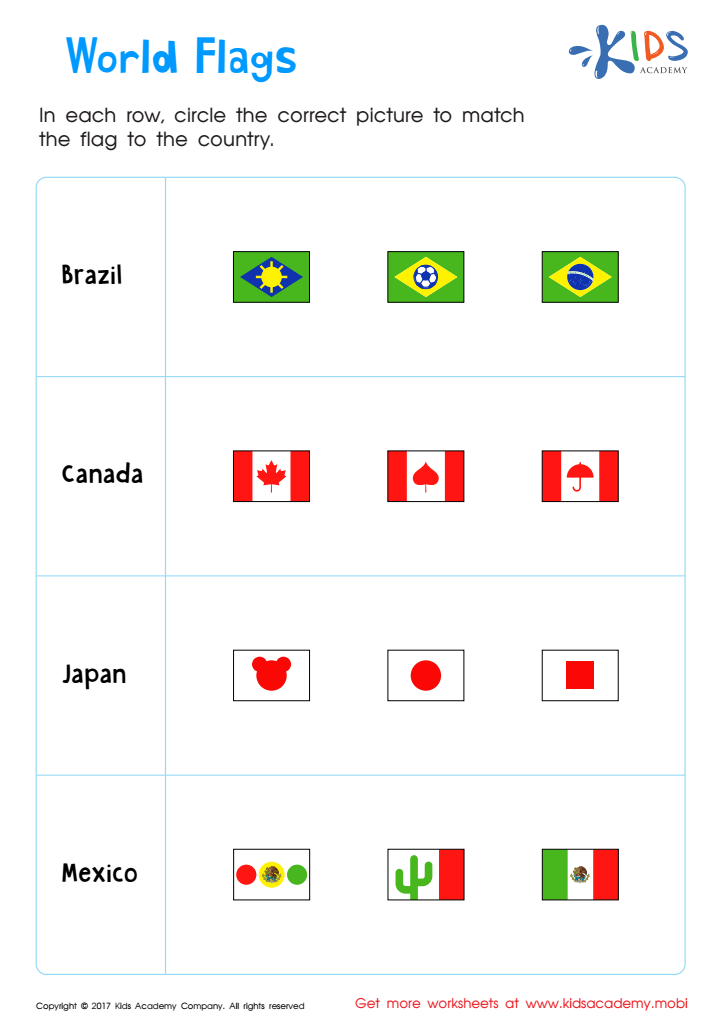
World Flags Printable
 Assign to My Students
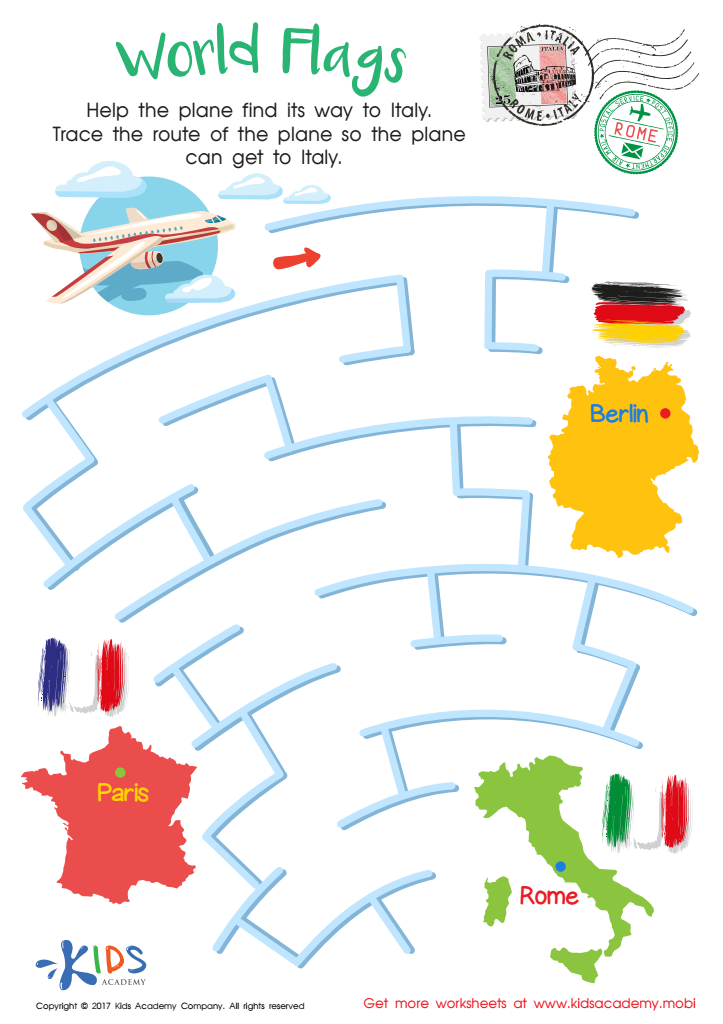
World Flags Maze Worksheet






Cultural understanding is essential for children ages 3-6 as it lays the foundation for empathy, inclusivity, and respect in their formative years. At this age, children are incredibly impressionable; they begin to form their identities and develop their worldview. By fostering cultural understanding, parents and teachers can help children appreciate diversity, which is increasingly vital in our globalized society.
Exposing young children to various cultures through stories, music, art, and celebrations helps them recognize similarities and differences among people. This exposure promotes curiosity and reduces the fear of the unfamiliar, thereby nurturing an open-minded approach to learning. Additionally, cultural understanding cultivates respect for others, supporting social development and emotional intelligence.
Moreover, teaching cultural awareness aids in combating stereotypes and prejudice early on. When children learn to value different cultures, they are more likely to become compassionate adults who champion inclusivity in their communities.
Ultimately, investing in cultural understanding during these critical early years equips children with important life skills, such as critical thinking and collaboration. As they learn to engage positively with diverse perspectives, they become well-rounded individuals prepared to thrive in an interconnected world.








