Emotional identification Worksheets for Ages 3-6
4 filtered results
-
From - To
Discover our engaging Emotional Identification Worksheets designed specifically for children ages 3-6. These interactive resources help young learners recognize and express their emotions through colorful illustrations and easy-to-understand activities. By using these worksheets, children will enhance their emotional intelligence, learning to identify feelings such as happiness, sadness, anger, and surprise. Our worksheets encourage creative expression and foster essential social skills, laying the foundation for a healthier emotional development. Perfect for home or classroom use, these fun-filled worksheets make understanding emotions enjoyable and educational. Explore our collection today and support your child's emotional growth in a playful way!
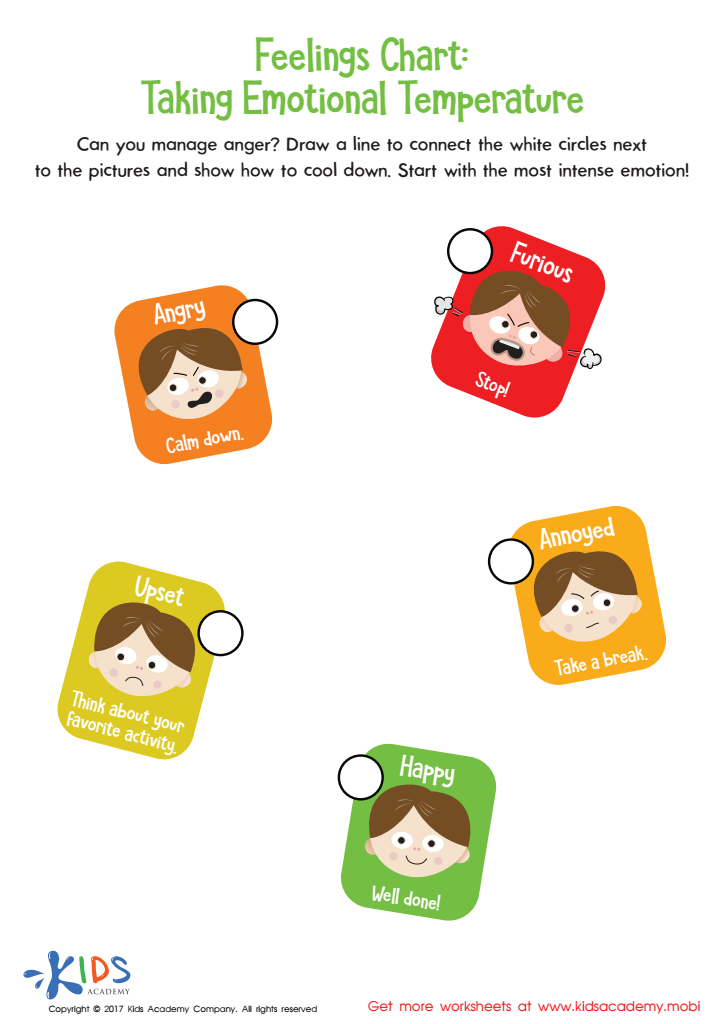
Feelings Chart Worksheet
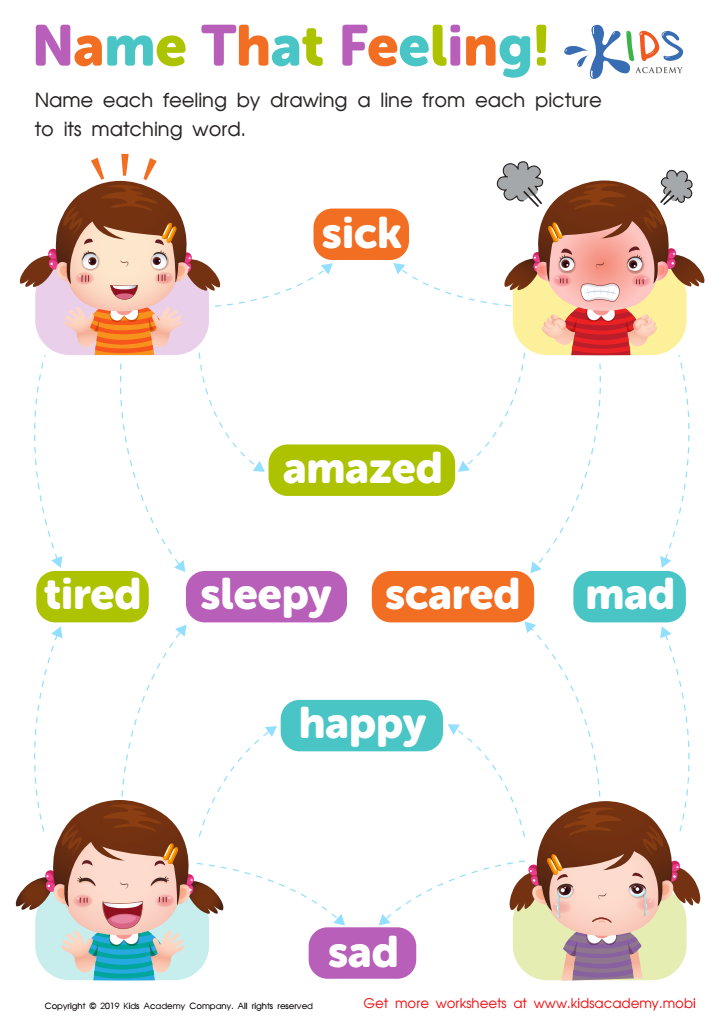
Name that Feeling Worksheet
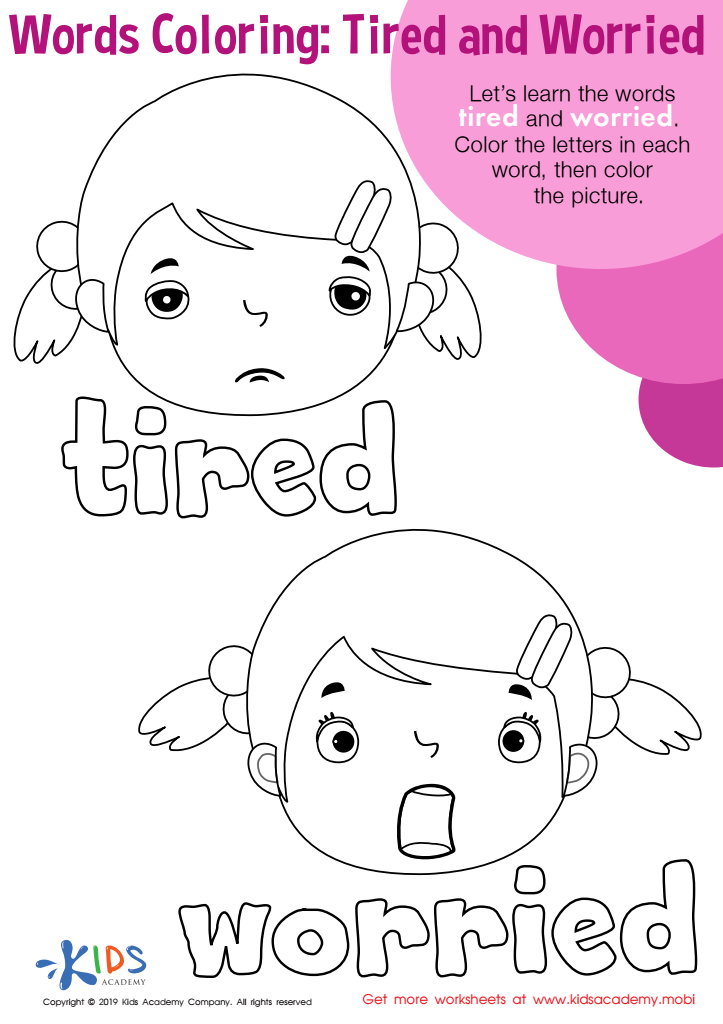
Tired and Worried Words Coloring Worksheet
 Assign to My Students
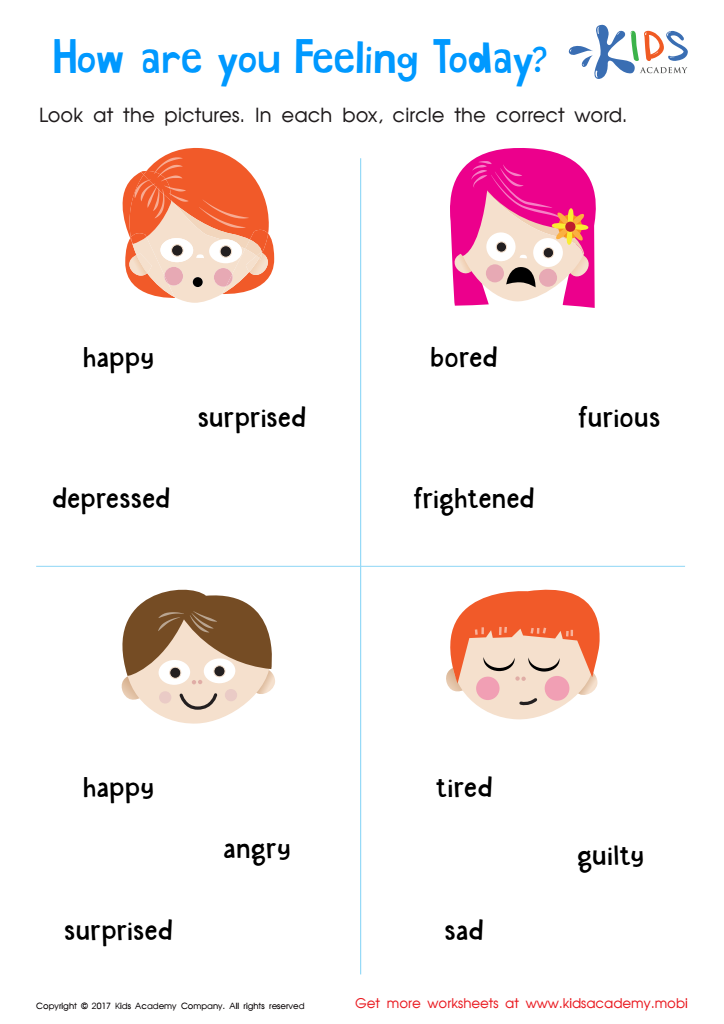
Understanding Feelings Worksheet







.jpg)
Emotional identification is crucial for children aged 3 to 6 as it lays the groundwork for their social and emotional development. At this tender age, children are beginning to understand and express their emotions, but they often lack the vocabulary and awareness to label what they are feeling. Parents and teachers play a critical role in guiding them through this process.
By fostering emotional identification, adults can help children recognize their own emotions and the emotions of others, which is vital for empathy and effective communication. This understanding can prevent behavioral issues, reduce frustration, and enhance social interactions. For instance, when children can identify that they feel sad or anxious, they are more likely to seek comfort rather than acting out.
Furthermore, emotional identification promotes resilience. When children understand and name their emotions, they can better navigate life's challenges and develop coping strategies. This skill is foundational for mental health and well-being, influencing how they form relationships, manage stress, and make decisions later in life. In helping children at this early stage, parents and teachers equip them with essential tools for navigating the complexities of interpersonal connections and building a happier, more emotionally intelligent future.








