
Improving observation skills Worksheets for Ages 3-6
4 filtered results
Difficulty Level
Grade
Age
-
From - To
Subject
Activity
Standards
Discover our engaging "Improving Observation Skills Worksheets for Ages 3-6," designed to sharpen your child's attention to detail. These colorful, easy-to-use worksheets help young learners enhance their focus, boost cognitive development, and improve memory through fun activities and exercises. Suitable for preschoolers and kindergarteners, these expertly crafted worksheets teach kids to identify patterns, differences, and similarities, fostering critical early learning skills. Ideal for both classroom and at-home use, our collection supports parents and educators in making learning an exciting and interactive adventure. Equip your little one with essential skills for future academic success!
Favorites
With answer key
Interactive
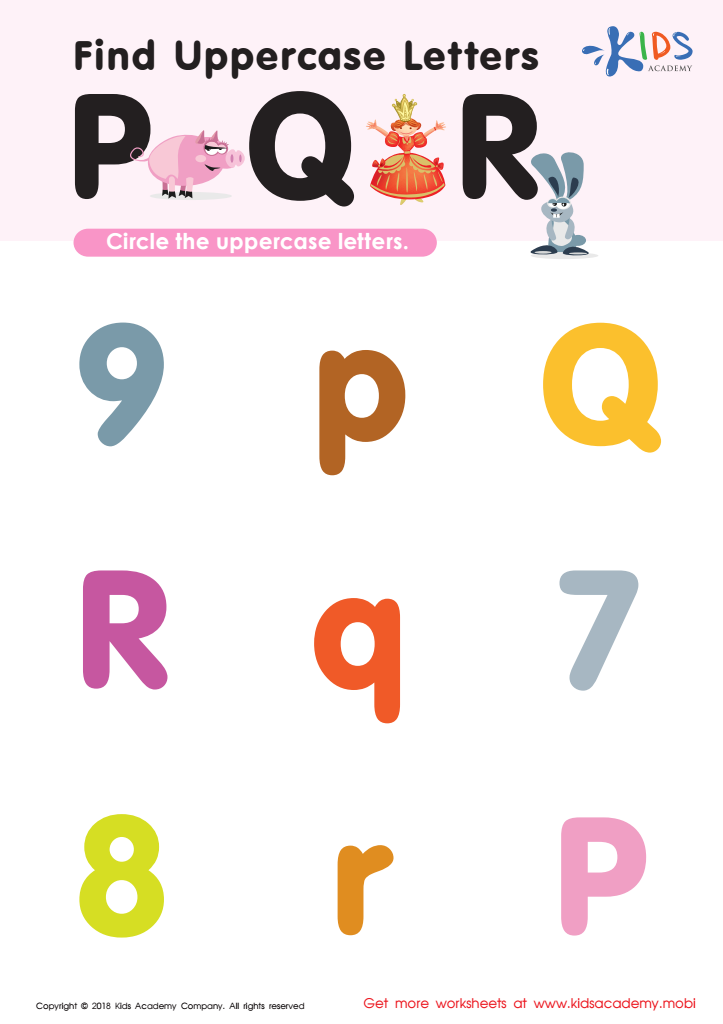
Find Uppercase Letters P, Q, and R Worksheet
Kids learn best when they can make connections. This free printable worksheet guides kids to solve the puzzle using the example letters P, Q, and R, supported by graphics and colors. Point out the page is pink, like the pig (which starts with P!) and solve by finding and circling the uppercase letters – be careful of the numbers!
 Assign to My Students
Find Uppercase Letters P, Q, and R Worksheet
Worksheet
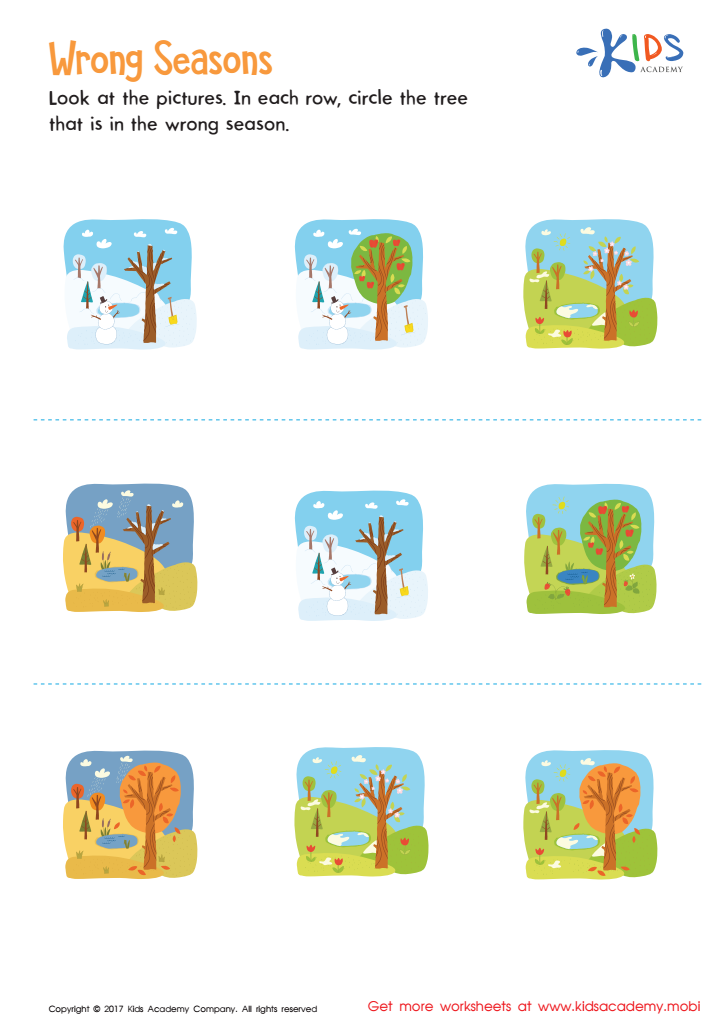
Wrong Seasons Worksheet
Uh oh! Trees are out of place in these vibrant pictures! Use this wrong seasons worksheet to help your child develop observation, analytical, and critical thinking skills. They'll learn about how the seasons change the surroundings, like trees. Print it out today to sharpen your child's eye for spotting the seasons!
Wrong Seasons Worksheet
Worksheet
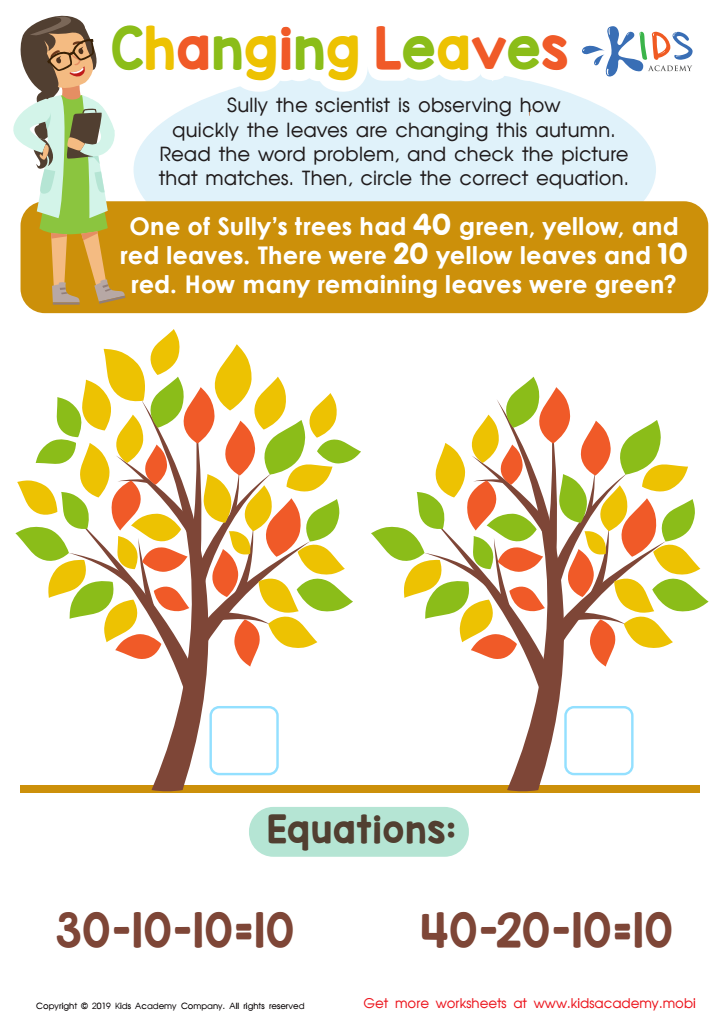
Changing Leaves Worksheet
Fall is the perfect time for kids to help Sully the scientist observe the changing leaves! Download the free worksheet with a subtraction word problem and bolded info to find the matching equation and picture. It's a fun way for your tots to learn while they admire the reddening, yellowing, and orange leaves.
Changing Leaves Worksheet
Worksheet
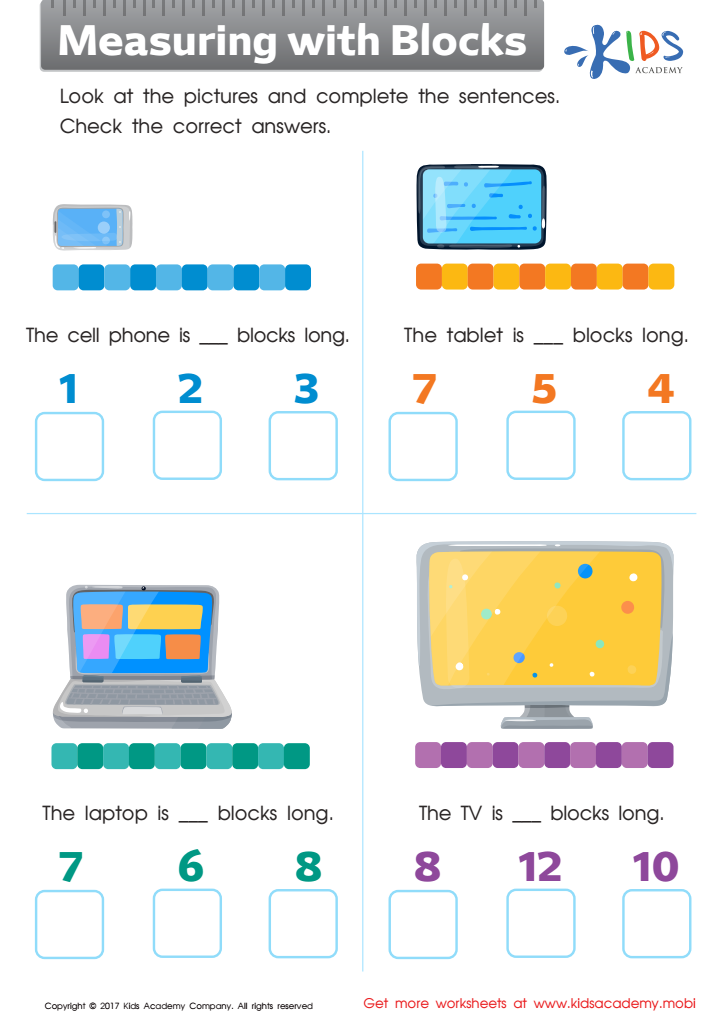
Measuring with Blocks Worksheet
Help your child get ready for math success with this Kids Academy worksheet. It provides colorful blocks to practice measuring objects. Coach them to count the boxes under each picture, then check the box with the right answer. It's a fun way to get acquainted with rulers!
Measuring with Blocks Worksheet
Worksheet
Join Kids Academy for Free
Who is primarily going to use this learning content?








Improving observation skills in children aged 3-6 is crucial for both parents and teachers because this developmental stage lays the foundation for future learning and cognitive development. At this age, children are naturally curious and highly receptive to sensory experiences, making it an ideal time to cultivate their ability to notice and process details in their environment.
Firstly, strong observation skills enhance a child's learning ability. By keenly observing, children learn to understand their surroundings, recognize patterns, and make connections. This foundational awareness supports their ability to absorb new information effectively and contributes to critical thinking and problem-solving skills.
Secondly, developing these skills aids in language development and communication. When children observe and describe what they see, hear, or feel, they enrich their vocabulary and improve their ability to express themselves clearly. This boost in communication skills is fundamental for social interactions and early literacy.
Lastly, fostering observation skills nurtures emotional intelligence. By paying attention to facial expressions, body language, and social cues, children learn empathy and appropriate social behaviors. This understanding of others' feelings and reactions is essential for building healthy relationships.
In summary, enhancing observation skills in early childhood provides a robust platform for lifelong learning, effective communication, and emotional well-being, making it a vital focus for parents and teachers.








