Number Matching Worksheets for Ages 3-6
4 filtered results
-
From - To
Discover our engaging Number Matching Worksheets designed specifically for children aged 3-6! These fun and colorful resources help young learners develop essential number recognition and counting skills through captivating activities. Your child will enjoy matching numbers with corresponding visual representations, enhancing their mathematical understanding while boosting their fine motor skills. Our worksheets cater to various learning styles, ensuring every child can benefit from this interactive approach. Perfect for home or classroom use, these printables encourage children to explore numbers in a playful way, laying a solid foundation for their future learning. Start your child's numerical journey today with our delightful worksheets!
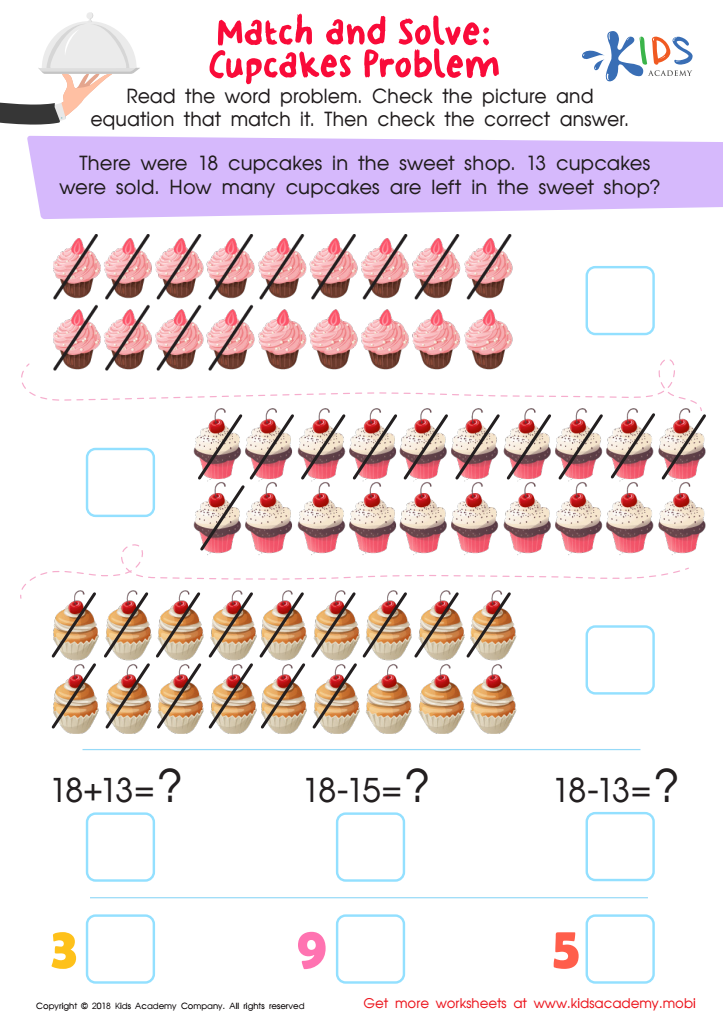
Match and Solve: Cupcakes Problem Worksheet
 Assign to My Students
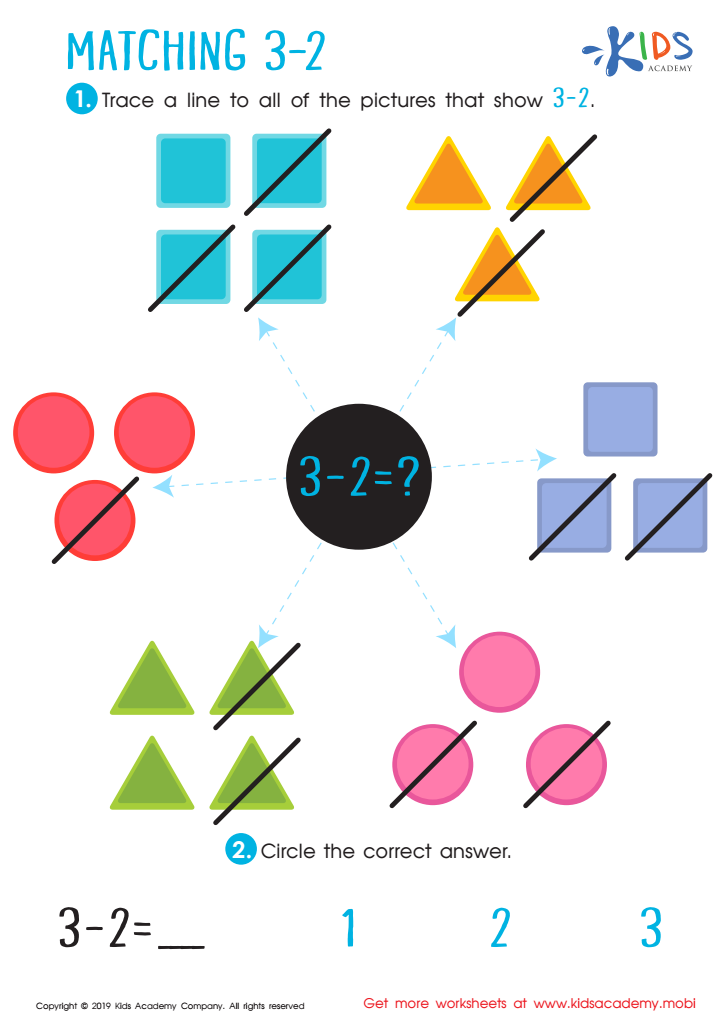
Matching 3-2 Worksheet
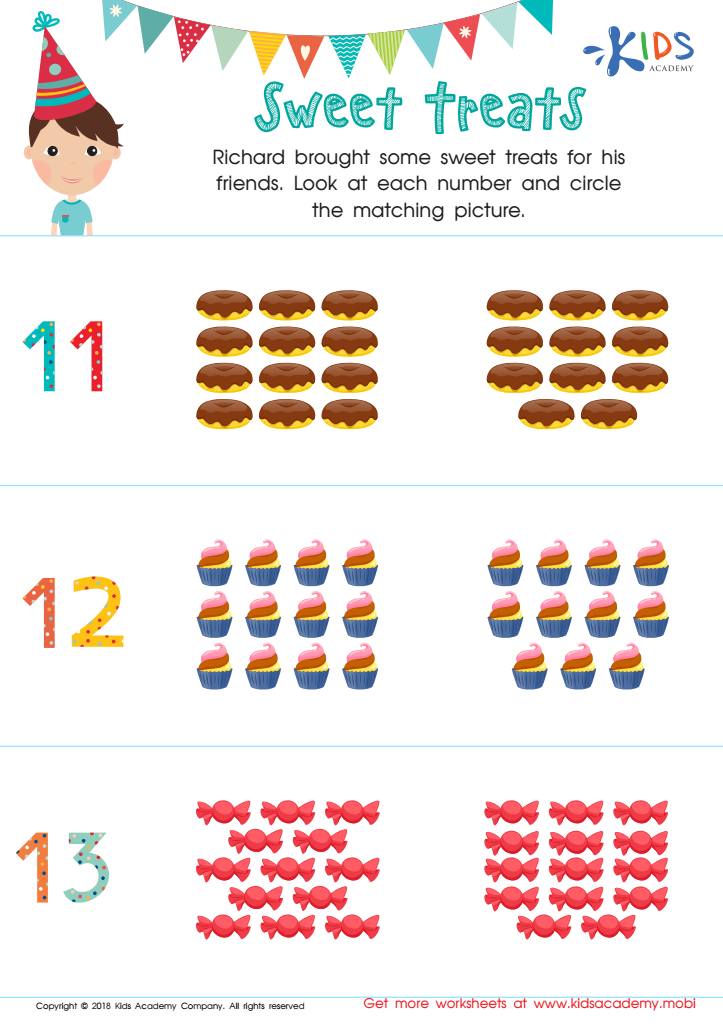
Kindergarten Math Worksheet Matching Numbers
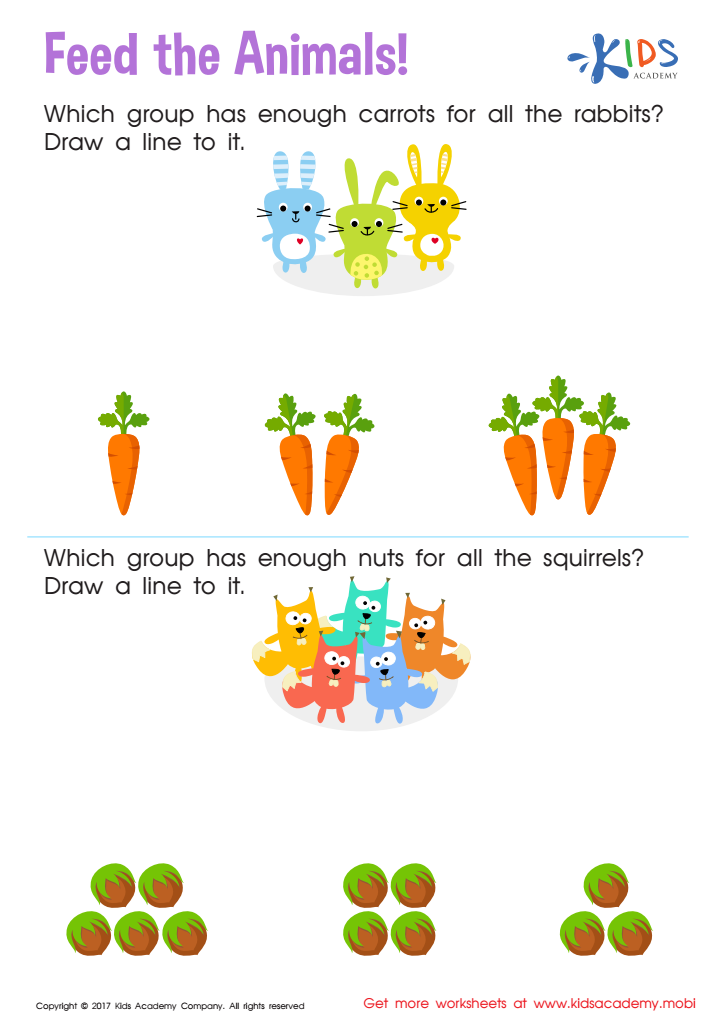
Count and Match: Feed the Animals Worksheet






Number matching is a fundamental skill for children ages 3-6, as it lays the groundwork for their mathematical understanding and overall cognitive development. During these formative years, children are naturally curious and quick to learn, making it an ideal time to introduce concepts related to numbers and counting. Number matching helps enhance their ability to recognize numbers, improve counting skills, and understand quantity, all of which are vital for future academic success.
Moreover, engaging in number matching activities promotes critical thinking and problem-solving abilities. It encourages children to recognize patterns, establish connections, and boost their visual discrimination skills. For parents and teachers, facilitating these early math experiences supports the development of a positive attitude towards mathematics and learning as a whole.
Additionally, number matching activities can be easily integrated into play-based learning environments. They can be implemented through fun games, visual aids, or hands-on manipulatives, capturing children's interest while fostering development. By prioritizing number matching, educators and parents collectively cultivate essential skills that enable children to navigate the soon-to-be complex world of mathematics with confidence and ease. Overall, supporting these foundational skills is essential for a child's academic journey and lifelong learning.








