Pattern recognition Worksheets for Ages 3-6 - Page 2
25 filtered results
-
From - To
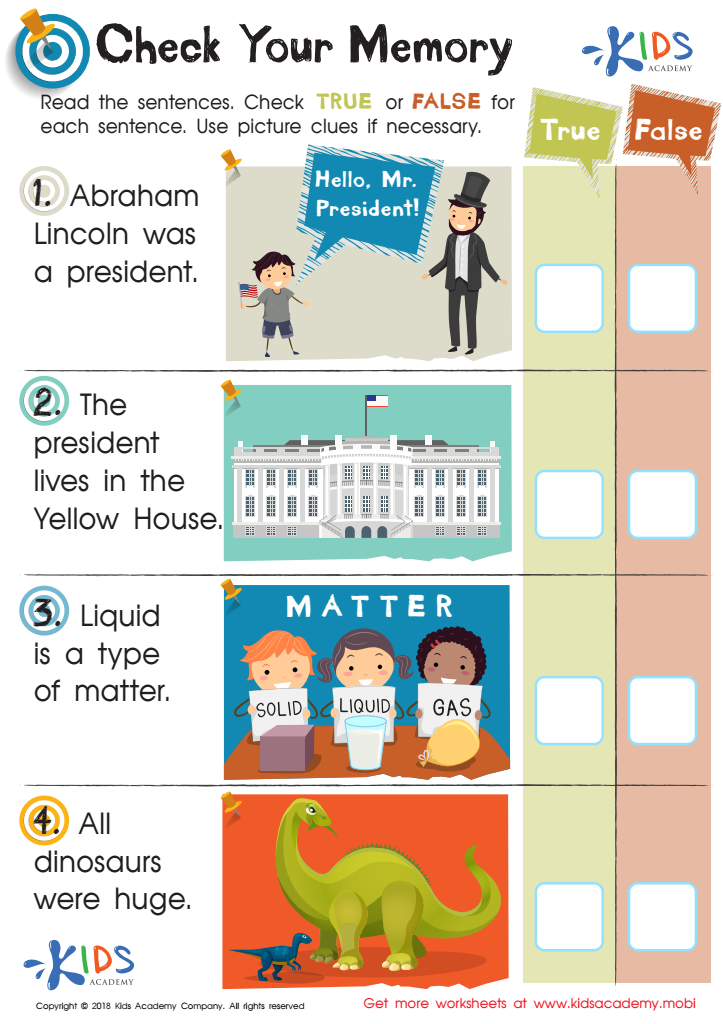
Check Memory Worksheet
 Assign to My Students



.jpg)




Pattern recognition is a fundamental cognitive skill that plays a crucial role in early childhood development, particularly for children aged 3-6 years. During this formative period, children are naturally curious and eager to make sense of the world around them. Engaging in pattern recognition activities—such as identifying sequences in colors, shapes, and sounds—enhances their observational skills and encourages critical thinking.
For parents and teachers, fostering pattern recognition is essential for several reasons. Firstly, it lays the groundwork for mathematical concepts. Recognizing patterns helps children understand relationships, sequences, and spatial awareness, which are foundational in arithmetic and geometry. Secondly, pattern recognition sharpens problem-solving abilities. Children learn to predict outcomes and make connections, skills that are invaluable throughout their educational journey.
Moreover, engaging in pattern-related activities promotes cognitive development and strengthens memory and attention spans. It offers opportunities for creative expression and language development as children describe what they observe. By prioritizing pattern recognition, parents and teachers can support holistic growth, preparing children not only for academic success but also for everyday life skills. Encouraging these activities is an investment in a child's future capabilities and confidence in navigating complex challenges.








