Phonics development Worksheets for Ages 3-6
5 filtered results
-
From - To
Unlock the power of reading with our Phonics Development Worksheets for Ages 3-6. Tailored to nurture young minds, these worksheets transform phonics learning into an exciting adventure. Through engaging activities, children explore letter sounds, word formation, and early reading skills. Perfect for preschool and kindergarten students, our worksheets support language development and build a strong literacy foundation. With kid-friendly designs and interactive exercises, learning becomes a fun and rewarding experience. Parents and educators can conveniently provide high-quality educational content to inspire a love of reading from an early age. Start your child's phonics journey with Kids Academy today!
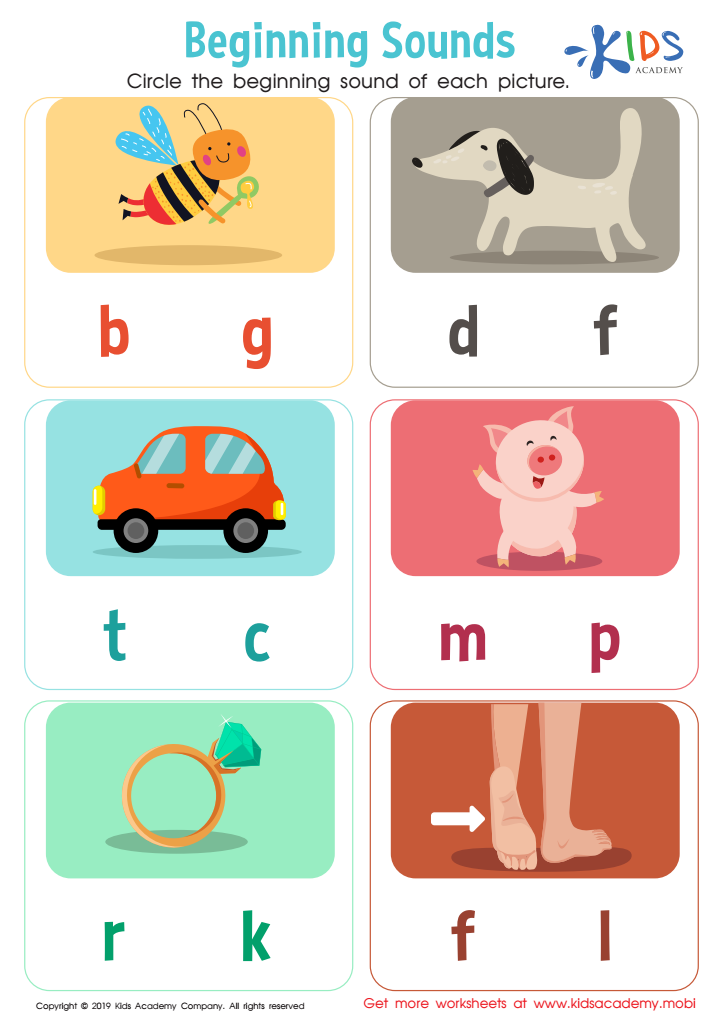
Beginning Sounds Worksheet
 Assign to My Students
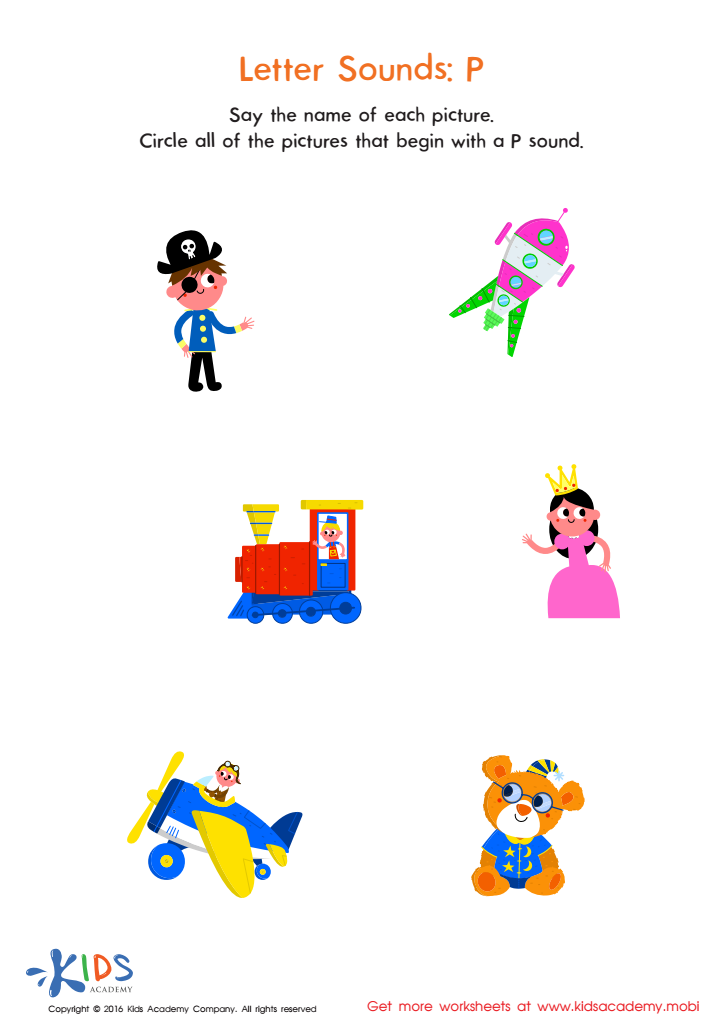
Letter P Sound Worksheet
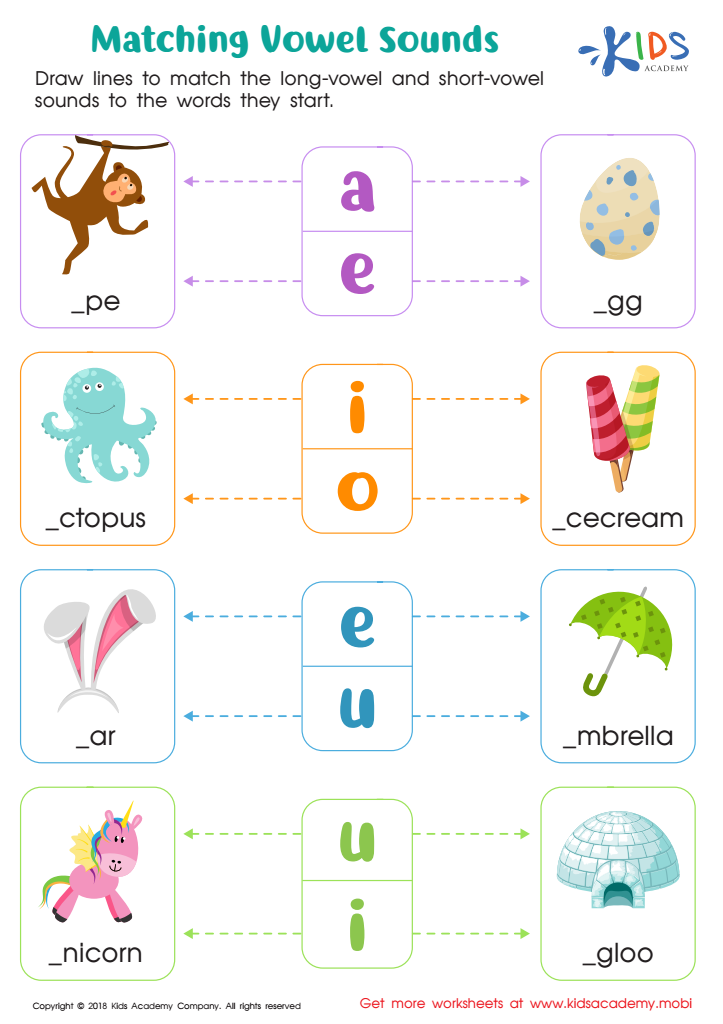
Matching Vowel Sounds Worksheet
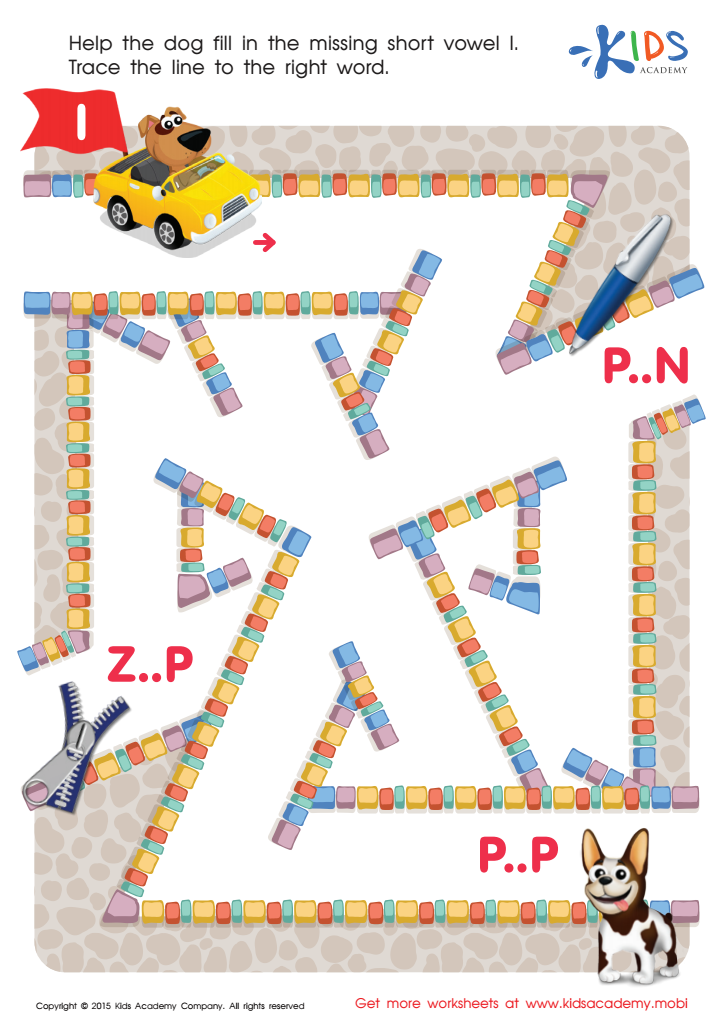
Short Vowel Sound I Worksheet
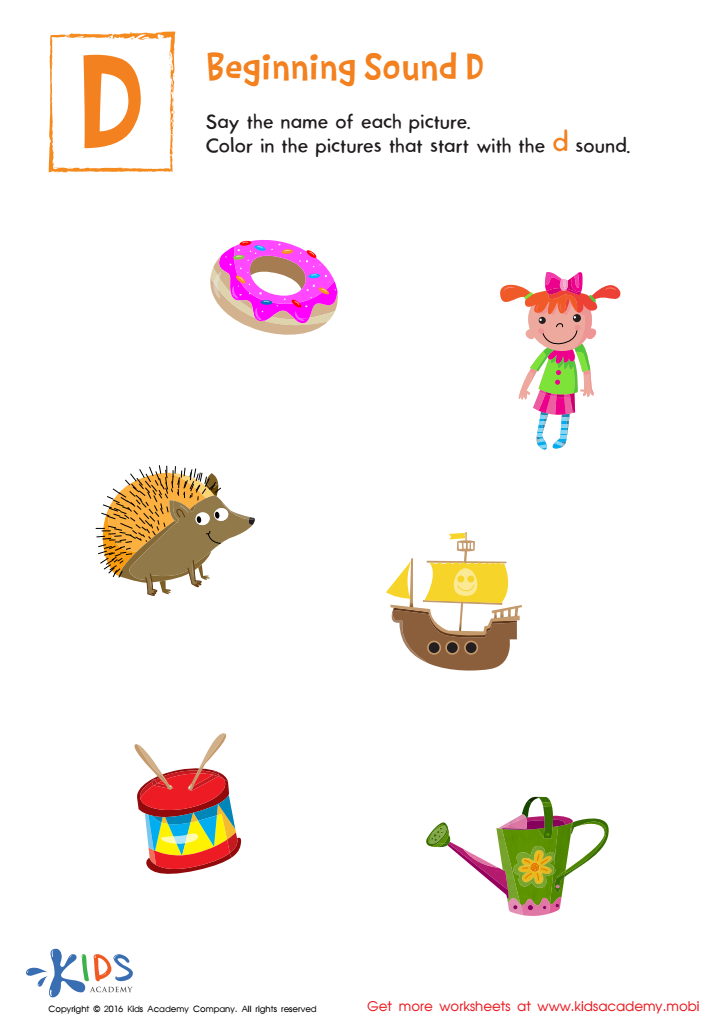
Beginning Sound D Worksheet





.jpg)


Phonics development is crucial for children aged 3-6 as it lays the foundational skills required for reading and writing. At this stage, children are in a prime period for language acquisition, and phonics instruction helps them understand the relationships between letters and sounds, a key literacy building block. By learning phonics, children can decode new words, improving their reading fluency and comprehension. This early skill development promotes confidence and a love for reading, which are essential for ongoing educational success.
From a cognitive perspective, phonics enhances a child's ability to identify patterns in words, aiding memory retention and problem-solving skills. Early phonics education also supports vocabulary expansion and better articulation. Additionally, without a strong phonics foundation, children are likely to struggle with more advanced literacy skills, impacting their academic performance across subjects.
Parents and teachers play a critical role in this development. Through engaging, playful activities, they can make phonics learning enjoyable, fostering a positive learning environment. Investing time and resources into phonics at this crucial stage prepares children not just for primary school, but also sets the stage for lifelong learning and literacy. Everything considered, prioritizing phonics development for young children can significantly impact their academic journey and overall intellectual growth.








