
Phonics improvement Worksheets for Ages 3-6
5 filtered results
Difficulty Level
Grade
Age
-
From - To
Subject
Activity
Standards
Looking to enhance your child's phonics skills? Our Phonics Improvement Worksheets for Ages 3-6 offer engaging activities designed to boost early literacy development. These worksheets focus on letter recognition, sound identification, and blending techniques, making learning fun and effective. Ideal for preschoolers and kindergarteners, our resources foster a love for reading through interactive exercises that cater to various learning styles. From matching letters to decoding simple words, each worksheet enhances phonemic awareness and lays a strong foundation for future reading success. Start your child's journey to becoming a confident reader today with our expertly crafted phonics worksheets!
Favorites
With answer key
Interactive
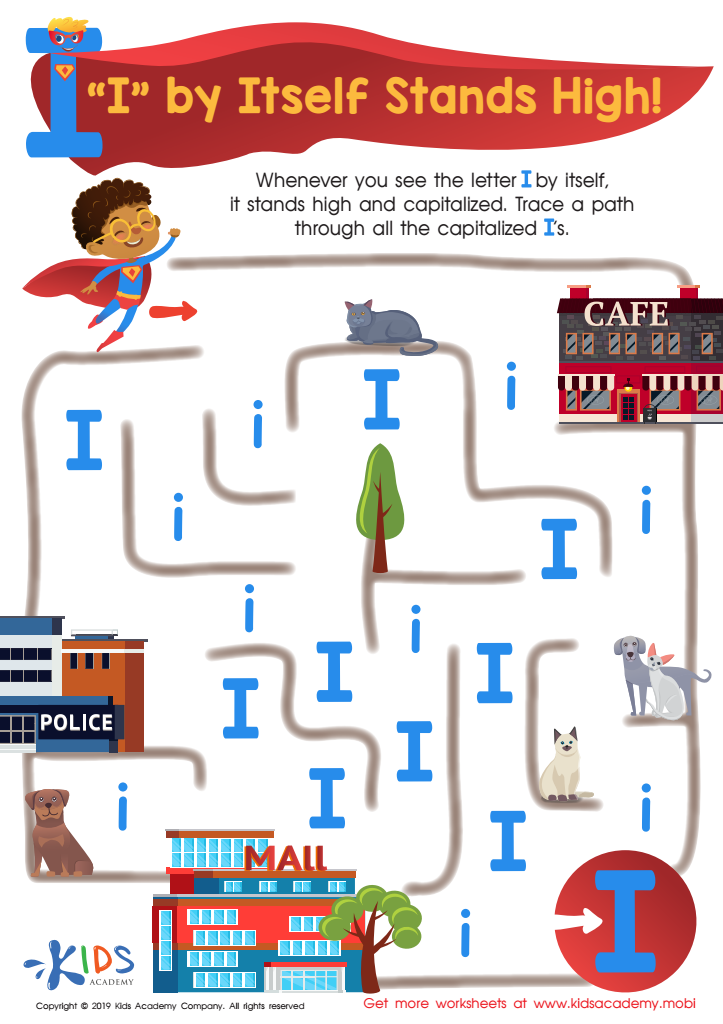
I Stands High Worksheet
Kids can use their imagination to help a superhero find the uppercase 'I's on the 'I By Itself Stands High' worksheet. This helps children learn capitalization, and they can join the superhero in flying over a city of cats, dogs and buildings to locate the needed letters.
 Assign to My Students
I Stands High Worksheet
Worksheet
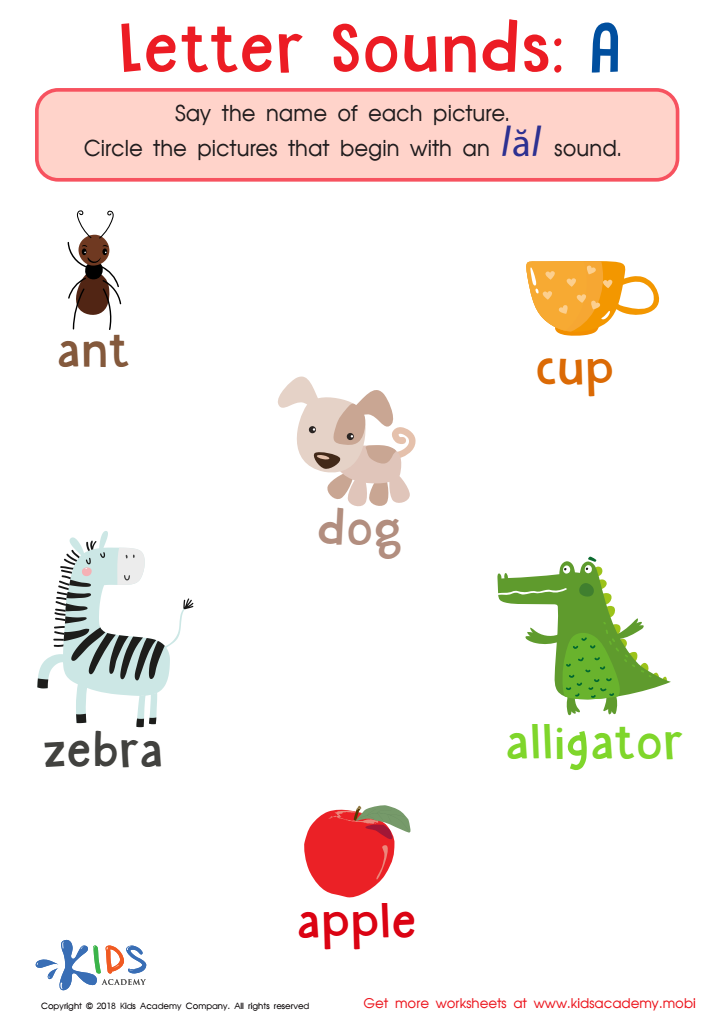
Letter A Sounds Worksheet
Encourage your new reader to practice the «ă» sound with this fun, free PDF worksheet. With the help of picture clues, they'll say the name of each word and trace circles around the items that start with «ă». This worksheet is an effective way to boost beginning sound skills while having fun!
Letter A Sounds Worksheet
Worksheet
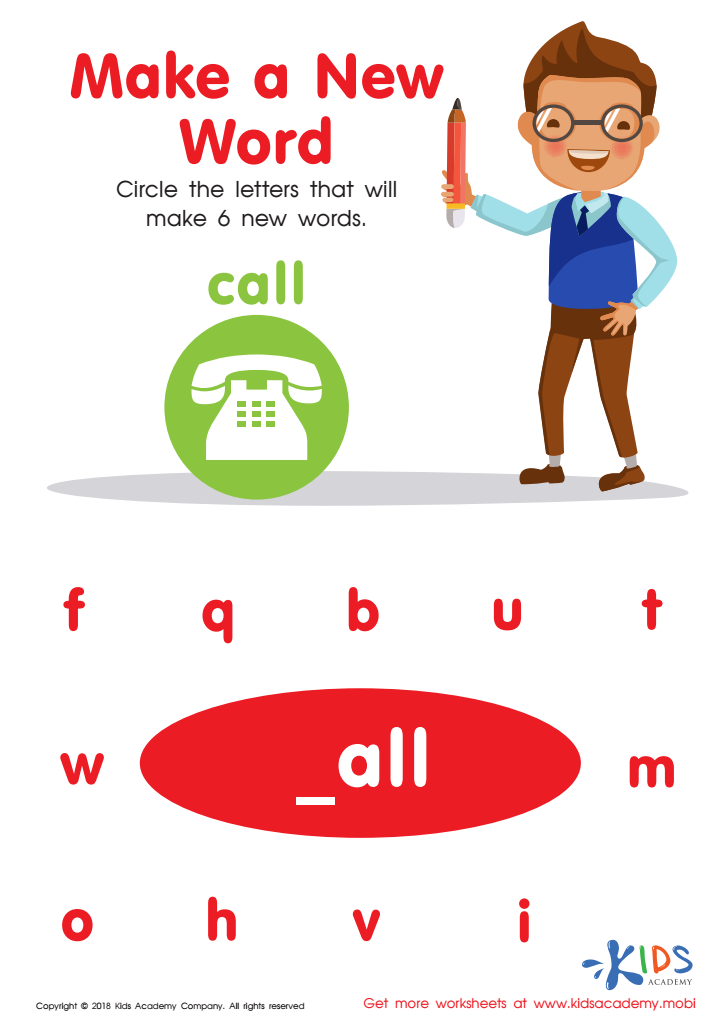
Make a New Word Worksheet
Young readers and writers can enhance their skills with this fun PDF worksheet. They'll trace letters to create new words and feel like super readers and writers after finding six words. They'll also practice building words with the "all" word family.
Make a New Word Worksheet
Worksheet
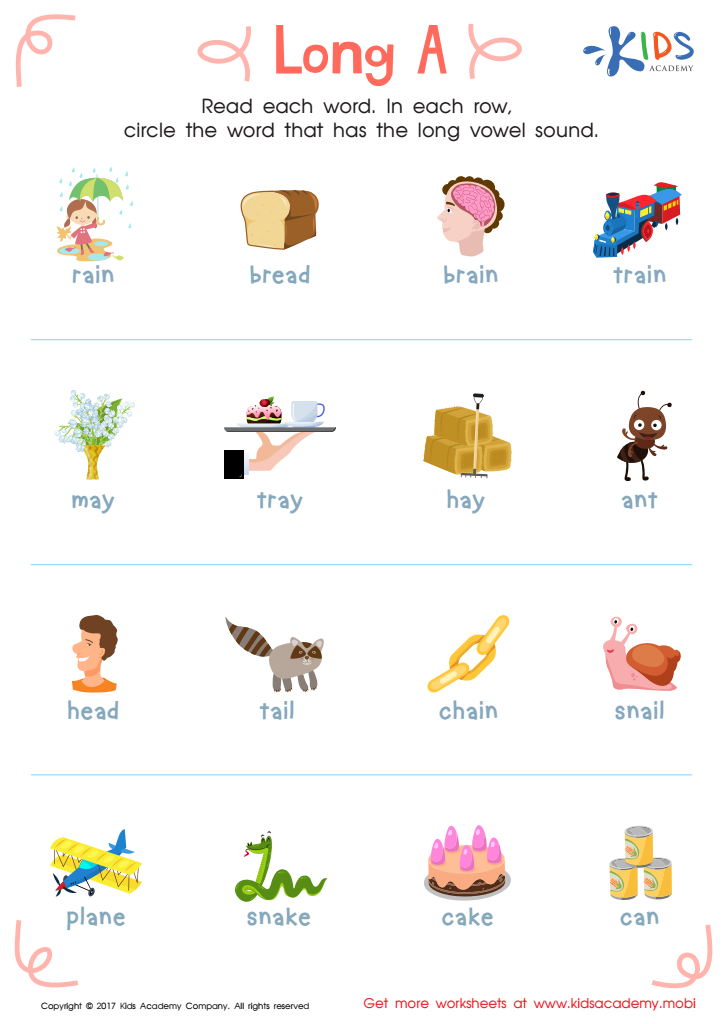
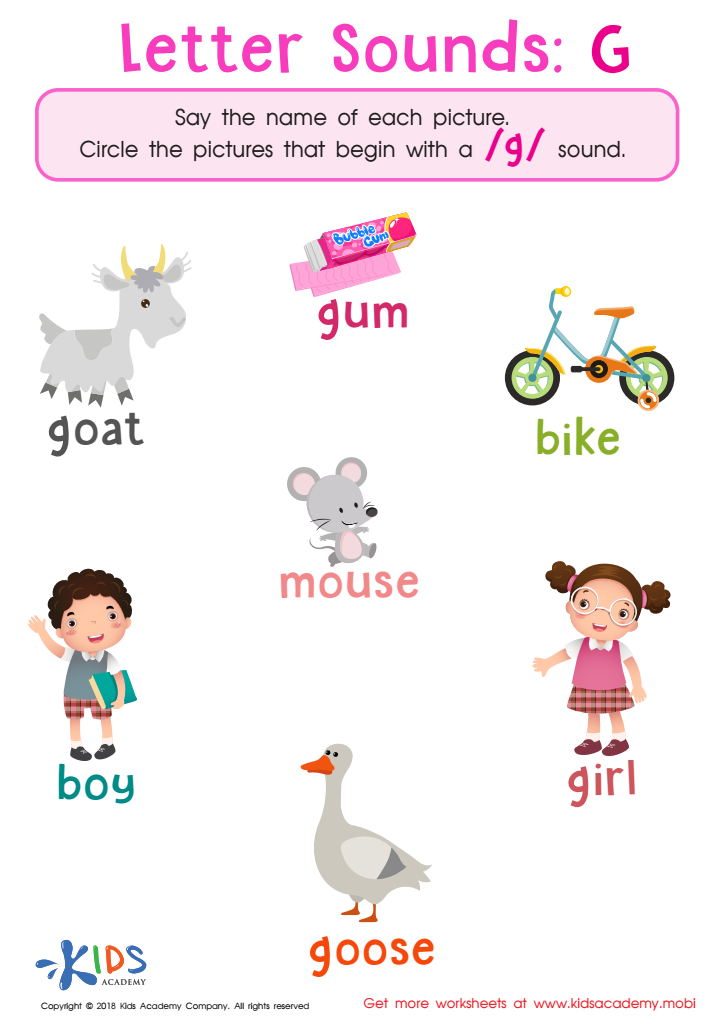
Letter G Sounds Worksheet
Help emerging readers build confidence by giving them practice identifying hard "G" with this free PDF worksheet. They'll use picture clues to name the words, and practice fine-motor skills tracing circles around the corresponding pics. It's a great way to introduce or reinforce hard "G" words.
Letter G Sounds Worksheet
Worksheet
Join Kids Academy for Free
Who is primarily going to use this learning content?







Phonics is a fundamental skill that lays the groundwork for reading and writing. For children aged 3-6, mastering phonics is particularly crucial, as it directly impacts their ability to decode words and build a strong literacy foundation. Early exposure to phonics helps children understand the relationship between letters and sounds, enhancing their capability to blend sounds into words. This foundational skill not only supports reading fluency but also boosts comprehension, allowing young learners to engage with texts meaningfully.
Furthermore, phonics improvement helps build confidence in children as they learn to read independently. Confident readers are more likely to enjoy reading, which fosters a lifelong love of books. Parents and teachers play a vital role in facilitating this development through interactive activities such as rhyming games, storytelling, and phonetic songs.
Investing in phonics education creates opportunities for academic success, as proficient readers are better equipped to tackle various subjects in school. Furthermore, strong literacy skills are linked to enhanced communication abilities, critical thinking, and higher self-esteem. In a world increasingly reliant on written communication, prioritizing phonics improvement for young learners supports their overall growth and future success. Thus, parents and teachers should actively promote phonics learning during these formative years.








