
Recognizing numbers Worksheets for Ages 3-6
6 filtered results
Difficulty Level
Grade
Age
-
From - To
Subject
Activity
Standards
Unlock the joy of learning with our "Recognizing Numbers Worksheets for Ages 3-6"! Designed by educational experts, these engaging worksheets help young learners master number recognition in a fun, interactive way. From tracing and counting to seeking and matching, each activity builds foundational math skills crucial for early development. Perfect for preschoolers and kindergarteners, our worksheets make learning numbers delightful and accessible. Whether used at home or in the classroom, watch as your child's confidence and proficiency with numbers soar. Spark curiosity and fuel a love for math with these essential educational tools!
Favorites
With answer key
Interactive
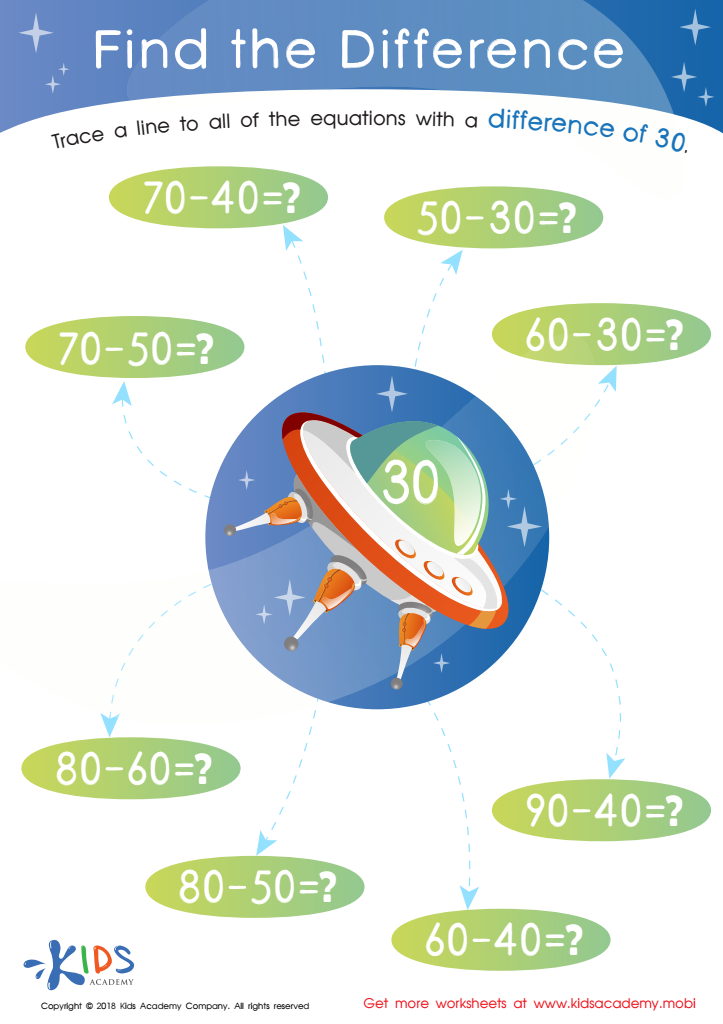
Find The Difference Worksheet
Kindergarteners need to work out subtraction problems and get the right answers. To help them, point to the alien ship with '30' in it on the worksheet. Get them to follow a line to the equations with a difference of 30. Solving these simple subtraction problems will give the answers.
 Assign to My Students
Find The Difference Worksheet
Worksheet
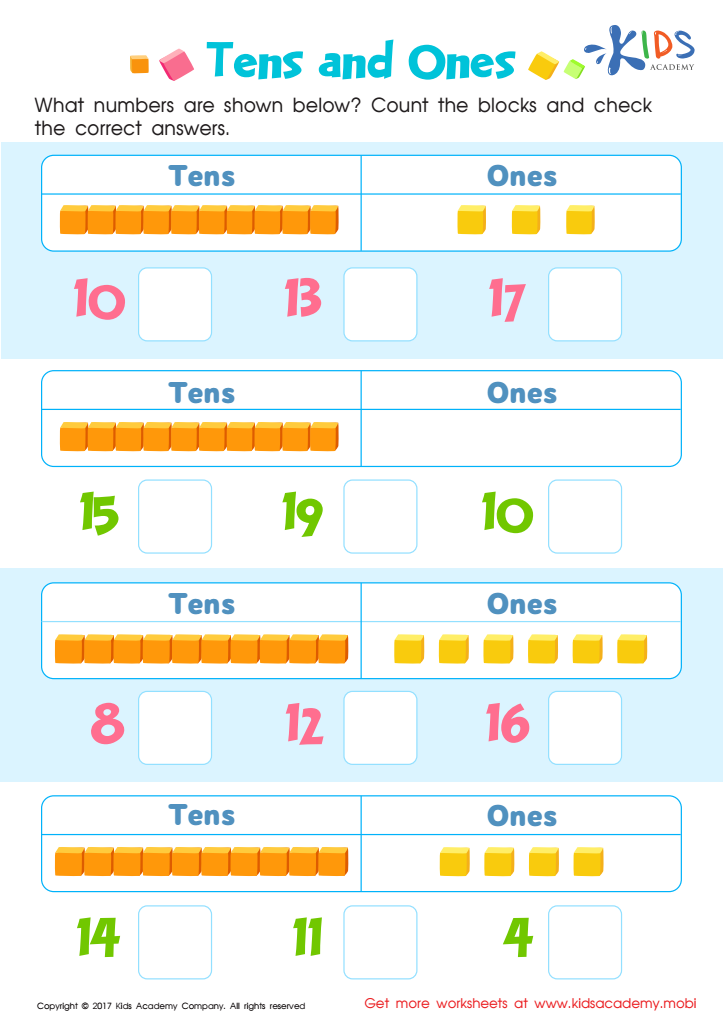
Tens and Ones Worksheet
Help your child make math fun with this worksheet! Count the blocks on both sides and enter the total in the box below the figures. This will help them overcome any math-related anxieties they might have and let them enjoy the learning process.
Tens and Ones Worksheet
Worksheet
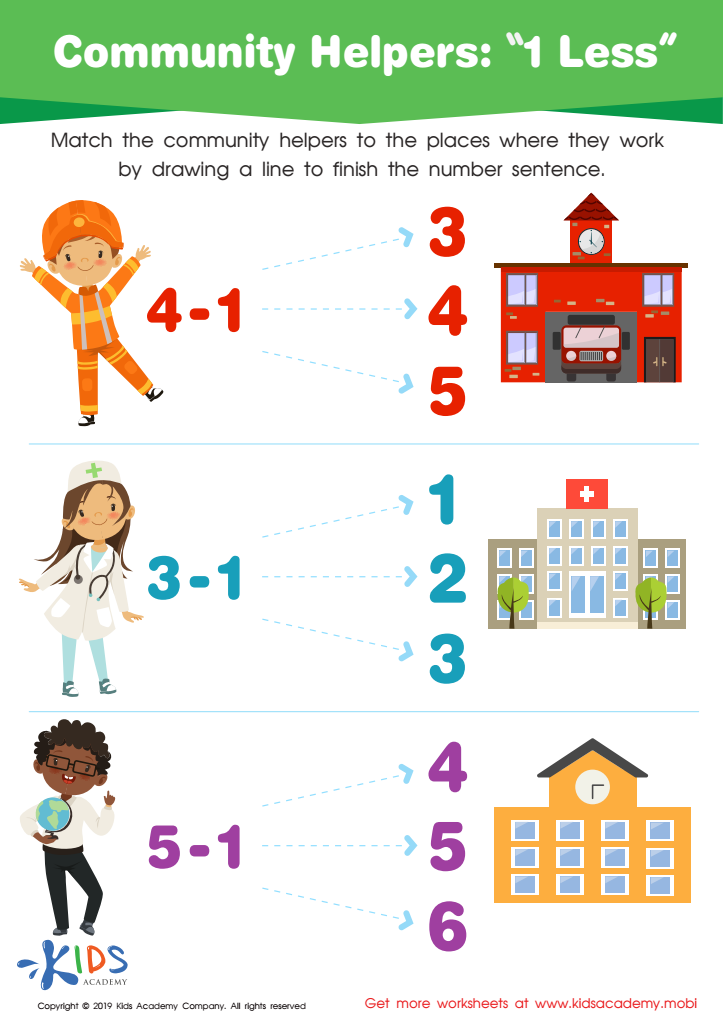
Community Helpers: 1 less Worksheet
Look at this worksheet with your child and ask them to identify the different community helpers. Match them to the places where they work by drawing a line to finish the number sentence. This helps them identify the people that help keep the community organized and running smoothly. Examples of community helpers include doctors, police officers, firefighters, teachers, etc.
Community Helpers: 1 less Worksheet
Worksheet
Join Kids Academy for Free
Who is primarily going to use this learning content?








Recognizing numbers is a foundational skill crucial in the early development of children aged 3-6. This ability to identify and understand numbers not only sets the groundwork for future math learning but also plays a significant role in everyday experiences and problem-solving abilities. By recognizing numbers, children can begin to understand concepts such as quantity, order, and value. This understanding helps them in practical situations, like sharing toys fairly or understanding their age.
For parents, fostering number recognition can be an engaging, everyday activity woven into daily routines, such as counting steps or sorting groceries. For teachers, incorporating this skill through playful and interactive methods like songs, games, and hands-on activities can foster a positive attitude towards math. Moreover, early number recognition correlates with improved mathematical achievement later in life. It encourages cognitive development, critical thinking, and fine motor skills as children learn to write numbers.
Ultimately, caring about and emphasizing number recognition for children ages 3 to 6 equates to setting a solid educational foundation, promoting academic success and enhancing real-world competency. It’s a vital part of early childhood education that supports a child’s confidence and curiosity in learning, influencing their overall development and readiness for school.








