Sorting abilities Worksheets for Ages 3-6
3 filtered results
-
From - To
Explore our engaging Sorting Abilities Worksheets designed for children ages 3-6! These fun resources will help young learners develop essential sorting skills by categorizing objects based on various attributes such as color, shape, and size. Our thoughtfully crafted worksheets, complete with vibrant illustrations and interactive activities, foster critical thinking and enhance cognitive abilities. Perfect for both home and classroom use, these materials support early mathematics and problem-solving skills in an enjoyable way. Download our Sorting Abilities Worksheets today and watch your child’s confidence grow as they become adept at organizing and classifying the world around them!
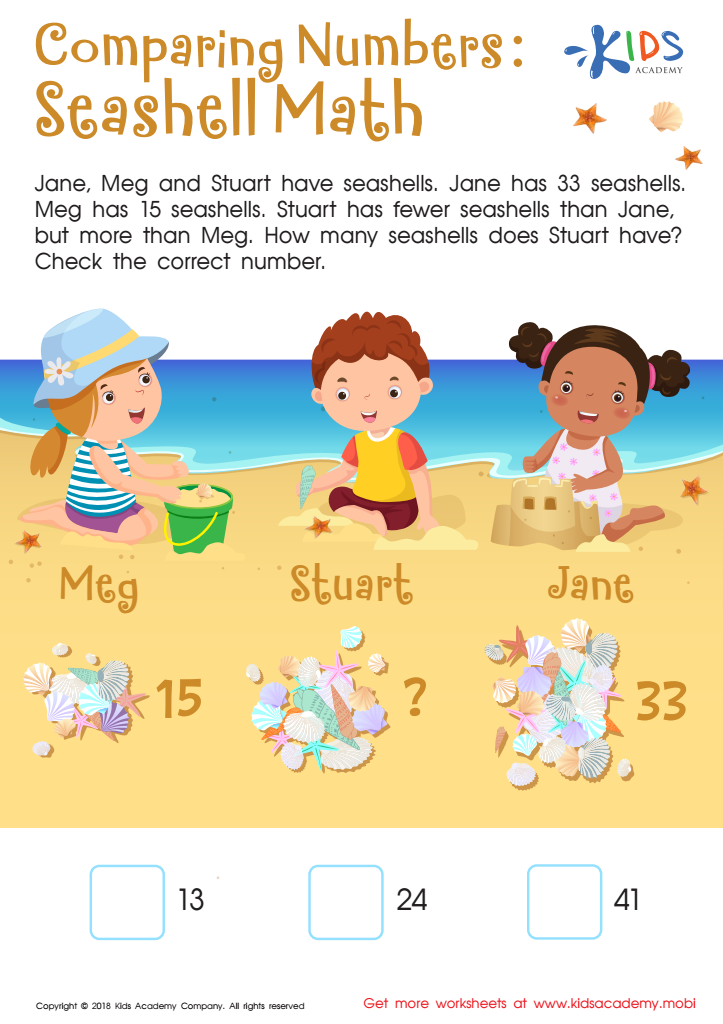
Seashell Collectors Worksheet
 Assign to My Students
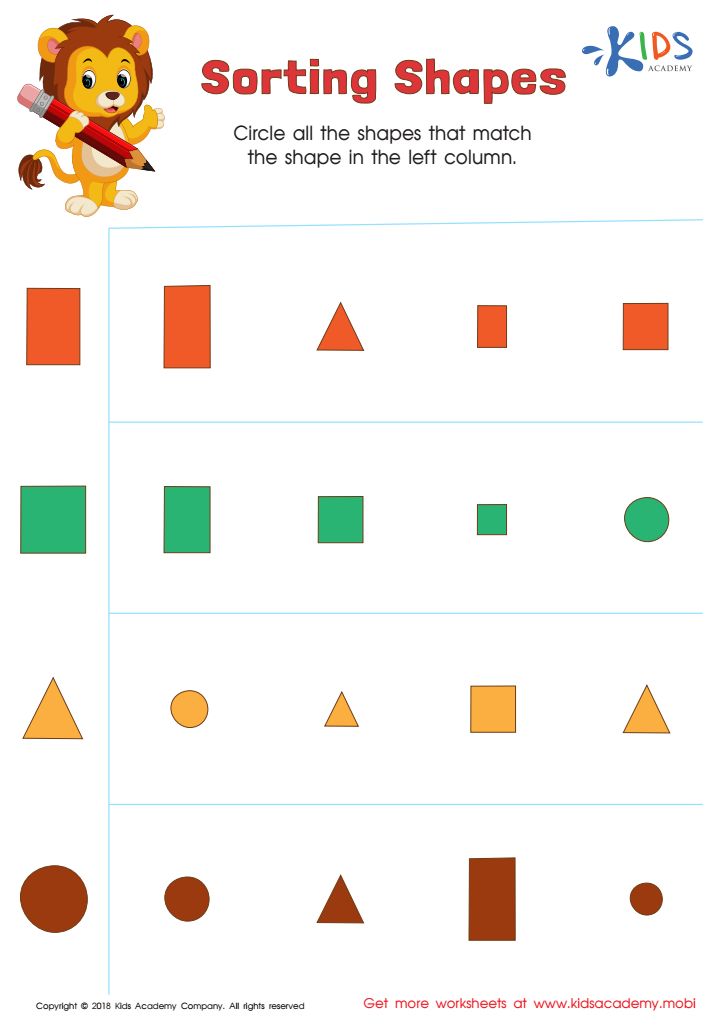
Sorting Shapes - Part 2 Worksheet
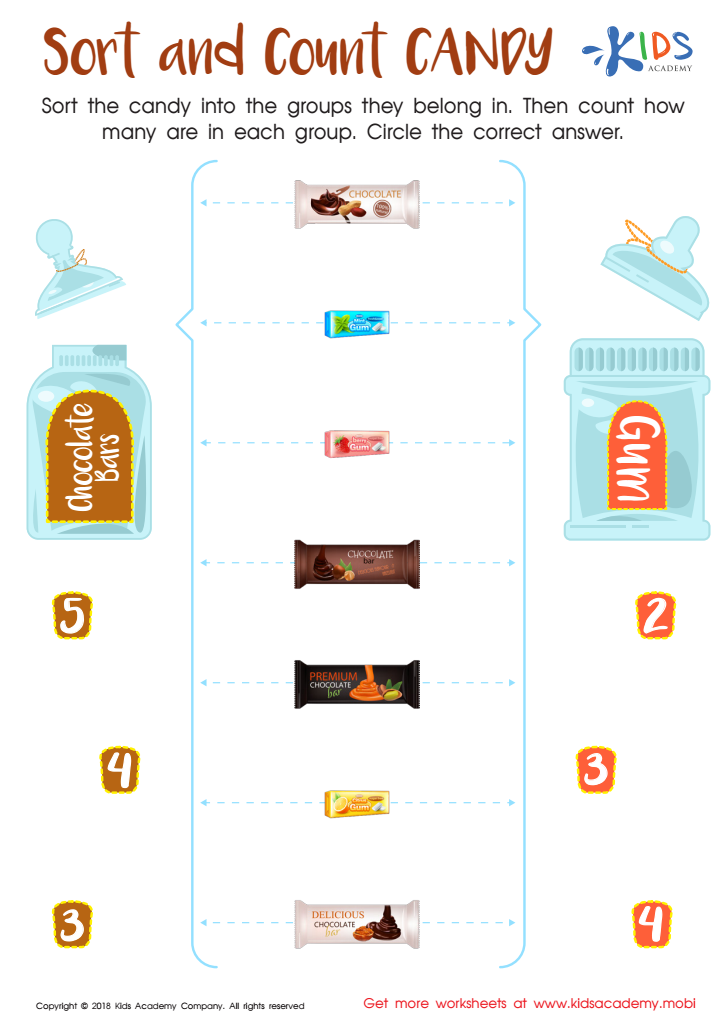
Sort and Count Candy Worksheet







Sorting abilities are crucial developmental skills for children aged 3-6, which serve as foundational elements in cognitive, social, and emotional growth. At this age, children begin to understand categories based on shapes, colors, sizes, and other attributes, enhancing their cognitive organization skills. When parents and teachers encourage sorting activities, they help children develop critical thinking and problem-solving abilities by teaching them to observe, compare, and differentiate objects.
This skill also promotes early math competencies, laying the groundwork for future concepts like addition, subtraction, and algebraic reasoning. Furthermore, sorting activities foster language development as children articulate their reasoning and describe the characteristics of the items they are sorting.
Socially, working on sorting tasks can encourage cooperative play and communication among peers, fostering friendships and social skills. Additionally, sorting helps children build focus and attention spans, which are essential for learning in later years. Engaging children in sorting exercises ensures they gain confidence, as they see their progress and mastery. Therefore, both parents and teachers should emphasize sorting abilities to equip children with essential skills that will benefit their overall development, academic achievements, and interpersonal relationships.








