Sound differentiation Worksheets for Ages 3-6
3 filtered results
-
From - To
Discover engaging Sound Differentiation Worksheets designed for children ages 3-6, aimed at enhancing their auditory skills and early phonemic awareness. These printable activities from Kids Academy help young learners distinguish between different sounds, aiding in their language development and listening skills. Each worksheet provides a variety of fun, interactive exercises to keep kids motivated while building a solid foundation for reading. Suitable for both classroom use and at-home learning, these resources ensure your child progresses confidently and enjoys each step of their educational journey. Visit Kids Academy and start your child's sound differentiation adventure today!
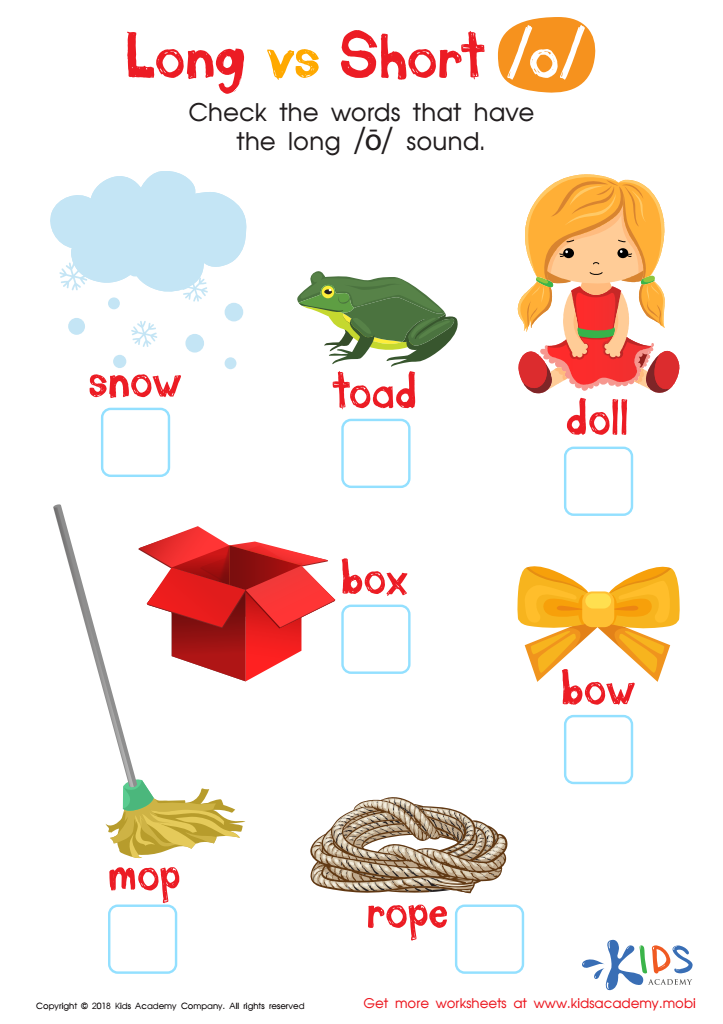
Long vs Short O Reading Worksheet
 Assign to My Students
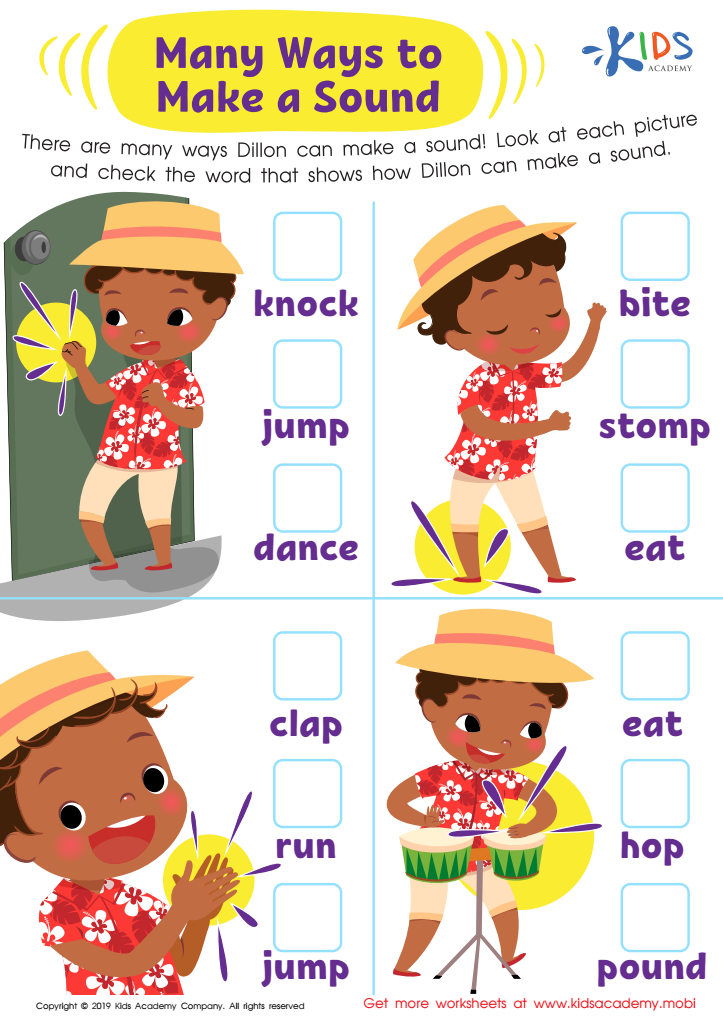
Many Ways to Make a Sound Worksheet
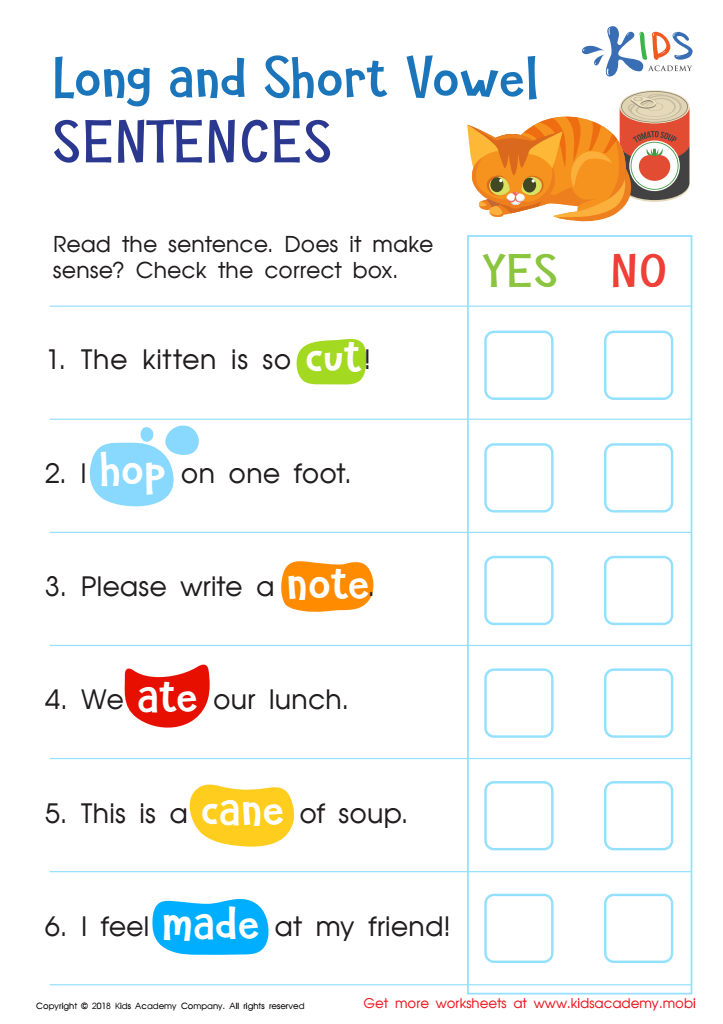
Long and Short Vowel Sentences: Assessment Worksheet








Sound differentiation is a crucial skill for children aged 3-6, as it lays the foundation for their language development and literacy skills. During these early years, children are in the critical period for phonemic awareness, where they learn to identify and differentiate between the various sounds (phonemes) in spoken language.
This ability to distinguish sounds is vital for several reasons. Firstly, it aids in the development of vocabulary, as children learn to recognize that different sounds create different words and meanings. For example, understanding the difference between the sounds “b” and “p” helps children differentiate words like “bat” and “pat,” which is essential for effective communication.
Secondly, sound differentiation is closely linked to reading skills. The ability to associate sounds with corresponding letters or groups of letters (phonics) is fundamental for decoding words while reading. Children who struggle with sound differentiation often face challenges in learning to read, which can have long-term impacts on their academic success.
Lastly, sound differentiation supports social and emotional development. Clear communication is essential for forming relationships and expressing needs and emotions. Therefore, parents and teachers should prioritize activities that promote phonemic awareness, such as rhyming games, songs, and reading aloud, to support children's robust developmental growth.
By investing time and effort in fostering sound differentiation skills early on, parents and teachers set the stage for their children's lifelong language and literacy success.








