Sound-letter correlation Worksheets for Ages 3-6
4 filtered results
-
From - To
Introduce your young learners to the foundations of literacy with our engaging Sound-Letter Correlation Worksheets for ages 3-6. These thoughtfully designed activities help children recognize and connect letters to their corresponding sounds, a critical step in early reading development. Each worksheet features bright images, fun exercises, and engaging prompts that make learning interactive and enjoyable. Perfect for both classroom and home use, our worksheets support essential skills such as phonemic awareness and early word recognition, setting the stage for advanced literacy achievements. Ignite your child's curiosity and confidence in reading with Kids Academy's expertly crafted resources.
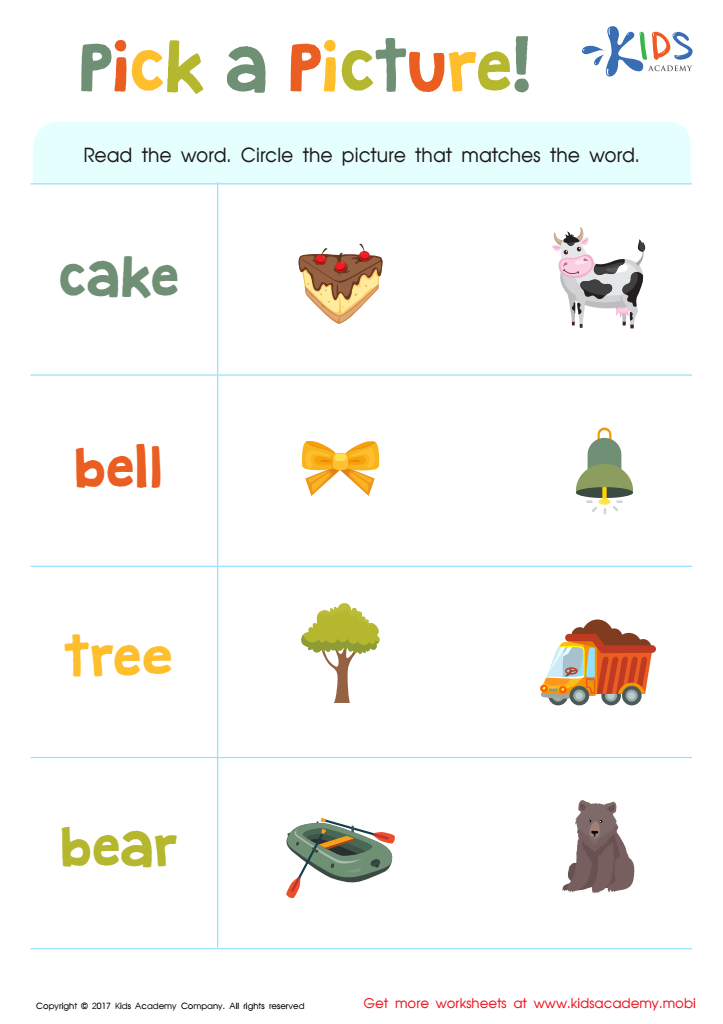
Pick a Picture Word Recognition Worksheet
 Assign to My Students
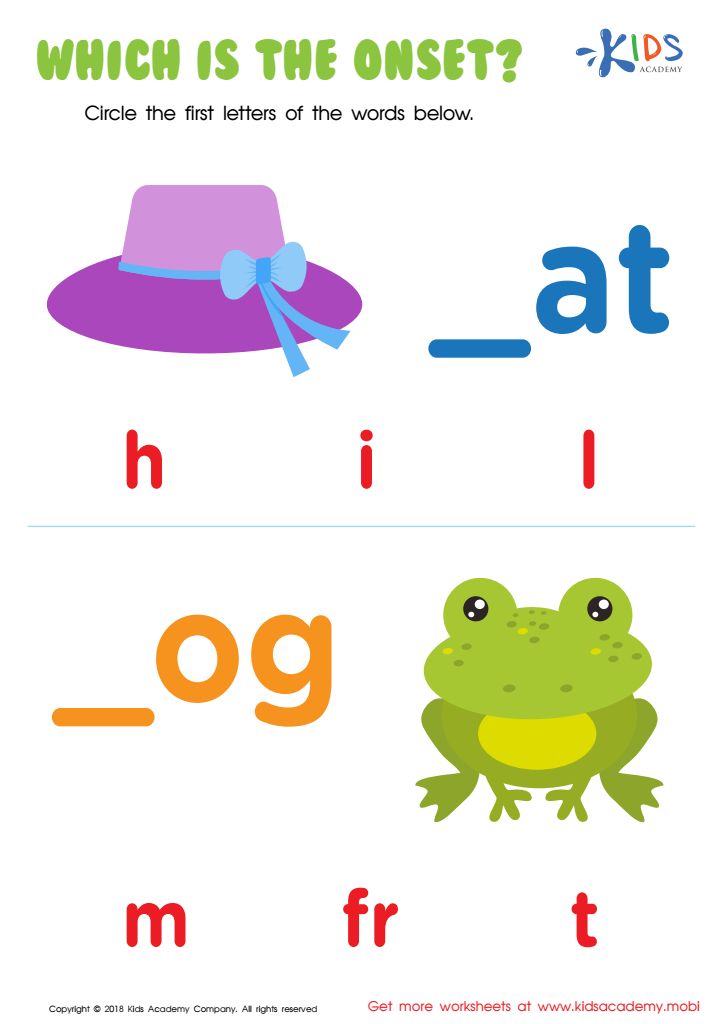
Which Is the Onset? Worksheet
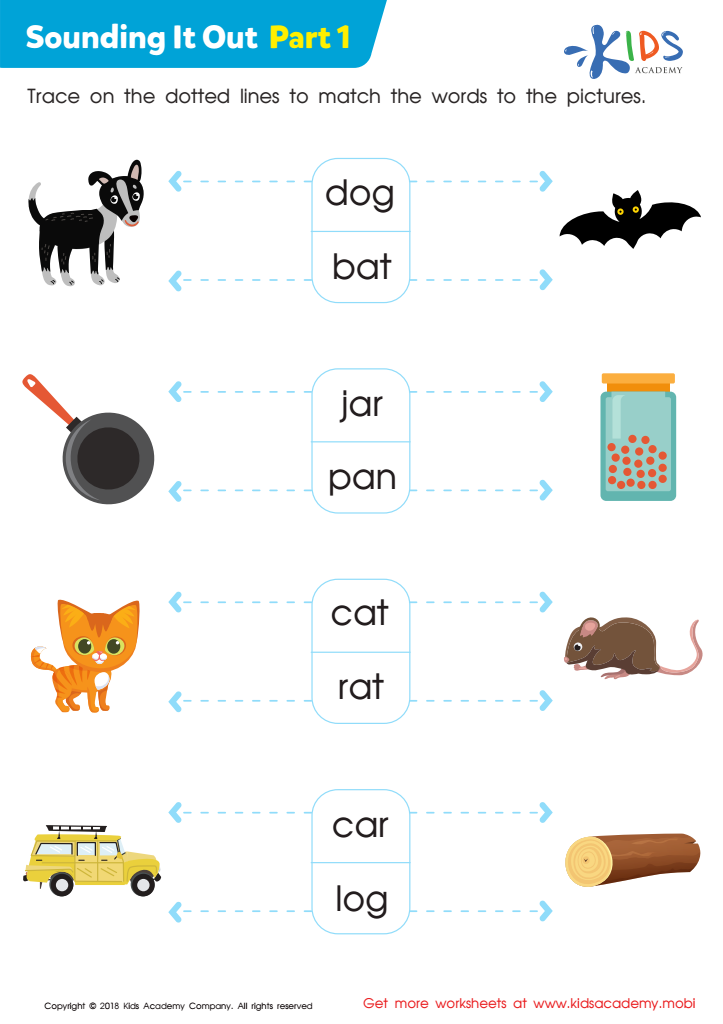
Sounding it Out: Part 1 Worksheet
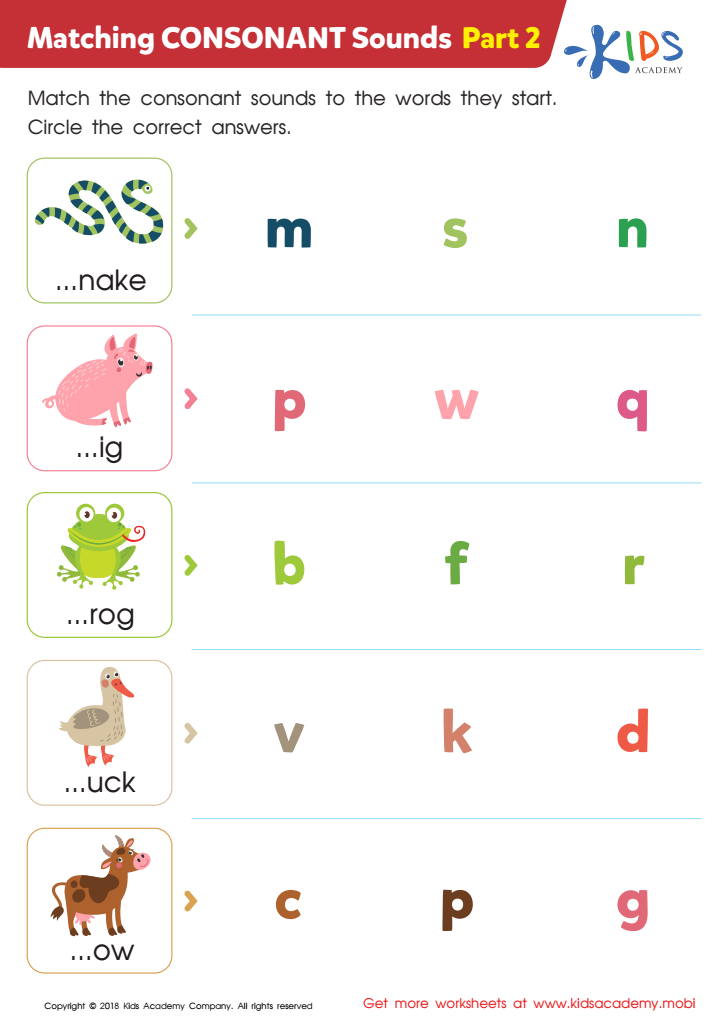
Matching Consonant Sounds: Part 2 Worksheet







Understanding the correlation between sounds and letters is crucial for young children aged 3-6 because it lays the foundation for reading and literacy skills. This correlation, known as phonemic awareness, helps children recognize that letters or groups of letters make specific sounds. By grasping this concept early on, they can more easily decode words, leading to smoother and more fluent reading.
For parents and teachers, fostering this understanding can significantly impact a child's academic trajectory. Early reading skills are strongly linked to later educational success, and children who struggle with reading often face difficulties in other subjects. By focusing on sound-letter correlations, educators can help children develop a love for reading, which in turn enhances their comprehension and vocabulary.
Moreover, early intervention can prevent future challenges. Children who do not grasp these basic phonetic principles are at risk for reading difficulties, which can lead to frustration, low self-esteem, and a lack of interest in learning. Activities that emphasize sound-letter links, such as phonics games, rhymes, and interactive reading, make learning enjoyable and effective, ensuring that children are well-prepared for more advanced literacy tasks.
In summary, prioritizing sound-letter correlation in early childhood education is essential for developing proficient, confident readers and setting the stage for lifelong learning.








