Spatial Orientation Worksheets for Ages 3-6
4 filtered results
-
From - To
Explore our engaging Spatial Orientation Worksheets designed specifically for children ages 3 to 6! These worksheets foster essential skills such as directional awareness, spatial recognition, and relationship understanding. Little learners will enjoy activities that encourage them to identify positions, navigate spaces, and differentiate between various spatial concepts through fun illustrations and interactive exercises. Our resources support early childhood development by enhancing critical thinking and problem-solving abilities. Perfect for preschool and kindergarten settings or at-home learning, these worksheets aim to make learning vibrant and enjoyable while preparing young minds for future academic success. Dive into a world of learning today!
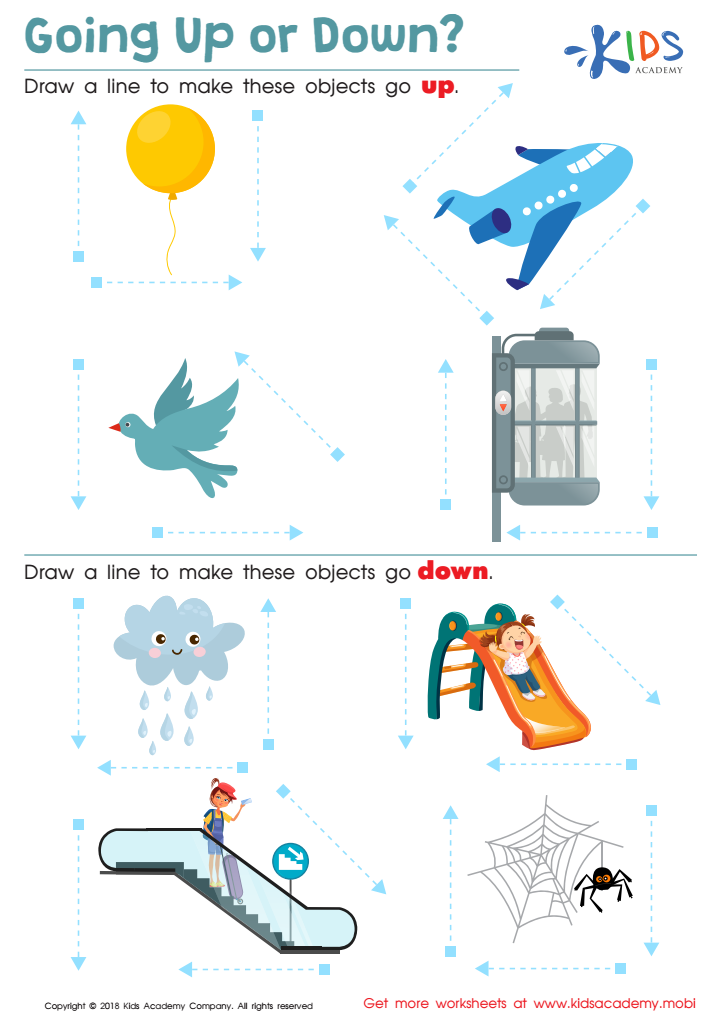
Going up or Down? Worksheet
 Assign to My Students
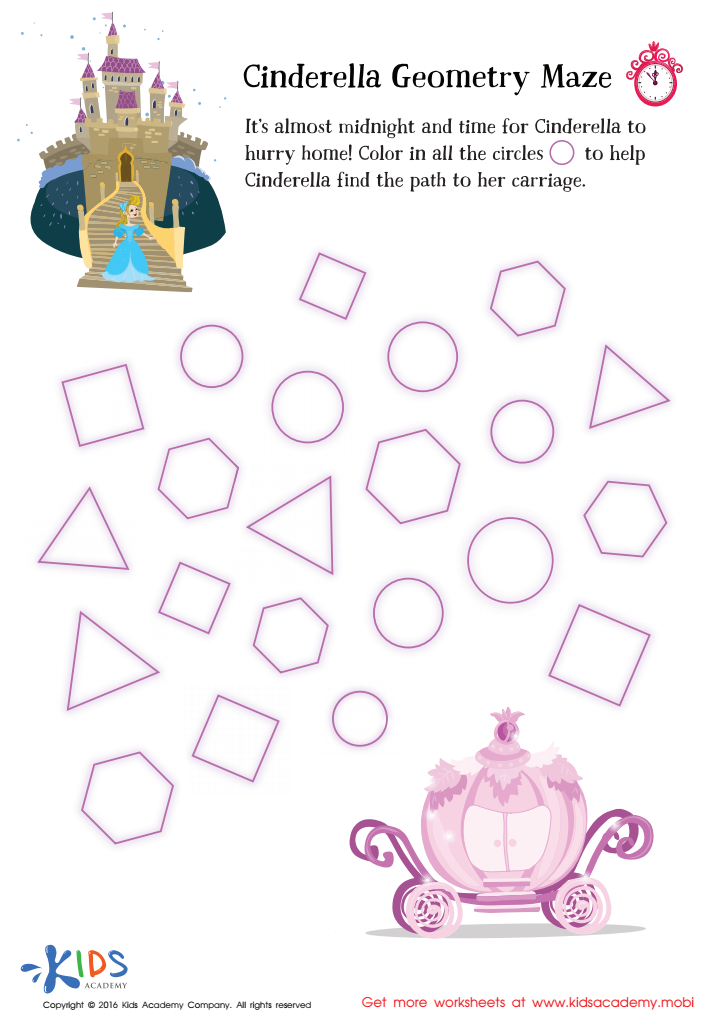
Cinderella Geometry Maze Worksheet
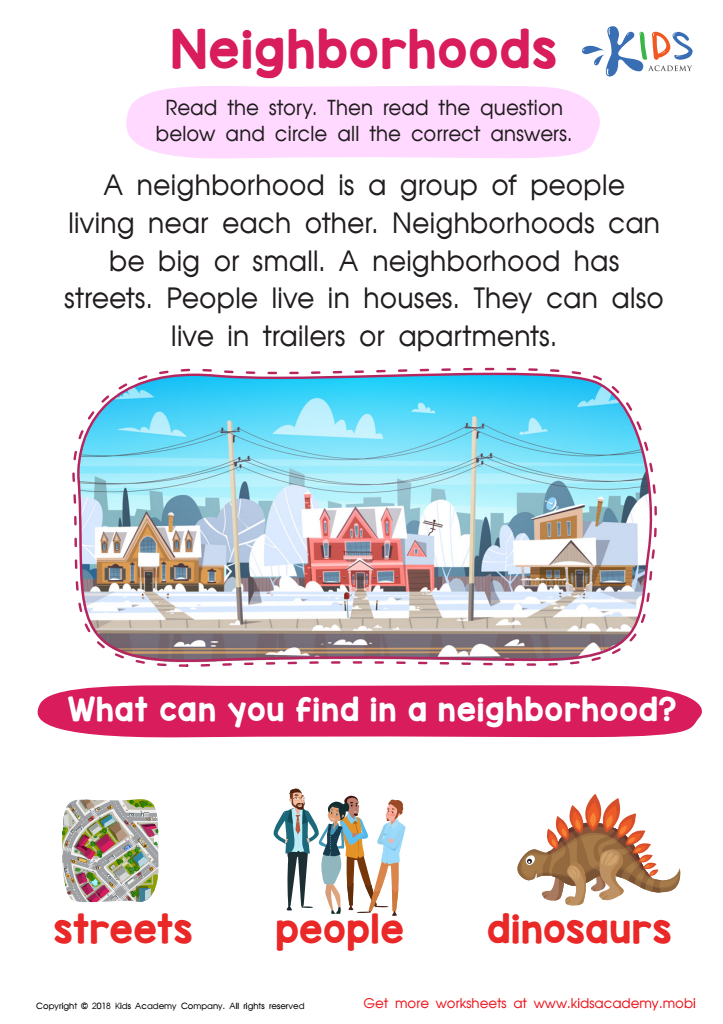
Neighborhoods Worksheet
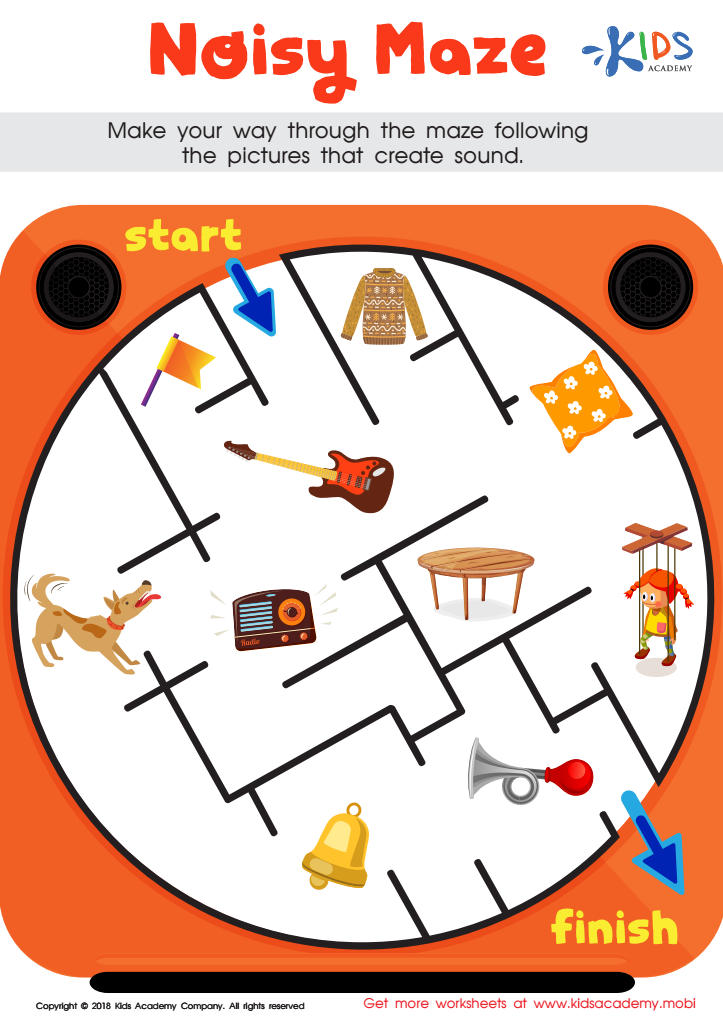
Noisy Maze Worksheet







Understanding spatial orientation in early childhood is crucial for several reasons. First, it lays the foundation for essential cognitive skills such as problem-solving, critical thinking, and creativity. At ages 3-6, children actively explore their environment, developing an awareness of their position in space relative to objects and other individuals. This awareness helps them navigate their surroundings, develop motor skills, and build independence.
Additionally, spatial orientation is closely linked to math and science readiness. Children who grasp concepts like direction, distance, shape, and movement are better prepared for future academic challenges, such as geometry and physics. It enhances their ability to visualize and manipulate objects mentally, skills that are critical in everyday tasks and more complex academic endeavors later on.
Moreover, fostering spatial awareness can improve social interactions and communication. Children who understand spatial relationships can describe their environment and express their needs more clearly. Therefore, parents and teachers should prioritize activities that promote spatial orientation—such as puzzles, building blocks, and outdoor exploration—to support holistic development during these formative years. Engaging children in play that incorporates these concepts not only makes learning enjoyable but also equips them with skills vital for lifelong learning and adaptation.








