Syllable identification Worksheets for Ages 3-6
3 filtered results
-
From - To
Discover our engaging Syllable Identification Worksheets designed specifically for children ages 3 to 6! These interactive resources help young learners master syllable recognition through fun activities and colorful illustrations. Our worksheets promote phonemic awareness by encouraging kids to clap, tap, or count syllables in words, enhancing their early literacy skills. Each worksheet is easy to follow and perfect for classroom or home use, making learning enjoyable. With various themes and difficulty levels, these printable worksheets cater to different learning styles, ensuring an enriching experience. Start your child's journey to reading fluency today with our Syllable Identification Worksheets!
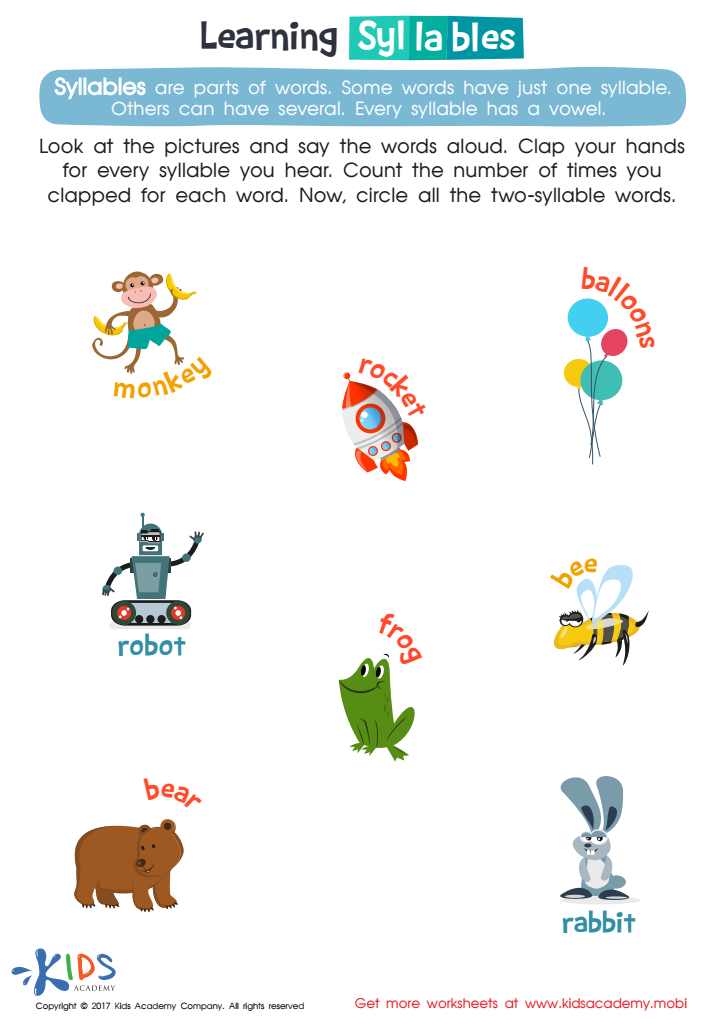
Learning Syllables Word Structure Worksheet
 Assign to My Students
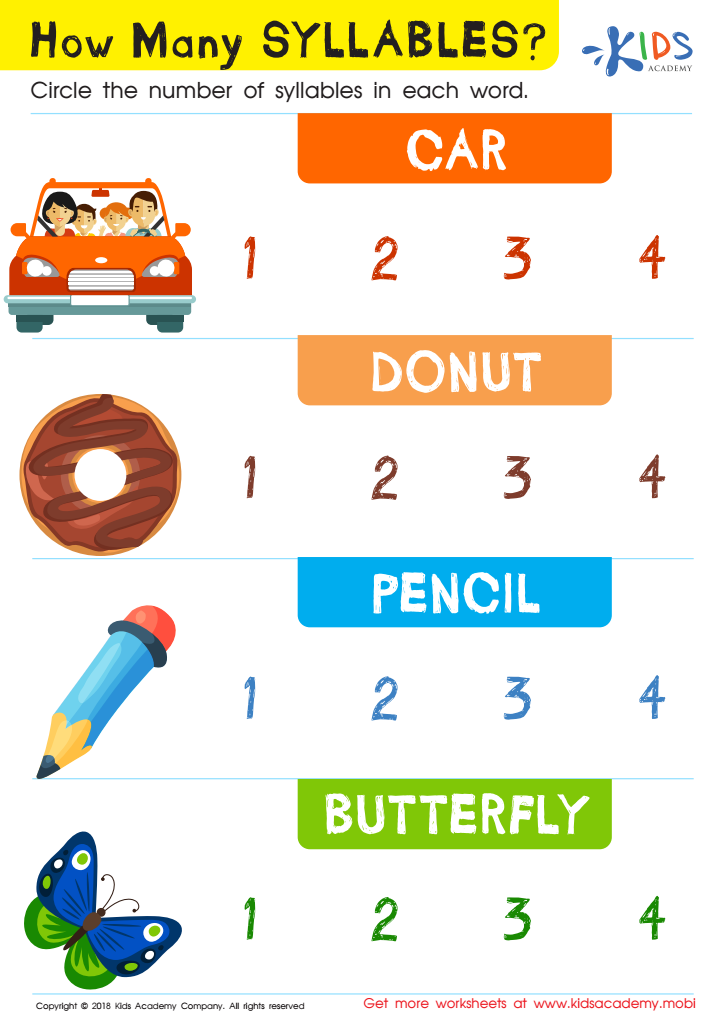
How Many Syllables? Worksheet
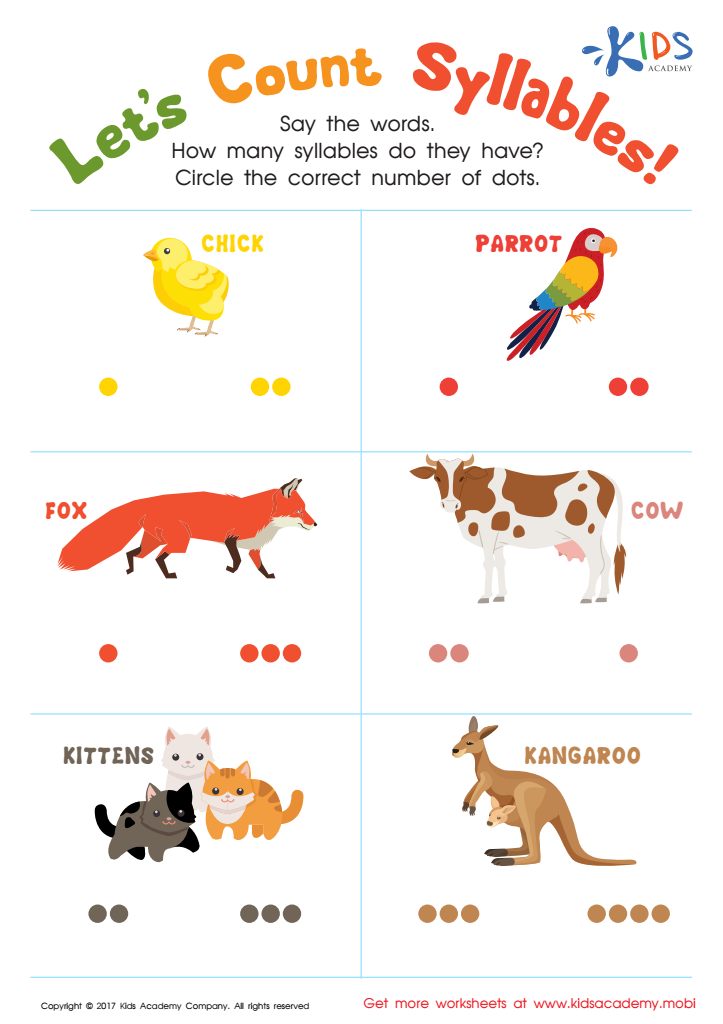
Lets Count Syllables Worksheet







Syllable identification is a crucial skill for early literacy development in children aged 3-6. It serves as a foundation for reading and writing, helping young learners understand the structure of words. By recognizing syllables, children gain essential phonemic awareness, which enhances their ability to decode words and improves spelling skills. This skill not only aids in lateral communication but also boosts confidence, enabling children to explore language in a playful and engaging manner.
Moreover, syllable identification contributes significantly to vocabulary development. As children play with syllables through games and activities, they become more adept at word formation and manipulation, enriching their language skills. Parents and teachers play a vital role by creating interactive learning experiences that promote this understanding.
Encouraging syllable recognition also fosters a love for reading from an early age. When children can easily segment and blend sounds, they experience greater enjoyment and success with books. This foundational skill also lays the groundwork for more advanced literacy concepts such as rhyming and phonics.
By prioritizing syllable identification, parents and educators not only prepare children for academic success but also nurture a lifelong appreciation for language and literature. Investing time in this area yields significant long-term benefits for children's cognitive and social development.








