Synonym identification Worksheets for Ages 3-6
3 filtered results
-
From - To
Explore our engaging Synonym Identification Worksheets designed for children aged 3-6! These worksheets provide a fun and interactive way for young learners to discover the world of synonyms, enhancing their vocabulary and language skills. Ideal for preschool and early elementary students, each worksheet encourages kids to recognize words with similar meanings through colorful illustrations and simple activities. By identifying synonyms, children bolster their comprehension and communication abilities while enjoying playful learning experiences. Perfect for classroom use or at-home practice, our worksheets empower little learners to expand their language skills in an enjoyable way. Download them today and watch your child's vocabulary flourish!
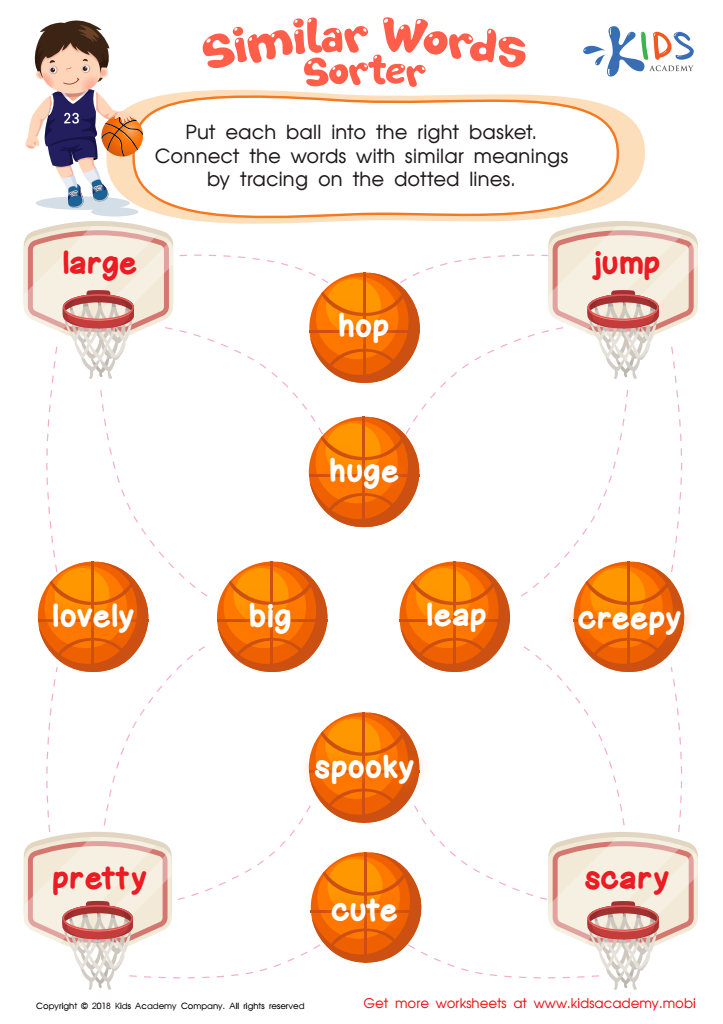
Similar Words Worksheet
 Assign to My Students
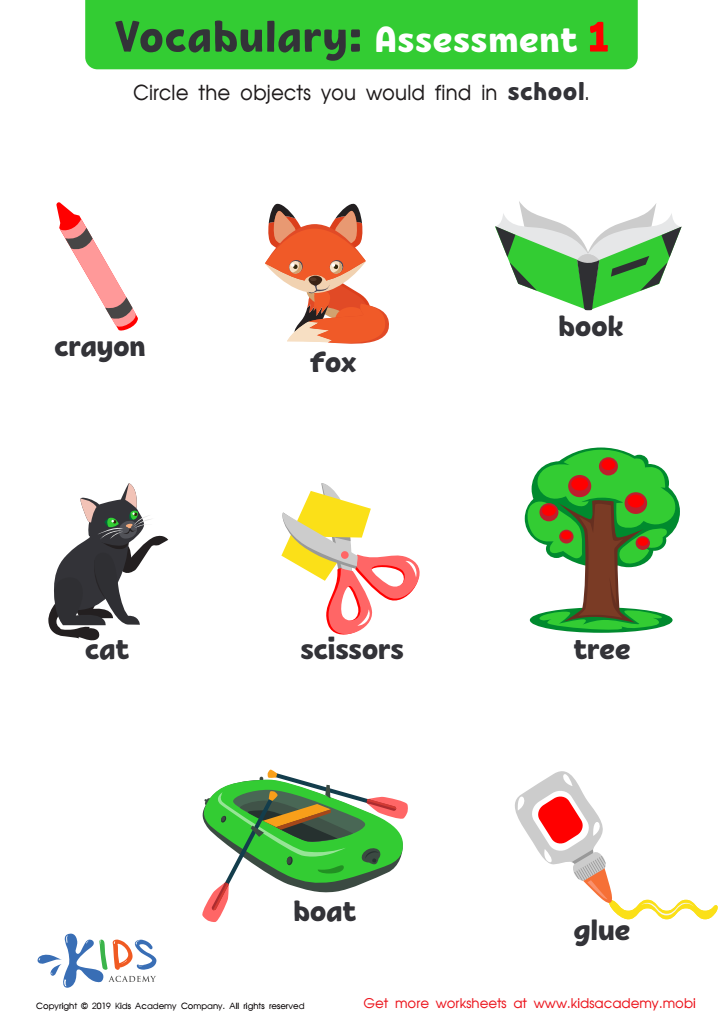
Vocabulary: Assessment 1 Worksheet
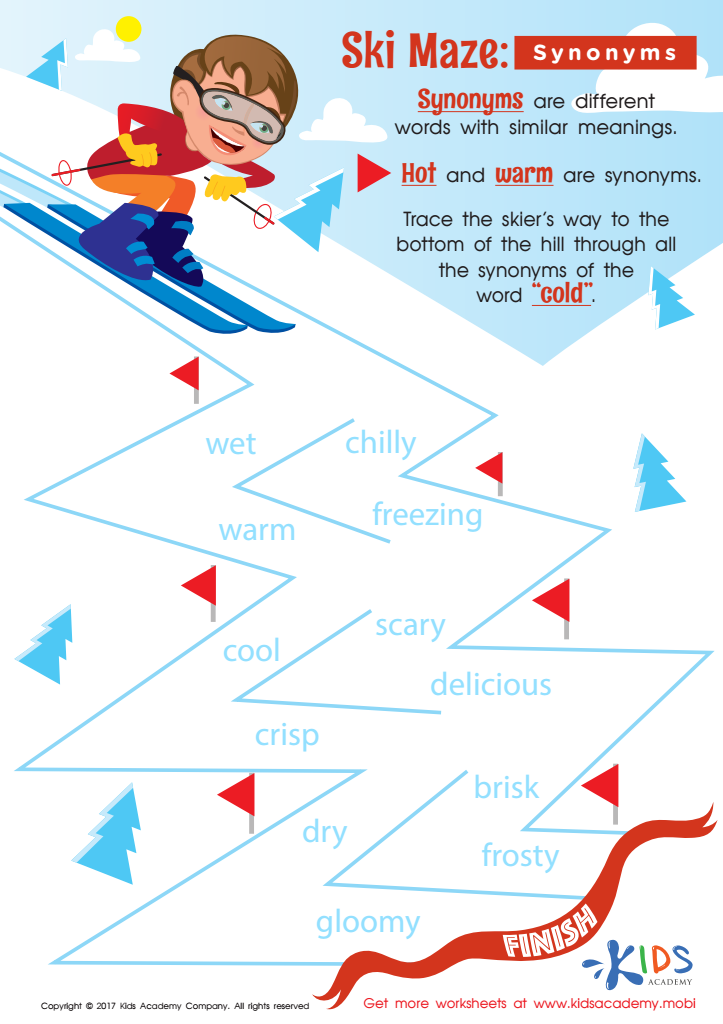
Free Printable Synonym Worksheet






Synonym identification is an essential language skill for early learners aged 3-6, and it holds notable significance for both parents and teachers. Understanding synonyms—words that have similar meanings—enhances vocabulary development, which is crucial during these formative years. When children learn synonyms, they not only expand their linguistic repertoire but also develop the ability to express themselves more accurately and creatively.
For parents, fostering synonym identification can improve their child's communication skills and comprehension. It empowers children to articulate their thoughts and feelings more precisely, enriching conversations at home. Additionally, when children encounter various contexts where synonyms apply, it cultivates critical thinking and adaptability in language use.
For teachers, integrating synonym identification into early childhood curricula promotes active engagement in learning. It aids in the development of phonemic awareness, which is foundational for reading and writing skills. Through playful activities such as games and storytelling, teachers can create an enjoyable learning experience, setting the stage for lifelong language proficiency. Ultimately, recognition of synonyms not only equips young learners with essential vocabulary skills but also nurtures their confidence and capability as effective communicators. Both parents and teachers should prioritize this learning to provide children with a strong linguistic foundation for future success.








