
Understanding adjectives Worksheets for Ages 3-6
4 filtered results
Difficulty Level
Grade
Age
-
From - To
Subject
Activity
Standards
Explore our engaging "Understanding Adjectives Worksheets" designed specifically for children ages 3-6! These worksheets focus on developing essential language skills through fun activities that help young learners identify and use adjectives effectively. With colorful illustrations and interactive tasks, children will enhance their vocabulary by describing people, places, and things. Ideal for parents and educators, our worksheets are easy to use and support early learning in a playful environment. Foster creativity and comprehension as your child gains confidence in language while having fun! Download now and watch them discover the world of adjectives through play and exploration!
Favorites
With answer key
Interactive
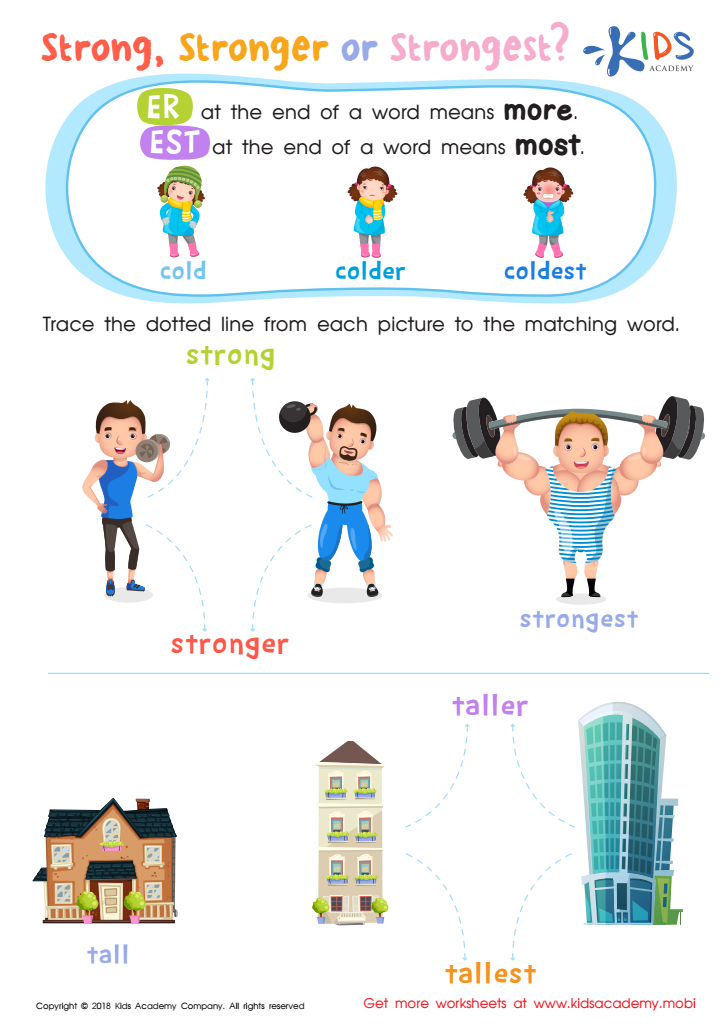
Strong or Stronger? Worksheet
Help your child understand the concept of size gradients with a fun worksheet. Explain to them that adding "-er" to words means "more" and "-est" means "most". Point to the pictures and have your little one trace the dotted line to the corresponding words to learn the concept of highest and lowest.
 Assign to My Students
Strong or Stronger? Worksheet
Worksheet
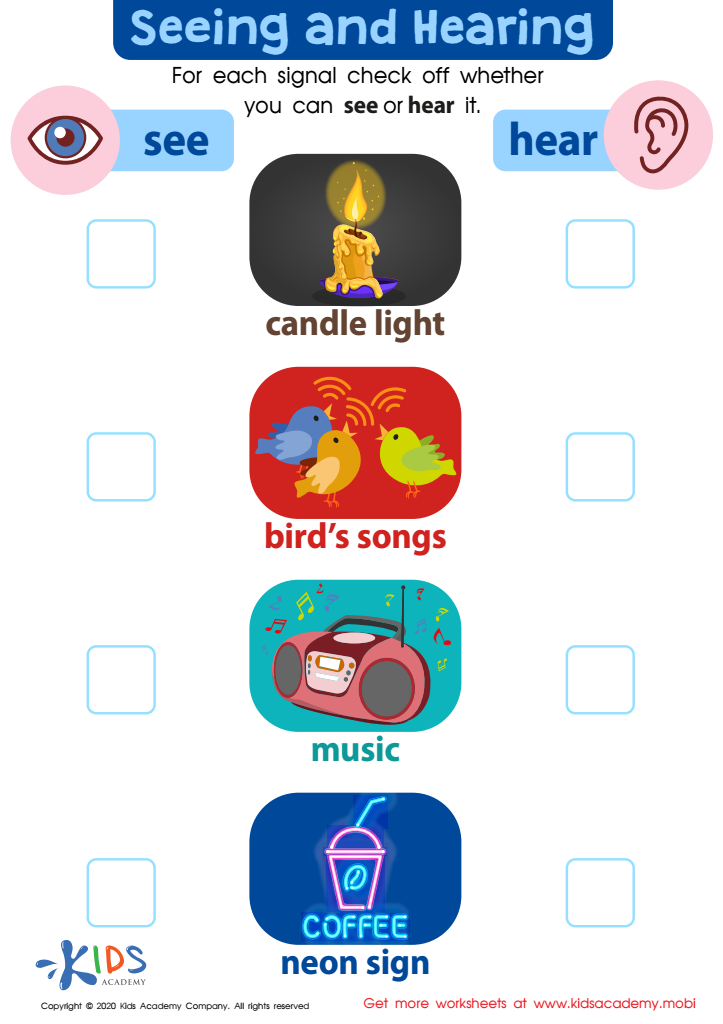
Seeing and Hearing Worksheet
Before beginning this worksheet, ensure your students know that we have five senses: eyes (seeing), tongue (tasting), skin (feeling), nose (smelling), and ears (hearing). This worksheet will explore seeing and hearing - ask your students what they can see/hear in the picture and get them to check it off.
Seeing and Hearing Worksheet
Worksheet
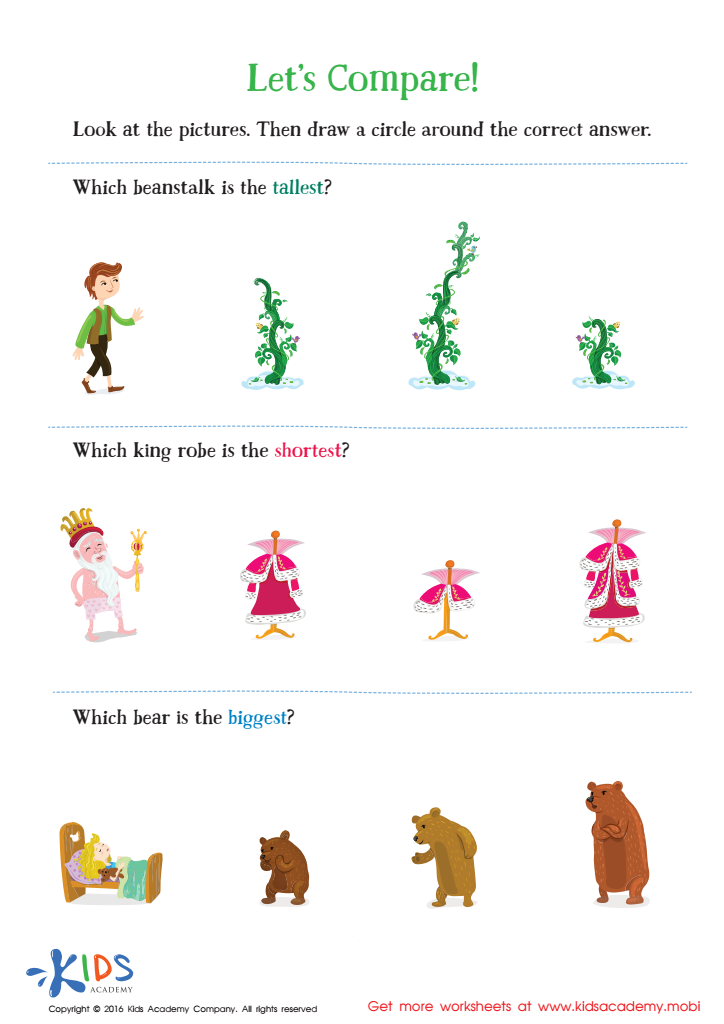
Fairy Tale Worksheet: Let's Compare
Preschoolers need to recognize different sizes of objects. This worksheet combines fun fairy tales with size practice, helping them read, problem solve, and sort through pictures. Your child will love the images and be eager to complete it. Enhance their learning by talking about the tales to build comprehension.
Fairy Tale Worksheet: Let's Compare
Worksheet
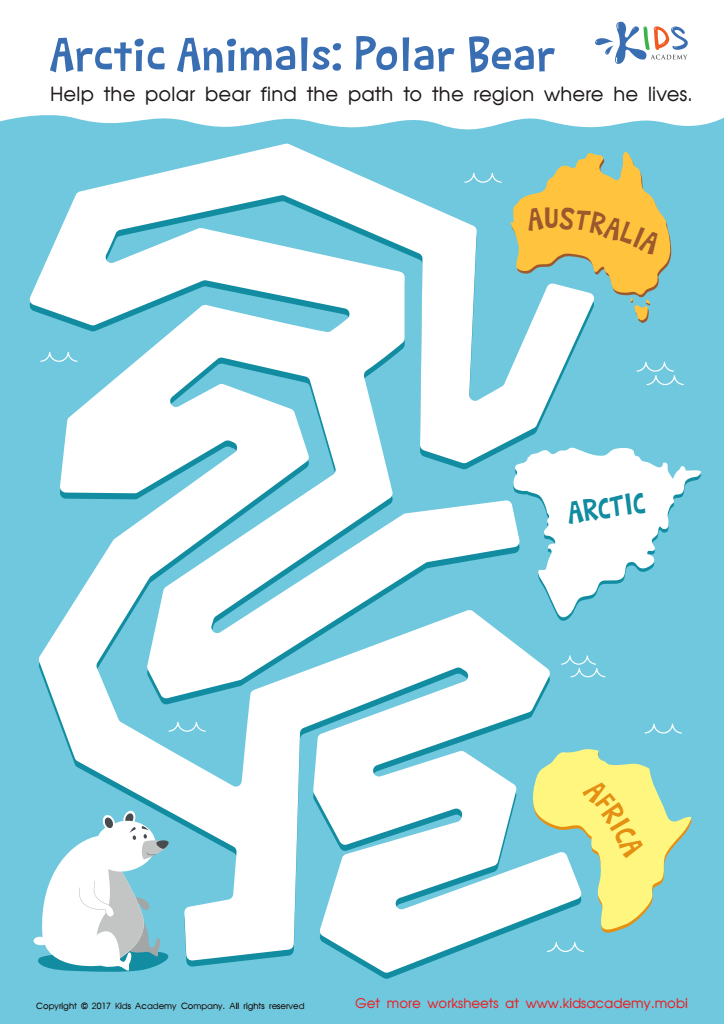
Arctic Animals: Polar Bear Worksheet
Oh no! Our polar bear friend is lost! Let's help him find his way back to the arctic with this fun worksheet. It reinforces science and social studies and kids will learn about the climate and habitats of different continents. They'll also develop logical reasoning skills! You can enrich the experience by looking up pictures of real polar bears after the worksheet is complete.
Arctic Animals: Polar Bear Worksheet
Worksheet
Join Kids Academy for Free
Who is primarily going to use this learning content?







Understanding adjectives is essential for children ages 3-6 because it significantly enhances their language development and communication skills. At this stage, emotional and cognitive growth is rapid; so, grasping descriptive language helps children express their thoughts and feelings more effectively.
Adjectives, which describe nouns, make language vibrant and engaging, allowing children to create richer narratives in their play and interactions. For example, instead of saying "the dog," they can say "the big, fluffy dog." This not only builds vocabulary but also helps them paint clearer mental images, fostering creativity.
Moreover, recognizing and using adjectives aids in comprehension. When children hear or read stories filled with descriptive words, they learn to interpret the context better, enhancing their understanding of the text. It also sharpens their observation skills by encouraging them to notice details in their surroundings, as they categorize and compare objects by attributes like color, size, and shape.
Encouraging the use of adjectives creates a strong foundation for literacy development to prepare children for reading and writing in later years. Overall, by focusing on adjectives early, parents and teachers can help cultivate articulate, imaginative, and confident communicators.








