Understanding clocks Worksheets for Ages 3-6
3 filtered results
-
From - To
Unlock your child's time-telling abilities with our "Understanding Clocks" worksheets for ages 3-6! Tailored to young learners, these engaging printables blend fun with education, laying a sturdy foundation for reading analog clocks. Designed by learning experts, each worksheet features colorful illustrations and simple tasks that make mastering hours and minutes exciting. Perfect for preschool and early elementary students, these resources enhance fine motor skills while promoting independence and confidence. Let your child embark on a delightful journey of time-ticking adventures with our exceptional worksheets! Your budding timekeeper awaits!
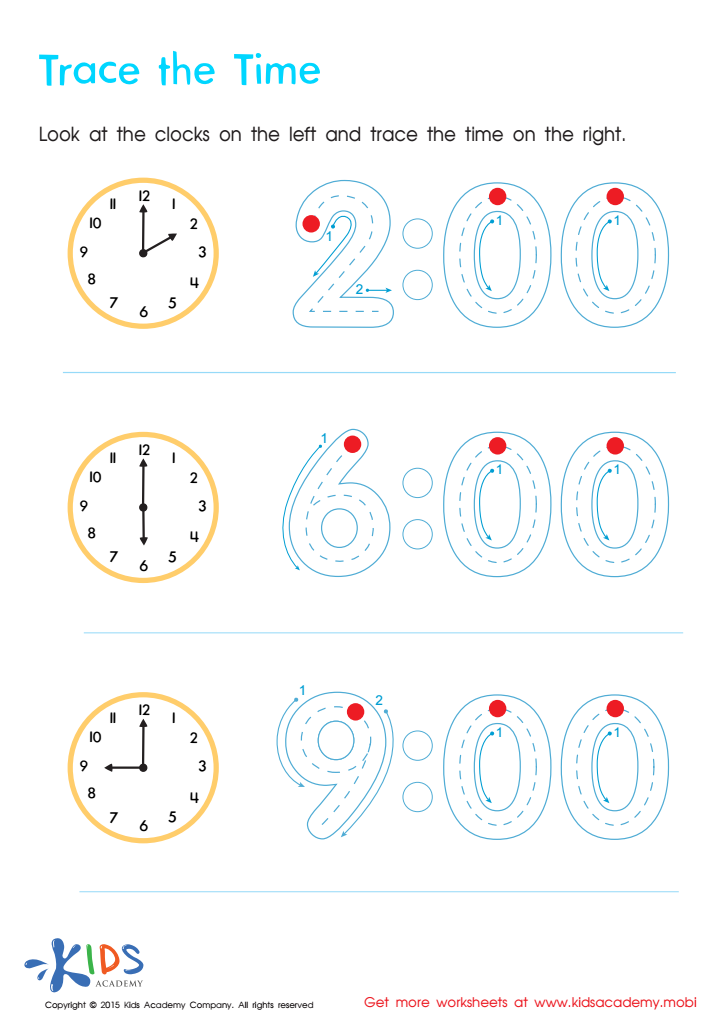
Telling The Time Worksheet: Part 2
 Assign to My Students
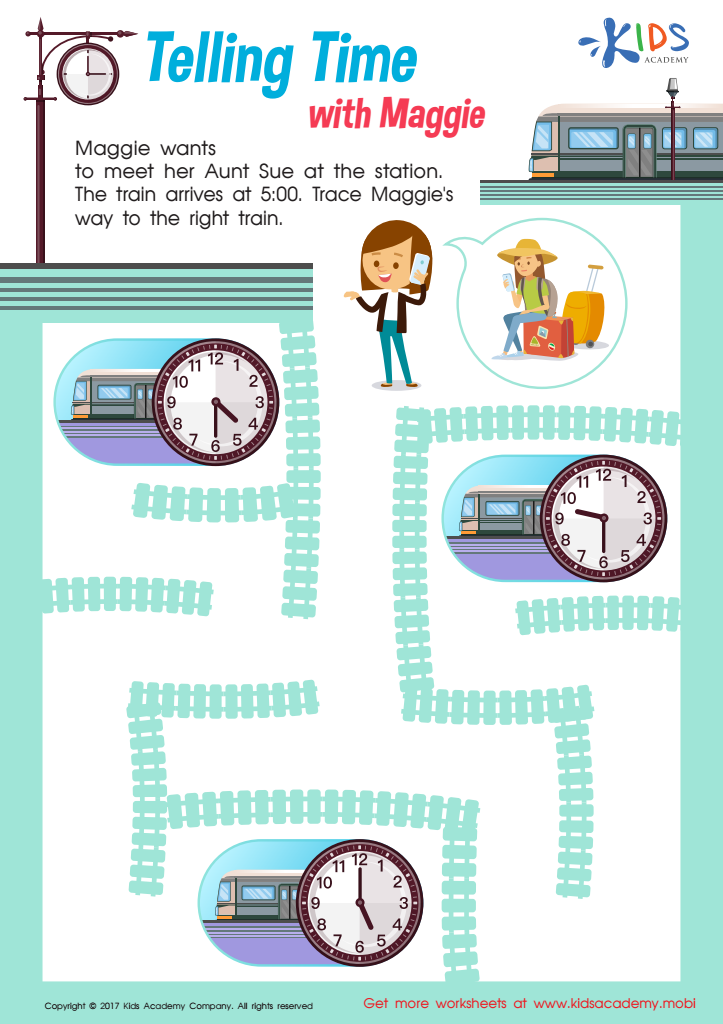
Telling Time With Maggie Time Worksheet


.jpg)




Understanding clocks is essential for young children aged 3-6 as it lays the foundation for crucial life skills and cognitive development. For parents and teachers, focusing on this subject helps children grasp the concept of time, promoting a sense of daily structure and routine. At this age, children begin developing their sense of order, making it pivotal to introduce them to time management early on.
Teaching young kids to read clocks not only aids in their ability to plan and execute daily activities but also enhances their mathematical skills such as counting, sequencing, and recognizing patterns. This early exposure to time concepts integrates learning across subjects, making abstract ideas more relatable and easier to understand.
Moreover, understanding clocks fosters responsibility and independence. When children know how to tell the time, they can be more accountable for their actions and schedules, such as knowing when it's time for school, meals, or play. This helps with smoother transitions and reduces anxiety caused by abrupt changes.
Lastly, discussing time and clocks encourages language development, enhancing vocabulary with terms like "hour," "minute," and "second." Ensuring that children grasp these foundational concepts equips them with essential skills, setting them up for future success in both academic and real-world scenarios.








