Understanding comparisons Worksheets for Ages 3-6
5 filtered results
-
From - To
Discover engaging "Understanding Comparisons Worksheets" designed for children ages 3-6! These fun and interactive resources help young learners grasp the concepts of big vs. small, more vs. less, and similar vs. different. Each worksheet is crafted to support early math and cognitive skills development through age-appropriate activities that encourage critical thinking. Whether at home or in the classroom, these worksheets promote independent learning while making comparisons exciting. Browse our variety of colorful and captivating worksheets to enhance your child's understanding of comparisons today, fostering their ability to differentiate and categorize in the world around them. Perfect for preschool and kindergarten education!
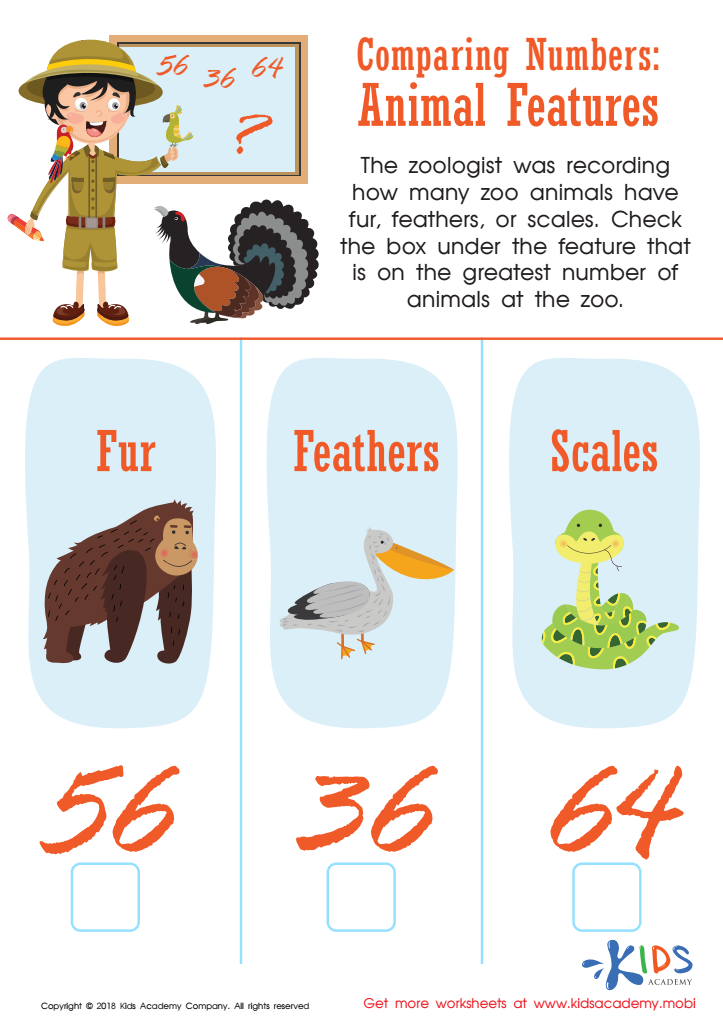
Animal Features Worksheet
 Assign to My Students
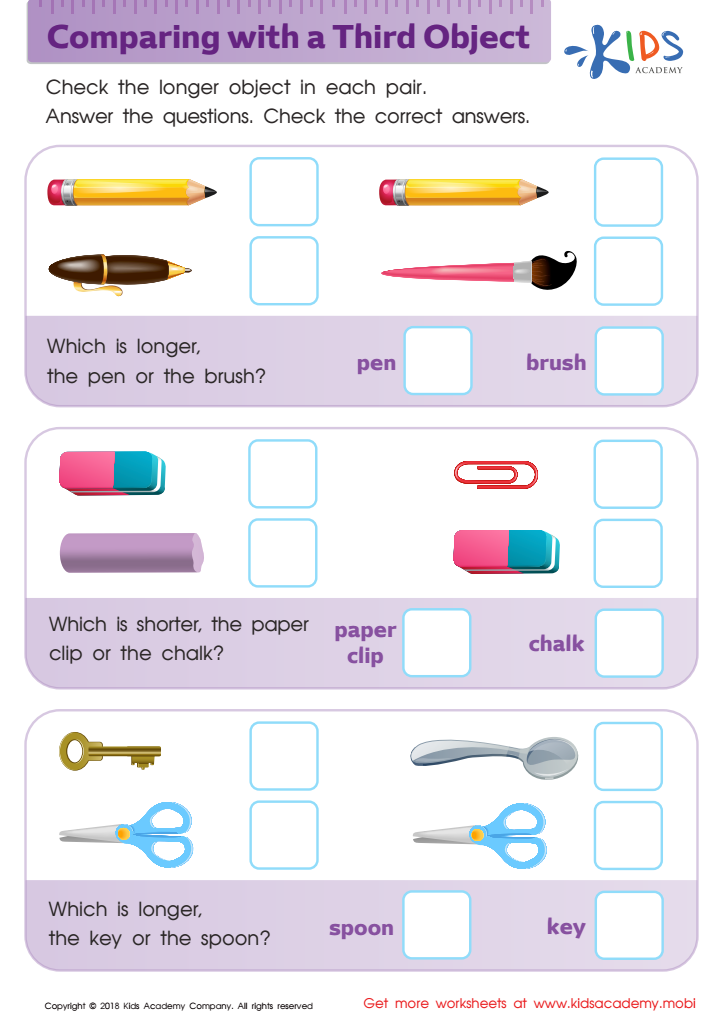
Comparing with a Third Object Worksheet
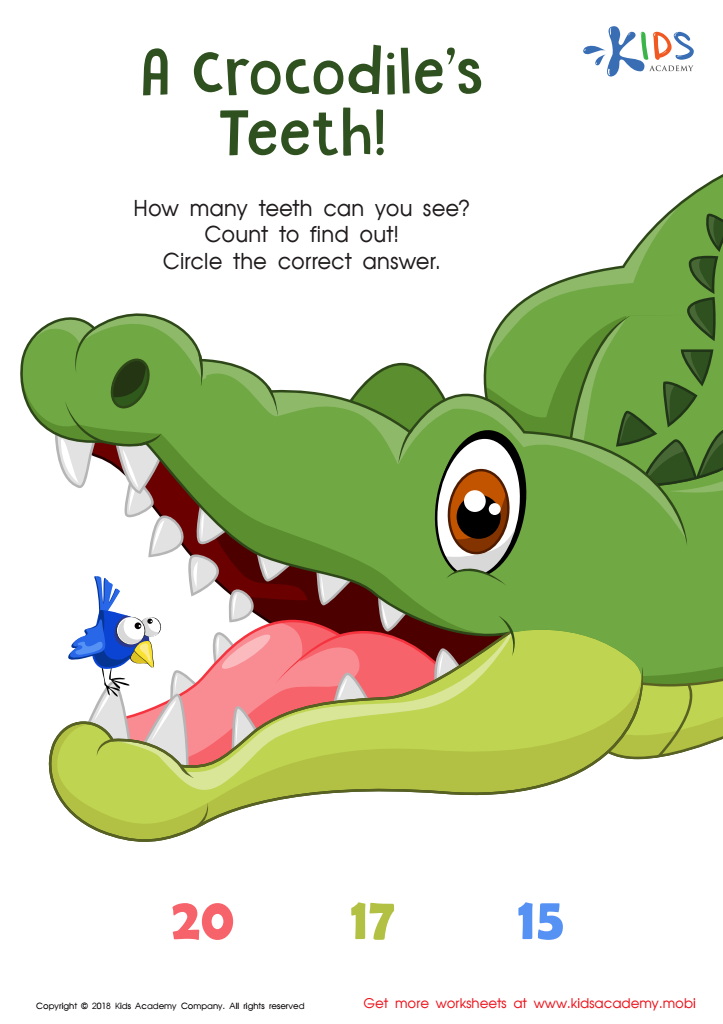
A Crocodile's Teeth Worksheet
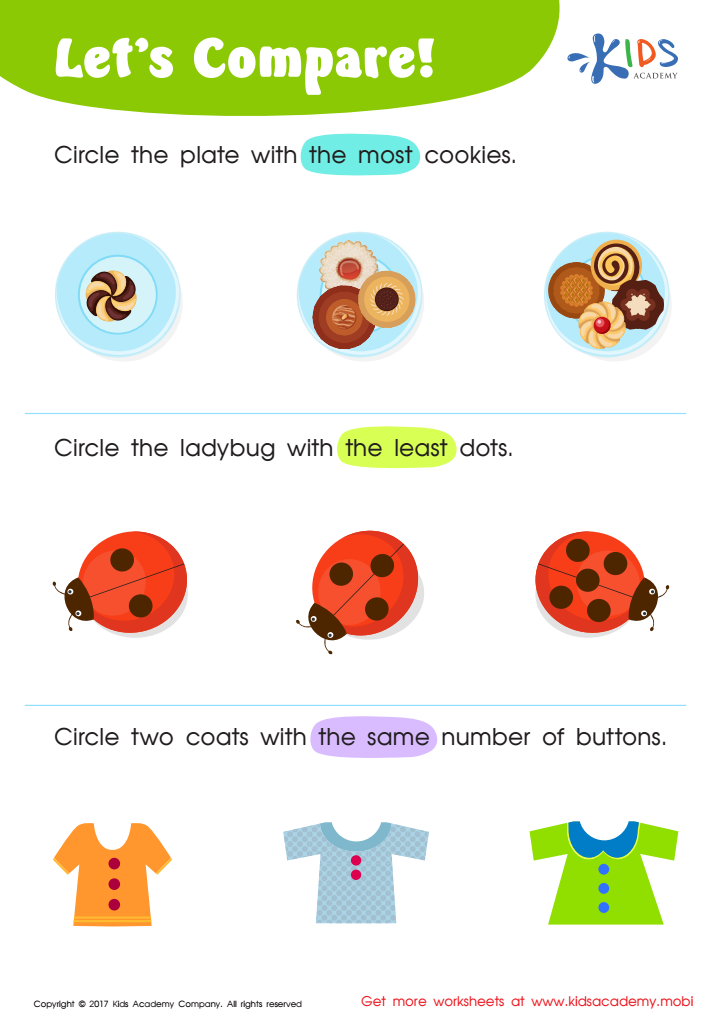
Matching: Classifying Toys by Size Worksheet
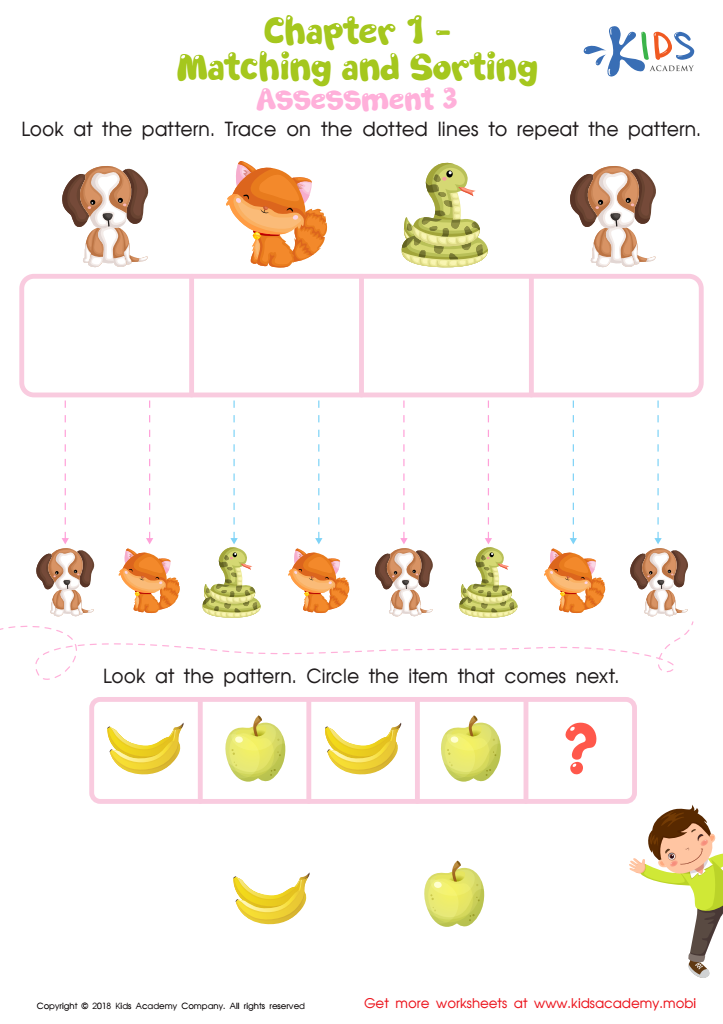
Matching and Sorting for Preschool: Assessment 3 Worksheet




Understanding comparisons is vital for children aged 3-6 as it lays the foundational skills for critical thinking and problem-solving. At this age, children are naturally curious and keen to explore their environment. Comparing objects—such as sizes, shapes, weights, and quantities—helps children make sense of the world around them. Parents and teachers should care about fostering these skills because they encourage cognitive development and promote early math skills, which are crucial for future learning.
Comparing also enhances language development. As children discuss similarities and differences, they expand their vocabulary and improve their communication skills. Socially, understanding comparisons aids in conflict resolution and collaborative play, as children learn to negotiate and share resources.
Moreover, mastering comparative thinking fosters self-confidence. When children can discern different attributes, they gain a sense of competence and achievement, which encourages them to further explore and engage with complex concepts. By supporting comparisons in play and daily life, parents and teachers equip children with essential tools that will serve them throughout their educational journey and beyond. Fostering these skills in young learners promotes overall development, setting a strong foundation for future academic success.








