Understanding equations Worksheets for Ages 3-6
5 filtered results
-
From - To
Explore our "Understanding Equations Worksheets for Ages 3-6," designed to introduce young children to the basics of math through fun and engaging activities. These worksheets help develop early math skills, enhancing their understanding of simple equations in an exciting and comprehensible way. Each colorful sheet contains age-appropriate exercises, including count and match, fill-in-the-blank problems, and more, fostering critical thinking and problem-solving abilities. Perfect for parents and educators, these worksheets offer a solid foundation for early learners to build math confidence and enthusiasm. Download now to give your child a head-start in math!
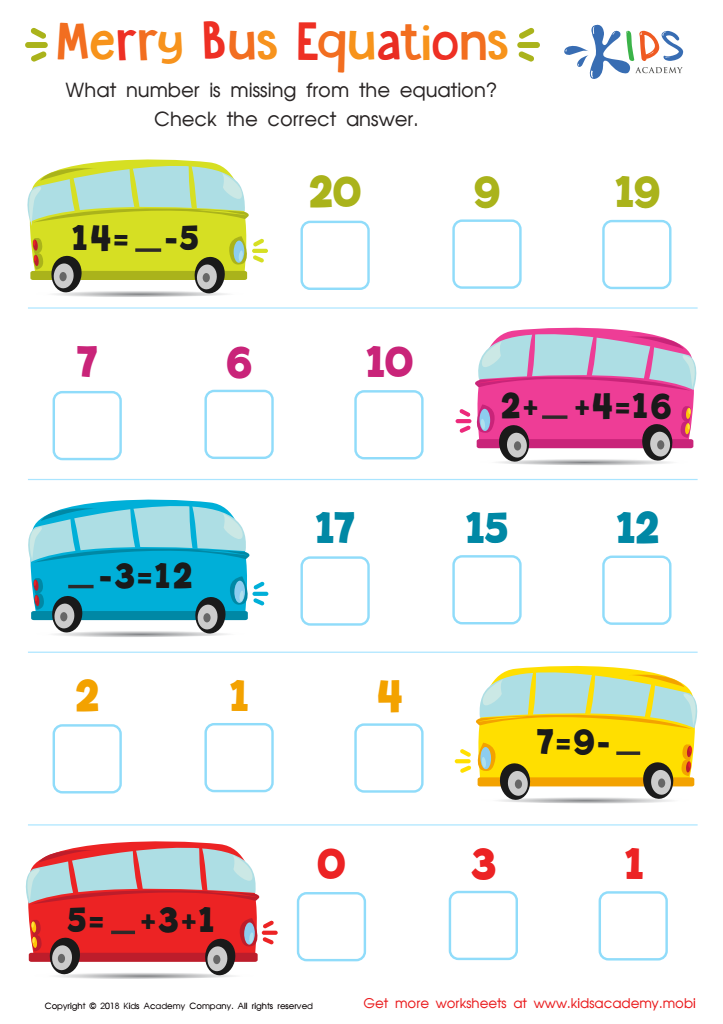
Merry Bus Equations Worksheet
 Assign to My Students
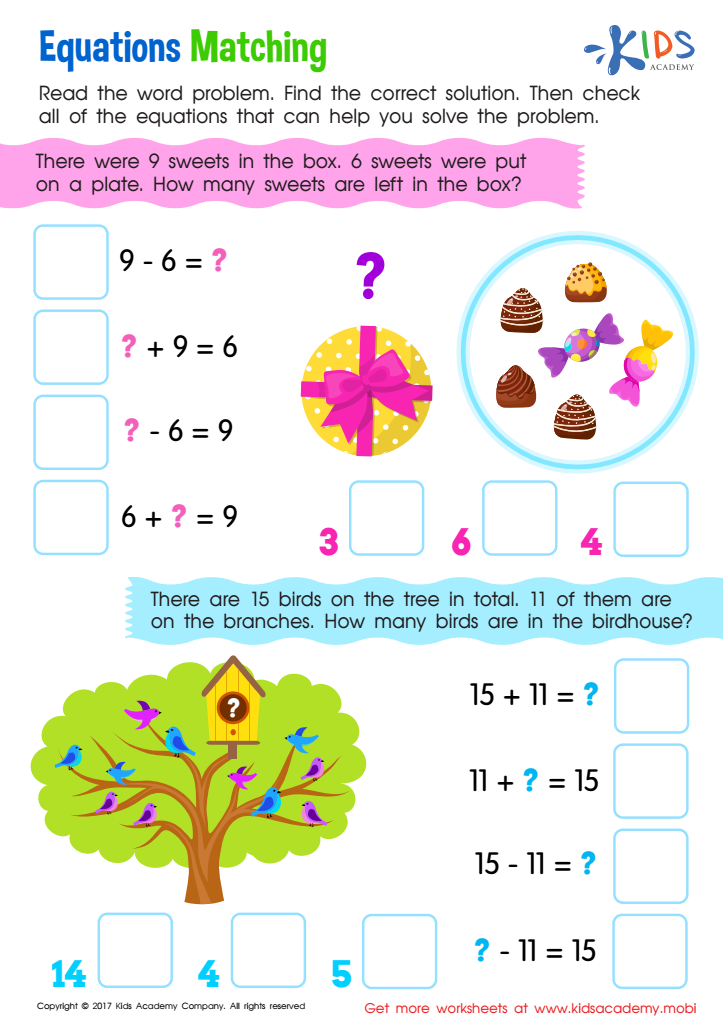
Equations Matching Word Problems Worksheet
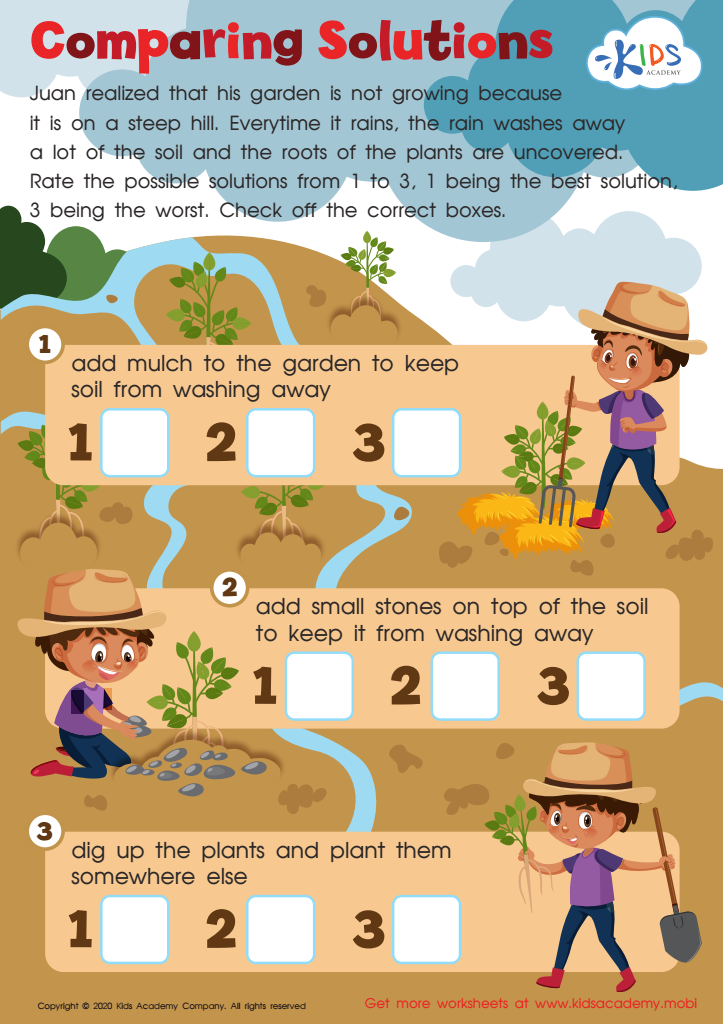
Comparing Solutions Worksheet
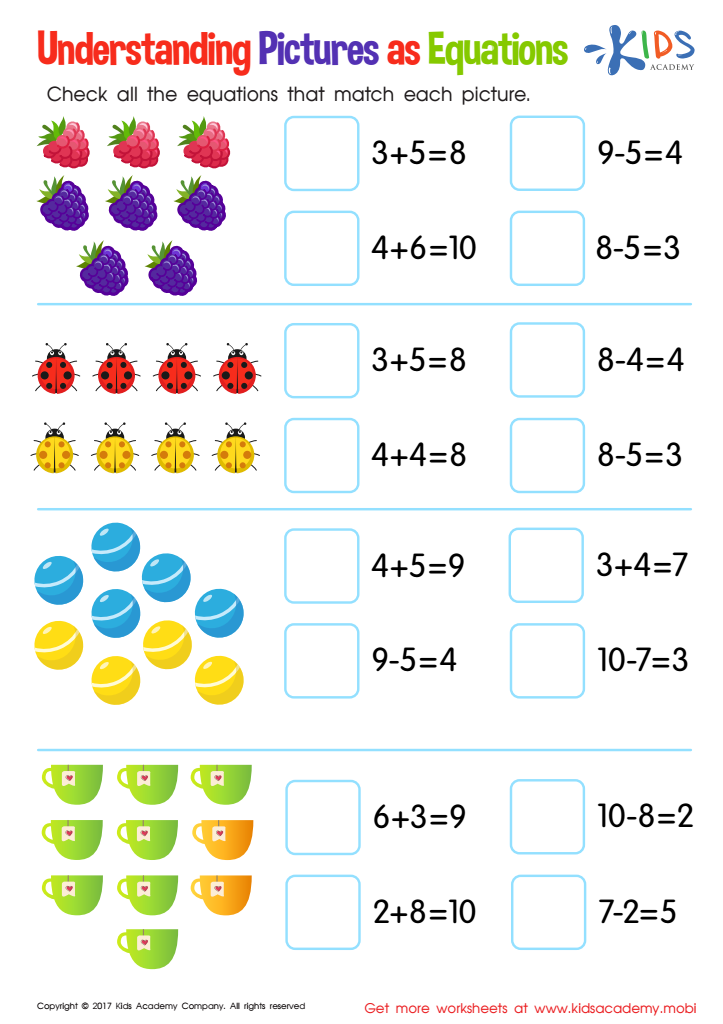
Understanding Pictures as Equations Worksheet
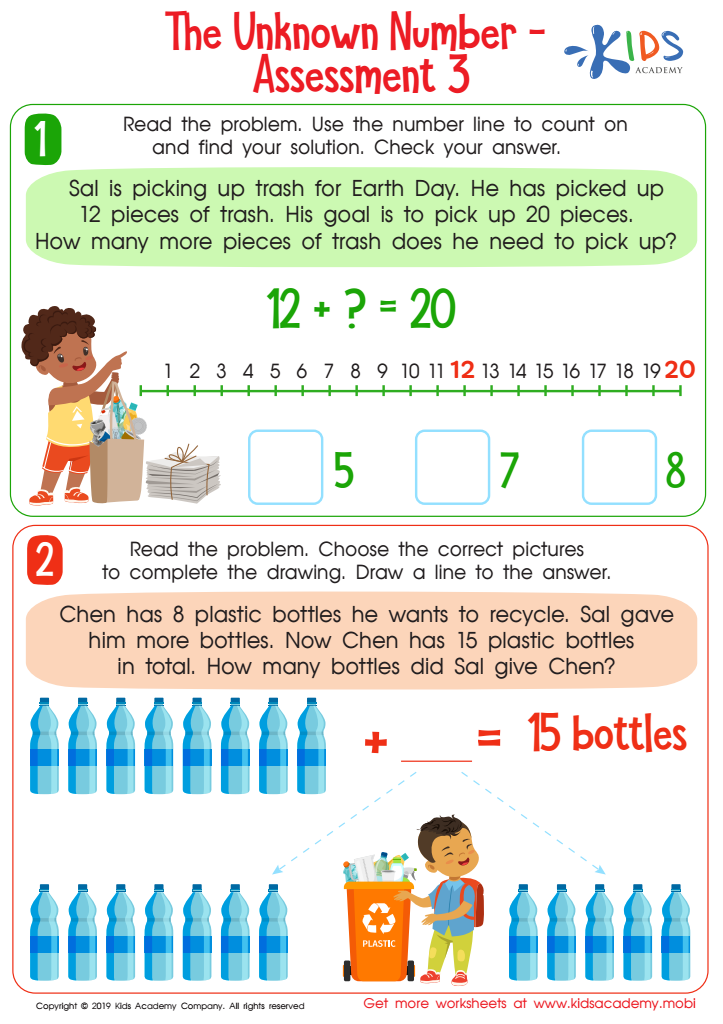
The Unknown Number - Assessment 3 Worksheet




.jpg)

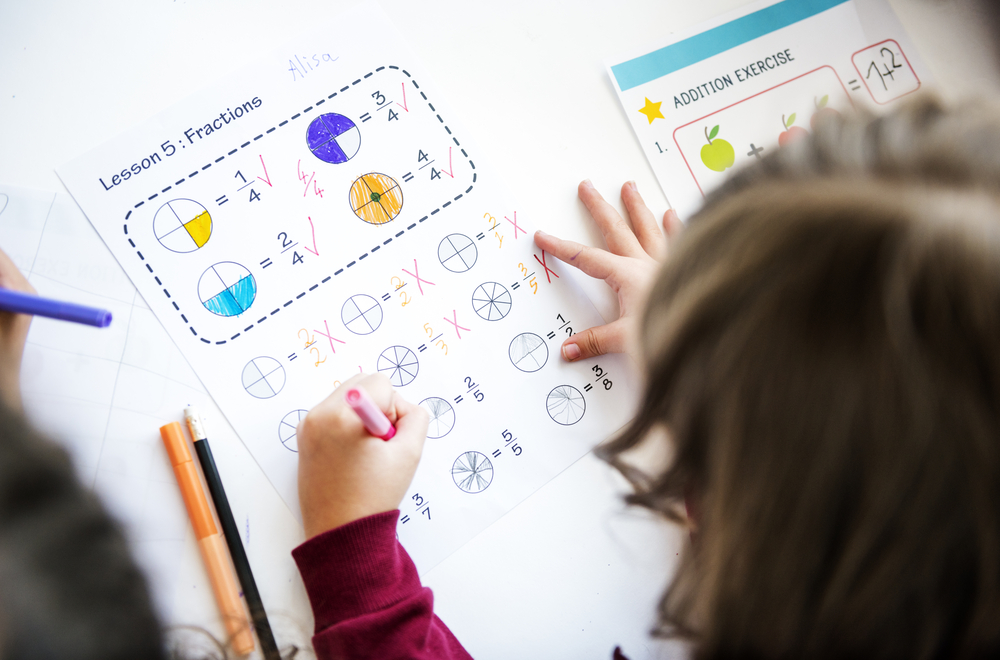
Understanding equations, even in simple forms, is crucial for young children aged 3-6 because it builds foundational cognitive skills that foster logical thinking, problem-solving, and early math understanding. At this formative stage, children's brains are highly receptive to new information and learning concepts that will support future academic achievement.
Introducing basic equations, often through play-based learning, helps children grasp the idea that numbers and operations denote relationships and balance. For example, using physical objects like blocks to show how "2 + 3 = 5" helps bridge abstract concepts with tangible experiences. This type of learning enhances children's ability to recognize patterns, understand sequencing, and develop critical basic mathematical language and numeracy skills.
For parents and teachers, integrating such understanding into early childhood education means equipping children with tools and confidence that are fundamental not only for later complex math topics, but for a broad range of problem-solving tasks throughout life. It encourages a positive disposition towards math, fostering curiosity and persistence. Moreover, such early math skills are strong predictors of academic success not just in mathematics, but in other subject areas as well, since they are critical thinking and analysis heavy as they progress through their educational journey.








