Understanding graphs Worksheets for Ages 3-6
3 filtered results
-
From - To
Welcome to our "Understanding Graphs Worksheets" designed specifically for children ages 3 to 6! These engaging and colorful worksheets introduce young learners to the basics of graphing in a fun and imaginative way. Through interactive activities, kids will explore simple bar graphs, picture graphs, and more, helping them to develop essential math skills. Each worksheet fosters curiosity and critical thinking, allowing children to analyze data visually while enhancing their vocabulary. Ideal for parents and educators alike, our worksheets serve as a valuable tool to support early math education and foster a love for learning. Start your child's graphing journey today!
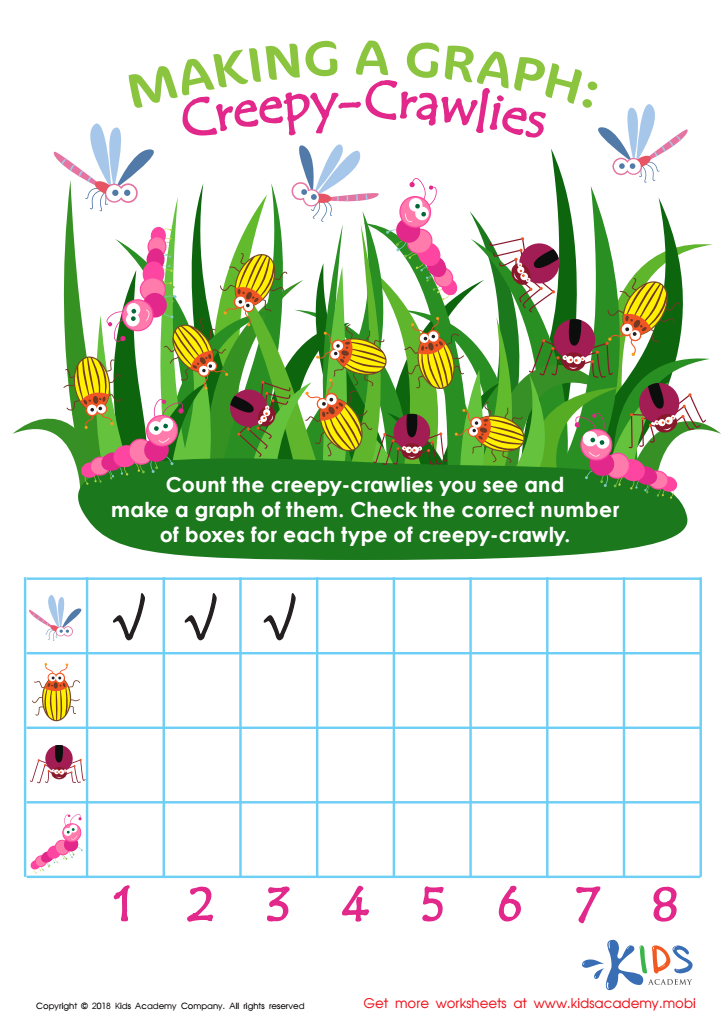
Making a Graph: Creepy Crawlies Worksheet
 Assign to My Students
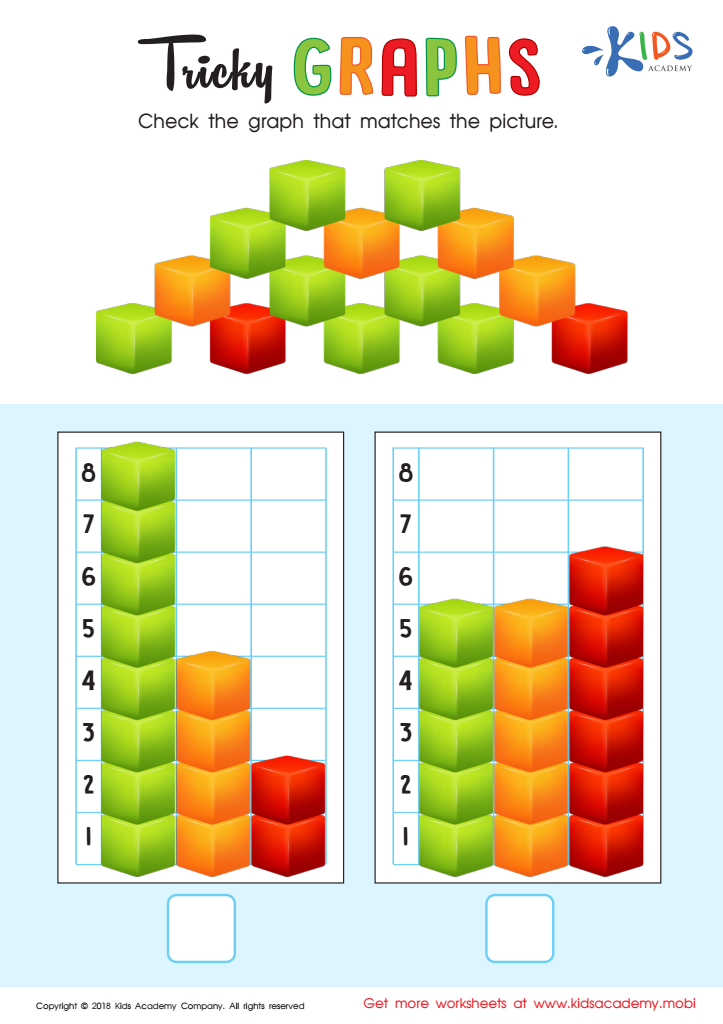
Tricky Graphs Worksheet
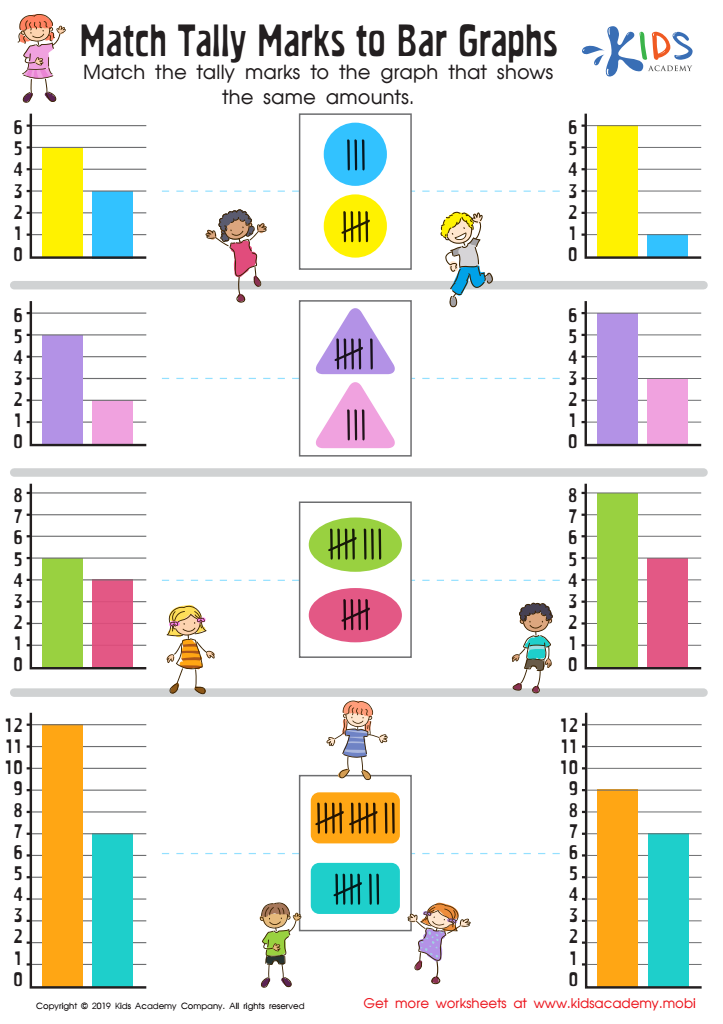
Match Tally Marks to Bar Graphs Worksheet






Understanding graphs is a foundational skill for young children, making it essential for parents and teachers working with ages 3 to 6. Early exposure to graph concepts helps children develop critical thinking, problem-solving abilities, and data interpretation skills, which are vital across all areas of learning.
Graphs simplify complex information, allowing kids to visualize relationships within data. This visualization fosters analytical skills, enabling children to compare quantities, understand trends, and draw conclusions based on observable patterns. For instance, simple bar or pictographs can help youngsters grasp concepts like "more" and "less," setting a strong foundation for mathematical skills.
Moreover, integrating graphing activities in everyday learning promotes collaboration, communication, and inquiry-based learning. By engaging with graphs, children learn to express their thoughts and questions, nurturing their curiosity about the world around them.
Ultimately, understanding graphs can aid in laying down a sense of order and organization, contributing to cognitive development. Parents and teachers who prioritize graph literacy are fostering creativity and analytical prowess, empowering children to make sense of both numerical and visual information as they transition into more advanced academic stages. By nurturing these skills early on, we prepare young learners for success in an increasingly data-driven society.








