
Understanding punctuation Worksheets for Ages 3-6
3 filtered results
Difficulty Level
Grade
Age
-
From - To
Subject
Activity
Standards
Enhance your child's writing skills with our engaging "Understanding Punctuation Worksheets" designed specifically for ages 3-6. These carefully curated worksheets introduce young learners to the basics of punctuation through fun activities and colorful illustrations. Kids will explore essential punctuation marks such as periods, question marks, and exclamation points, helping them understand their usage in simple sentences. With easy-to-follow exercises, your little ones will develop early literacy skills while enjoying the learning process. Perfect for both home and classroom settings, these worksheets lay a solid foundation for effective communication and writing confidence. Start your child's punctuation journey today!
Favorites
With answer key
Interactive
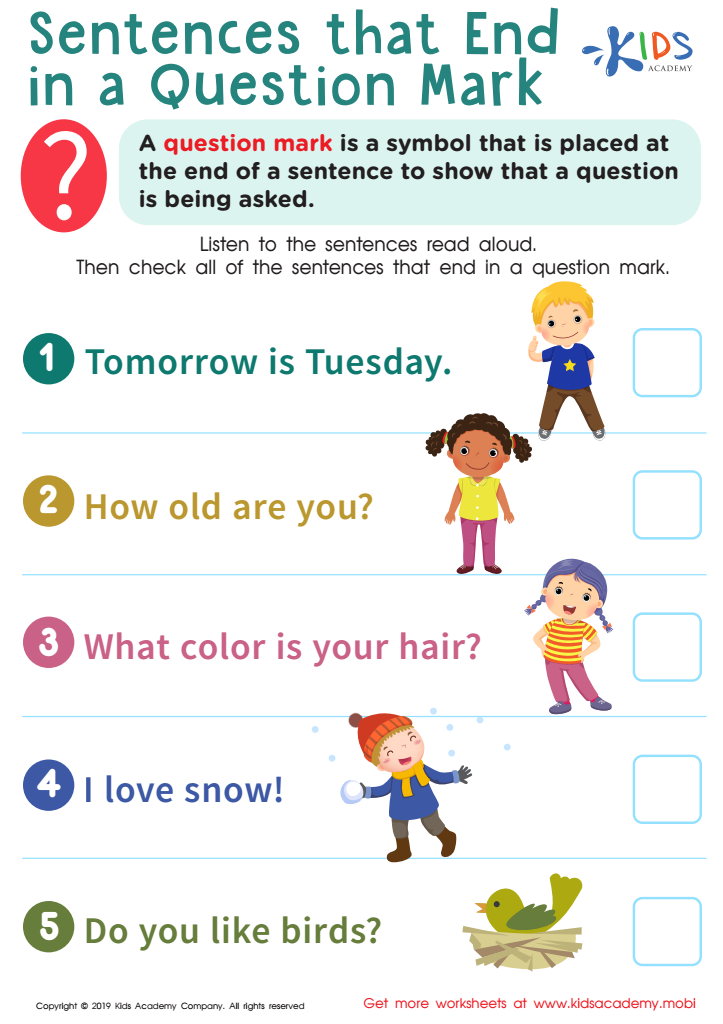
Sentences That End in an Question Mark Worksheet
Teach your students about the four most common punctuation marks - period, comma, question mark, and exclamation mark - with this worksheet. Show them how to use the question mark to indicate a sentence is a question. Then, have them check all sentences that end in a question mark.
 Assign to My Students
Sentences That End in an Question Mark Worksheet
Worksheet
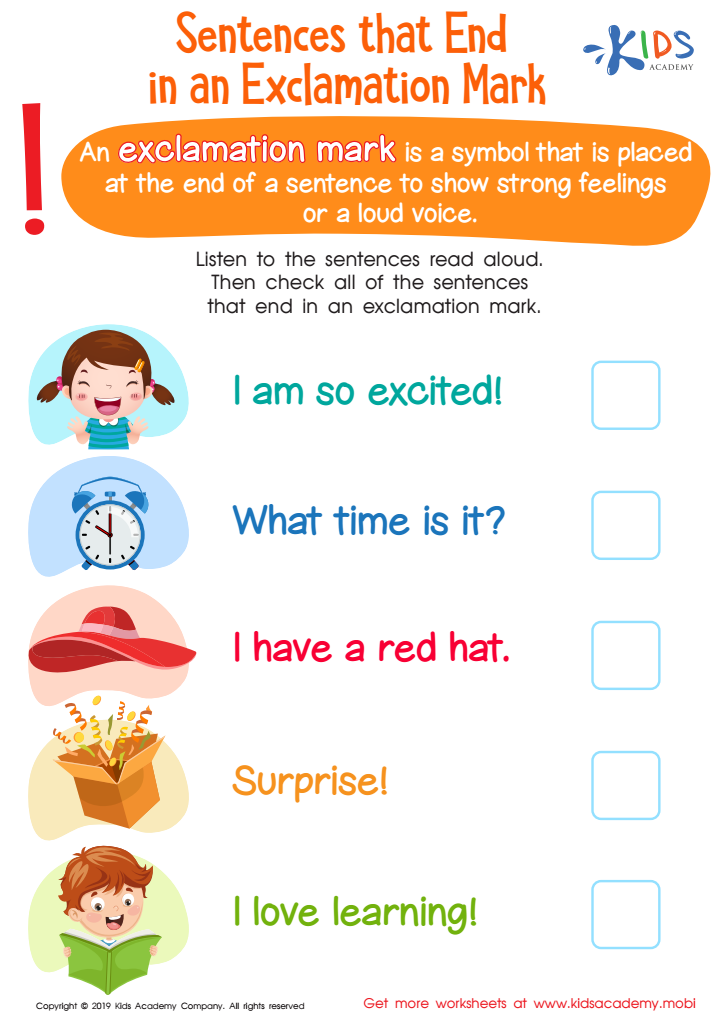
Sentences That End in an Exclamation Mark Worksheet
This worksheet is a great way to brush up kids' punctuation skills. Period, comma, question mark and exclamation mark are the first four punctuation marks they should learn. Exclamation marks show strong emotion or a noise. Use this printout to teach and test kids' understanding of exclamation marks.
Sentences That End in an Exclamation Mark Worksheet
Worksheet
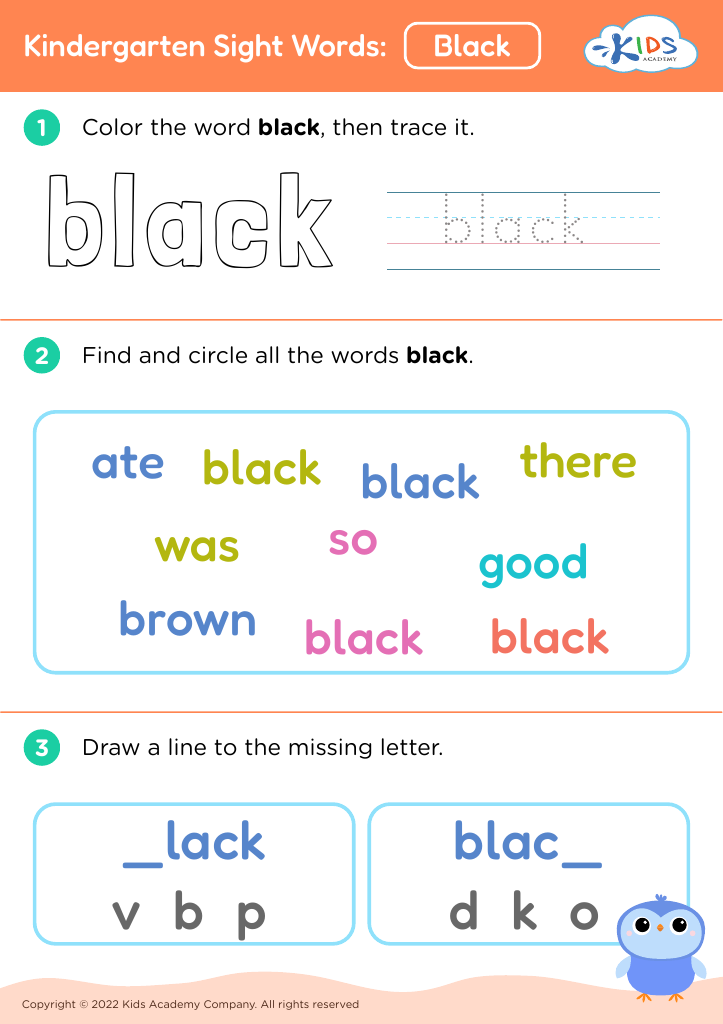
Join Kids Academy for Free
Who is primarily going to use this learning content?







Understanding punctuation is essential for children aged 3-6, as it lays the foundation for effective communication skills. At this age, children begin to recognize the basic elements of written language. Teaching punctuation fosters early literacy by helping children understand how written words create meaning. It encourages them to comprehend the rhythm of sentences, as punctuation marks guide the reader’s inflection and pauses.
Moreover, introducing punctuation can enhance vocabulary and sentence structure skills. Children who grasp the roles of periods, question marks, and exclamation points can better express their thoughts and emotions, promoting creativity in writing and storytelling. This understanding also assists with reading; children can decode sentences with greater ease, recognizing punctuation cues that dictate how a sentence should be read.
Furthermore, when parents and teachers emphasize punctuation, they help develop critical thinking skills. Understanding how to structure information invites children to organize their ideas more coherently. Ultimately, an early focus on punctuation paves the way for confident communicators, ensuring that children not only succeed in literacy but also develop a passion for reading and writing that can last a lifetime. Engaging in discussions about punctuation nurtures curiosity and a deeper understanding of language, making it a critical focus for educators and caregivers alike.








