
Underwater animal identification Worksheets for Ages 3-6
3 filtered results
Difficulty Level
Grade
Age
-
From - To
Subject
Activity
Standards
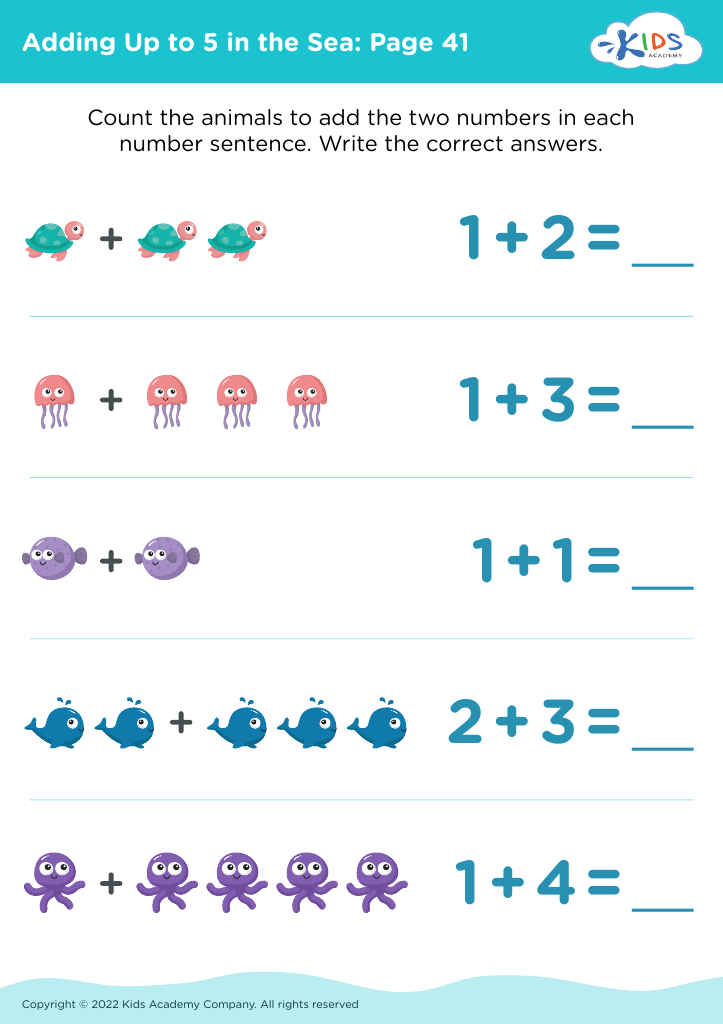
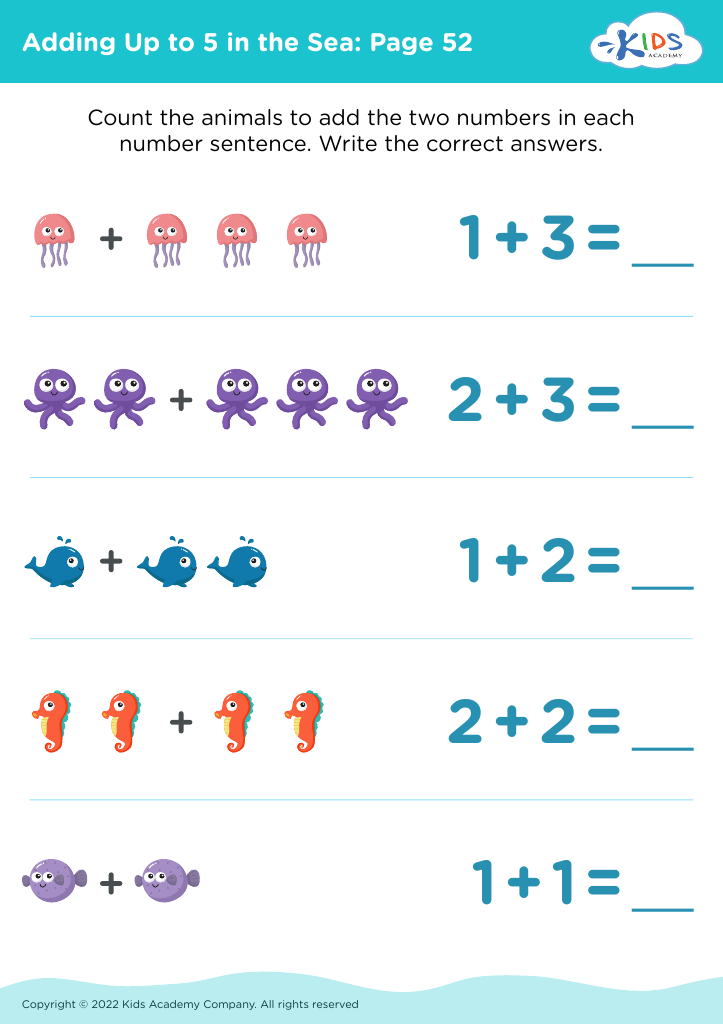
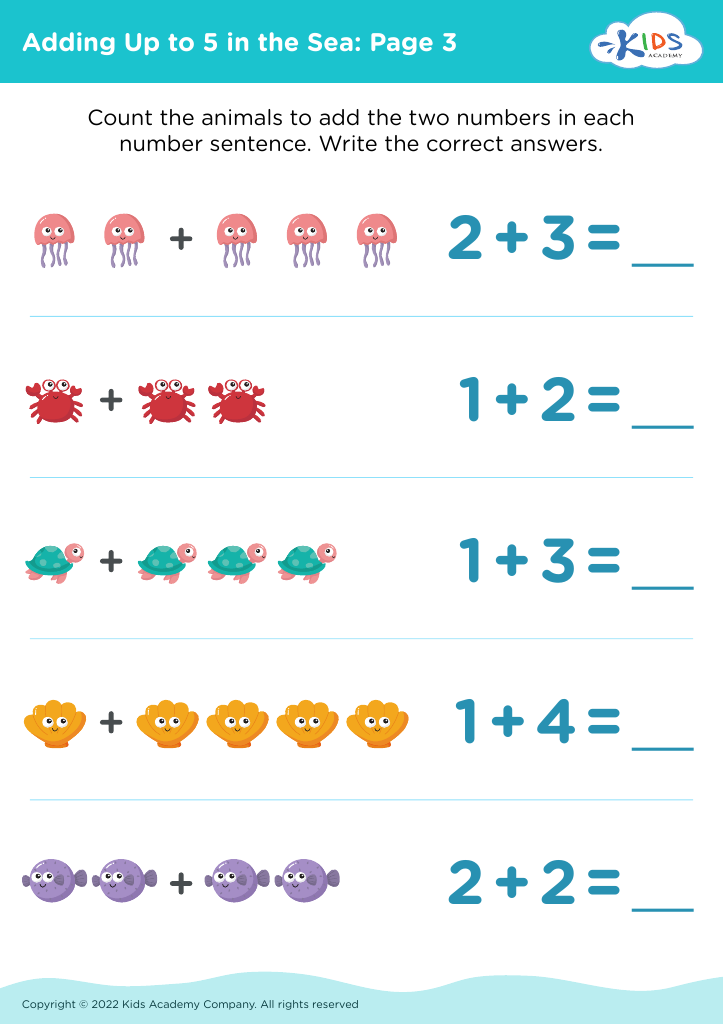
Discover our engaging Underwater Animal Identification Worksheets designed for children ages 3-6! These interactive printables are perfect for introducing young learners to the fascinating world of marine life. Through fun activities, kids will identify various underwater animals while enhancing their observational and cognitive skills. Our colorful and visually appealing worksheets make learning enjoyable, ensuring that children are excited about exploring sea creatures like fish, dolphins, and octopuses. Ideal for preschool classrooms or home learning, these worksheets promote early literacy and provide a fantastic way for little ones to connect with nature. Dive into exploration and watch them learn while having fun!
Favorites
With answer key
Interactive
Join Kids Academy for Free
Who is primarily going to use this learning content?







%20(1).jpg)
Understanding underwater animal identification can be incredibly important for young children aged 3-6, offering myriad educational and developmental benefits. Firstly, identifying underwater animals fosters a child's natural curiosity about the world, encouraging exploration and a sense of wonder about marine life. This foundational knowledge promotes environmental awareness and instills a sense of responsibility towards ocean conservation from an early age.
Engagement with underwater animals helps develop key skills including vocabulary expansion, critical thinking, and observational learning. Learning to recognize different marine species introduces children to new words, creating connections between vocabulary and tangible experiences—a vital aspect of language development.
Additionally, activities focused on underwater animal identification can enhance fine motor skills through hands-on crafts or interactive games. They also promote social interaction in group settings by encouraging teamwork during identification challenges or ocean-themed storytelling.
Moreover, in our increasingly interconnected world, teaching underwater animal identification lays the groundwork for future educational pursuits in biology, environmental science, and ecology. By caring about this aspect of learning, parents and teachers provide children with a multidimensional learning experience that not only captivates imagination but also builds respect for our fragile ecosystems and the myriad creatures that inhabit them.








