Verb identification Worksheets for Ages 3-6
3 filtered results
-
From - To
Our Verb Identification Worksheets for Ages 3-6 are designed to help young learners grasp the concept of action words in a fun and engaging manner. These colorful, kid-friendly worksheets help preschoolers and kindergarteners recognize and use verbs through age-appropriate activities. Each worksheet features simple exercises that encourage children to match, color, and identify verbs in vibrant illustrations and sentences, nurturing early literacy and language skills. Crafted by educational experts, our verb worksheets merge play with learning, fostering a strong foundation in grammar. Perfect for parents, teachers, and homeschoolers seeking quality educational resources.
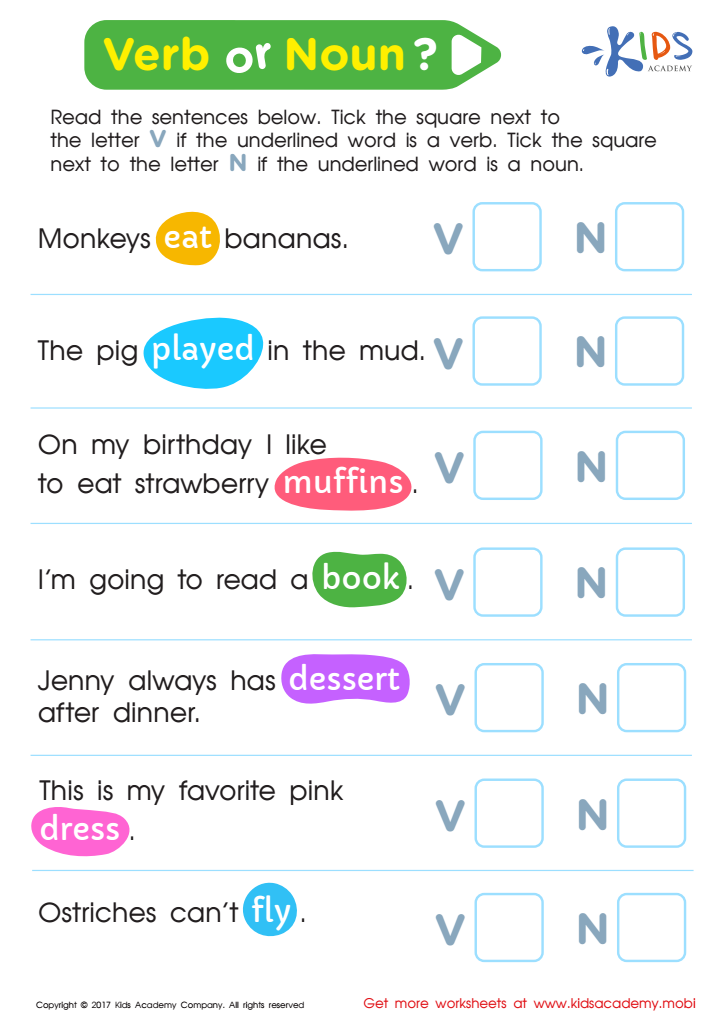
Verb or Noun Worksheet
 Assign to My Students
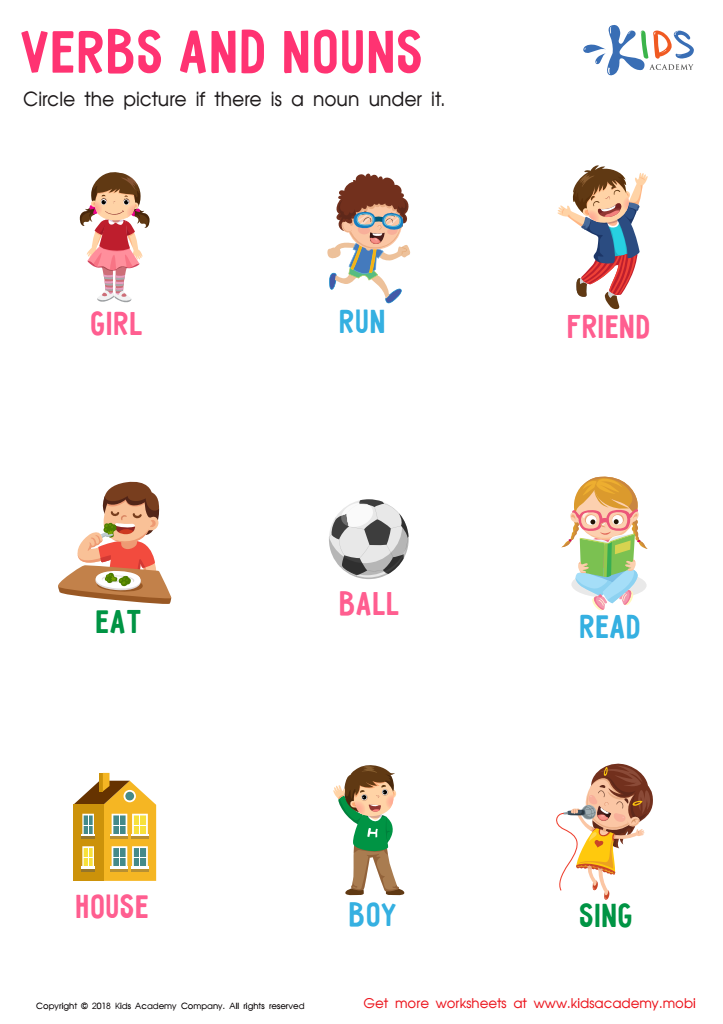
Verbs and Nouns Worksheet
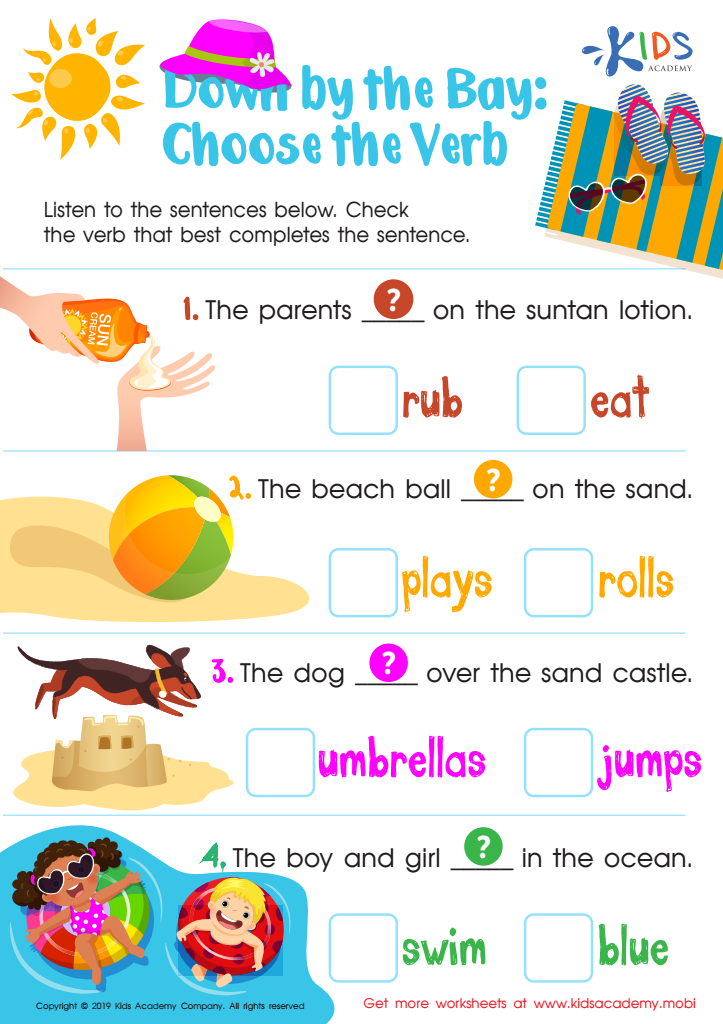
Down by the Bay: Choose the Verb Worksheet







Verb identification is crucial for children aged 3-6 as it lays the foundation for effective communication and cognitive development. Verbs, being action words, help children express experiences, actions, and occurrences, enabling them to interact more meaningfully with their environment. When children can identify verbs, they can form basic sentences, fostering early language skills critical for later academic success.
During ages 3-6, children are at a prime stage for language acquisition. Recognizing and using verbs allows them to expand their vocabulary, enhance their descriptive capabilities, and improve their ability to follow and give instructions. This linguistic proficiency is directly linked to reading comprehension and writing abilities they will need in school.
Moreover, understanding verbs aids in social-emotional development. When children can accurately describe their actions and intentions, frustration decreases, and cooperation with peers improves. This skill also supports storytelling, a key component of early literacy, helping children share experiences and imagine new scenarios.
In essence, by focusing on verb identification, parents and teachers provide children with the essential tools to understand and navigate the world around them, setting a strong groundwork for future educational milestones and everyday interactions.








