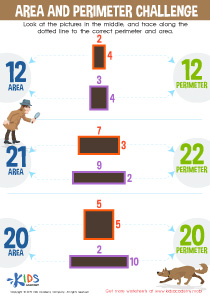
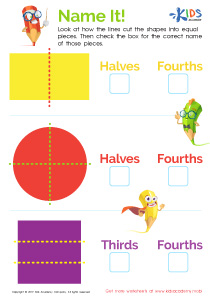
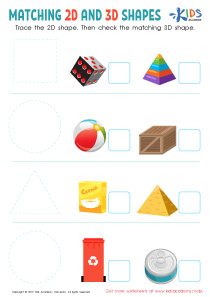
Vocabulary enhancement 2D Shapes Worksheets for Ages 3-6
6 filtered results
-
From - To
Discover our engaging "Vocabulary Enhancement 2D Shapes Worksheets" designed specifically for children ages 3-6. These worksheets help young learners explore and identify basic 2D shapes while expanding their vocabulary in a fun and interactive way. Utilizing vibrant visuals and straightforward activities, kids will learn essential shape names and characteristics, fostering both language and mathematical development. Our resources are perfect for home or classroom use, providing educators and parents with an effective teaching tool. Enhance your child's comprehension and love for shapes through our thoughtfully crafted activities that encourage creativity and exploration in early education. Start their learning journey today!
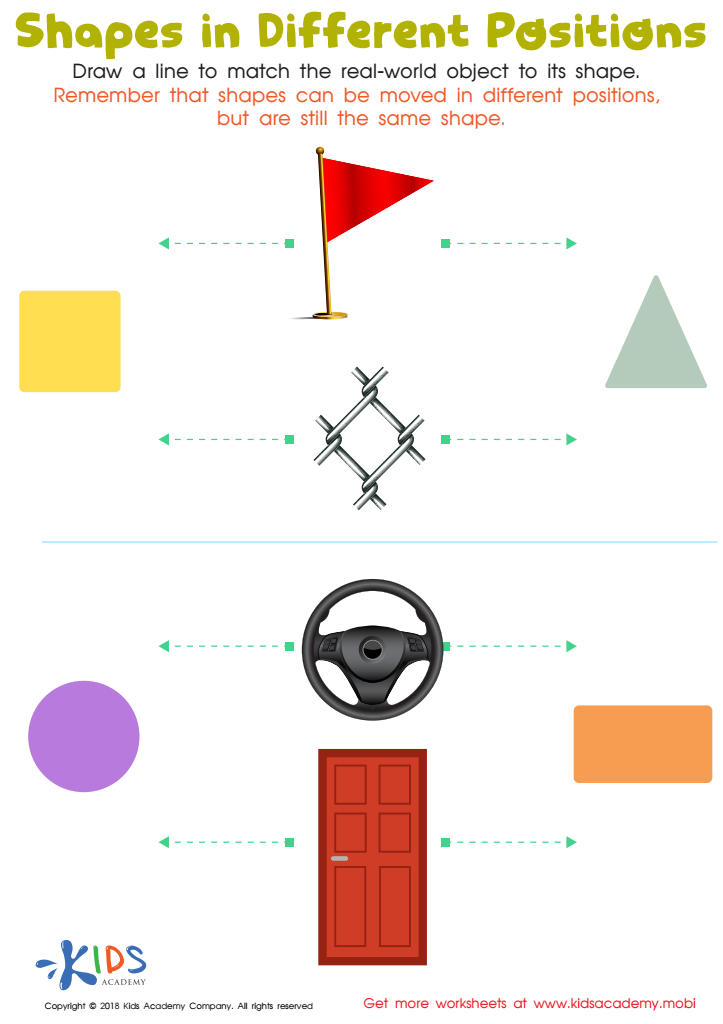
Shapes in Different Positions Worksheet
 Assign to My Students

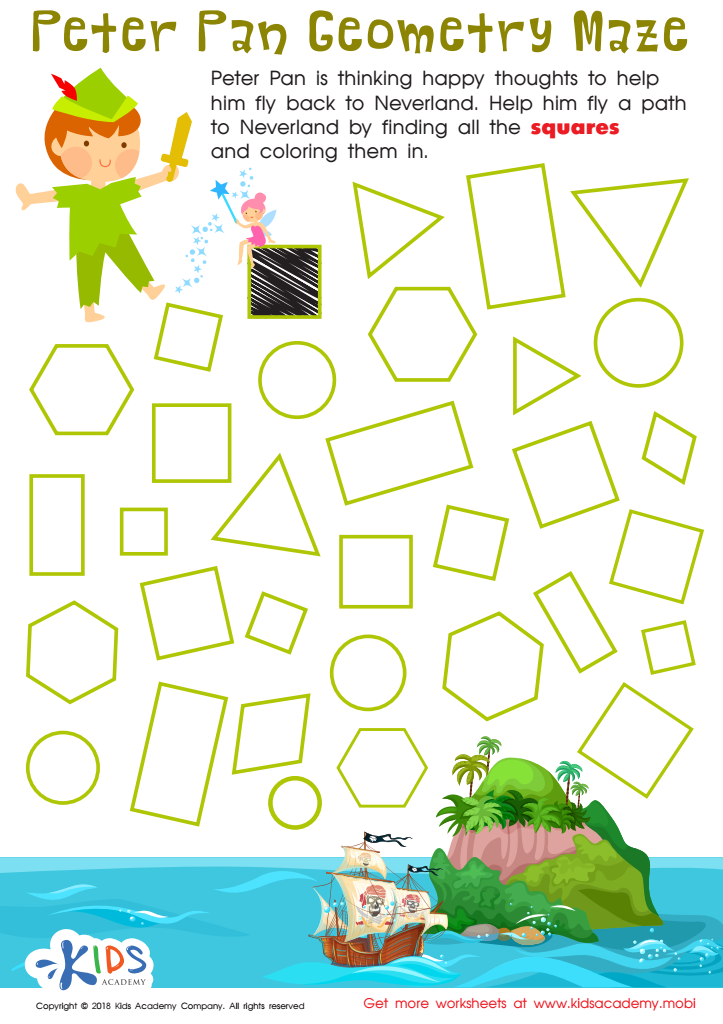
Peter Pan Worksheet
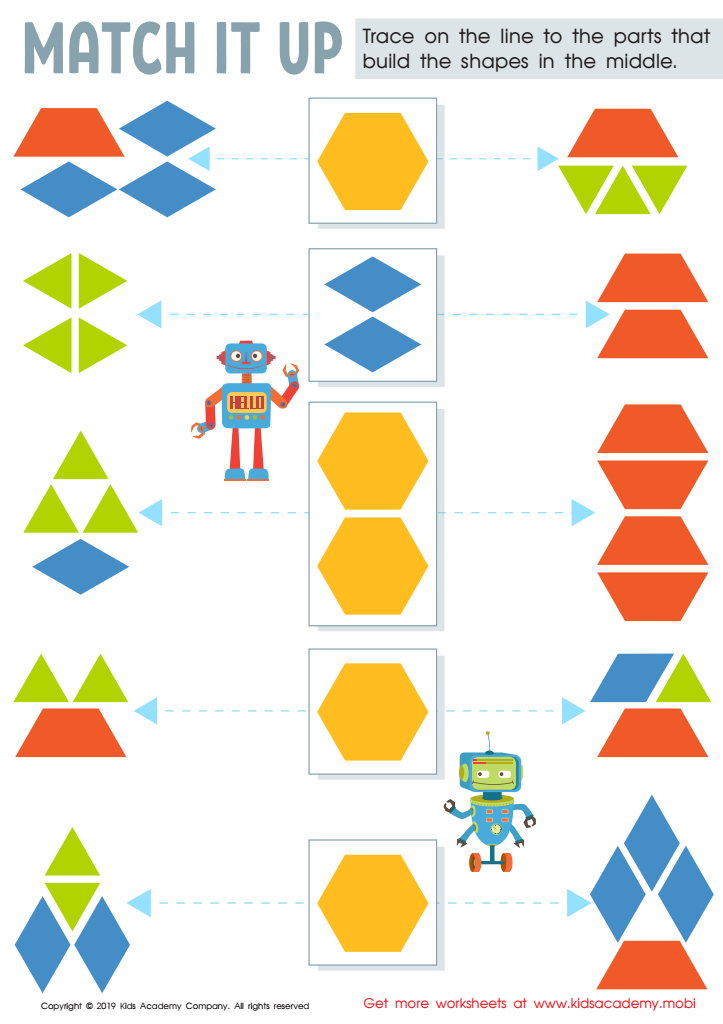
Match It up Worksheet
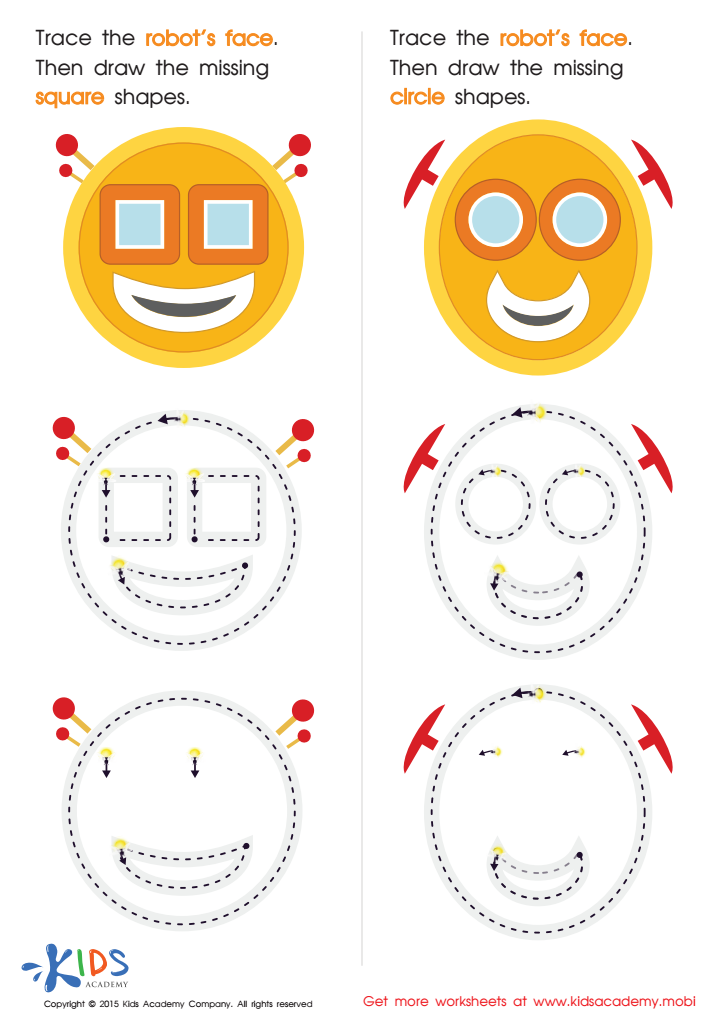
Practicing to Draw Circles And Squares Printable
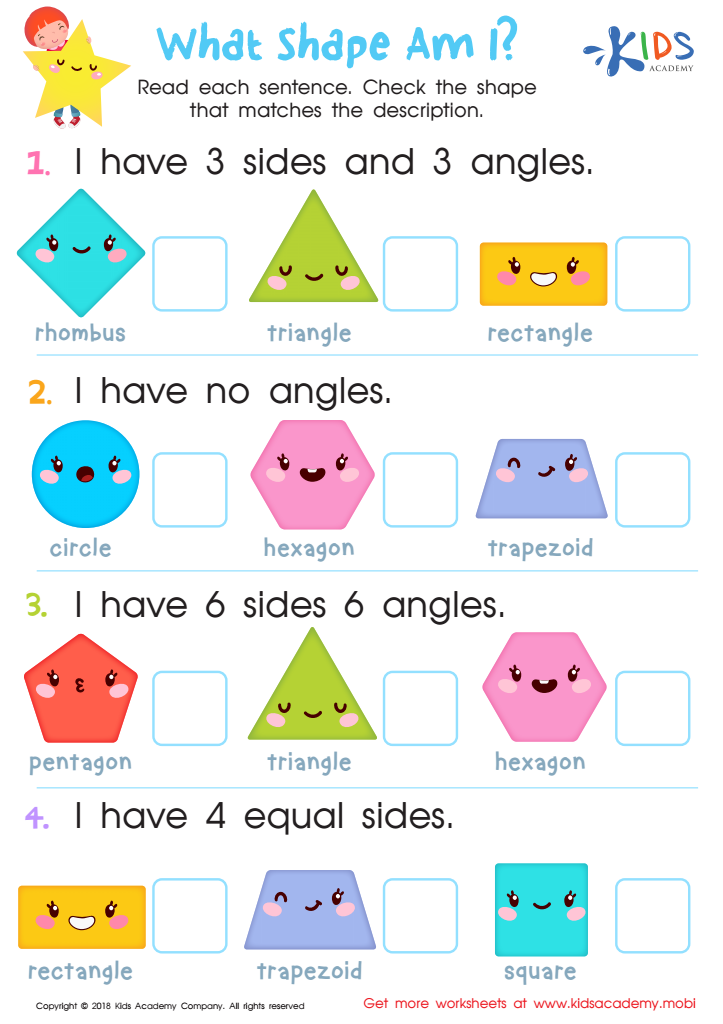
What Shape Am I? Worksheet
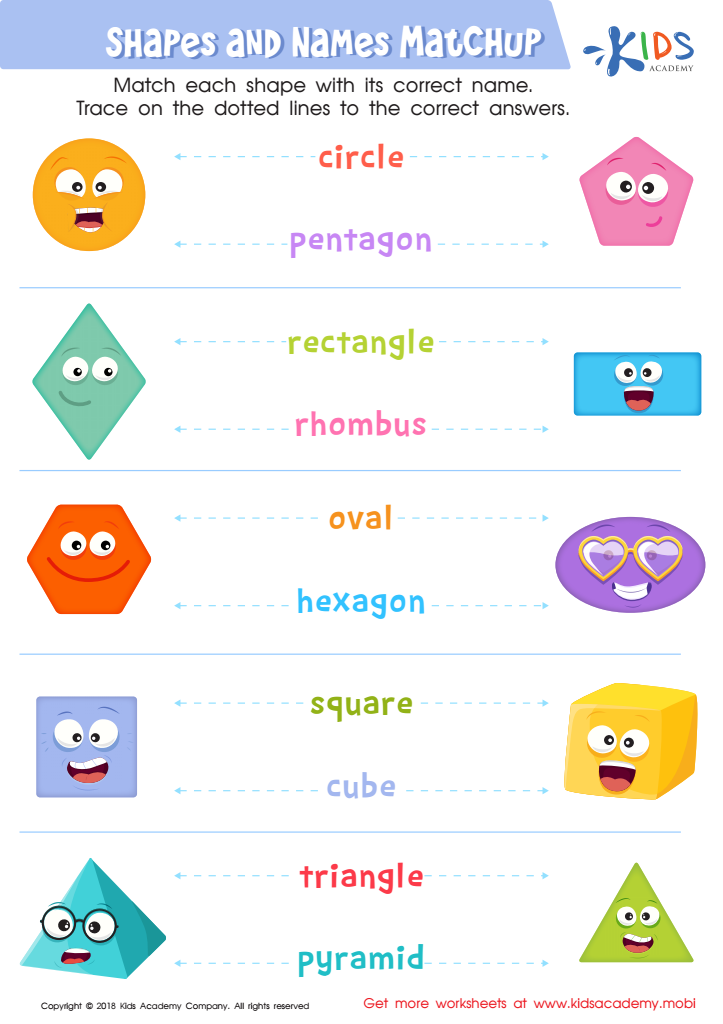
Shapes and Names Matchup Worksheet








Vocabulary enhancement related to 2D shapes is crucial for children aged 3-6 for several reasons. First, understanding shapes is fundamental to early mathematics and critical thinking skills. Learning to recognize and name basic shapes like circles, squares, and triangles lays the groundwork for more complex concepts, such as geometry and spatial reasoning, which are integral in later grades.
Moreover, vocabulary development in relation to 2D shapes enriches children's communication skills. When children learn to describe shapes using precise terms, they enhance their ability to express ideas clearly and confidently. For instance, instead of simply saying "that is a shape," they learn to describe it as a "blue triangle" or a "small yellow square," expanding their descriptive language.
Furthermore, integrating vocabulary enhancement in shape activities fosters engagement and creativity. Interactive activities can promote collaboration, turn-taking, and problem-solving among peers. These experiences build social skills that are critical for early childhood development.
Lastly, strong vocabulary and shape recognition skills support lifelong learning. By instilling a foundation for thinking critically and articulating their thoughts, educators and parents pave the way for a well-rounded education for young learners. In essence, investing time in vocabulary enhancement related to shapes is an investment in a child's overall cognitive development.