Animal recognition Adding at the Zoo Worksheets for Ages 3-6 - Page 2
43 filtered results
-
From - To
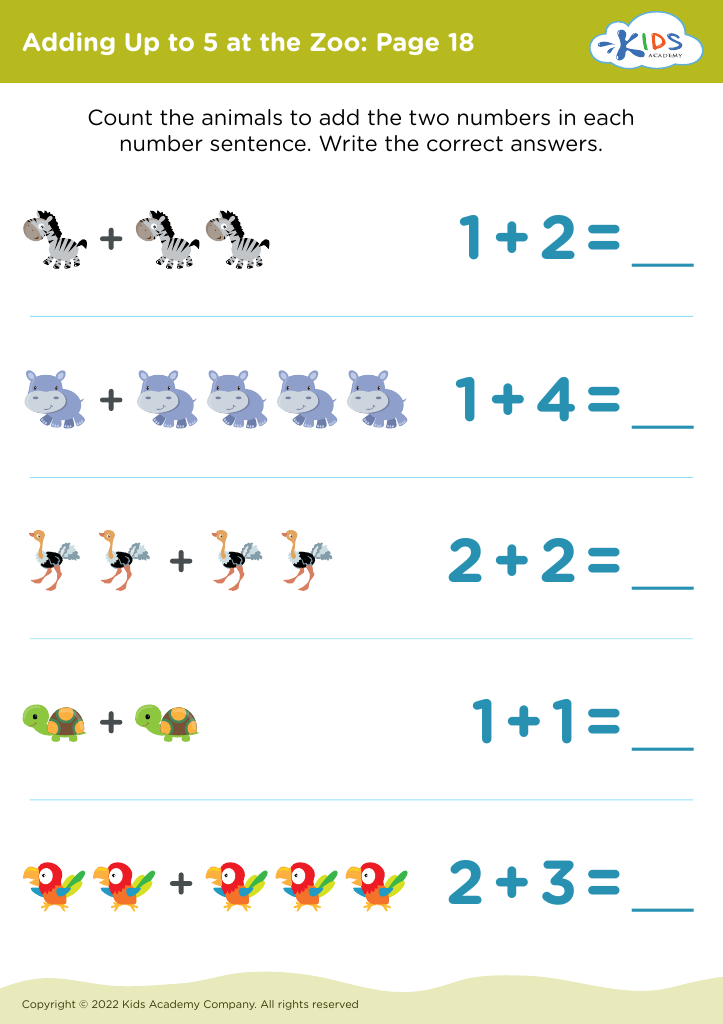
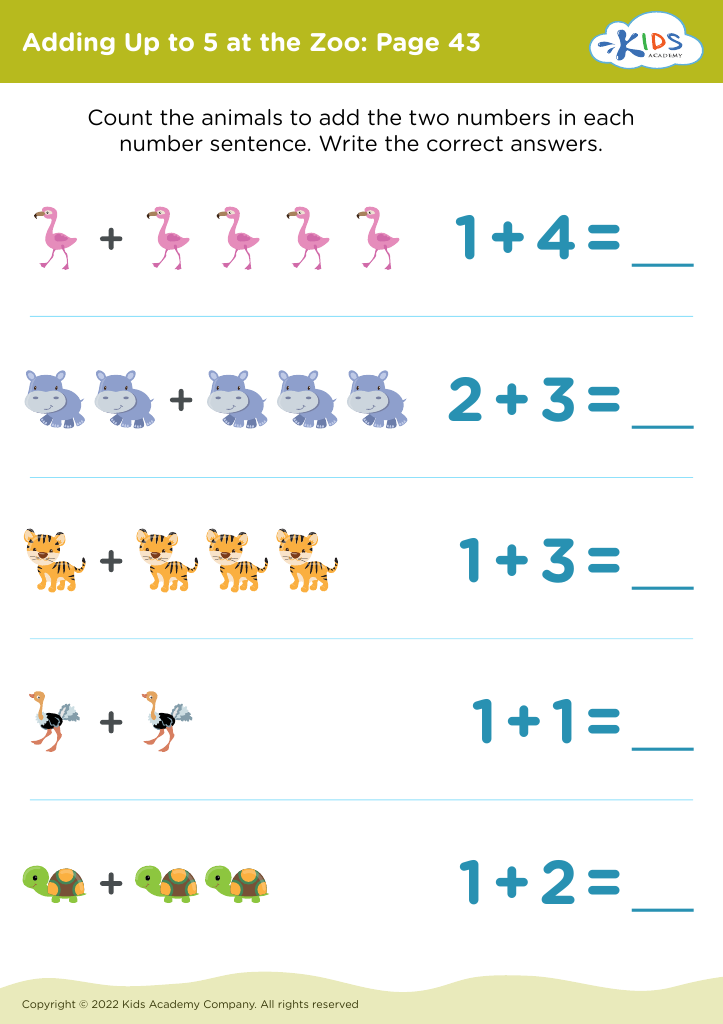
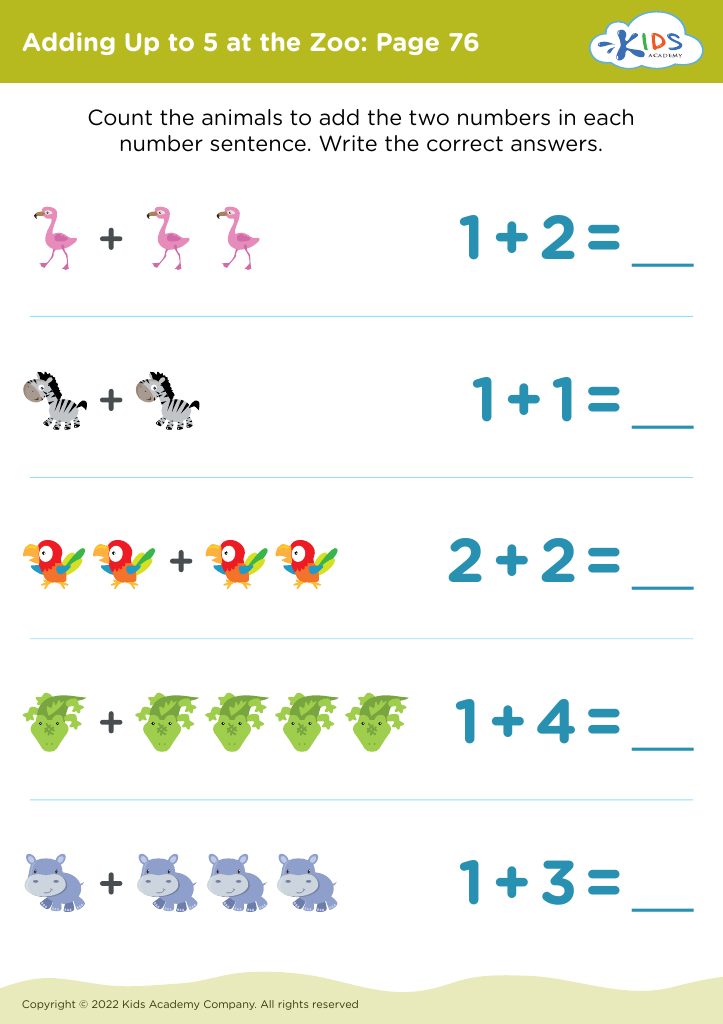
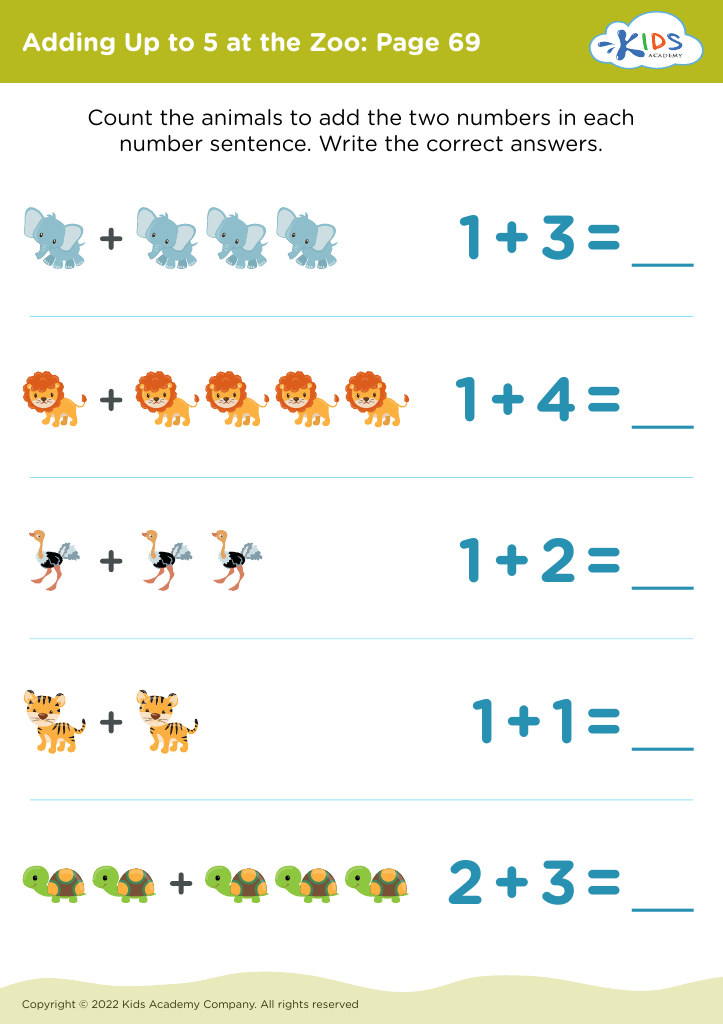
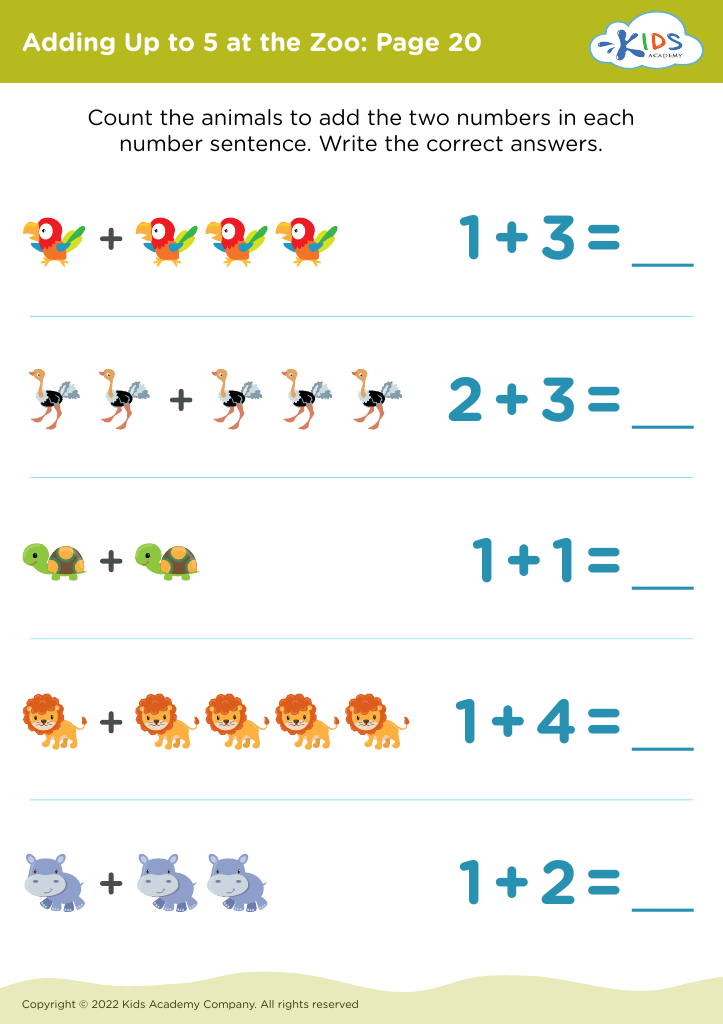
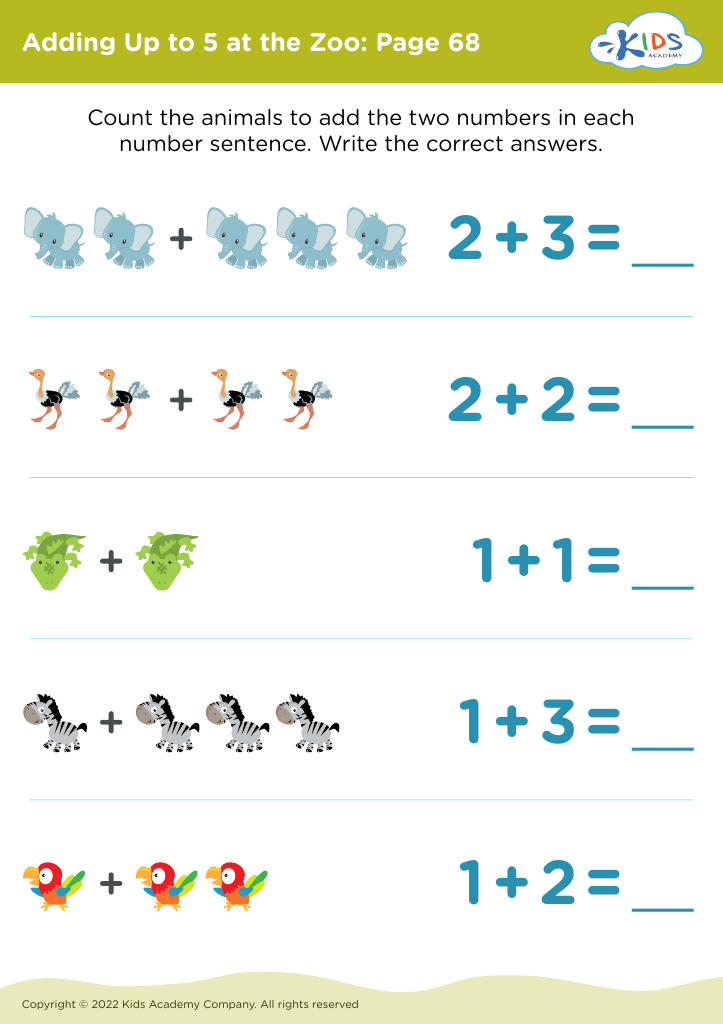
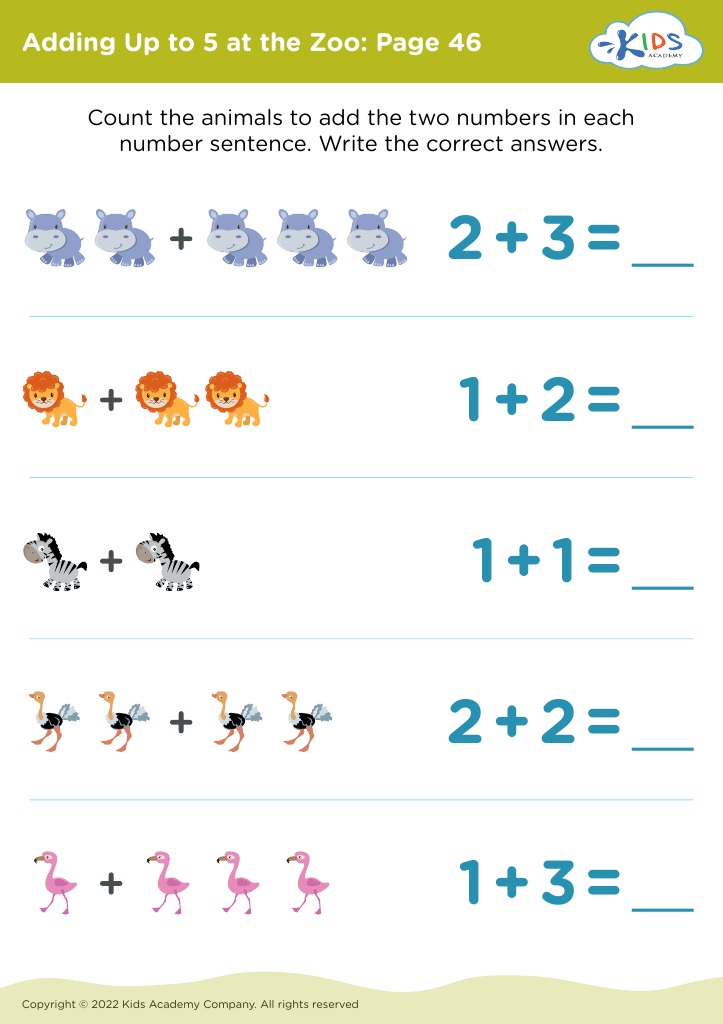
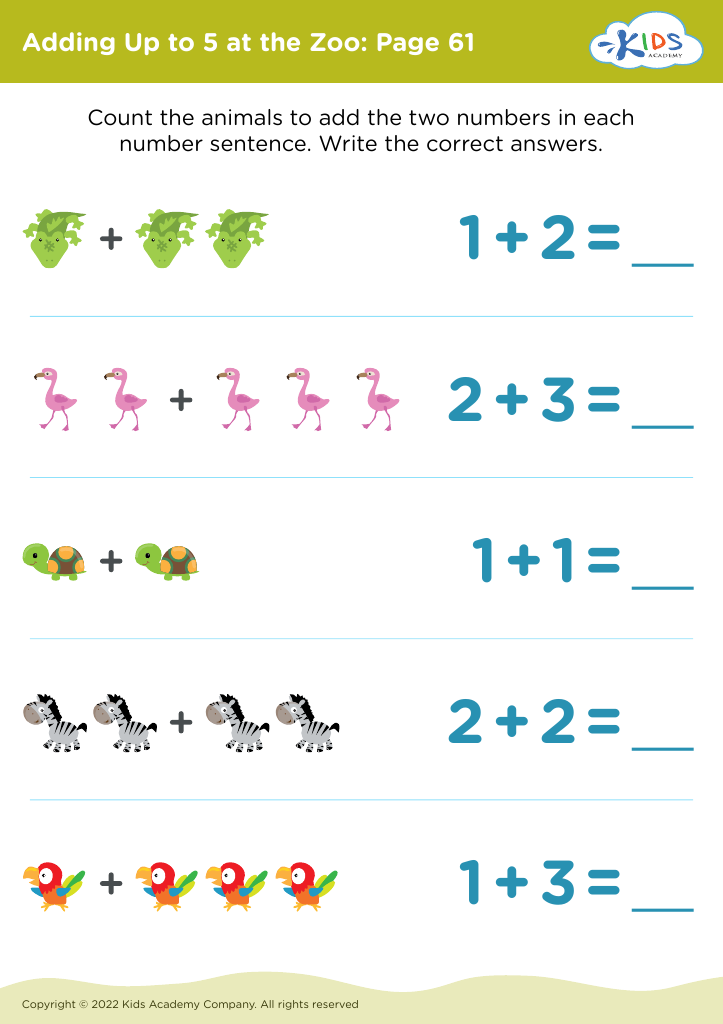
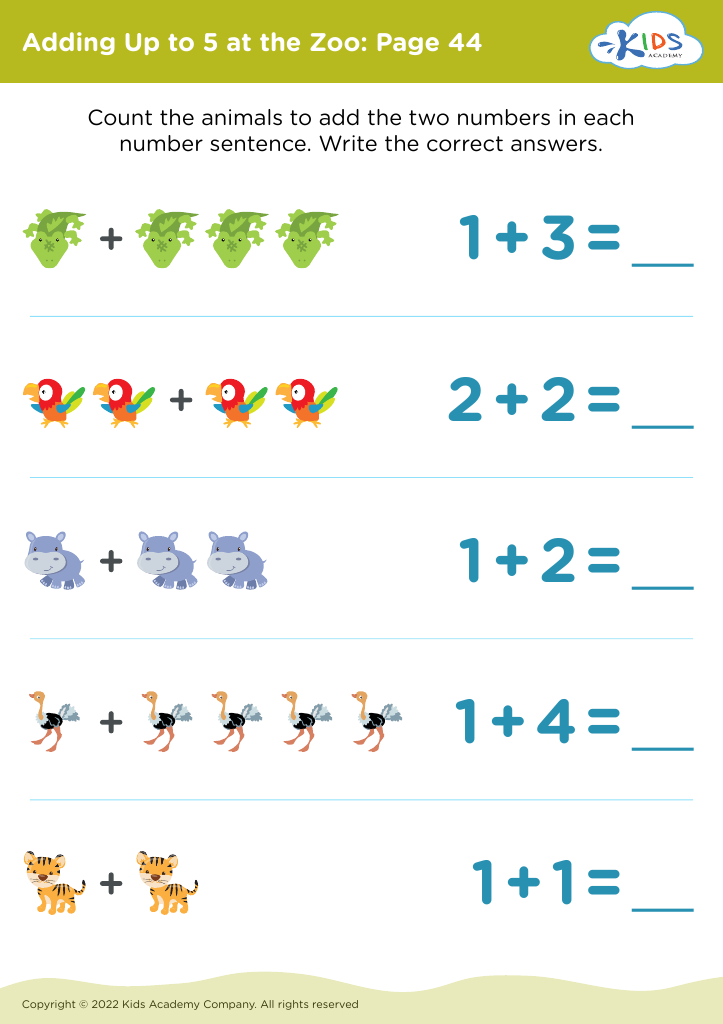
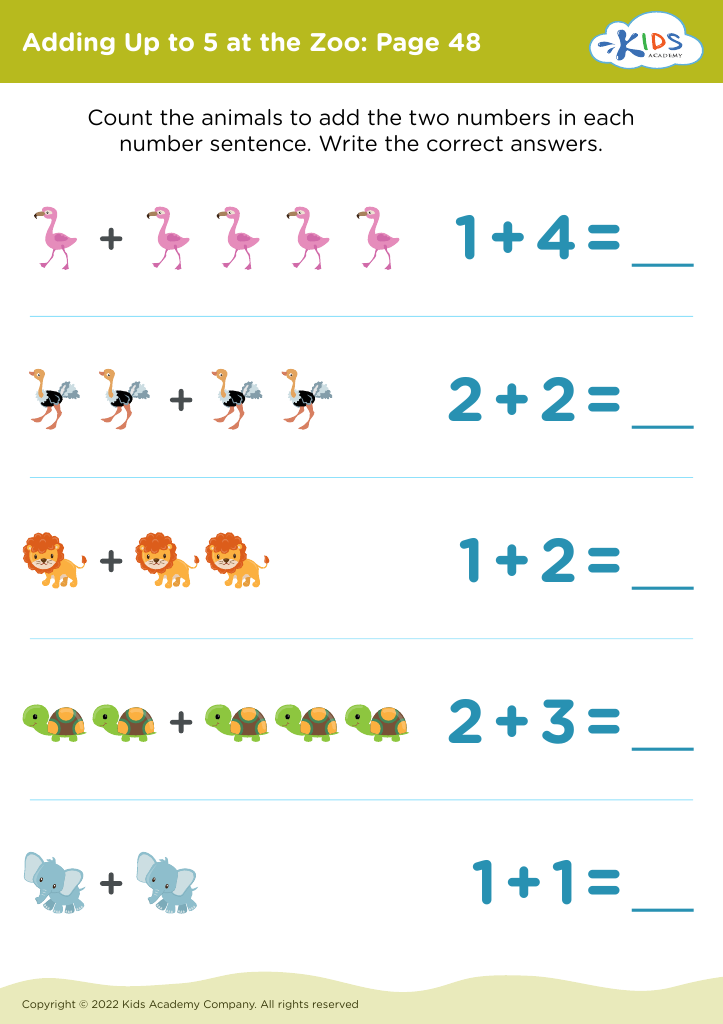
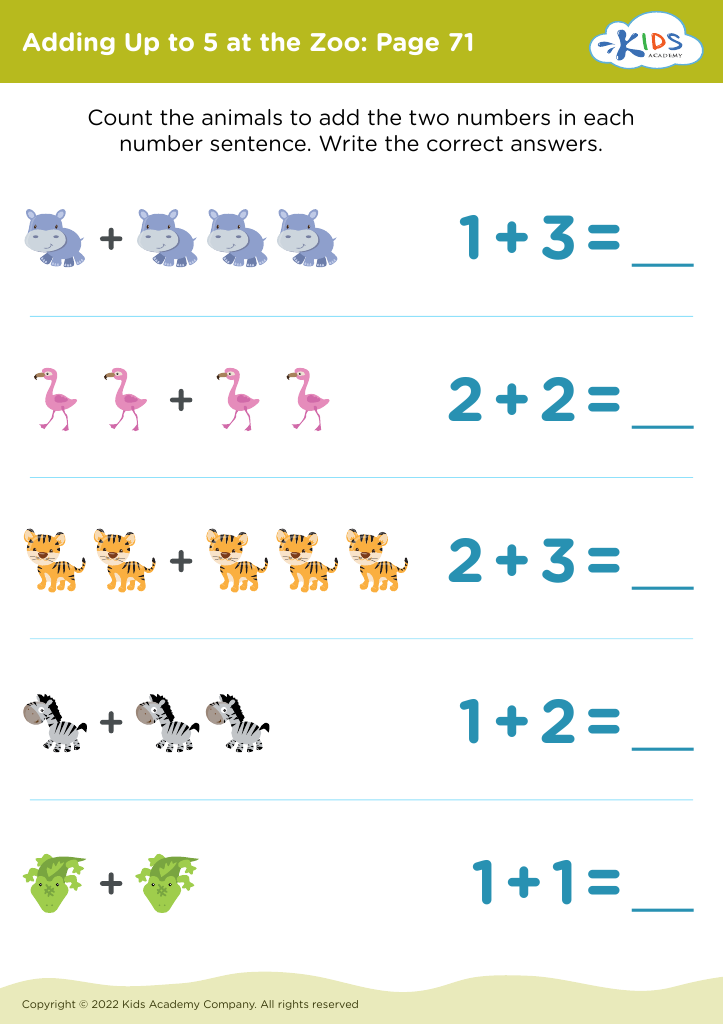
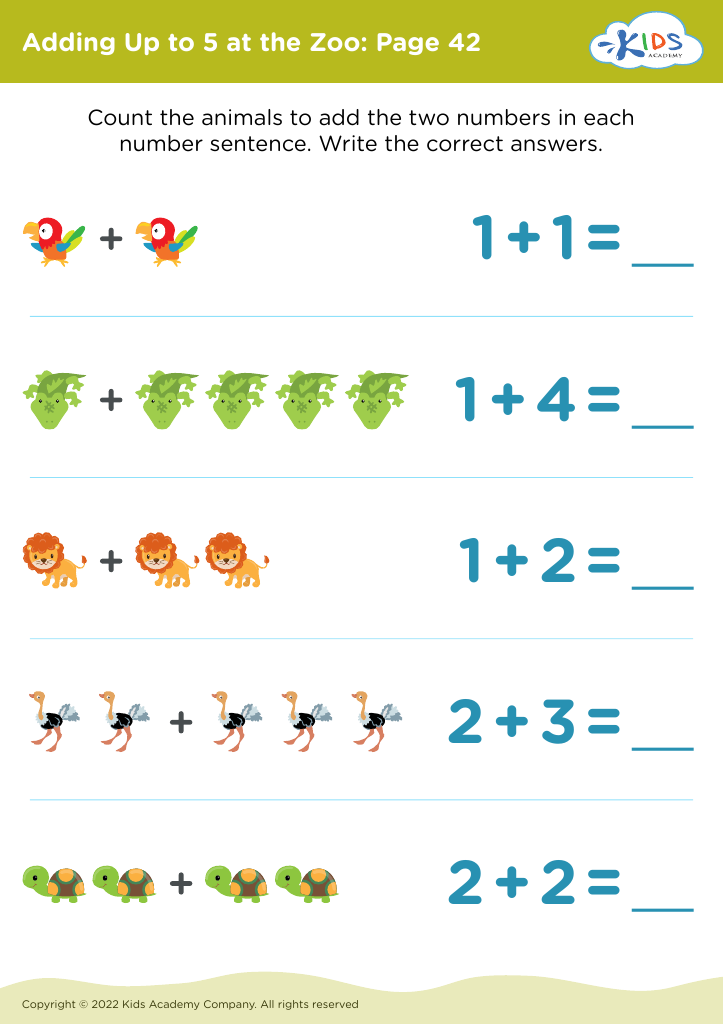
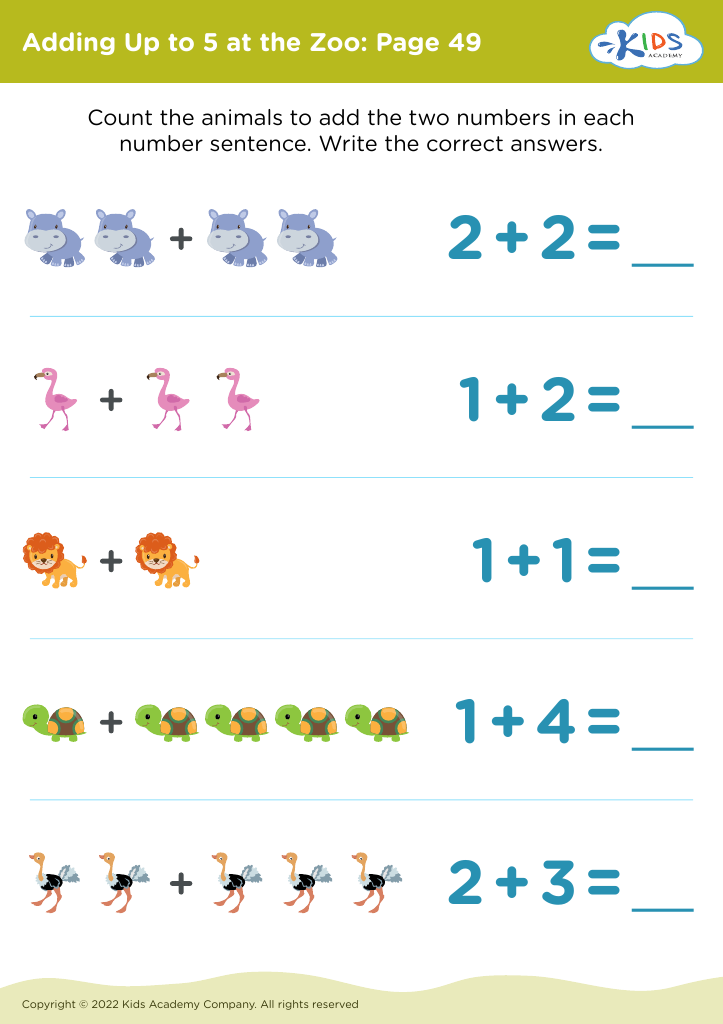
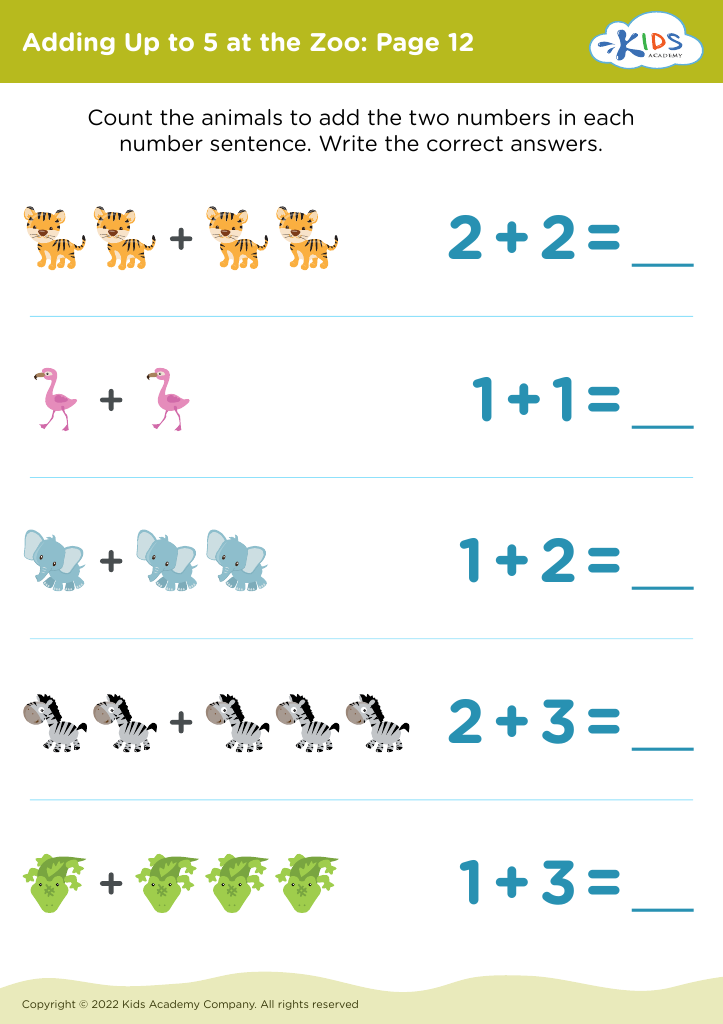
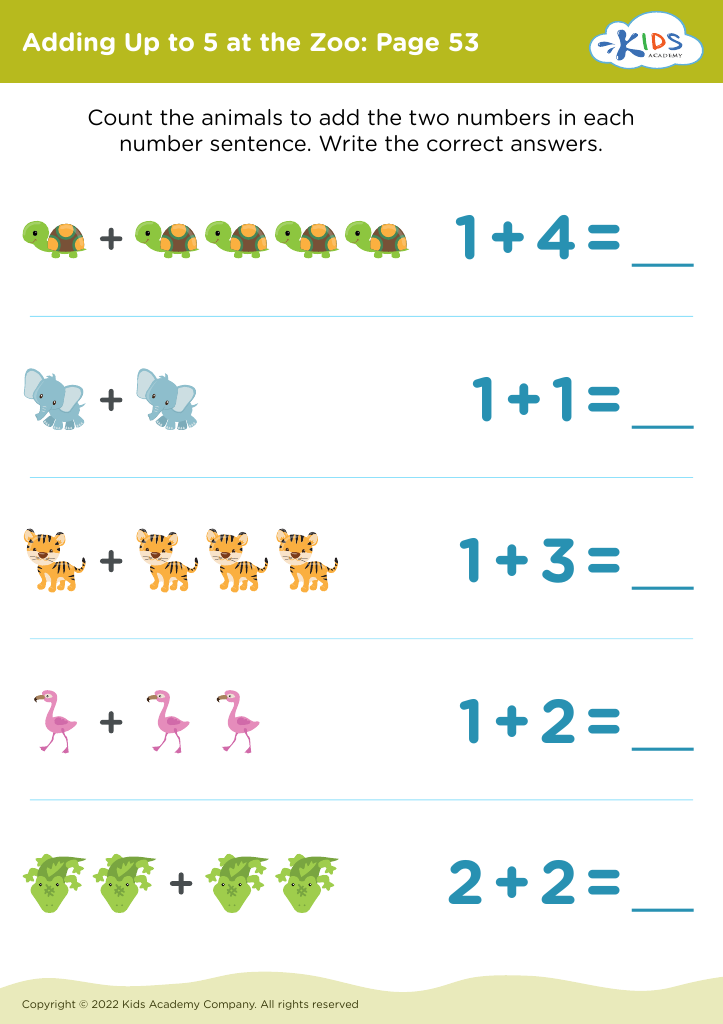
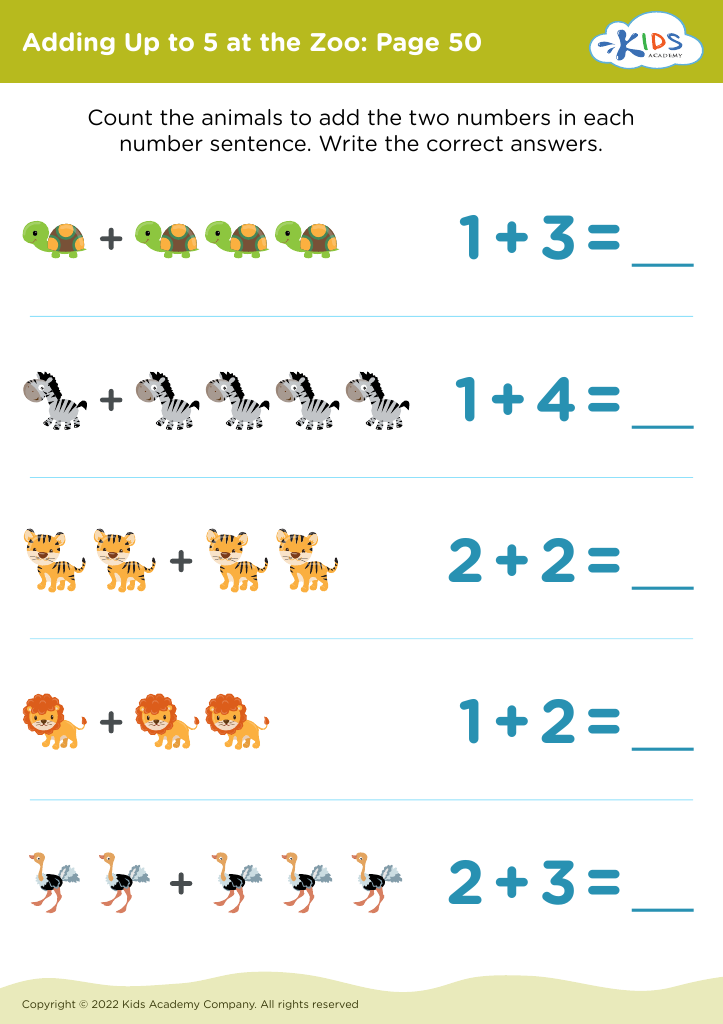
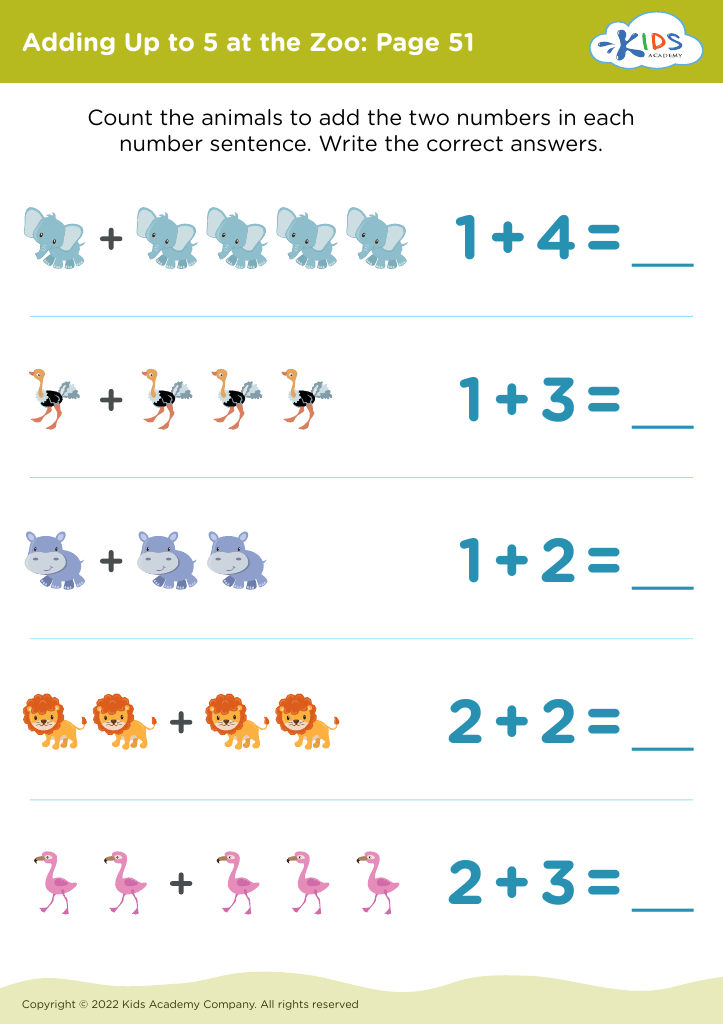
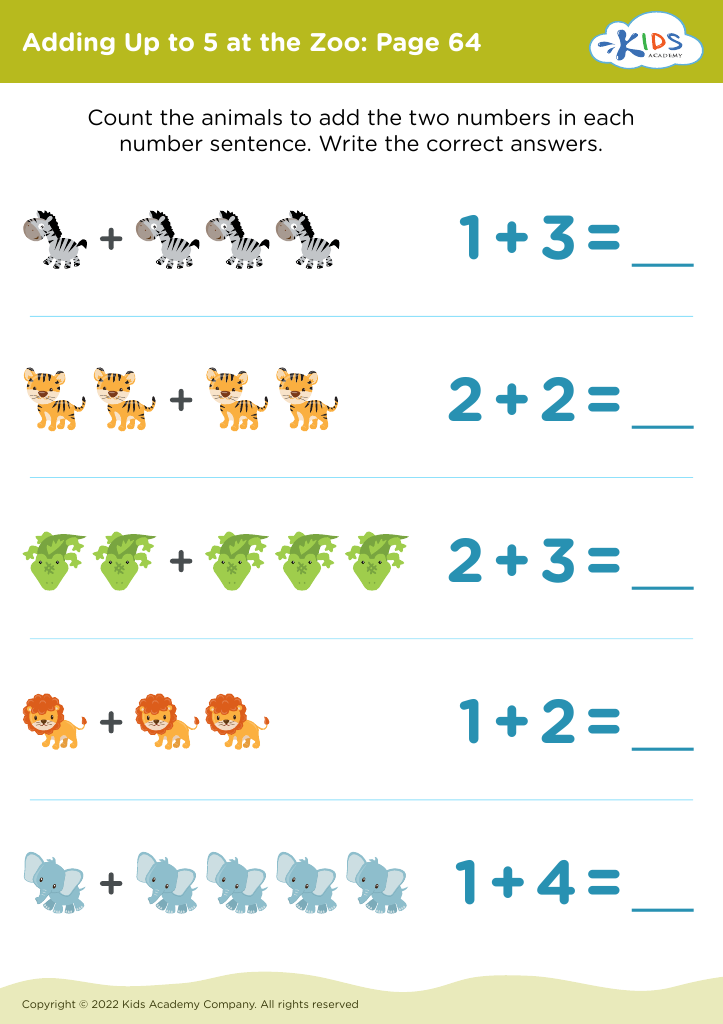
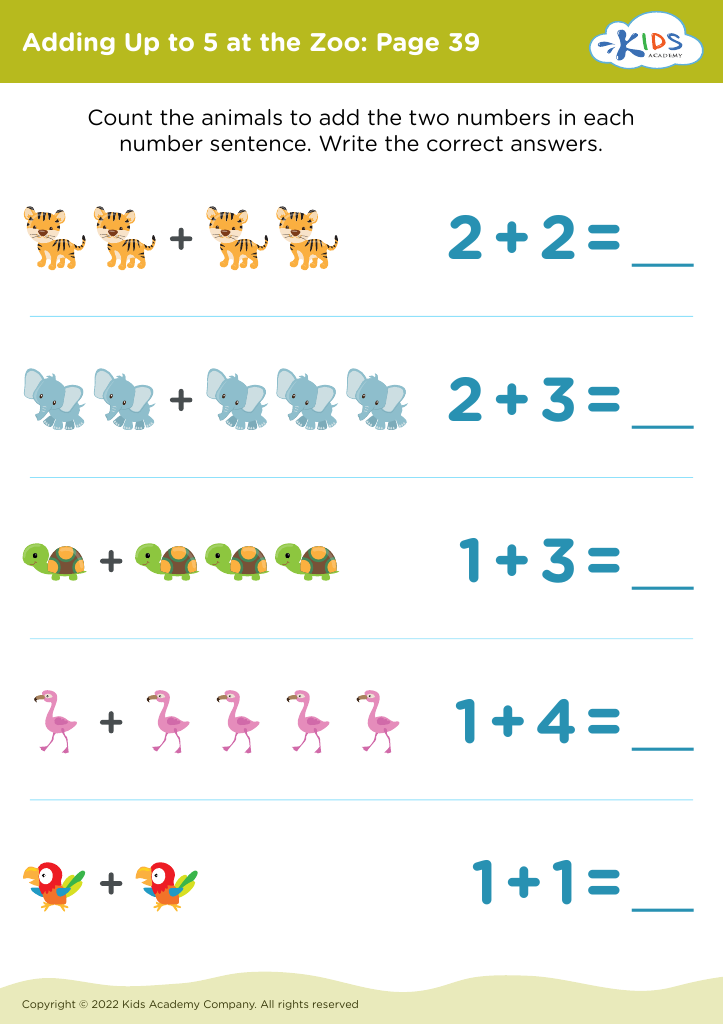



Animal recognition activities at the zoo offer numerous benefits for children aged 3-6, making them essential for both parents and teachers. Firstly, these activities boost cognitive development. Recognizing different animals enhances memory skills and knowledge about various species while encouraging curiosity about the natural world. By engaging with animals, children can learn about their habitats, behaviors, and importance in the ecosystem, fostering a sense of environmental awareness.
Zoo visits also provide a unique opportunity for social interactions. Children can bond with peers and adults around shared experiences, learning teamwork and communication skills. Interactive learning experiences encourage questions, stimulating critical thinking and fostering a love for exploration.
Emotionally, animal recognition can nurture empathy and compassion. As children observe animals and understand their needs, they develop a sense of care for living beings, which can contribute positively to their emotional intelligence.
Parents and teachers should also value these experiences for their ability to incorporate play-based learning. The joyful environment of a zoo captures children's imaginations, making learning enjoyable and lasting. Overall, animal recognition at the zoo is a meaningful way to support the holistic development of young children, connecting education with real-world experiences.