Filters

18 filtered results

Clear all filters
Favorites
With answer key
Interactive

18 filtered results

Difficulty Level

Grade


Introduce your little learners to the joys of math with our "Cognitive Development Adding at the Zoo" worksheets! Designed for children ages 3-6, these engaging activities transport kids to an exciting zoo setting where they practice counting and addition. Each worksheet is tailored to enhance cognitive skills, promote critical thinking, and nurture a love for learning. With colorful animal illustrations and interactive exercises, children will delight in combining numbers while strengthening their foundational math abilities. Perfect for early childhood educators and parents, these worksheets provide a fun, educational experience that makes math practice an adventure!
Check out this FREE Trial Lesson on Adding at the Zoo for age 3-6!

Sorting Objects into 3 Categories

Favorites
With answer key
Interactive
  • 3-6
  • Cognitive Development
  • Adding at the Zoo
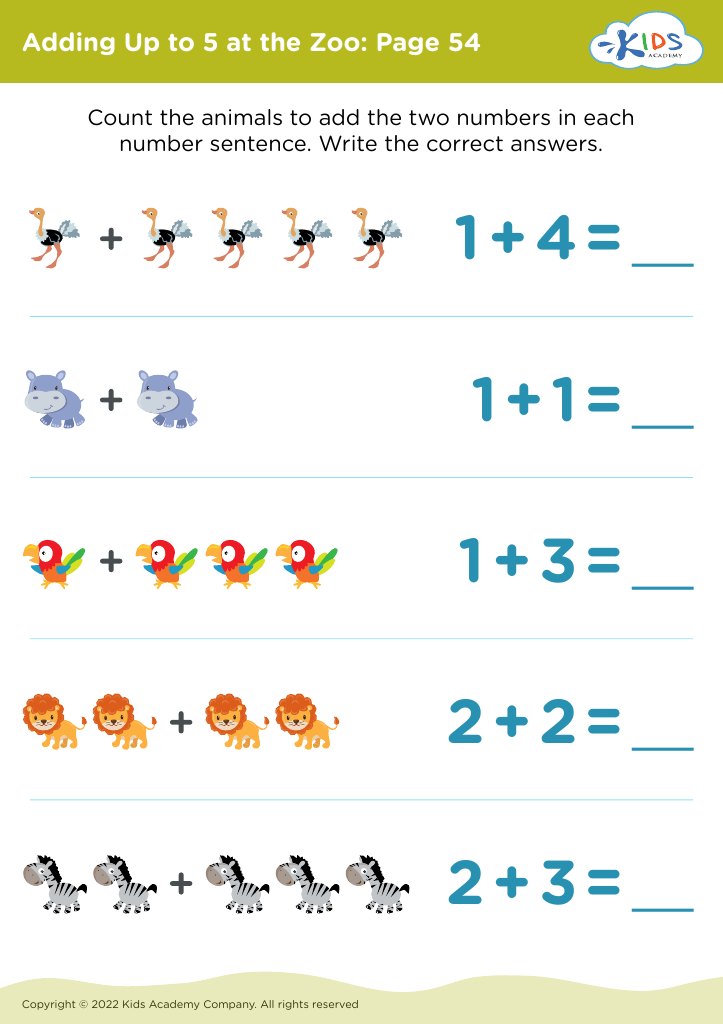
Adding Up to 5 at the Zoo: Page 54
Worksheet
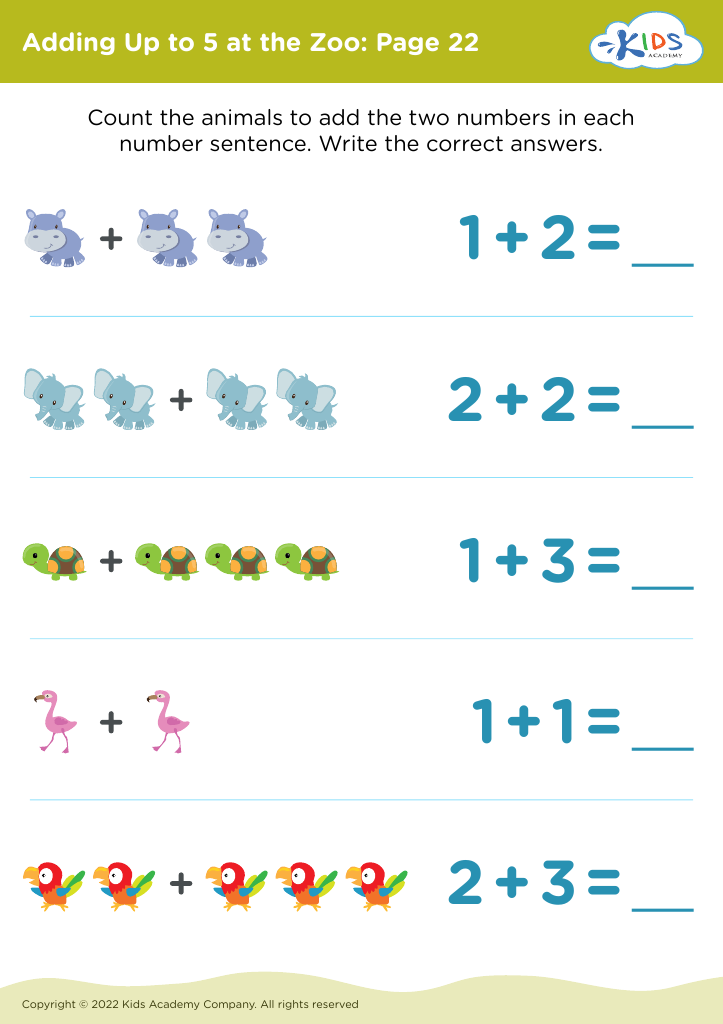
Adding Up to 5 at the Zoo: Page 22
Worksheet
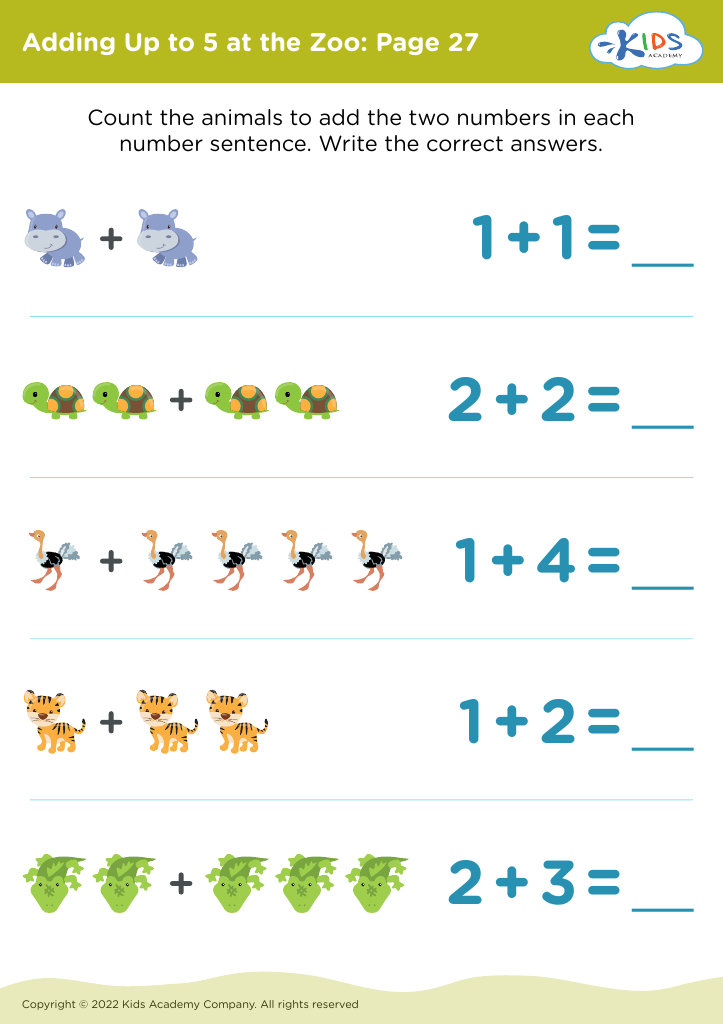
Adding Up to 5 at the Zoo: Page 27
Worksheet
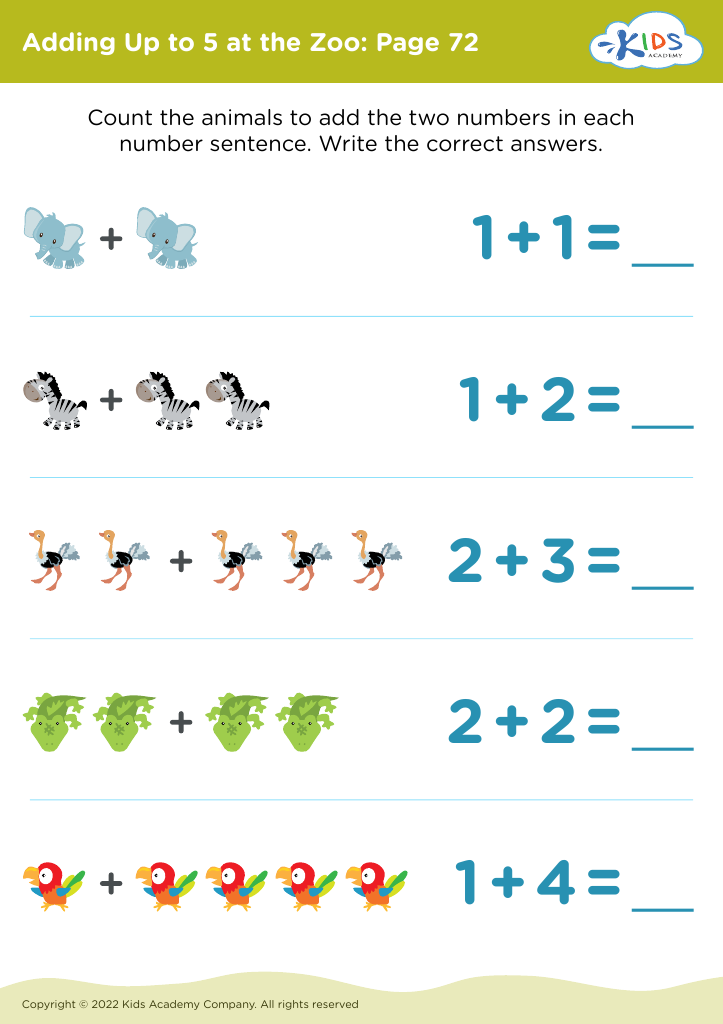
Adding Up to 5 at the Zoo: Page 72
Worksheet
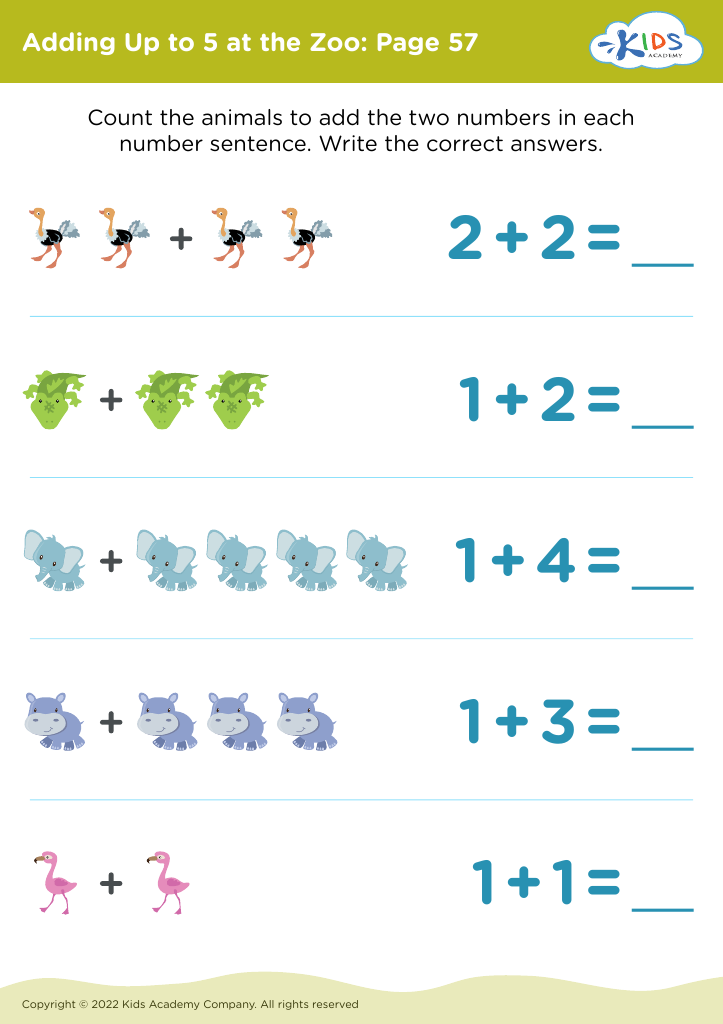
Adding Up to 5 at the Zoo: Page 57
Worksheet
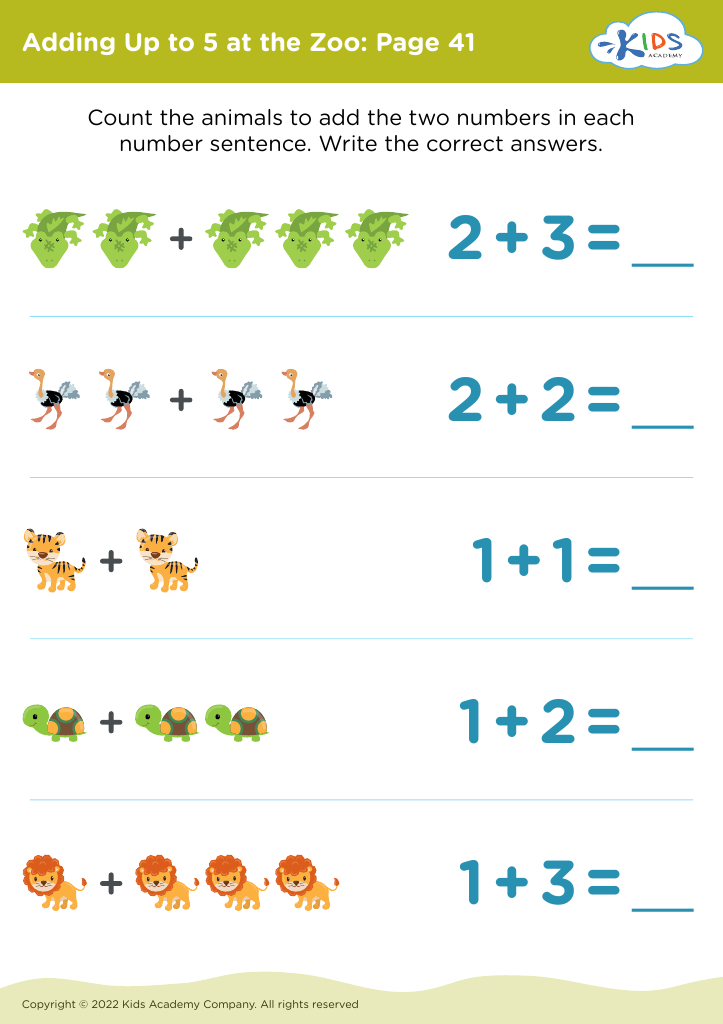
Adding Up to 5 at the Zoo: Page 41
Worksheet
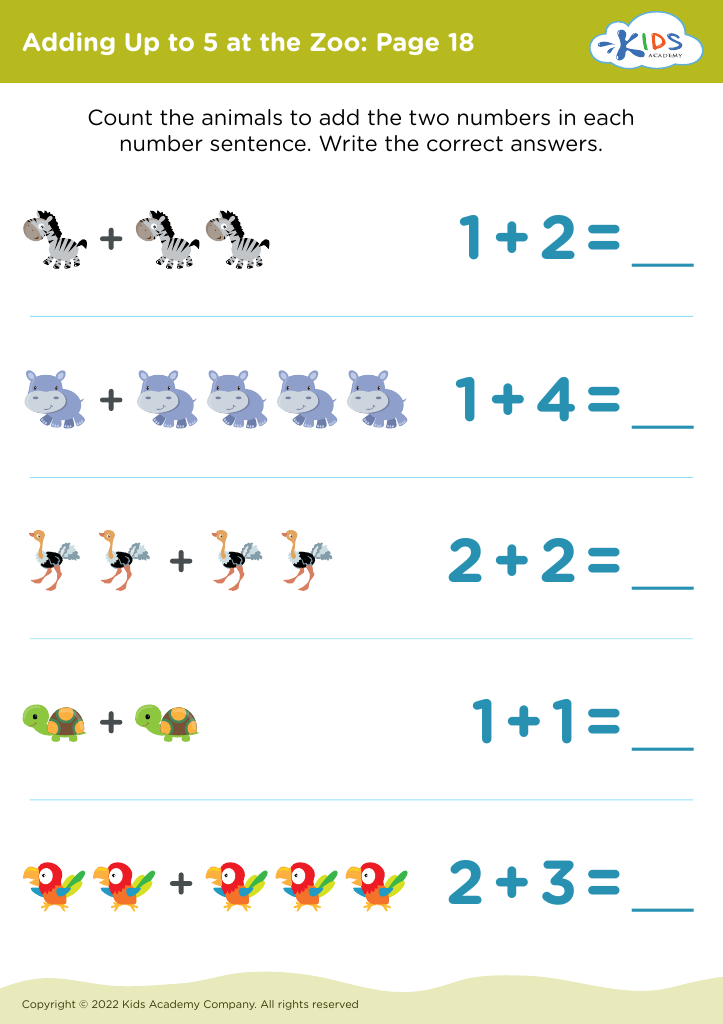
Adding Up to 5 at the Zoo: Page 18
Worksheet
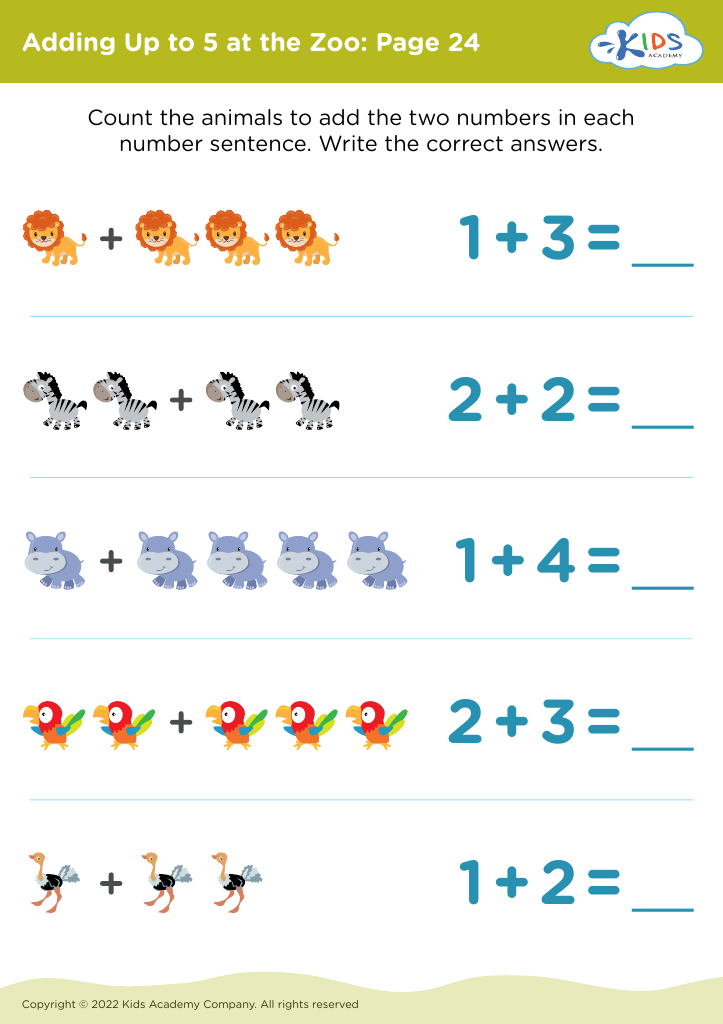
Adding Up to 5 at the Zoo: Page 24
Worksheet
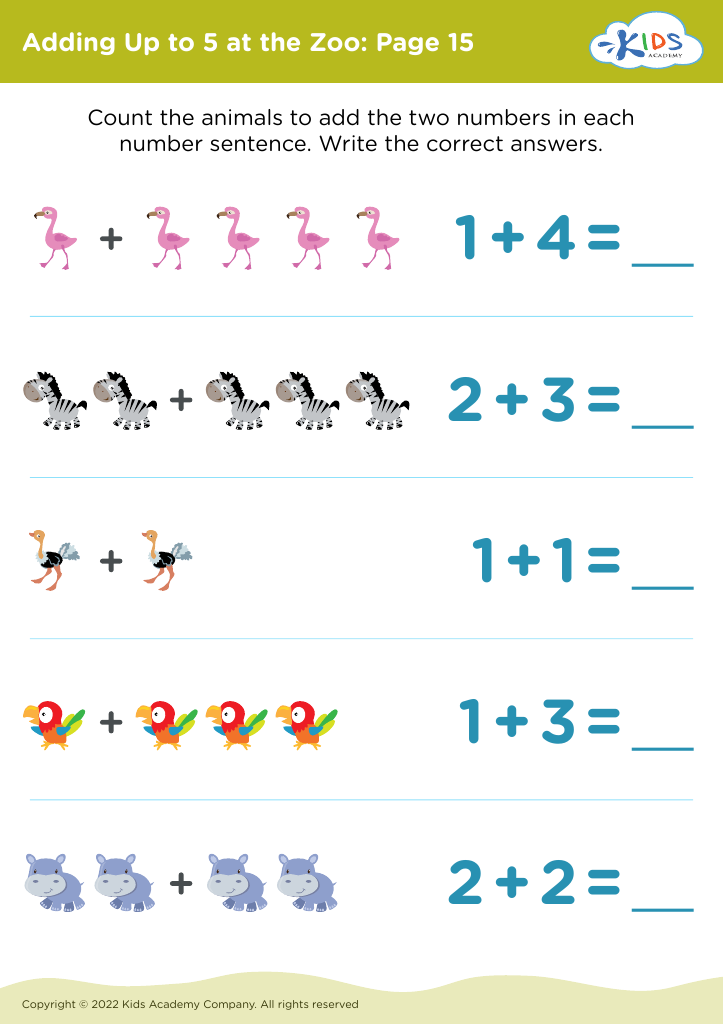
Adding Up to 5 at the Zoo: Page 15
Worksheet
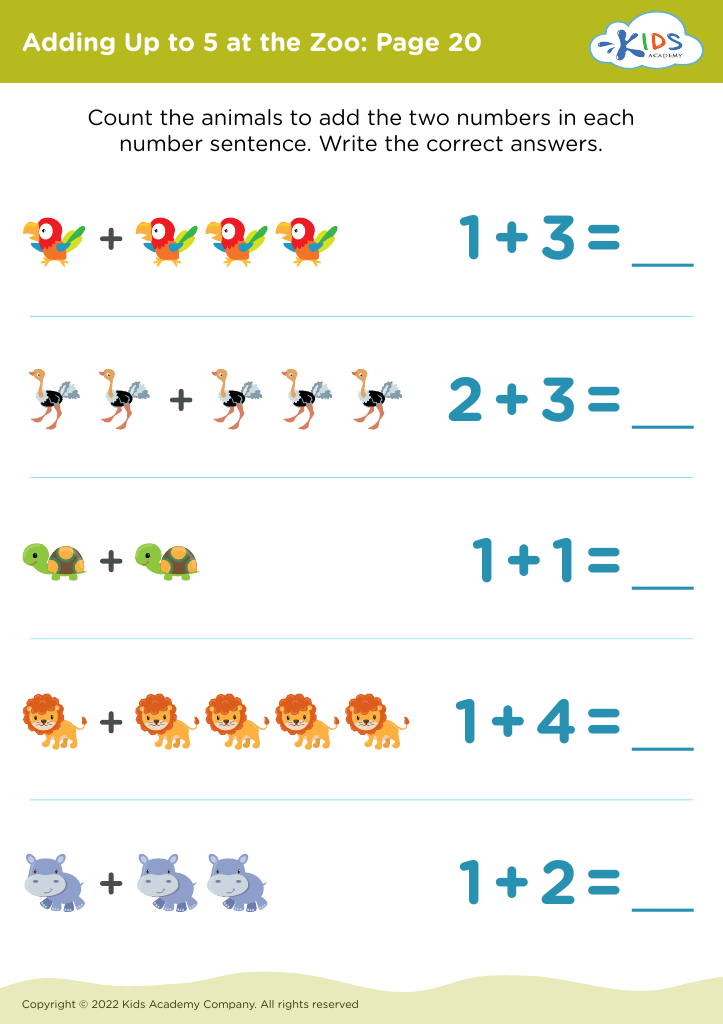
Adding Up to 5 at the Zoo: Page 20
Worksheet
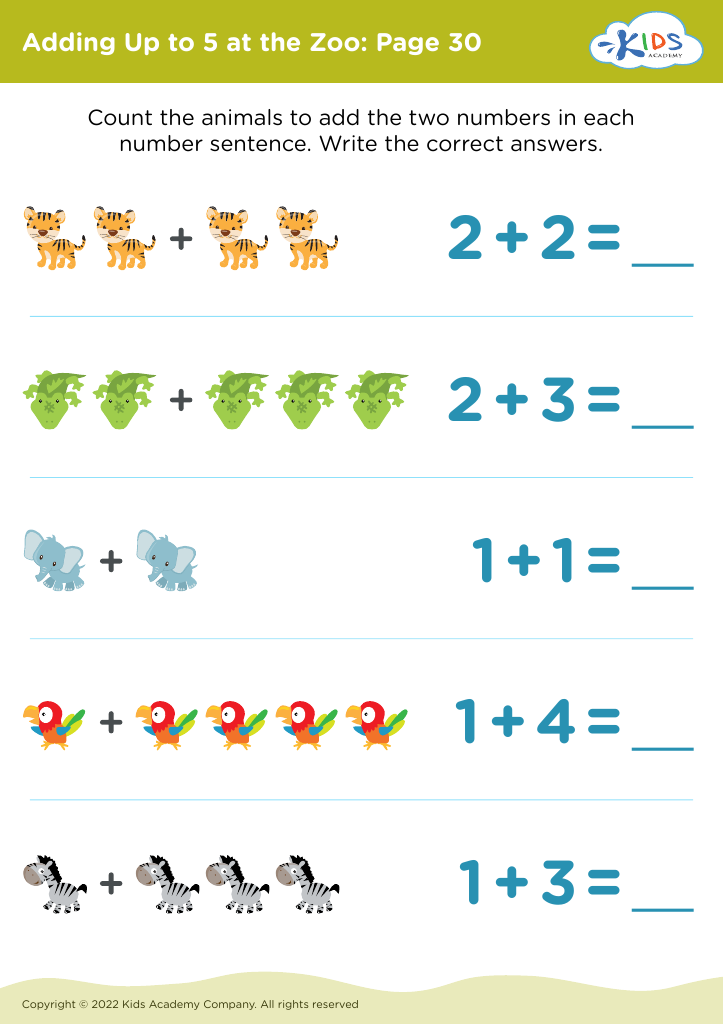
Adding Up to 5 at the Zoo: Page 30
Worksheet
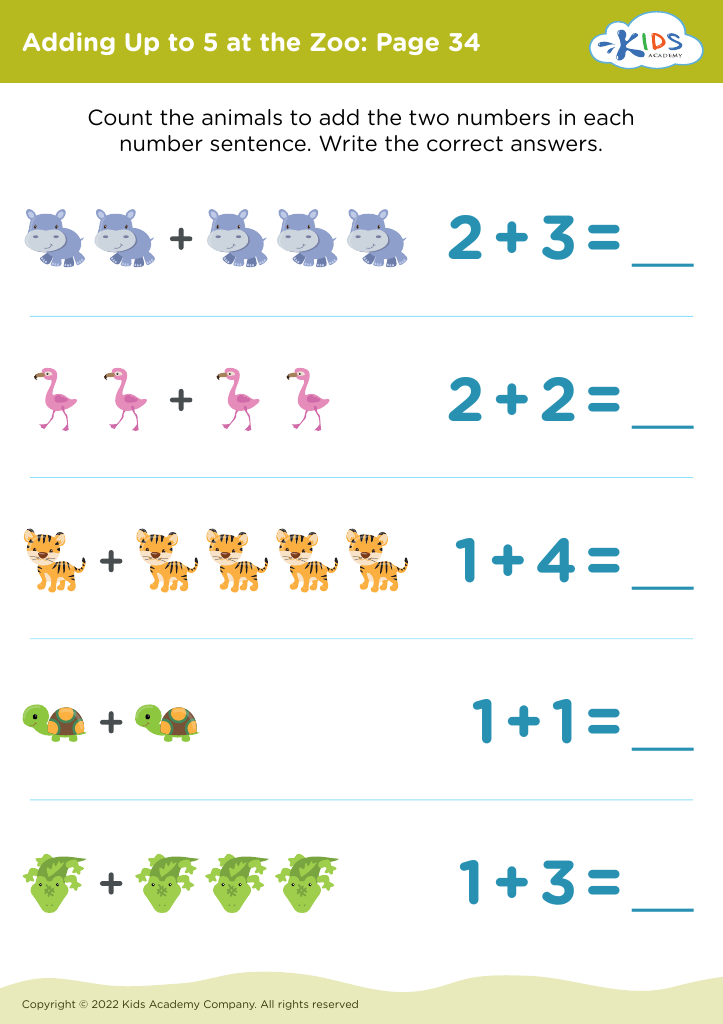
Adding Up to 5 at the Zoo: Page 34
Worksheet
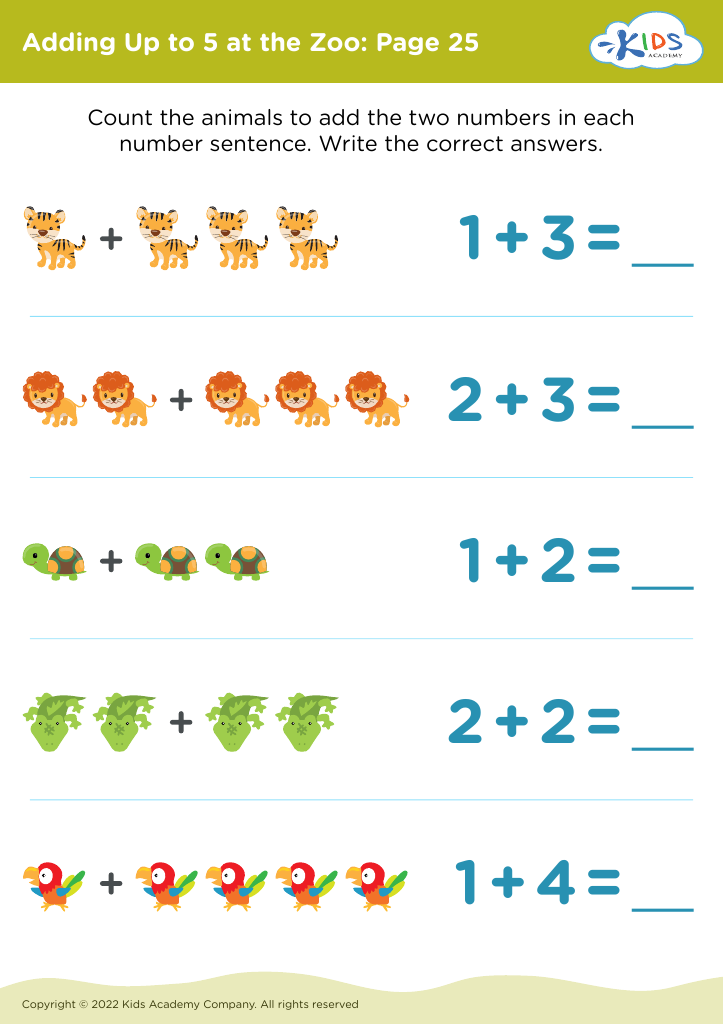
Adding Up to 5 at the Zoo: Page 25
Worksheet
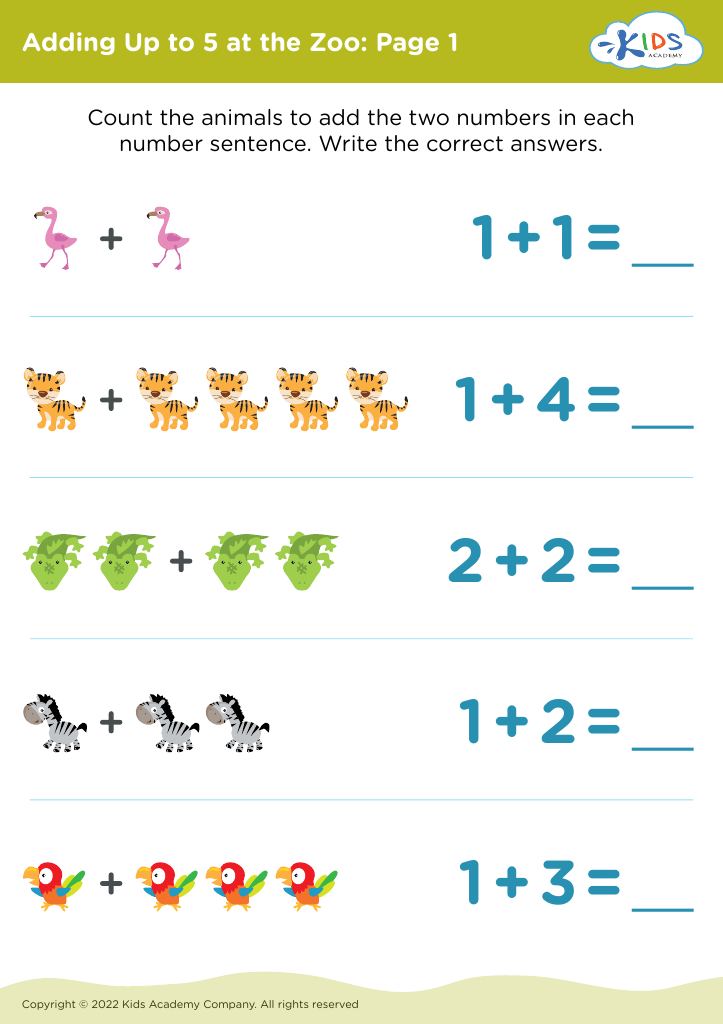
Adding Up to 5 at the Zoo: Page 1

Adding Up to 5 at the Zoo: Page 1

Adding Up to 5 at the Zoo: Page 1
Worksheet
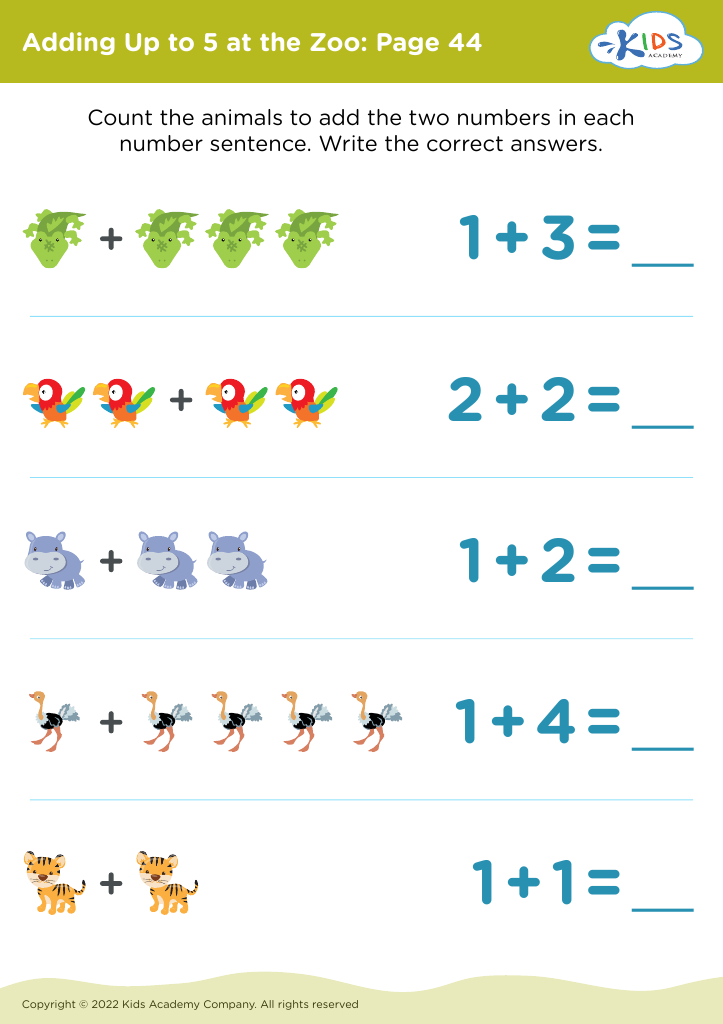
Adding Up to 5 at the Zoo: Page 44
Worksheet
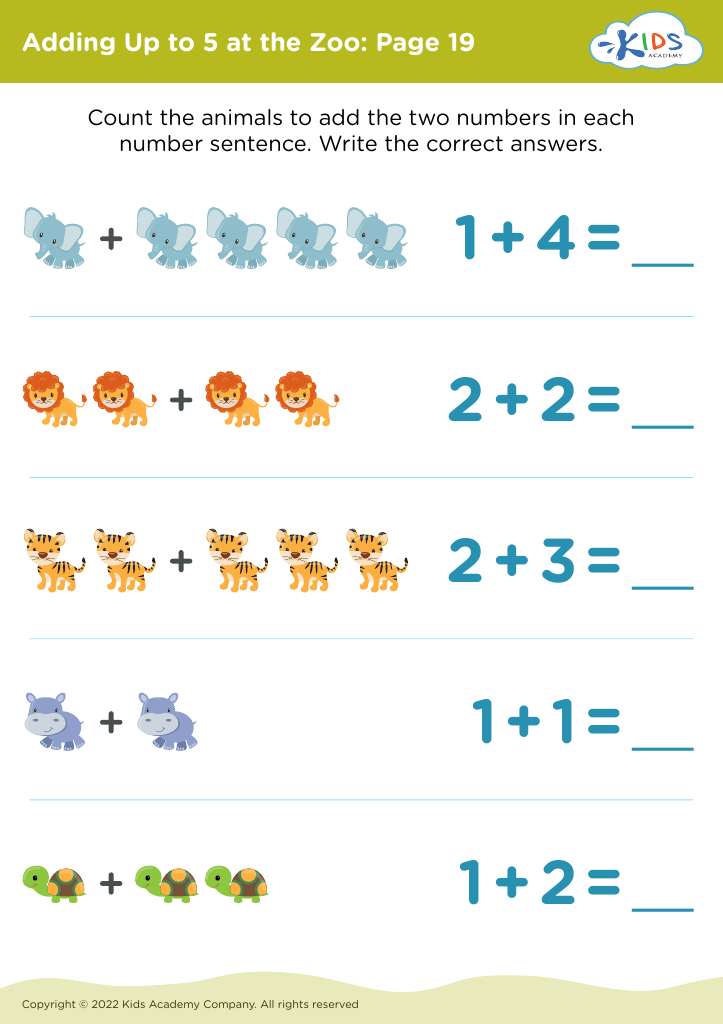
Adding Up to 5 at the Zoo: Page 19
Worksheet
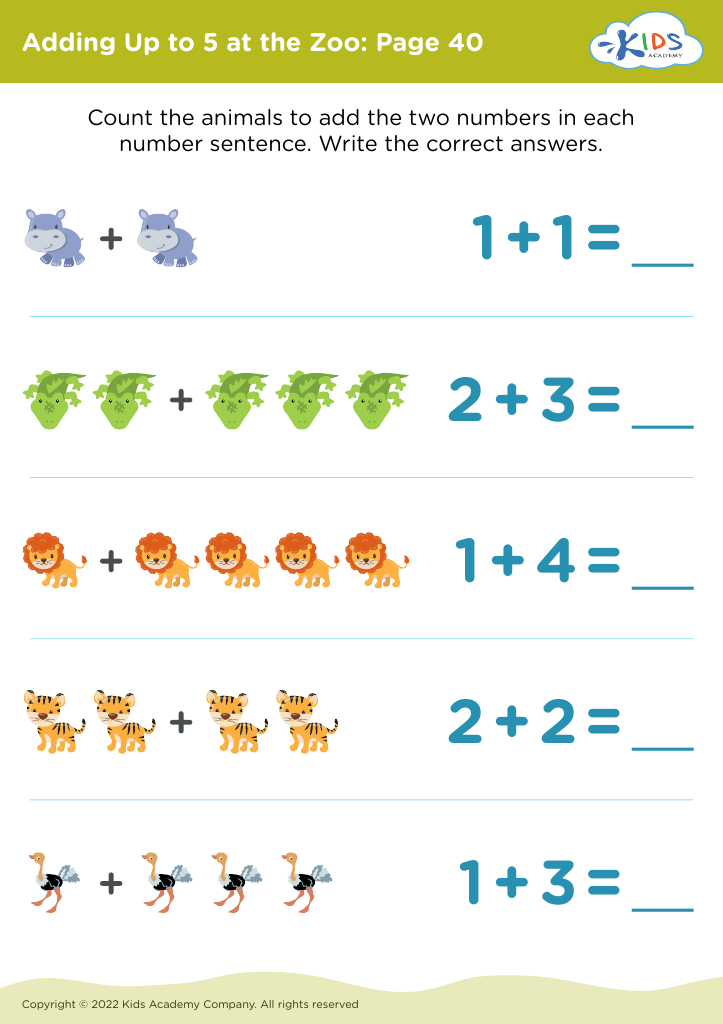
Adding Up to 5 at the Zoo: Page 40
Worksheet
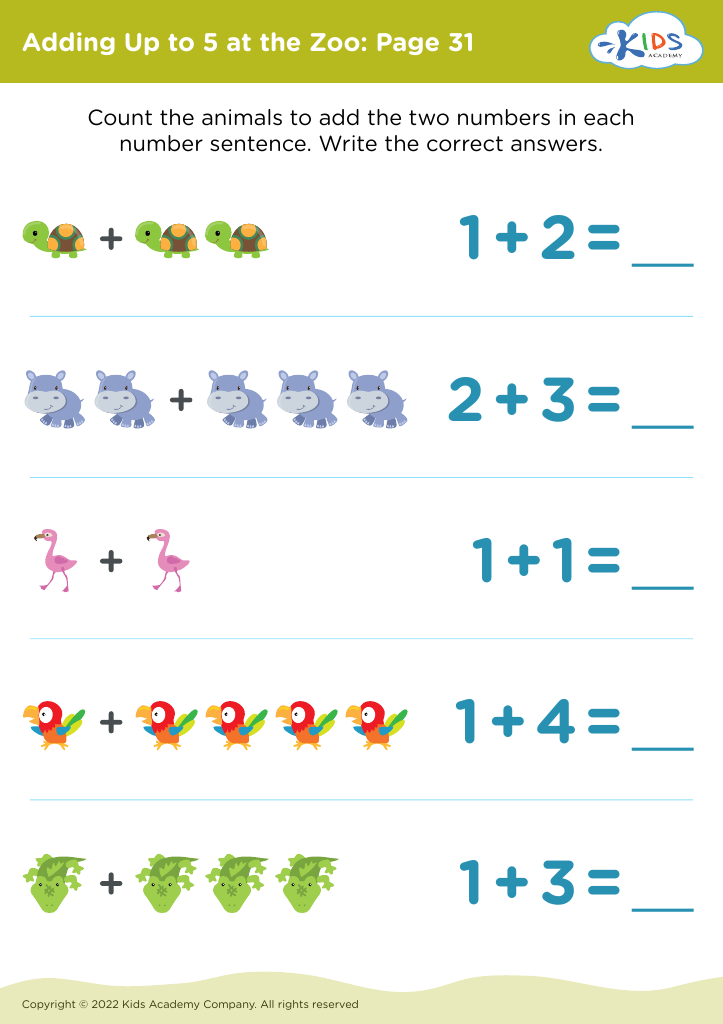
Adding Up to 5 at the Zoo: Page 31
Worksheet


Caring about cognitive development for children aged 3-6, especially within the context of learning tools like "Cognitive Development Adding at the Zoo," is pivotal for several reasons.

Firstly, the early years are foundational for brain development. During this period, children's brains are highly adaptable and capable of forming strong neural connections. Introducing educational tools that engage multiple senses, like colorful zoo animals for counting, can enhance memory, attention, and processing skills.

Secondly, early numeracy skills lay the groundwork for future math competence. "Adding at the Zoo" scenarios not only teach basic arithmetic but also introduce problem-solving techniques and logical thinking. These skills support more complex mathematical learning later on.

Furthermore, using fun and engaging themes such as the zoo can make learning feel less like a chore. When children are emotionally stimulated and interested, such as when they interact with animal figures or zoo settings, learning becomes effortlessly enjoyable and profoundly impactful.

Moreover, positive early learning experiences foster a lifelong love for education. By combining play and learning, parents and teachers can ignite curiosity and enthusiasm in children.

In sum, focusing on cognitive development through tools like "Adding at the Zoo" promotes essential math skills, piques interest in learning, and cultivates a positive educational foundation that can benefit children throughout their academic journey.