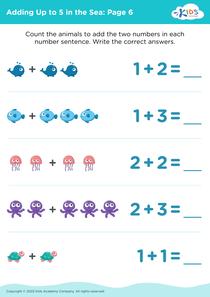
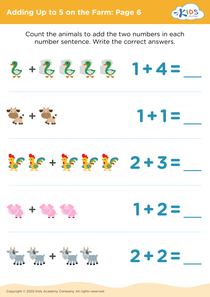
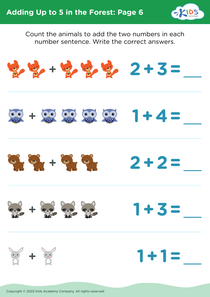
Fine motor skills (writing) Adding at the Zoo Worksheets for Ages 3-6
6 filtered results
-
From - To
Enhance your child's fine motor skills with our "Adding at the Zoo" worksheets, designed for ages 3 to 6. These engaging activities combine playful zoo themes with essential math concepts, encouraging children to practice writing numbers while enjoying imaginative scenarios. As kids count and draw their favorite animals, they develop hand-eye coordination and writing abilities. Our worksheets are perfect for home learning or classroom use, promoting both academic skills and creativity. Foster a love for learning with these fun and interactive worksheets that prepare your little ones for future educational success while exploring the wonders of the animal kingdom!
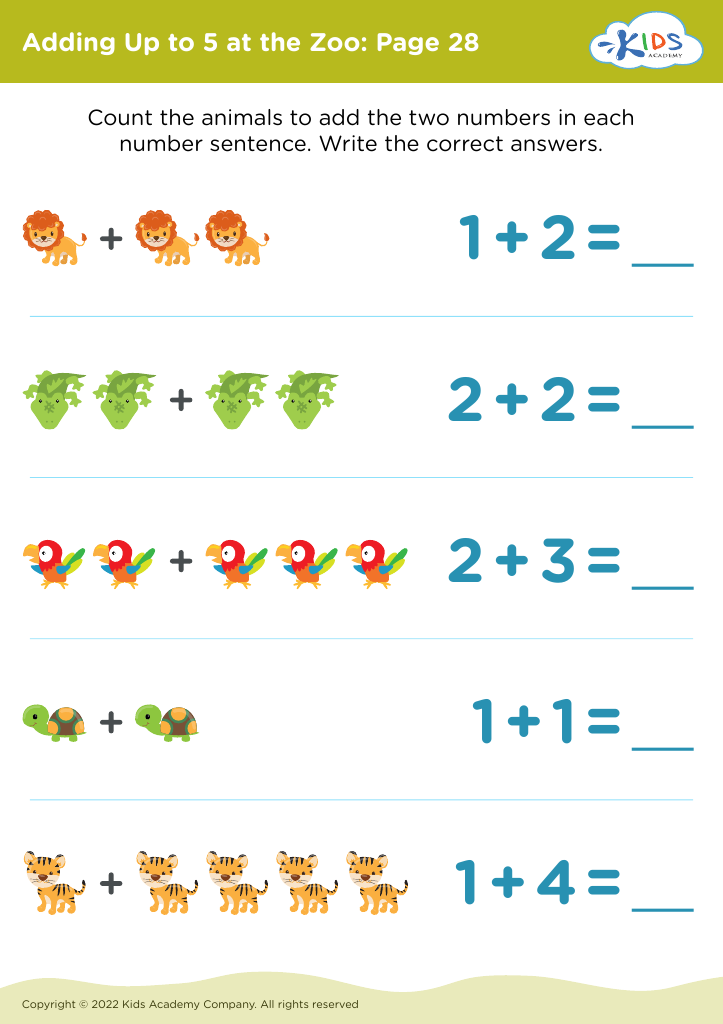
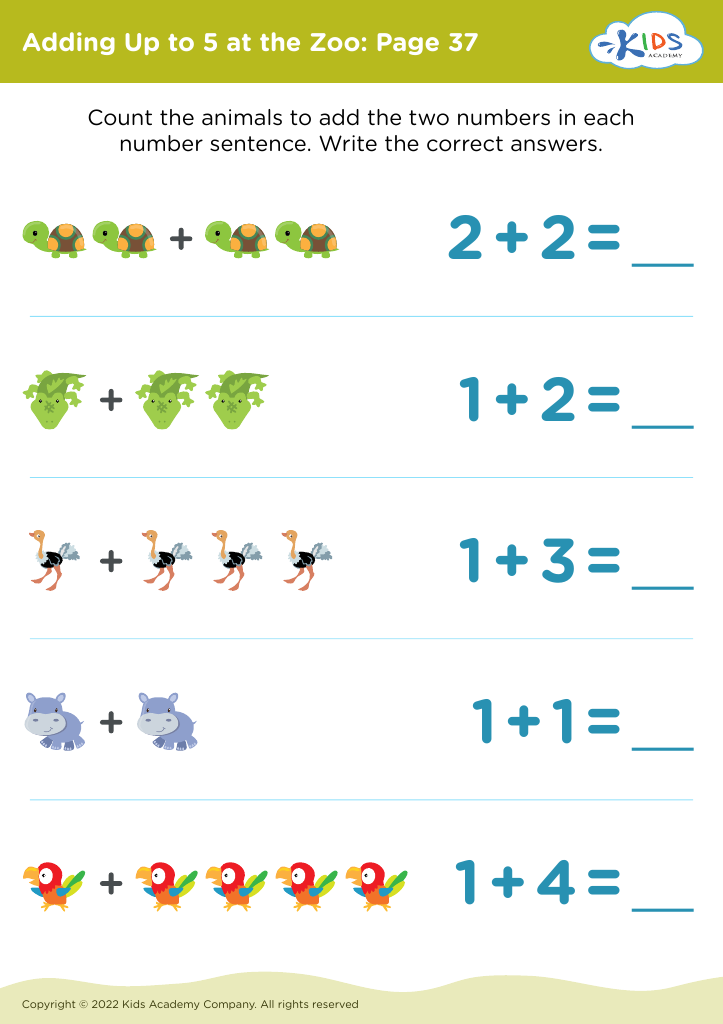
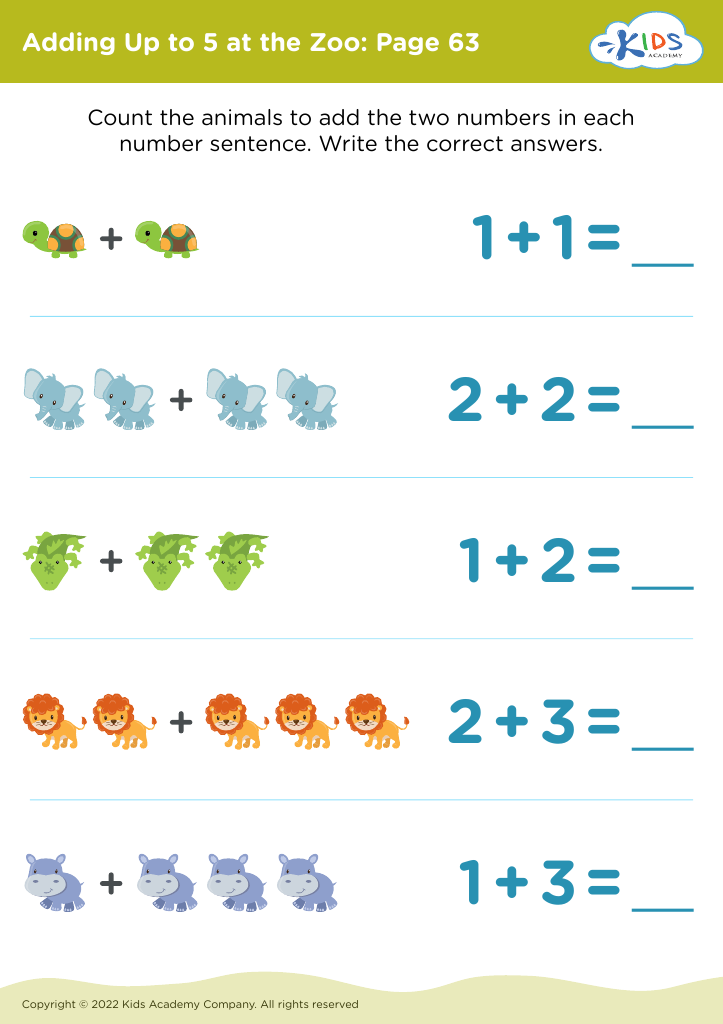
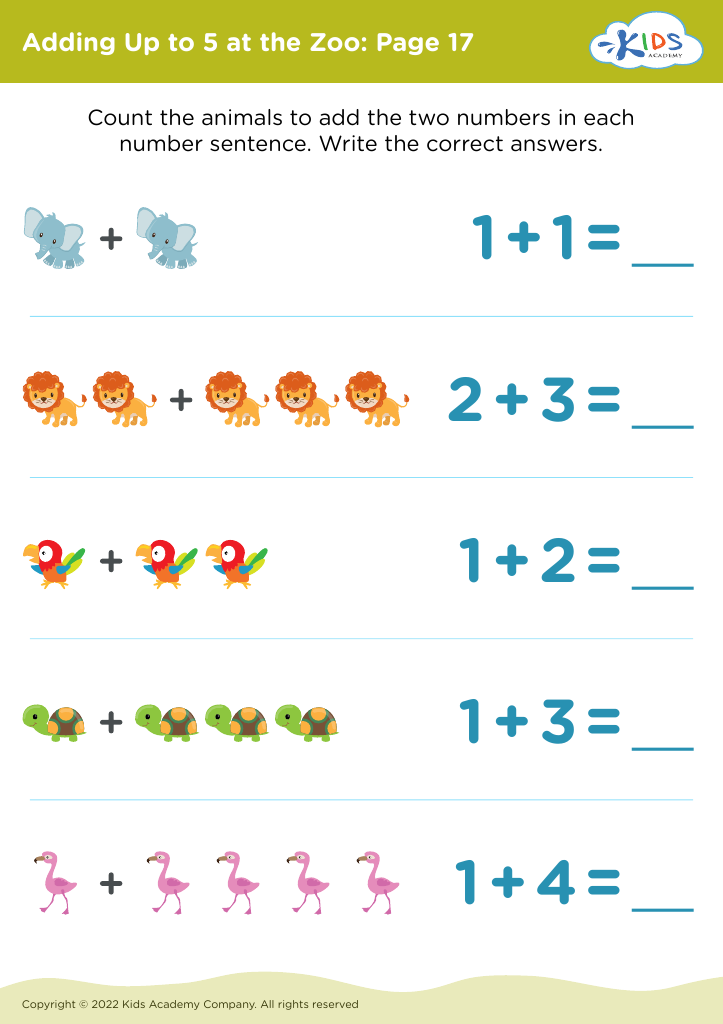
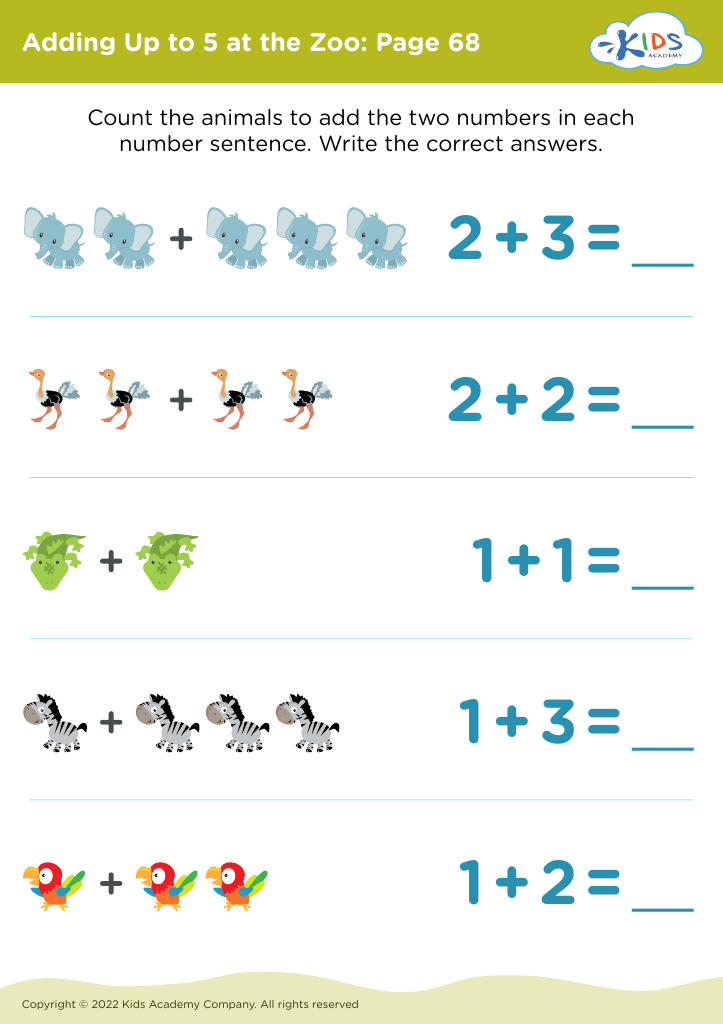
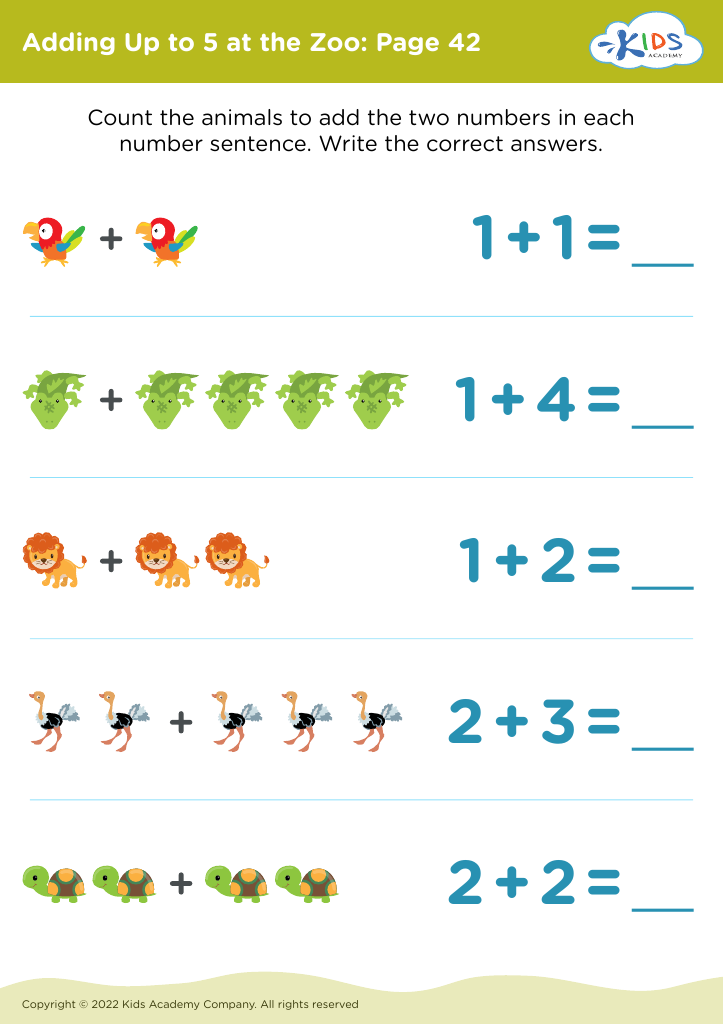



Fine motor skills are crucial for children aged 3-6 as they form the foundation for successful writing and a variety of everyday tasks. Activities like "Adding at the Zoo" can significantly enhance these skills while making learning fun. Developing fine motor skills involves strengthening the muscles in a child's hands and fingers, improving their control and coordination, which are essential for writing tasks.
When children engage in activities that involve grasping, pinching, and manipulating objects, they essentially prepare their little hands for holding pencils or crayons. These skills not only help them write legibly but also encourage creativity and expression through art. By incorporating fun scenarios such as a visit to the zoo, children are more likely to stay engaged and retain the lessons being taught.
Furthermore, as parents and teachers, encouraging fine motor development paves the way for academic success. Children who struggle with these skills may find it difficult to keep up with their peers in school, leading to frustration and decreased confidence. By prioritizing fine motor activities, we help build a solid foundation for literacy and learning, ultimately ensuring our young learners thrive both in the classroom and beyond. Thus, fostering these skills through enjoyable activities can make a noticeable difference in a child's developmental journey.