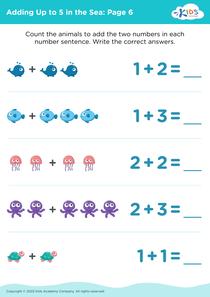
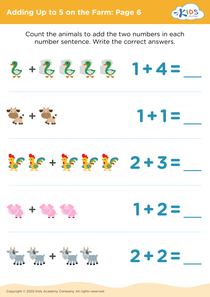
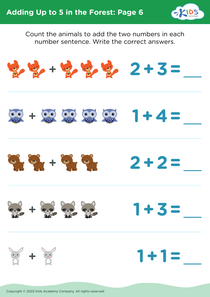
Problem Solving Adding at the Zoo Worksheets for Ages 3-6
3 filtered results
-
From - To
Unlock your child's problem-solving potential with our "Adding at the Zoo" worksheets designed for ages 3-6! These engaging, educational printables bring a delightful zoo theme to early math learning. Kids will enjoy meeting lovable zoo animals while practicing addition in fun, creative scenarios. Each worksheet is tailored to foster critical thinking and problem-solving skills while reinforcing basic math concepts. Perfect for preschoolers and kindergarteners, these resources not only boost confidence in math but also keep young learners captivated. Download now and transform math practice into a zoo-tastic adventure! Visit Kids Academy for more.
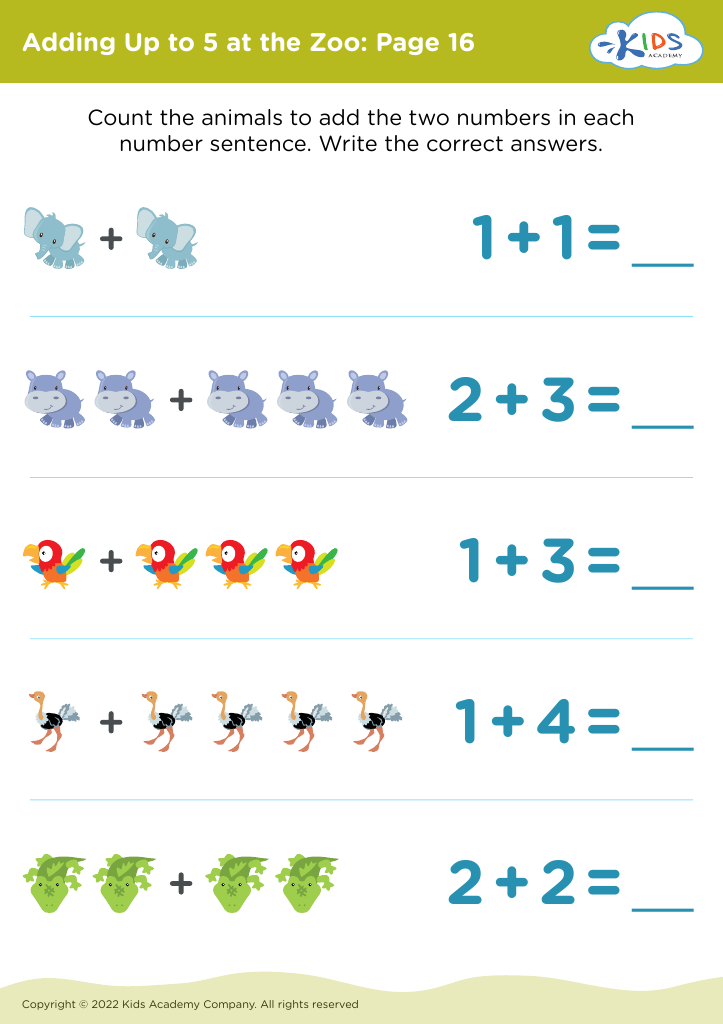
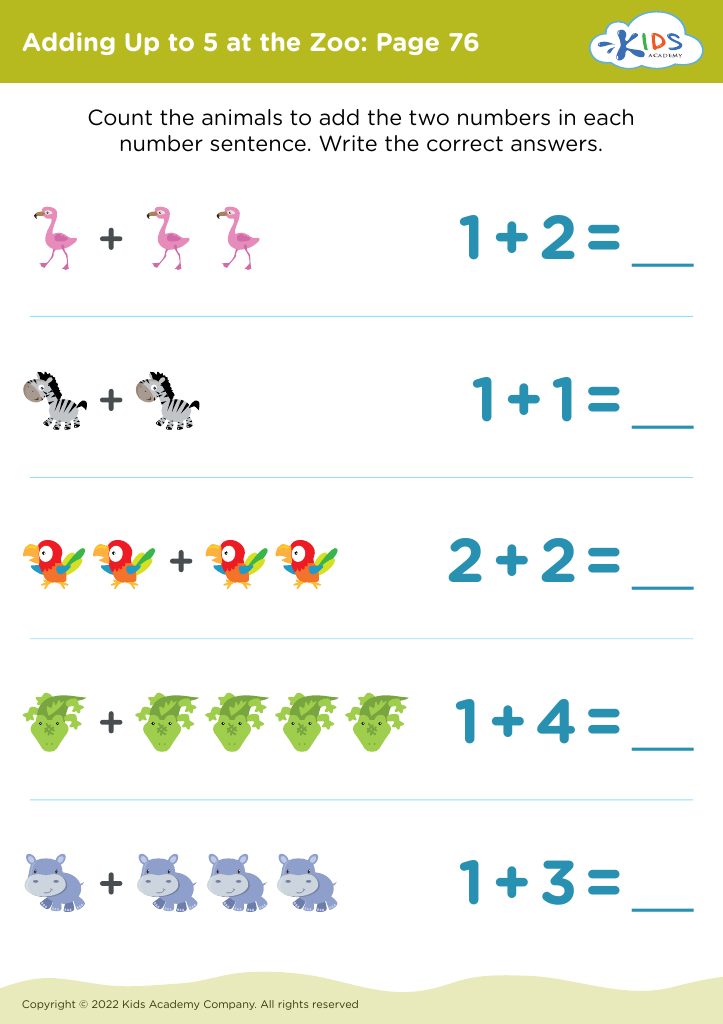
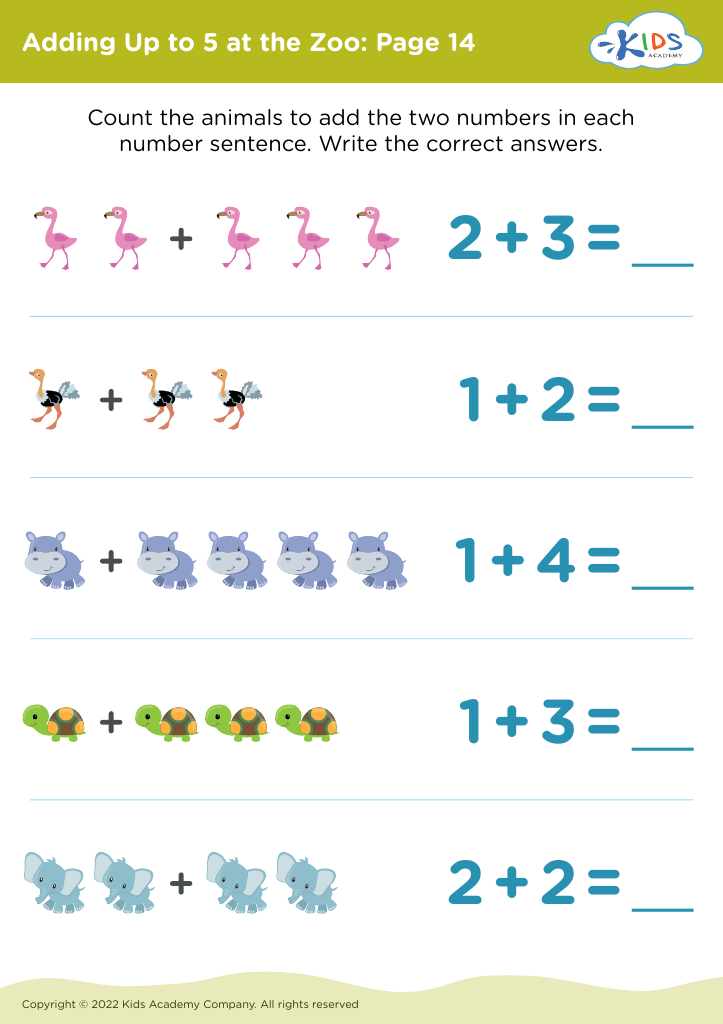



Problem Solving Adding at the Zoo for ages 3-6 is more than just a fun activity; it's a valuable educational tool that supports early childhood development in numerous ways. At this critical stage, young children are incredibly receptive to new concepts, and engaging, hands-on activities help reinforce foundational skills that underpin future learning. This activity brings together elements of mathematics, language development, and cognitive skills in an accessible and enjoyable format.
By integrating problem solving with the theme of a zoo, children are introduced to addition within a context that is both familiar and exciting to them. This excitement promotes a love for learning and encourages curiosity. Parents and teachers alike should care about this because it strengthens numerical understanding through practical scenarios. Children gain familiarity with numbers and basic arithmetic operations, which are essential for future math success.
Moreover, story-based scenarios enhance language skills as children follow narratives, ask questions, and describe their actions and observations. These interactions enrich vocabulary and comprehension abilities. Importantly, problem-solving develops critical thinking skills, including logical reasoning, pattern recognition, and the ability to approach challenges from different angles. By fostering these skills early on, children gain confidence and are better prepared for academic rigors in later years. Supporting such activities lays a solid foundation for holistic learning and a positive attitude towards education.