Problem-Solving Skills Adding at the Zoo Worksheets for Ages 3-6
4 filtered results
-
From - To
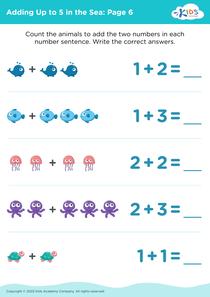
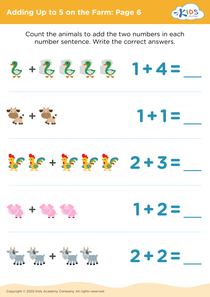
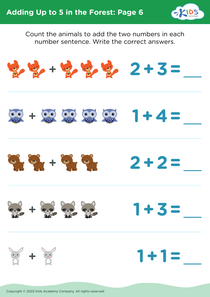
Introduce your little learners to the joy of addition with our "Problem-Solving Skills Adding at the Zoo Worksheets" designed for ages 3-6! These engaging worksheets make math fun by featuring adorable zoo animals to capture your child's imagination. While practicing addition, children will improve their problem-solving skills and develop a foundational understanding of math concepts. Each worksheet is thoughtfully crafted to suit young minds, promoting cognitive development through interactive learning. Help your kids master early math skills and build confidence with these playful, educational resources. Make adding and problem solving an exciting adventure at the zoo!
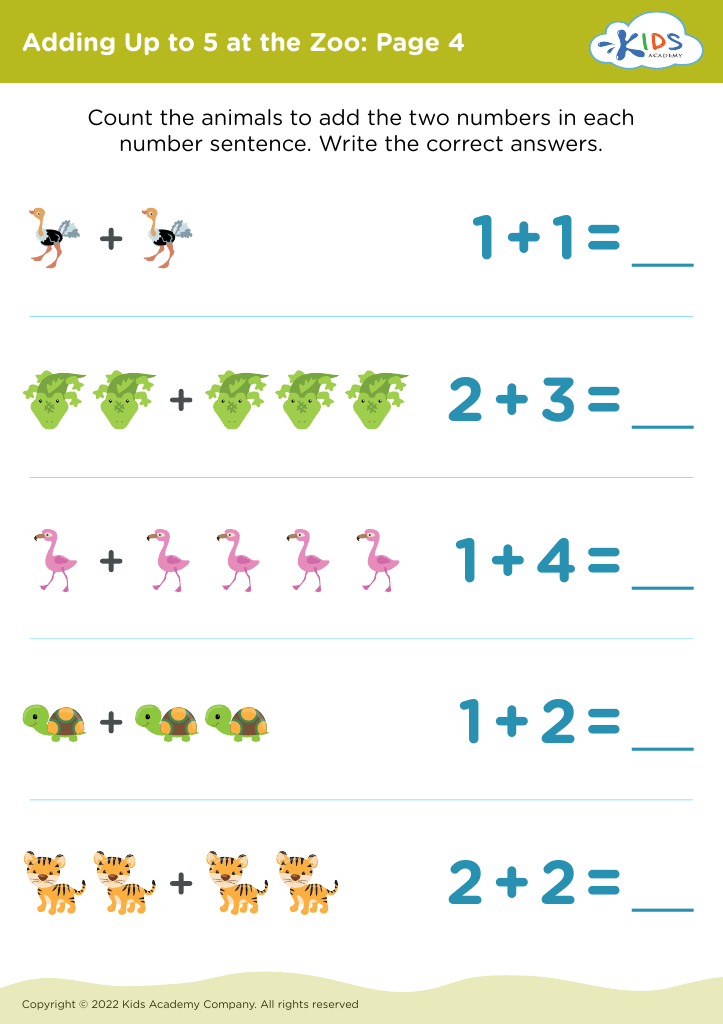
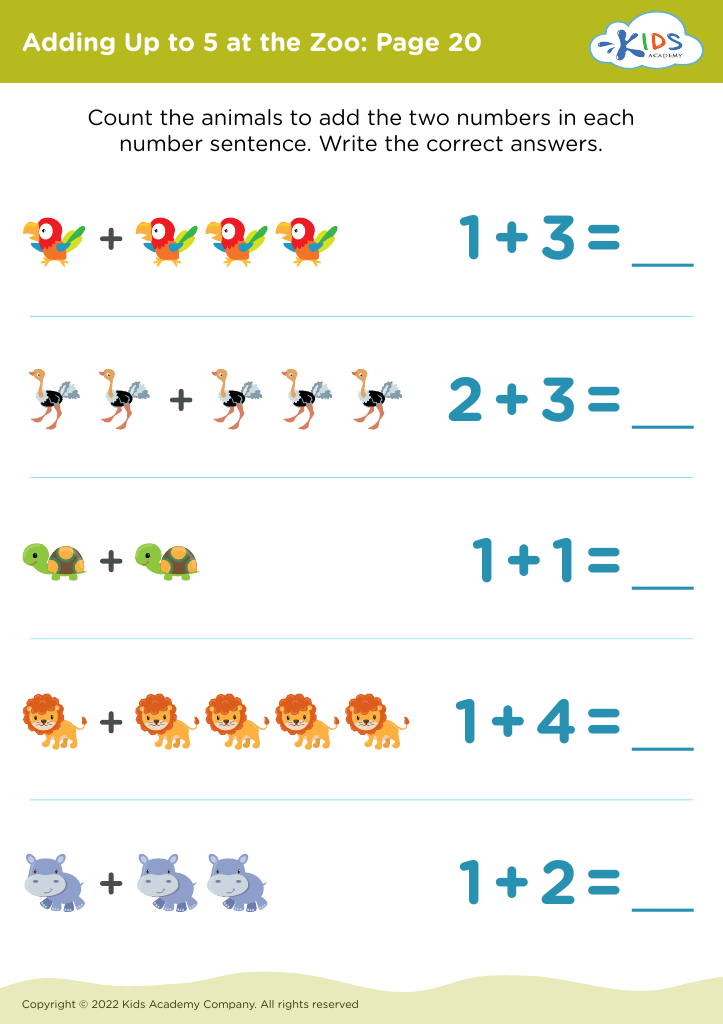
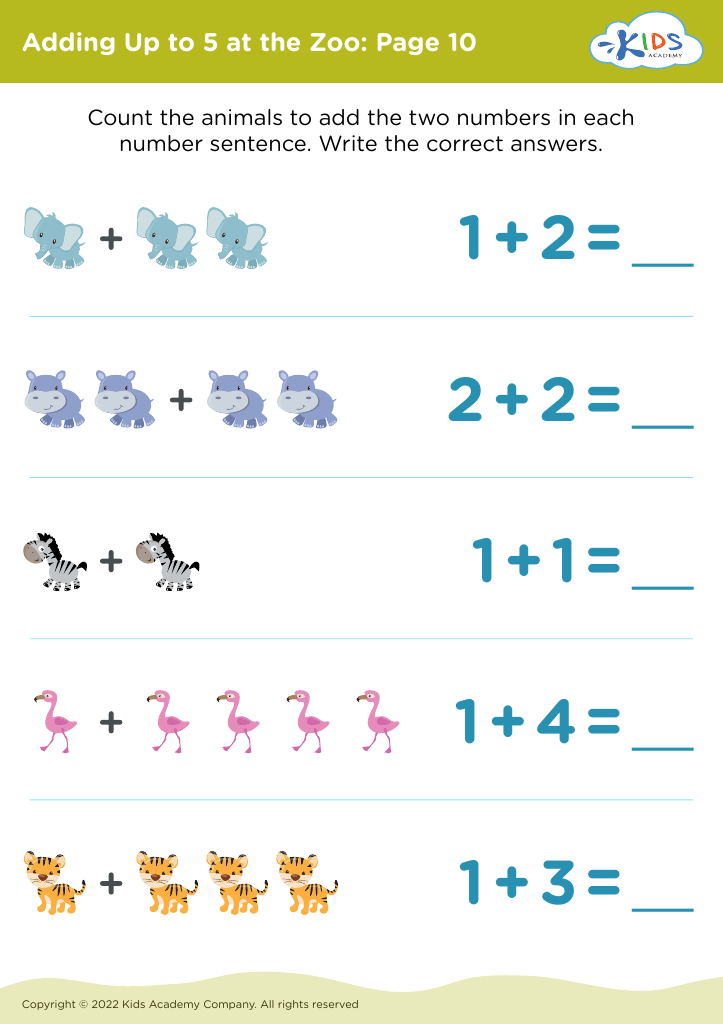
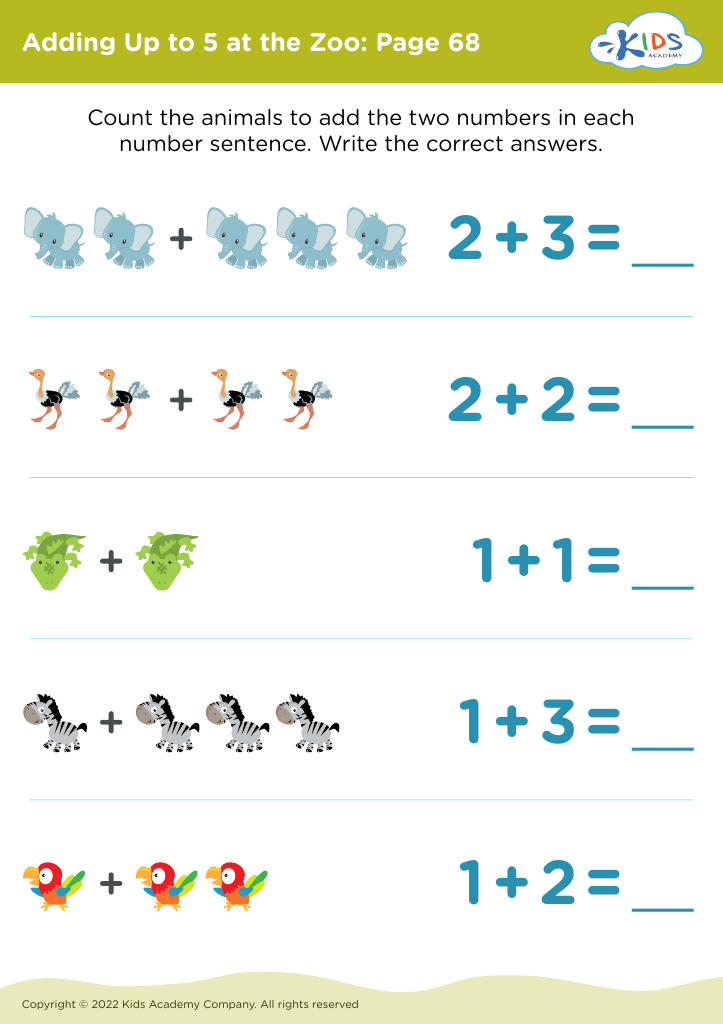



Problem-solving skills are foundational for young children's cognitive development, and "Problem-Solving Skills Adding at the Zoo" is an excellent, engaging way to nurture these abilities for ages 3-6. At this developmental stage, children are naturally curious and their brain functions—such as critical thinking, logical reasoning, and basic numeracy—are rapidly growing. By integrating problem-solving exercises with a fun, relatable theme like the zoo, parents and teachers can create an enjoyable learning experience that keeps young minds active and invested.
Firstly, adding activities featuring zoo animals can capture children's interest and make learning more relatable and less intimidating. Animals are fascinating to children, and this interest can be a powerful motivational tool. Secondly, the ability to comprehend basic addition sets the groundwork for more complex mathematical concepts they will encounter later in education. Moreover, these activities teach children to approach problems with a logical mindset, understanding that large problems can be broken down into simpler components.
Engaging children in these types of exercises also encourages persistence and improves focus—critical life skills that extend beyond the scope of mathematics. Parents and teachers who support the development of problem-solving skills are essentially fostering better decision-making for future academic, personal, and social situations, making it crucial not to overlook these early educational opportunities.