Understanding Quantities Adding at the Zoo Worksheets for Ages 3-6
6 filtered results
-
From - To
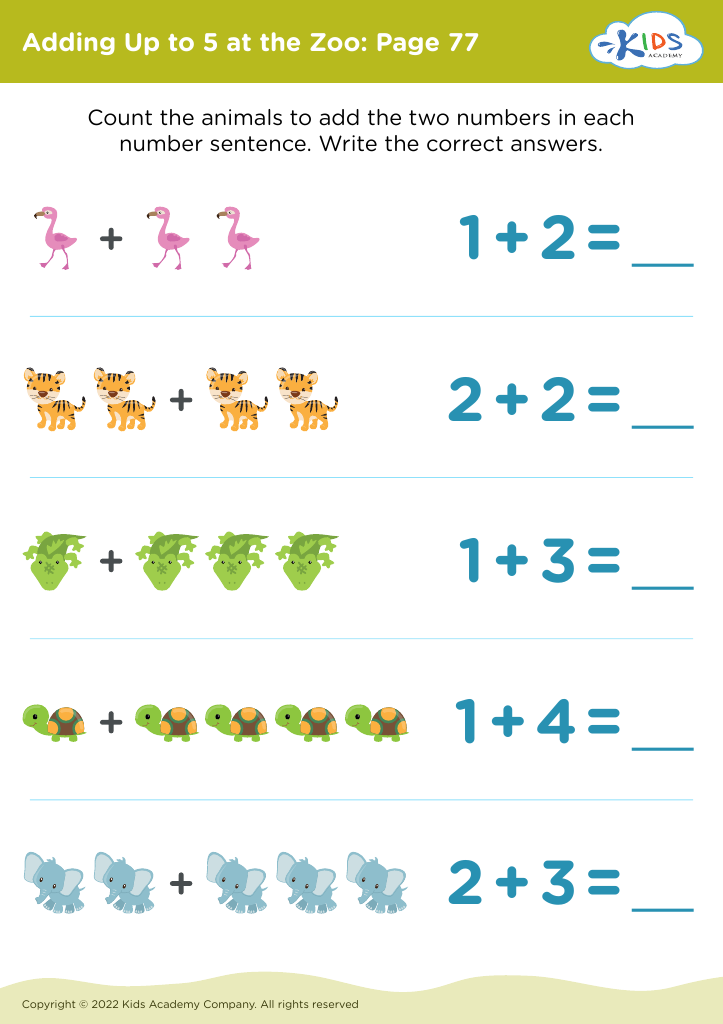
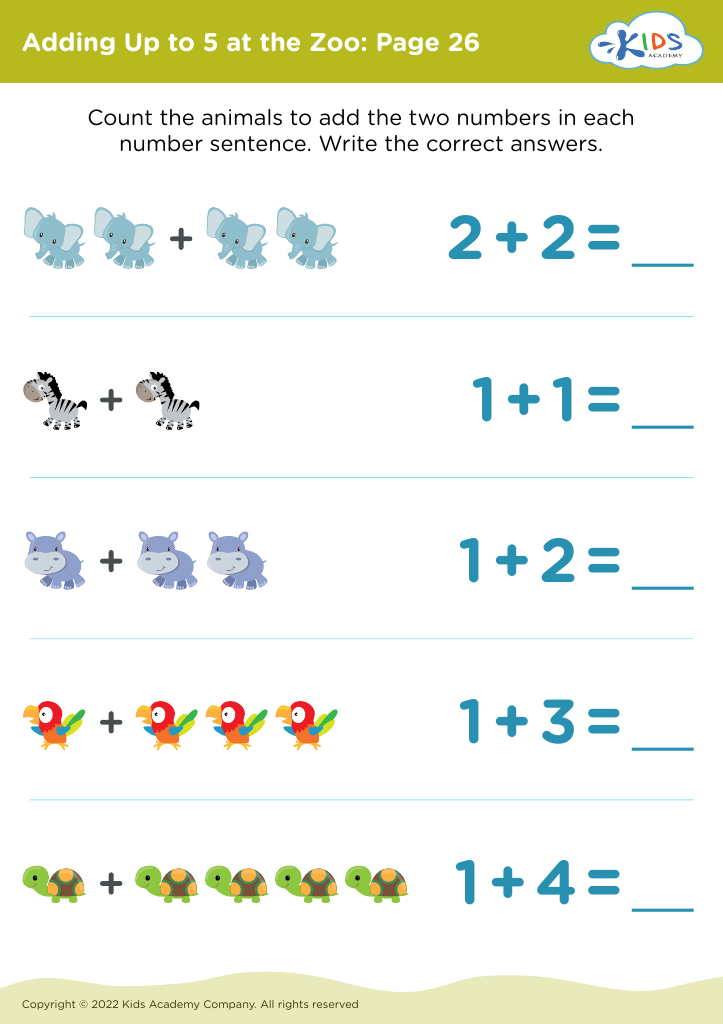
Introduce young learners to the exciting world of math with our "Understanding Quantities Adding at the Zoo Worksheets for Ages 3-6". These engaging printables feature adorable zoo animals, helping kids practice essential addition skills in a fun, interactive way. Curated specifically for early learners, these worksheets support the development of number sense and basic arithmetic, fostering a love for learning through delightful visuals and simple exercises. Perfect for home or classroom use, our worksheets are designed to make math enjoyable and accessible, encouraging children to explore numbers and quantities confidently. Enhance mathematical thinking with the cutest companions!
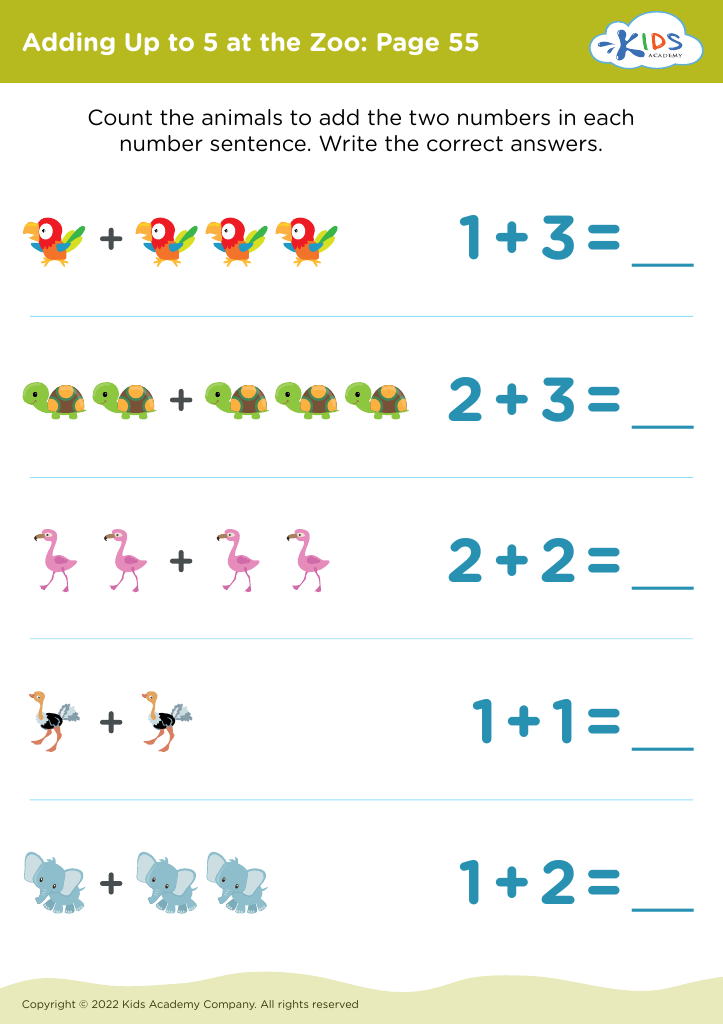
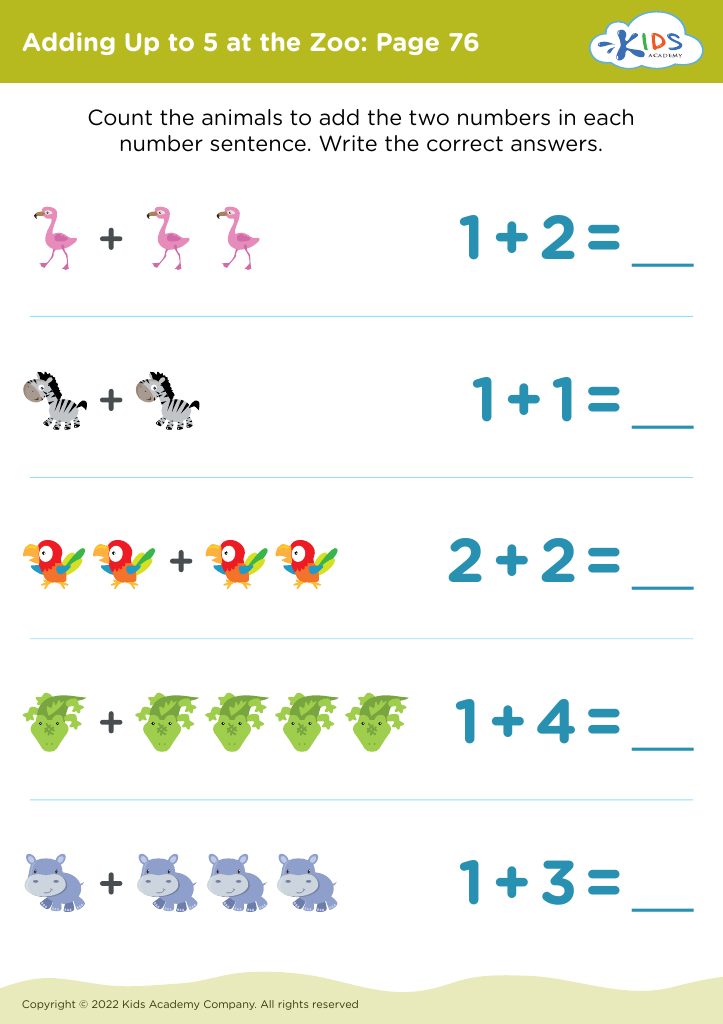
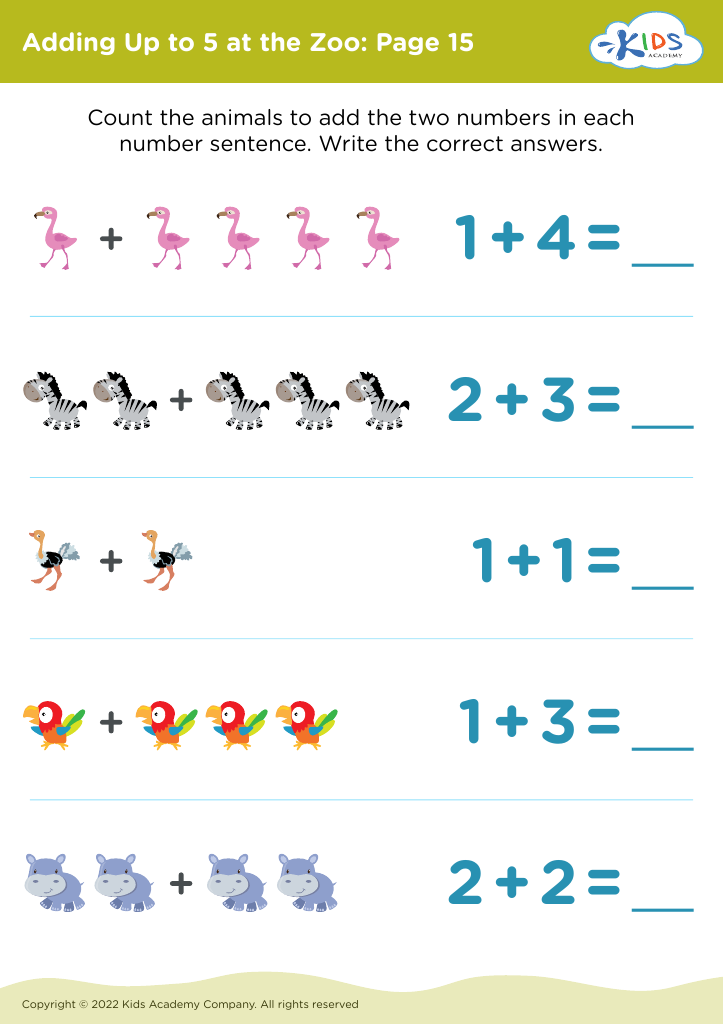
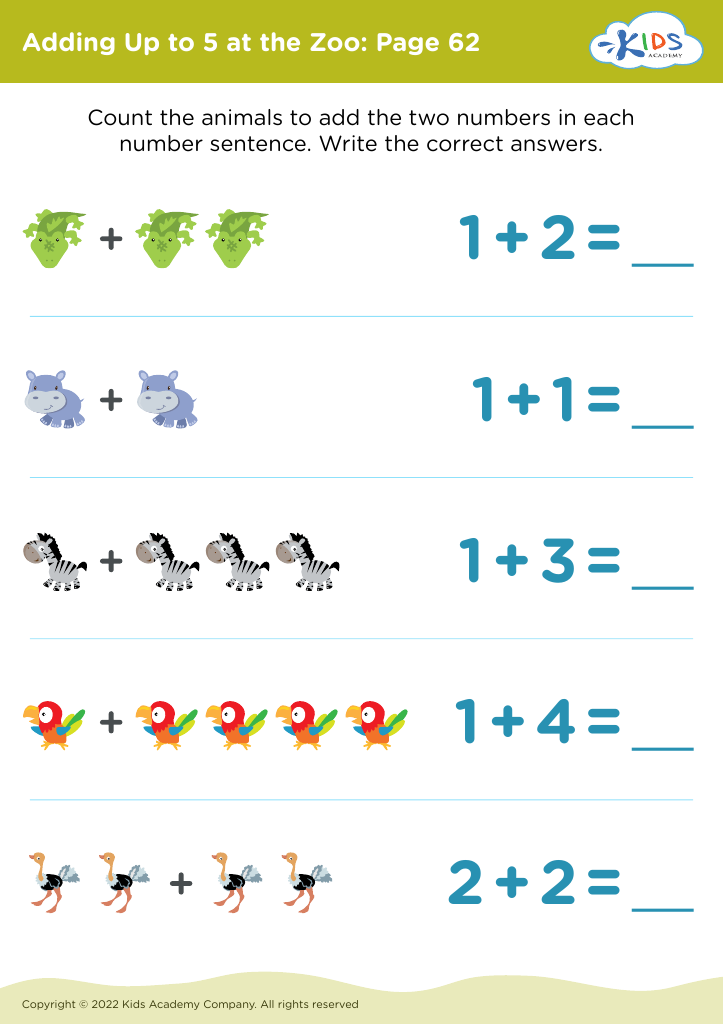



Understanding quantities and adding at an early age, especially in a fun and engaging environment like the zoo, lays a crucial foundation for future mathematical skills. For children aged 3-6, such activities are key in developing number sense, which is an intuitive understanding of numbers, their relationships, and how they are used in real-life situations.
Parents and teachers should care about this for several reasons:
-
Engagement and Interest: Learning about quantities and addition at the zoo merges education with a child’s innate curiosity. Seeing real animals while solving math problems makes learning enjoyable and memorable.
-
Contextual Learning: Contextual learning at the zoo helps children see the practical application of numbers and quantities. For example, counting the number of monkeys or adding the number of penguins in two enclosures helps them understand the relevance of math in the world around them.
-
Concept Development: Through interactive experiences, children begin to grasp fundamental concepts like counting, addition, and comparing quantities. These experiences build a strong conceptual understanding that's essential for more complex mathematics.
-
Critical Thinking and Problem-Solving: Activities that involve adding and understanding quantities encourage critical thinking and problem-solving. They teach children to recognize patterns, make predictions, and find solutions, skills that are beneficial across all areas of learning.
-
Foundation for Future Learning: Mastering basic math skills early on is associated with greater academic success later.