Filters

17 filtered results

Clear all filters
Favorites
With answer key
Interactive

17 filtered results

Difficulty Level

Grade


Explore our "Cognitive Development Adding in the Forest Worksheets" designed for children aged 3-6! This engaging resource enhances early mathematical skills through captivating forest-themed activities that promote counting, addition, and critical thinking. Children will embark on an exciting journey as they solve problems involving friendly woodland creatures, building foundational math skills essential for their development. Our worksheets are tailored to stimulate cognitive growth, encourage exploration, and foster a love for learning in a playful and interactive way. Perfect for classroom settings or home learning, these worksheets can easily be integrated into your curriculum. Start cultivating your child's math abilities today!
Check out this FREE Trial Lesson on Adding in the Forest for age 3-6!

Match Objects that Fit Together

Favorites
With answer key
Interactive
  • 3-6
  • Cognitive Development
  • Adding in the Forest
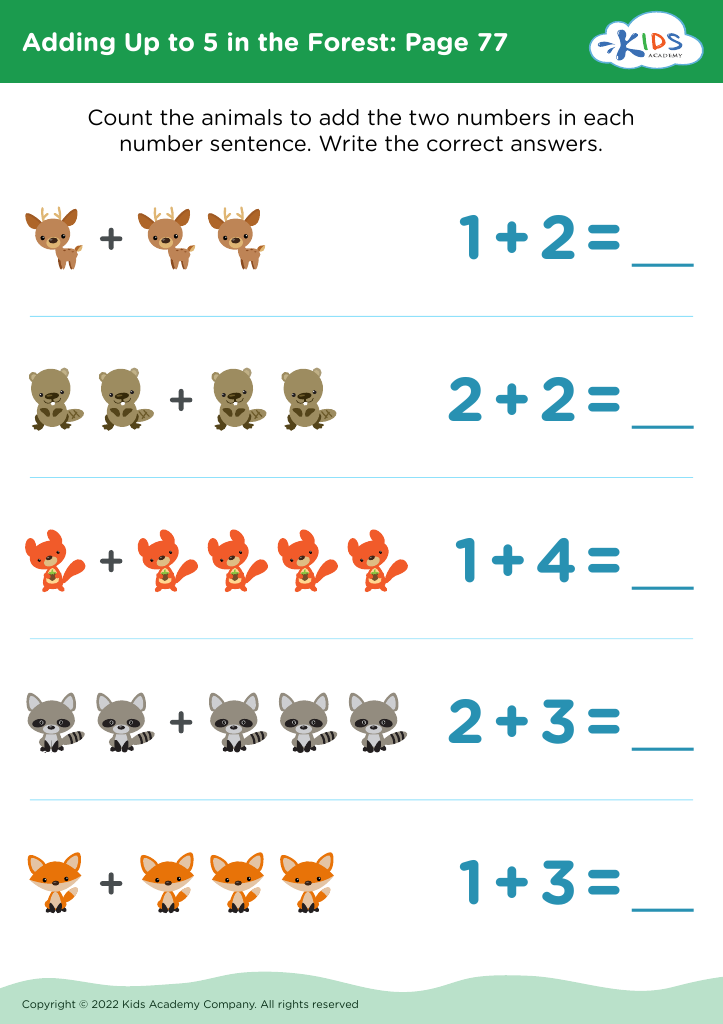
Adding Up to 5 in the Forest: Page 77
Worksheet
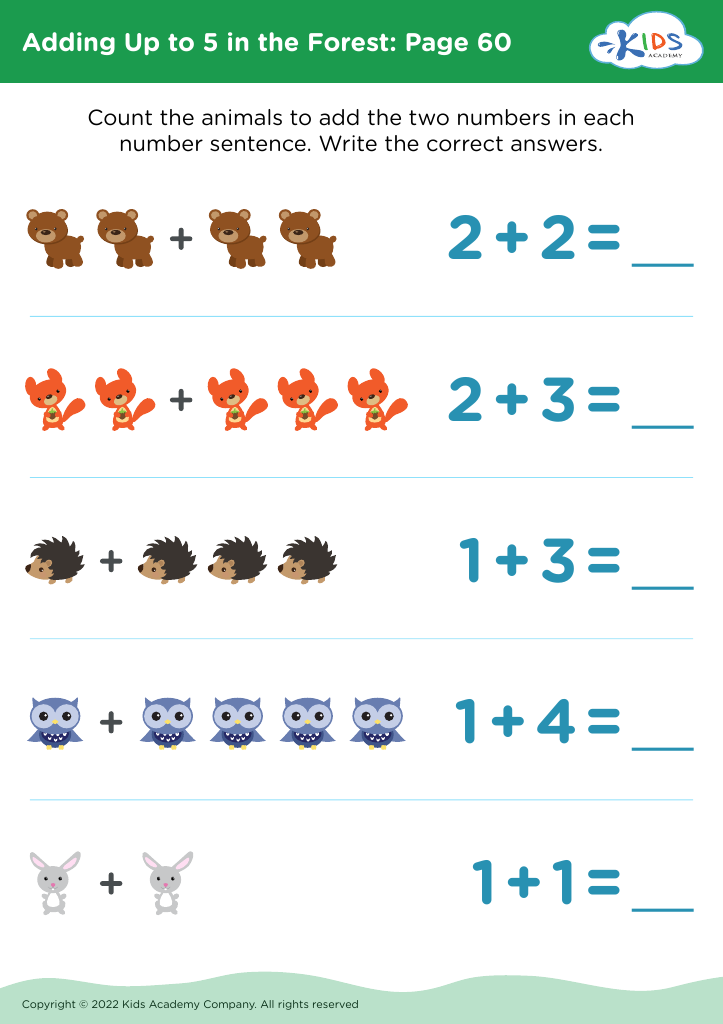
Adding Up to 5 in the Forest: Page 60
Worksheet
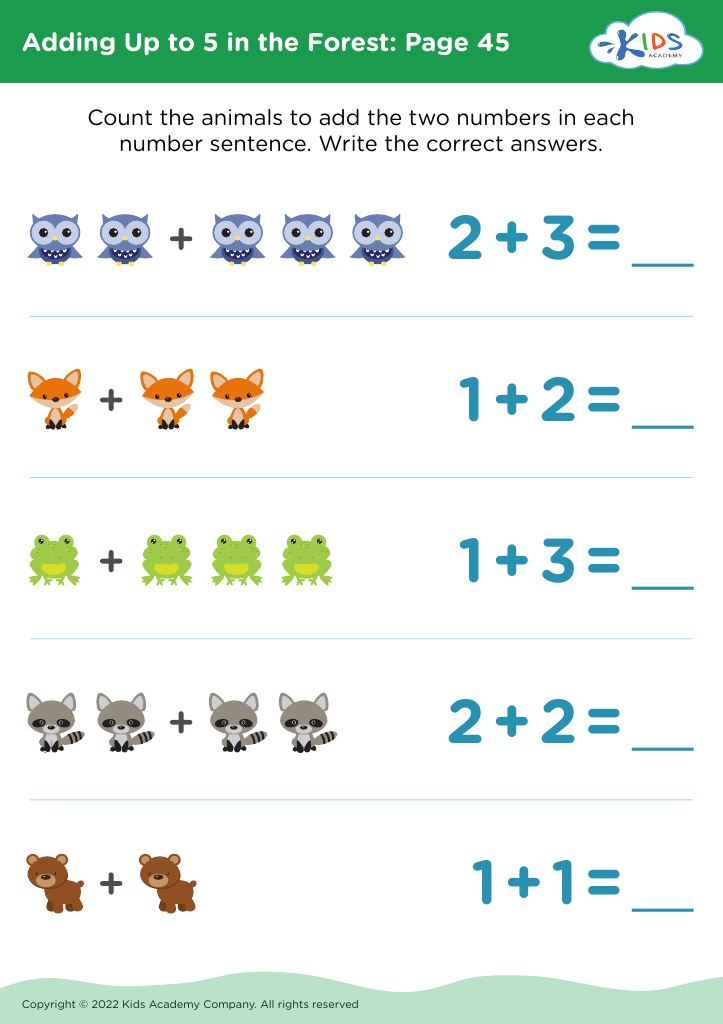
Adding Up to 5 in the Forest: Page 45
Worksheet
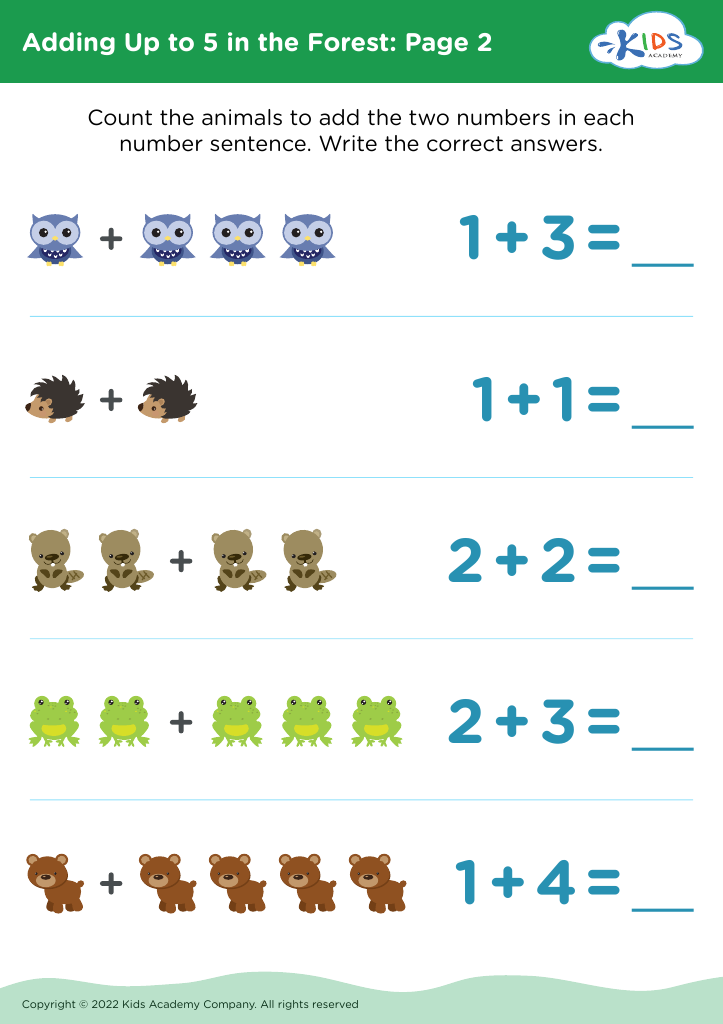
Adding Up to 5 in the Forest: Page 2
Worksheet
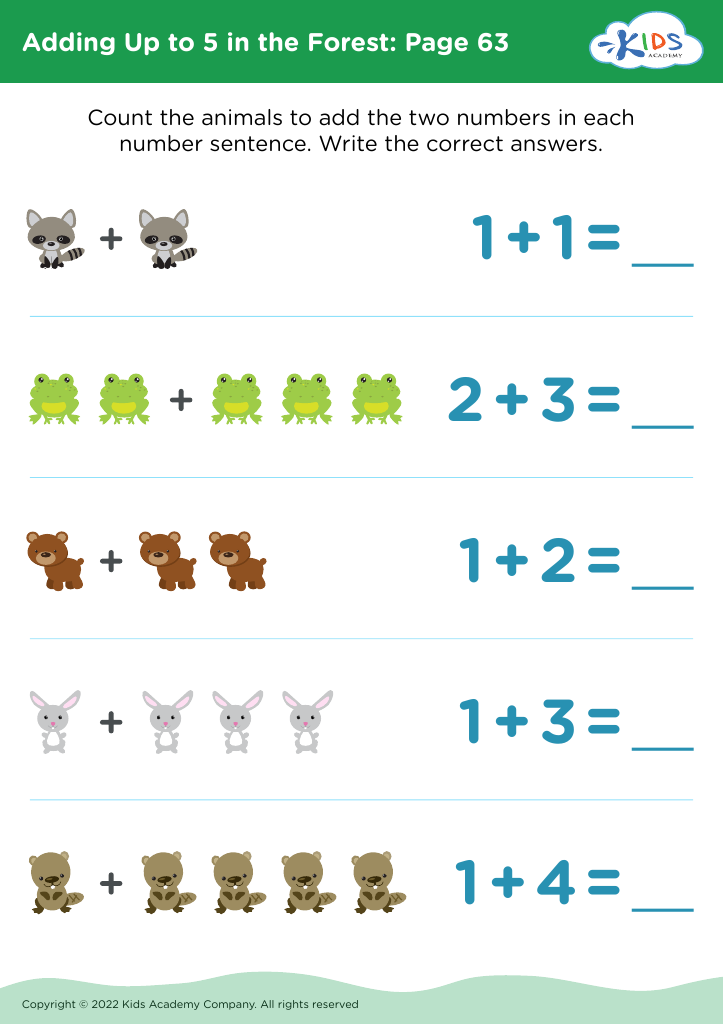
Adding Up to 5 in the Forest: Page 63
Worksheet
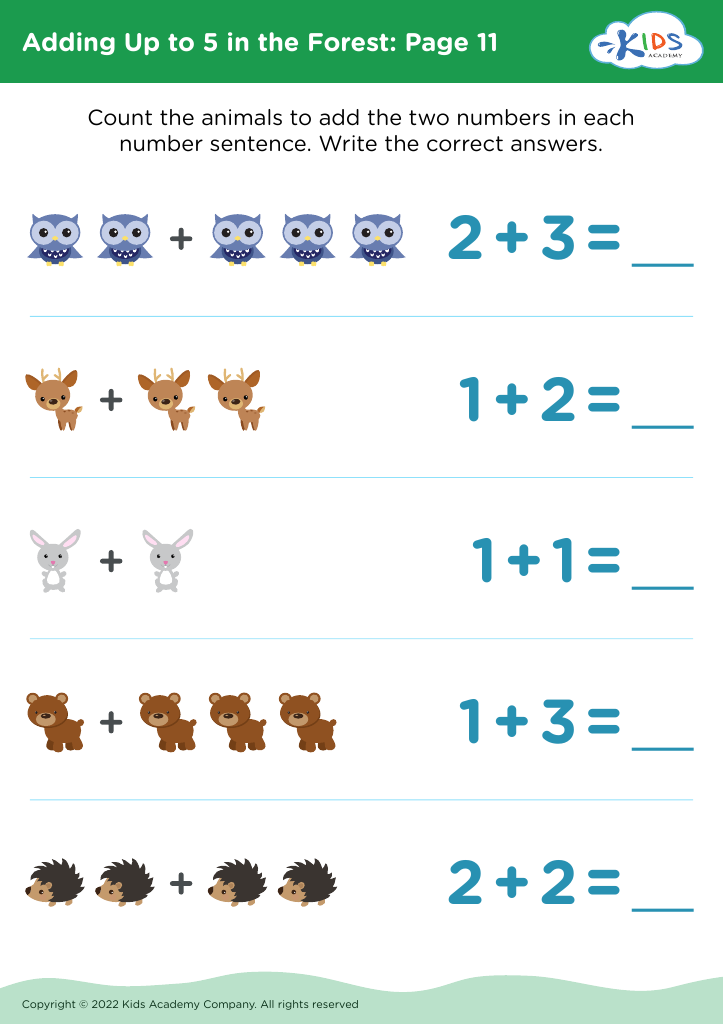
Adding Up to 5 in the Forest: Page 11
Worksheet
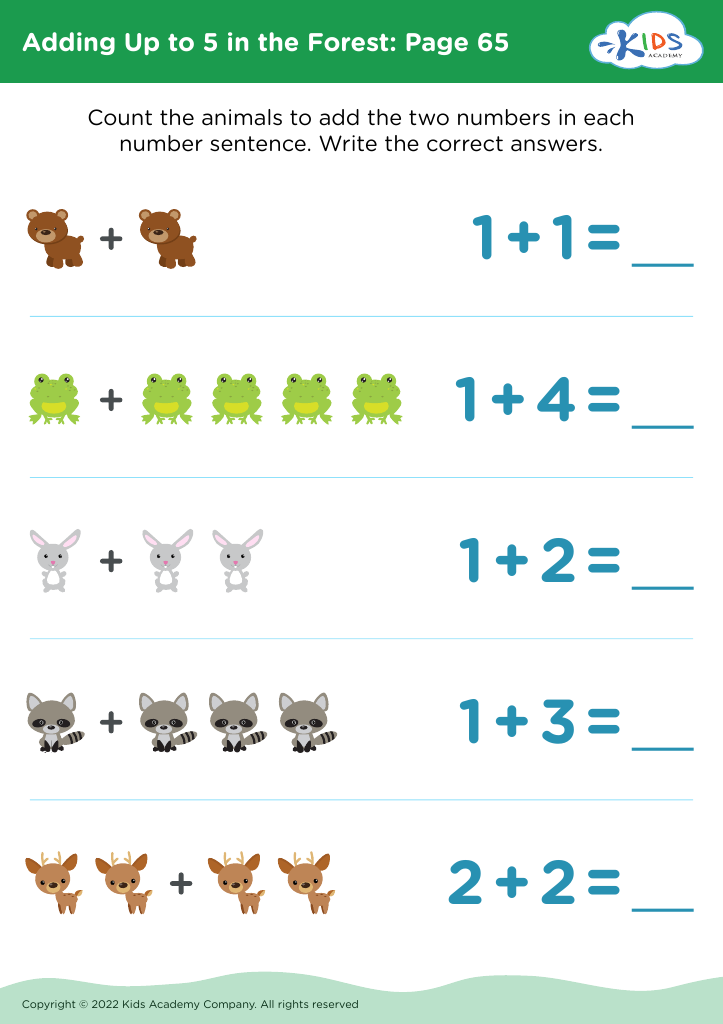
Adding Up to 5 in the Forest: Page 65
Worksheet
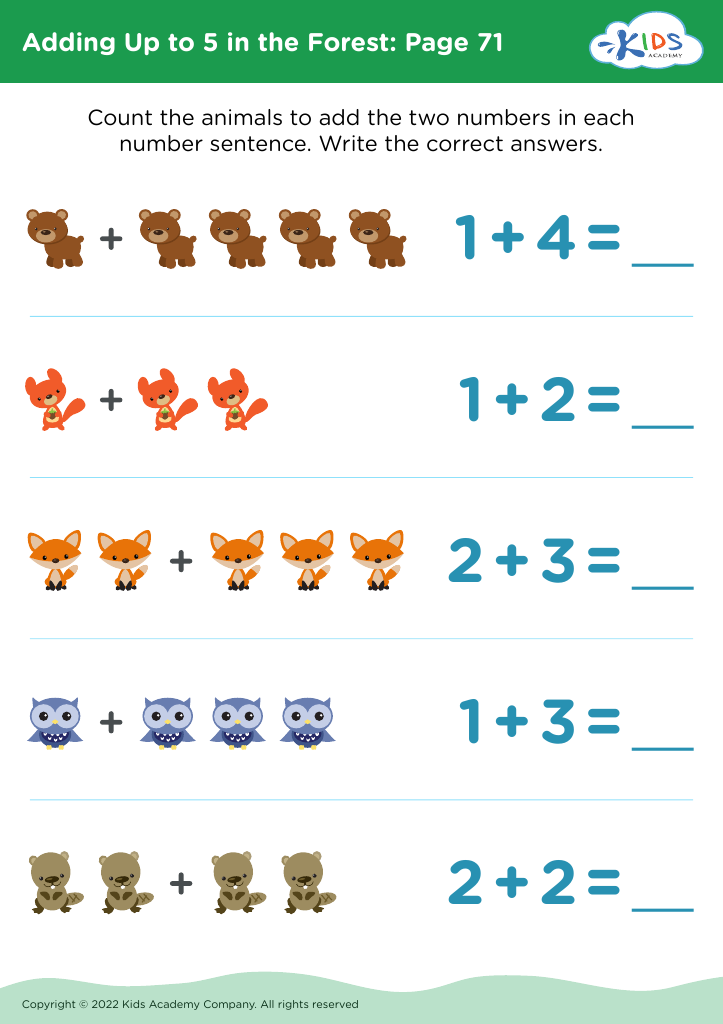
Adding Up to 5 in the Forest: Page 71
Worksheet
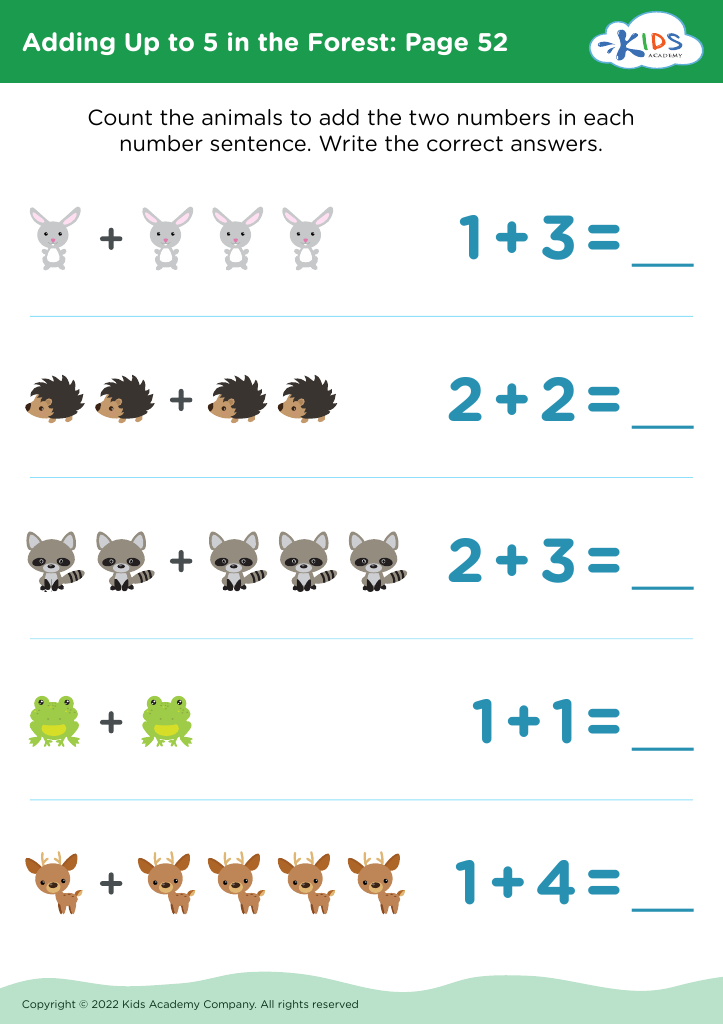
Adding Up to 5 in the Forest: Page 52
Worksheet
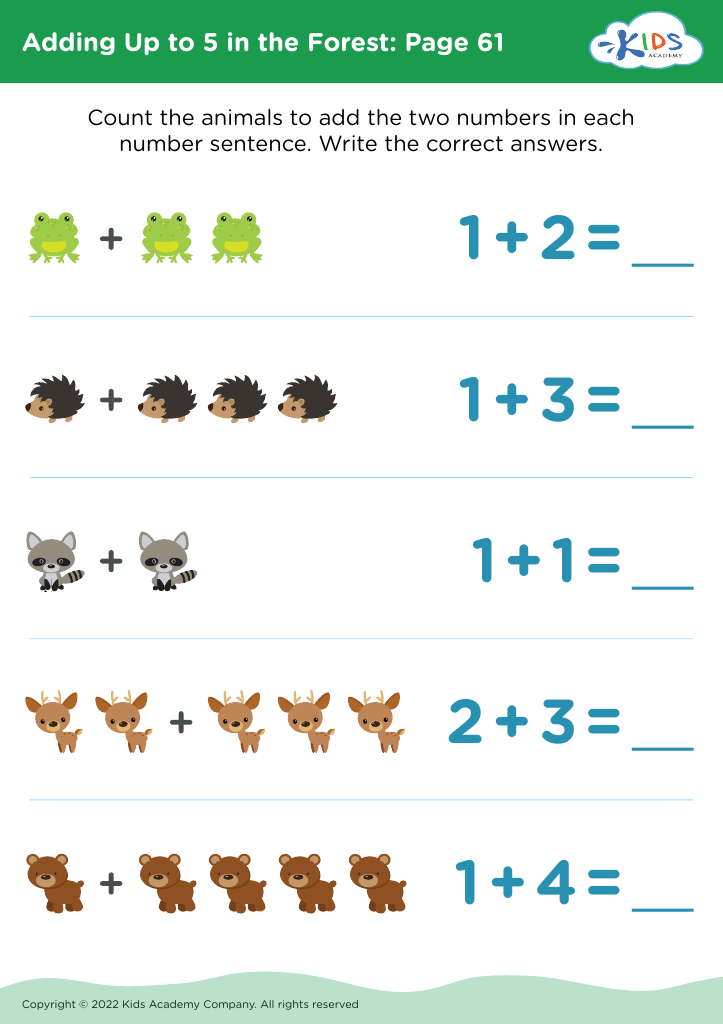
Adding Up to 5 in the Forest: Page 61
Worksheet
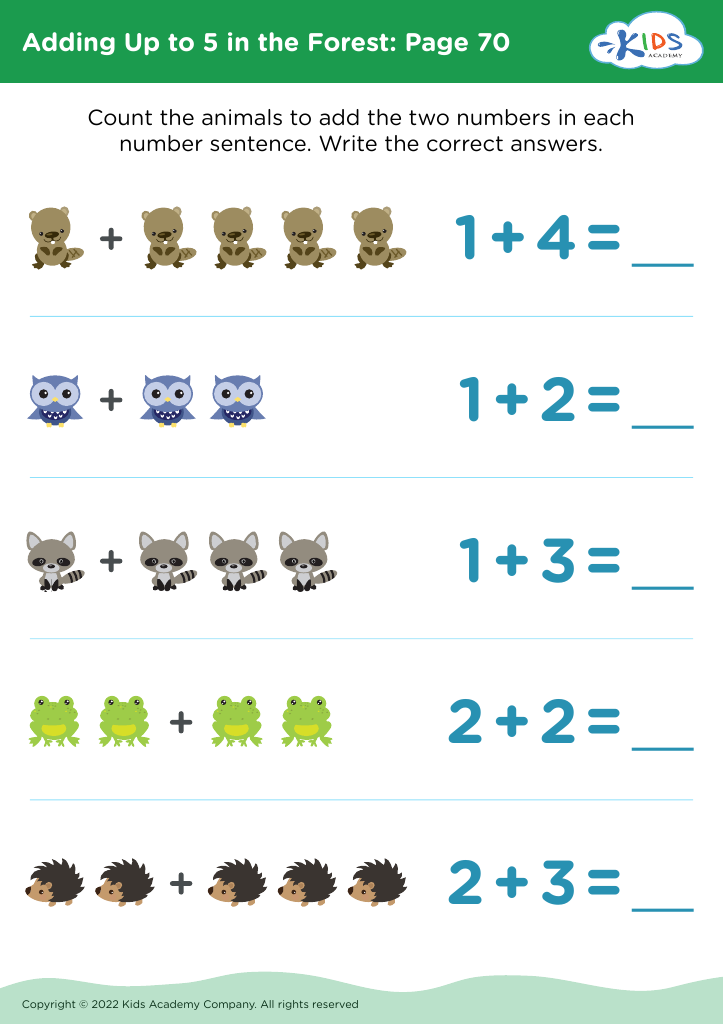
Adding Up to 5 in the Forest: Page 70
Worksheet
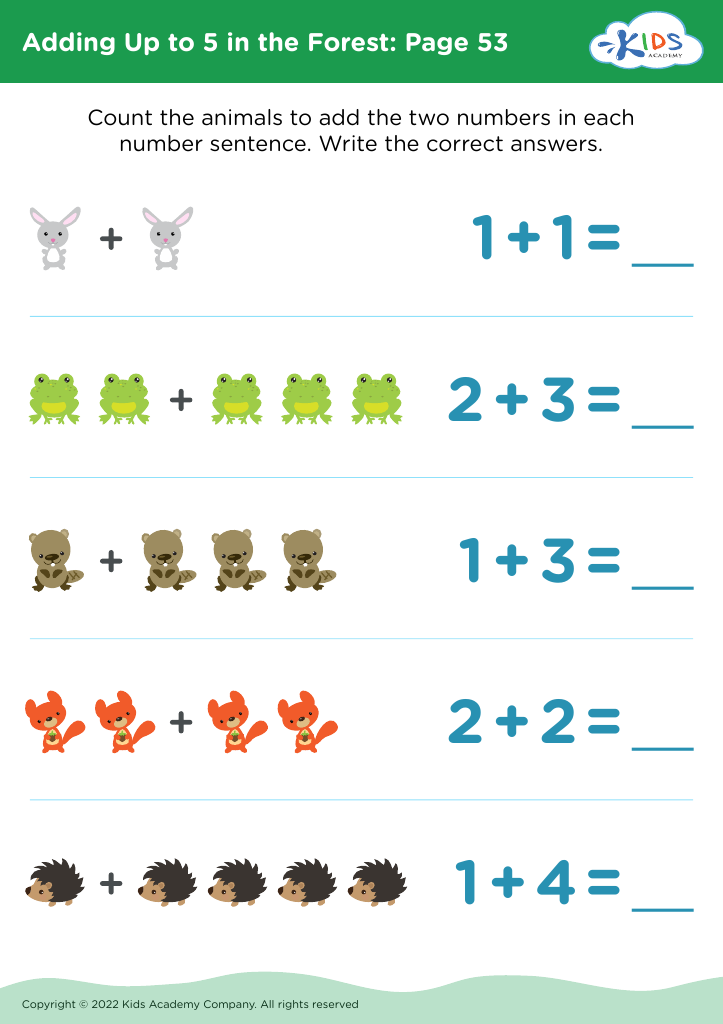
Adding Up to 5 in the Forest: Page 53
Worksheet
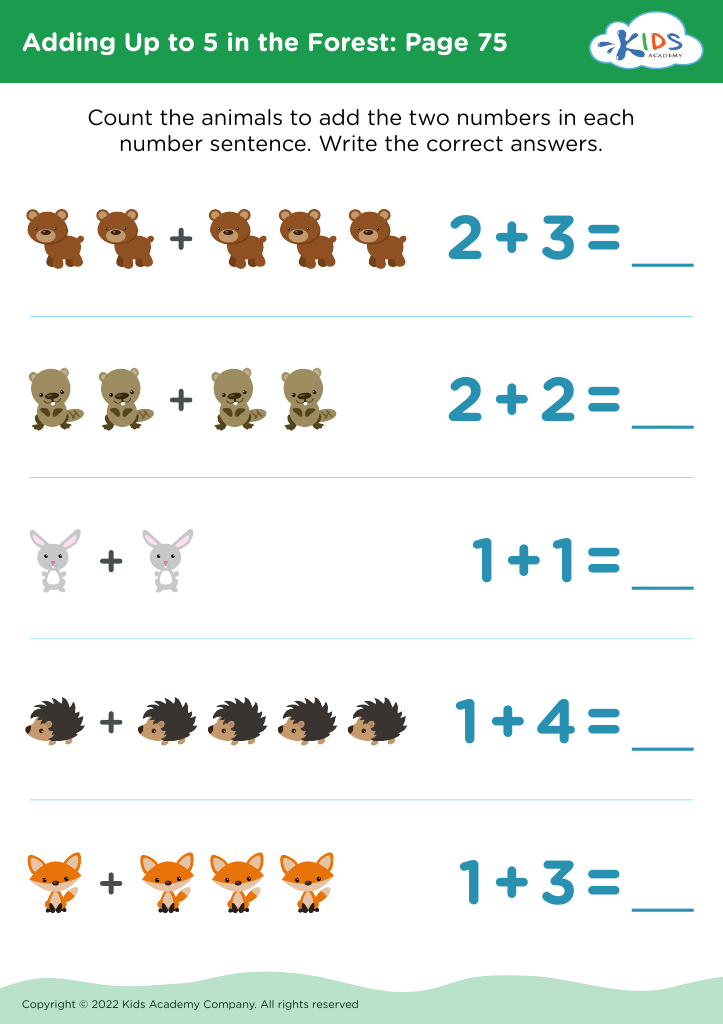
Adding Up to 5 in the Forest: Page 75
Worksheet
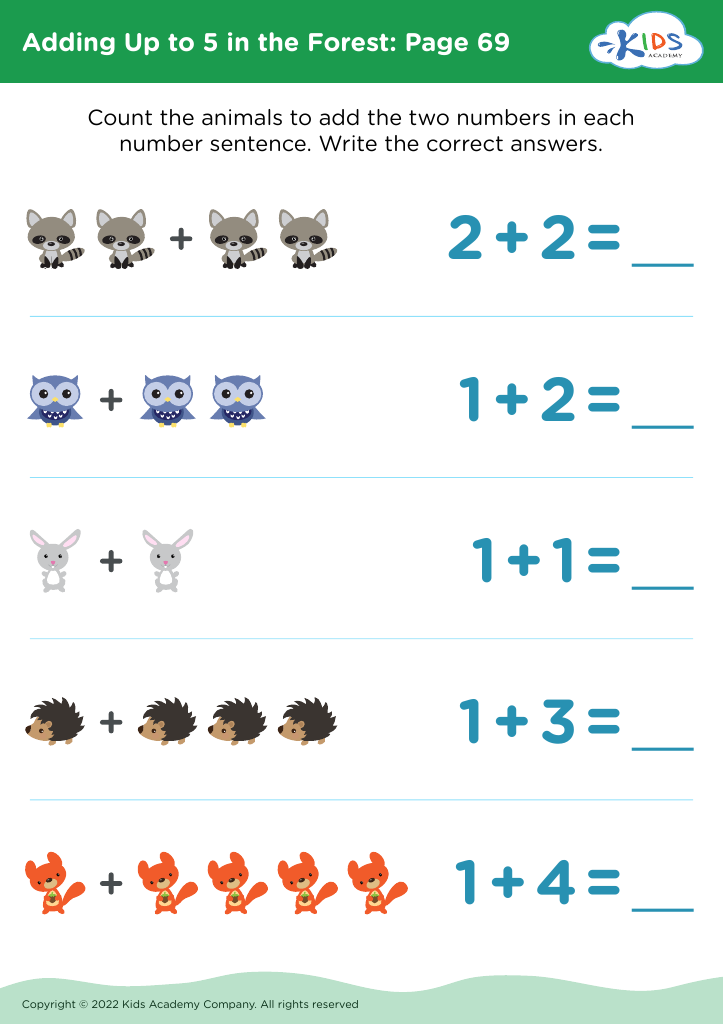
Adding Up to 5 in the Forest: Page 69
Worksheet
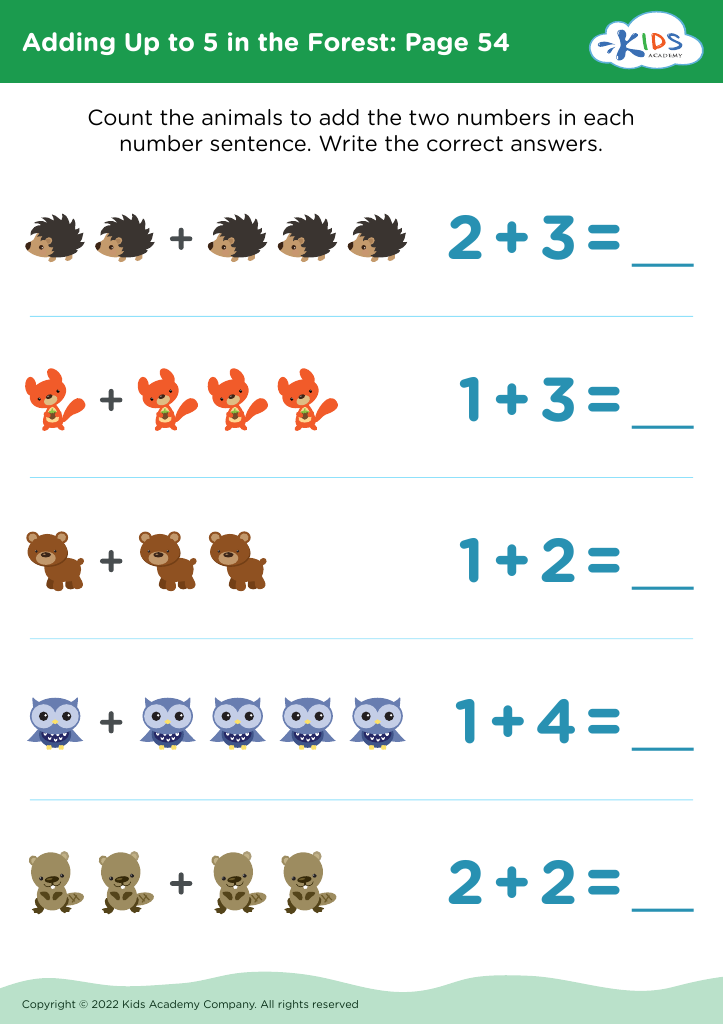
Adding Up to 5 in the Forest: Page 54
Worksheet
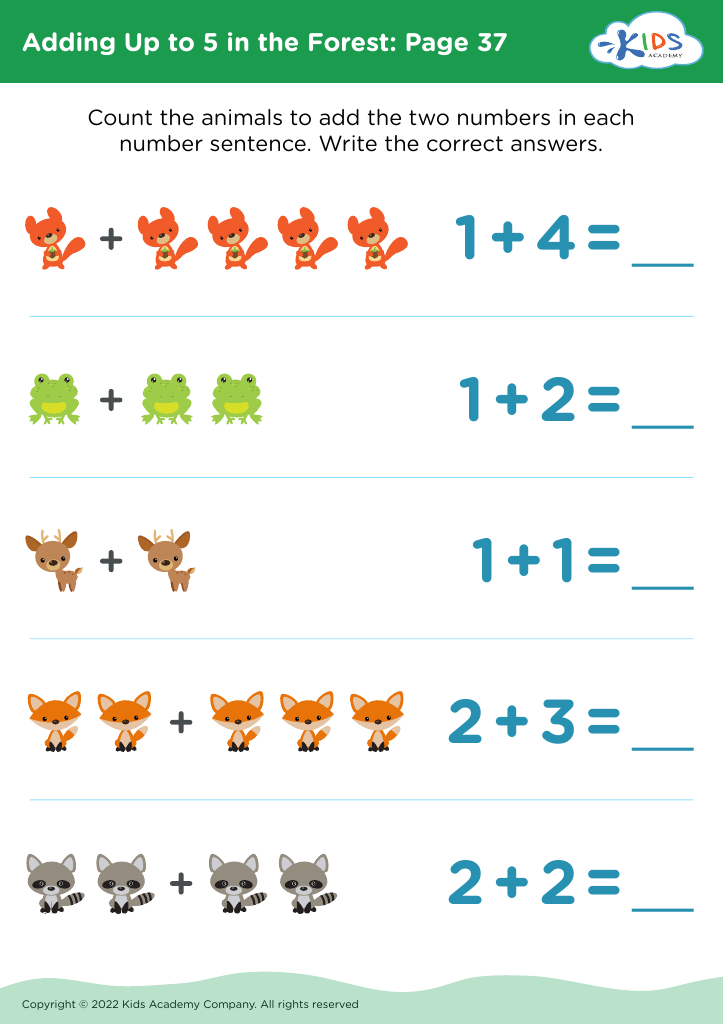
Adding Up to 5 in the Forest: Page 37
Worksheet
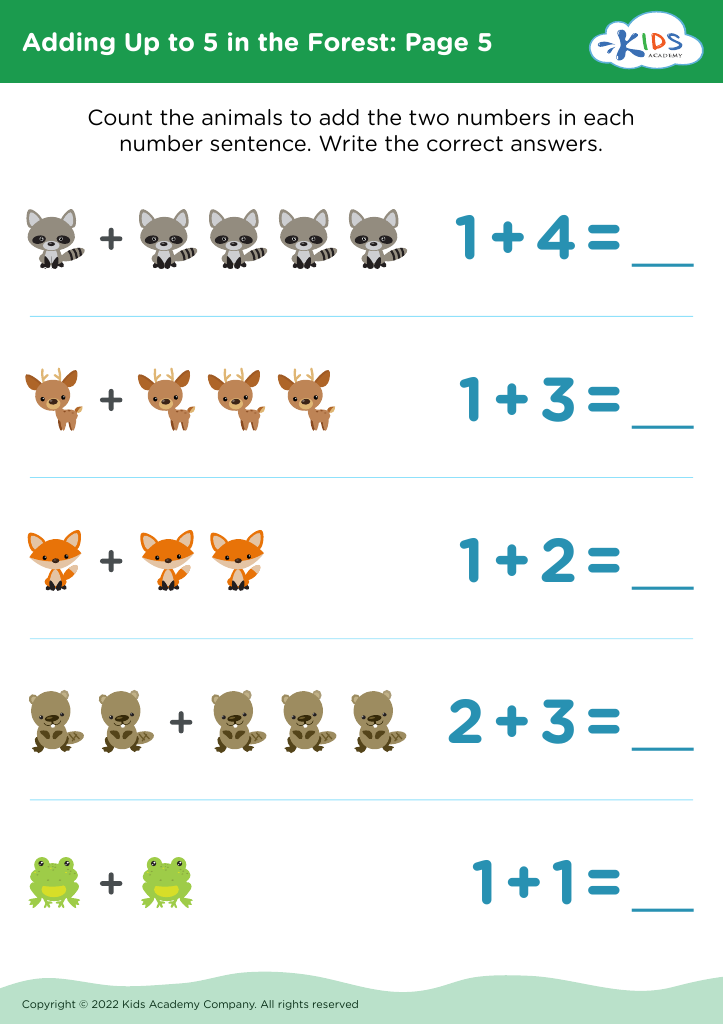
Adding Up to 5 in the Forest: Page 5
Worksheet


Cognitive development is a crucial aspect of early childhood education, especially for children aged 3-6. During these formative years, children undergo significant brain growth, shaping their ability to think, learn, and interact with the world. Parents and teachers should care about fostering cognitive development as it lays the foundation for critical thinking, problem-solving, and social skills.

In the context of the Forest School approach, which emphasizes learning through nature, cognitive development is enriched by real-world experiences. When children explore their surroundings, they engage their senses, stimulate curiosity, and build connections between concepts. Activities such as observing wildlife, experimenting with natural materials, or participating in group play not only enhance cognitive processes but also promote emotional and social growth.

Additionally, focusing on cognitive development during these years supports future academic success. Early exposure to problem-solving and observational skills can lead to better literacy, numeracy, and overall learning outcomes. By prioritizing cognitive growth through a nature-based curriculum, parents and teachers help create resilient, confident learners who are well-equipped to navigate their educational journey and everyday life. Thus, investing in early cognitive development is not just beneficial; it’s essential for nurturing well-rounded individuals.