Counting proficiency Adding in the Forest Worksheets for Ages 3-6
3 filtered results
-
From - To
Explore our "Counting Proficiency: Adding in the Forest" worksheets designed for ages 3-6! These engaging resources help young learners develop essential counting and addition skills through fun, nature-themed activities. Children will join woodland creatures on an adventure, adding objects and counting along the way, ensuring early math concepts come to life. Each worksheet offers vibrant illustrations and simple exercises that make learning enjoyable. Perfect for both classroom use and home learning, our worksheets support hand-eye coordination, number recognition, and problem-solving skills. Foster a love for math while sparking creativity in the great outdoors. Get started today and watch young minds flourish!
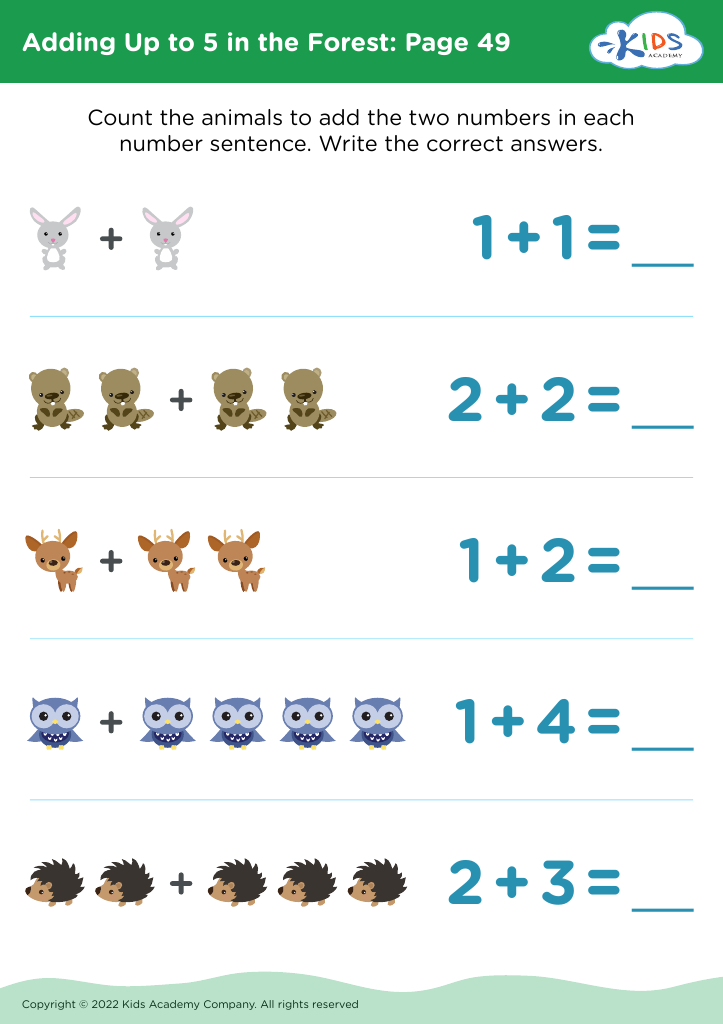
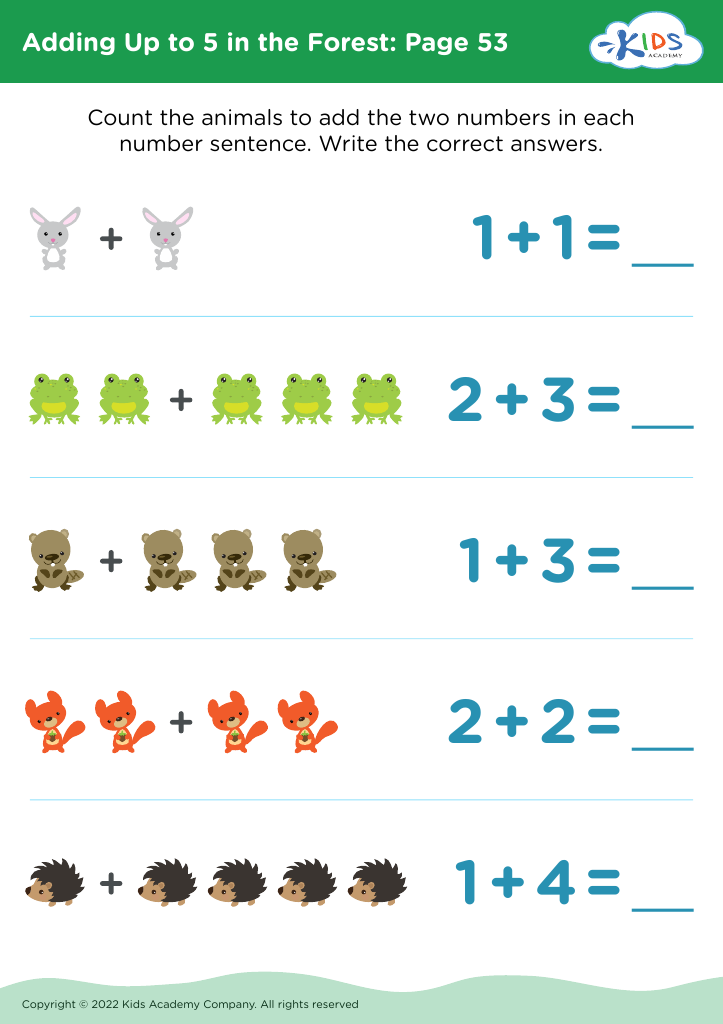
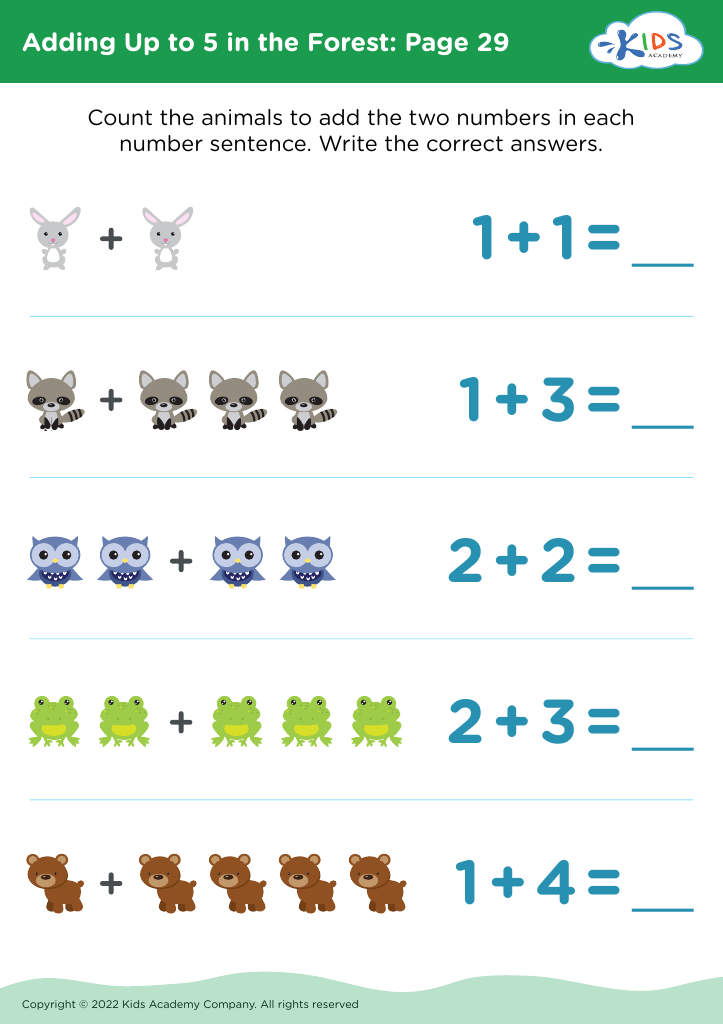



Counting proficiency is a crucial foundation for early math skills, and it plays a significant role in a child's overall cognitive development. When it comes to young children aged 3-6, developing counting skills in a thematic context, such as "Adding in the Forest," offers a fun and engaging way to learn. This approach encourages kids to recognize numbers and understand basic addition through interactive storytelling, hands-on activities, and exploration of their environment.
Teachers and parents should care about counting proficiency because it fosters critical thinking and problem-solving abilities essential for later learning. Mastering counting also enhances language skills, as children learn to communicate numerical concepts and relations effectively. Moreover, engaging activities improve concentration and perseverance, vital traits in early education.
By introducing counting within relatable themes like nature, teachers and parents can stimulate children's imaginations and curiosity, cultivating a love for learning. This thematic approach provides rich opportunities for social interaction, whether through collaborative games or storytelling, which enhances emotional intelligence and communication skills. Ultimately, ensuring that children develop counting proficiency sets the stage for a successful and confident transition into more complex mathematical concepts.