Fine Motor Skills Adding in the Forest Worksheets for Ages 3-6
5 filtered results
-
From - To
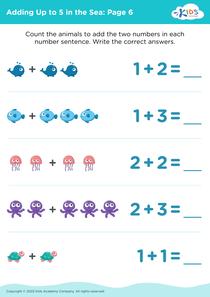
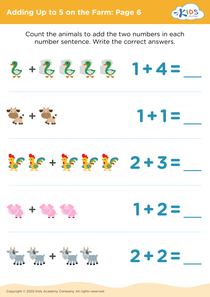
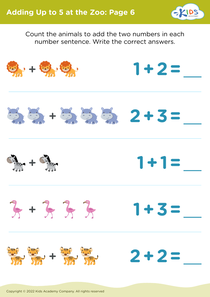
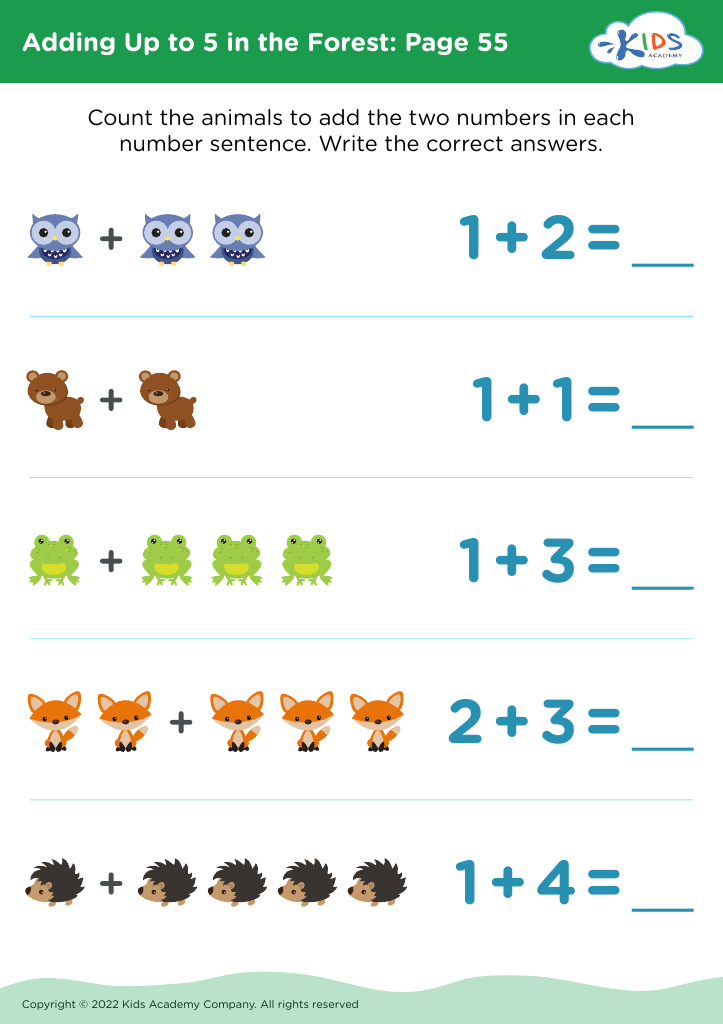
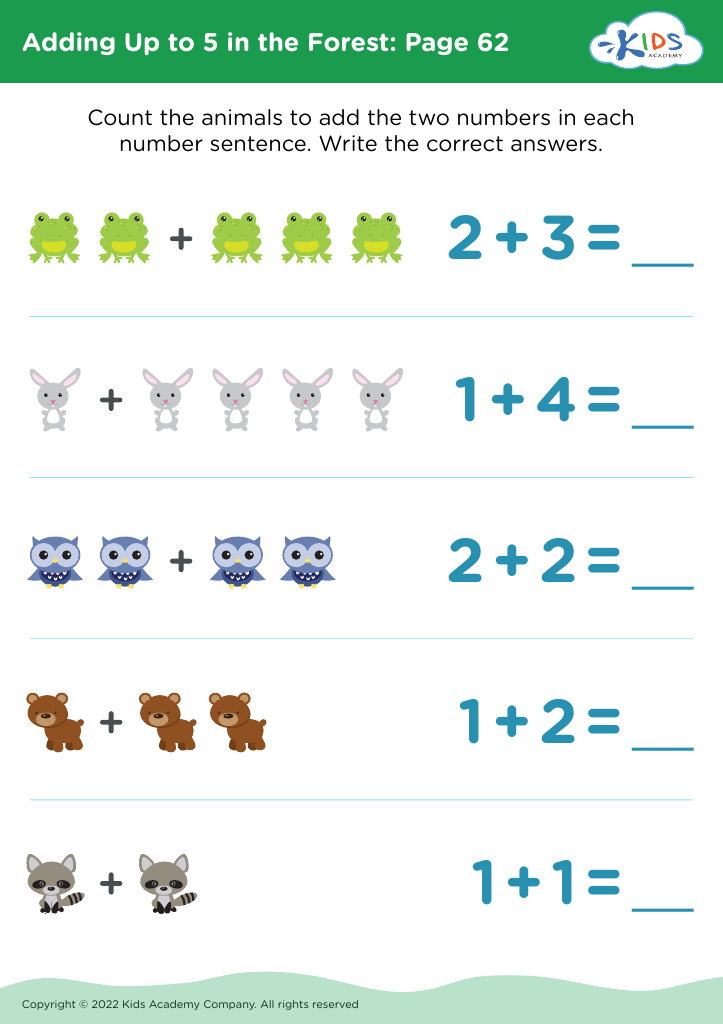
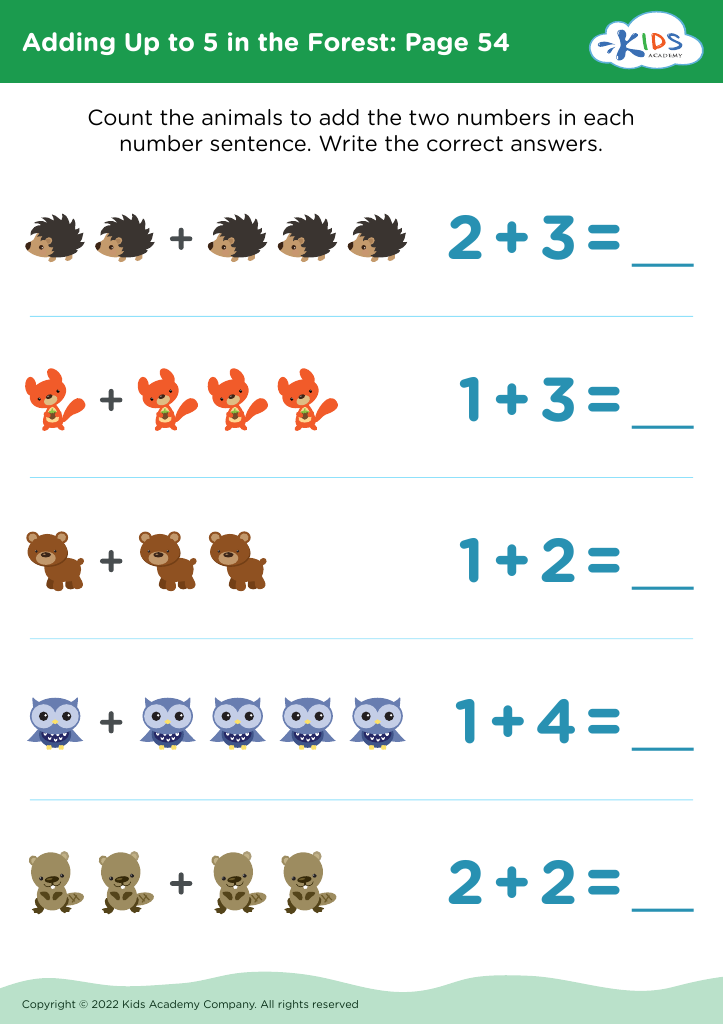
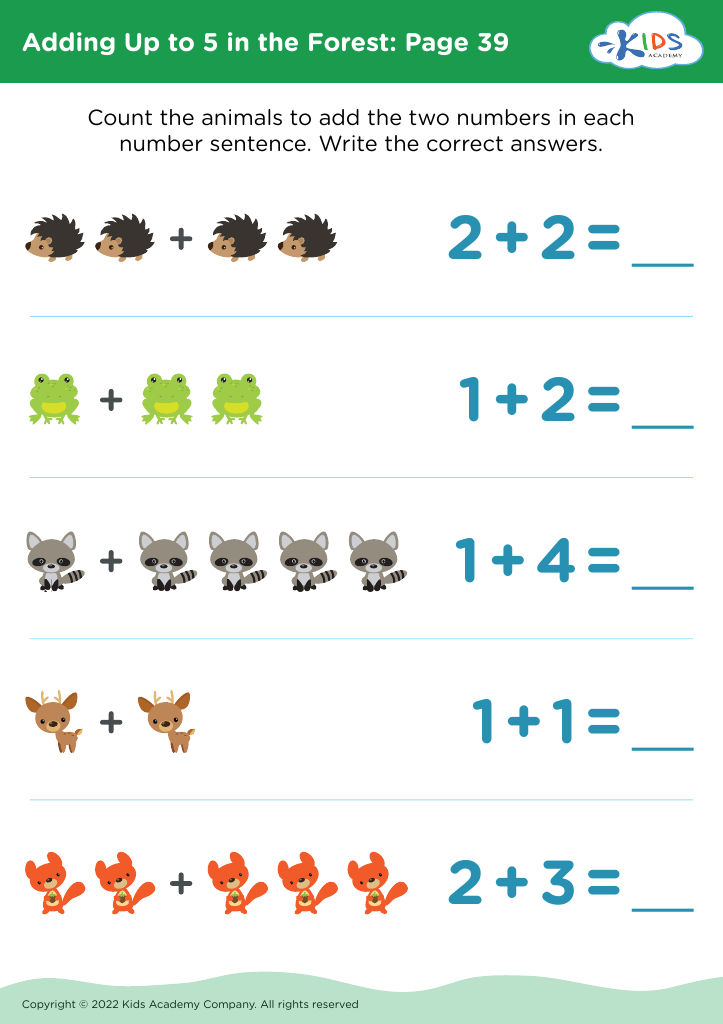
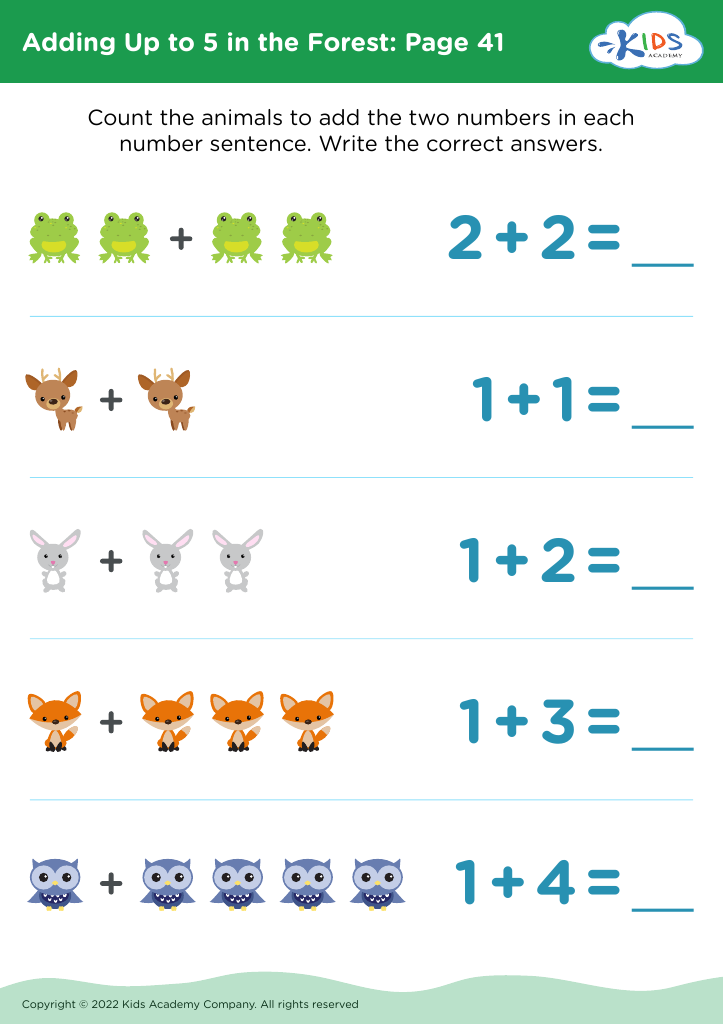
Enhance your child's fine motor skills with our engaging "Adding in the Forest Worksheets" designed specifically for ages 3-6! These interactive worksheets combine math and nature, encouraging young learners to practice addition while promoting hand-eye coordination and dexterity. Through fun forest-themed activities, children will develop essential skills such as tracing, cutting, and coloring while exploring numbers and counting. Perfect for homeschoolers or classroom settings, these worksheets make learning a delightful experience. Foster your child's growth and confidence in math with our carefully crafted resources that build foundational skills in a playful environment. Download the worksheets and watch learning come to life!



Fine motor skills are crucial for young children aged 3-6, as they lay the foundation for a variety of everyday tasks and learning activities. In a forest setting, engaging in activities that promote fine motor skills can be both enjoyable and educational.
When children manipulate small objects like pinecones, acorns, or twigs, they enhance their hand-eye coordination, dexterity, and grip strength. Activities such as picking up natural materials, stringing them onto yarn, or using tools to dig in the soil foster problem-solving and critical thinking skills. Moreover, using nature to teach fine motor skills supports holistic development by intertwining physical coordination with sensory experiences, which can capture children’s curiosity and creativity.
Parents and teachers should care about fine motor skills because these abilities are directly linked to success in the classroom. Tasks like writing, cutting, and using scissors require a certain level of dexterity. By integrating fine motor activities in a natural environment, caregivers provide children with enjoyable and enriching experiences that stimulate their cognitive, emotional, and physical growth. Furthermore, such interactions with nature cultivate a sense of appreciation for the environment, encouraging lifelong learning and well-being.